

Broadcasting
NBC Plans Review of Broadcasting Code to Check Fake News, Hate Speech

The National Broadcasting Commission (NBC) says it is reviewing the broadcasting code to address emerging challenges like hate speech and fake news.
Dr. Igomu Onoja, its Zonal Director in charge of the North-Central, who disclosed over the weekend in Jos, said that the review had become necessary to enforce ethics and check the excesses of broadcasting stations.
Onoja spoke at a colloquium organised by the Plateau chapter of the Nigeria Union of Journalists (NUJ), to mark this year’s Press Week.
The colloquium focused on “Fake News, Hate Speech and Nigeria’s Democratic Sustenance”.
He warned broadcasting stations against being used by desperate politicians to “pollute the system with hate speech” because it had the tendency to set the nation on fire.

“We have radio stations in Jos clapping for people that say that the Plateau governor is mentally deranged; even worse things have been said on air. We cannot tolerate that,” he warned.
Onoja advised media organisations to be fair in allotting air time to political parties and groups as the campaigns for the 2019 general elections gradually hot up.
“If you give 30 minutes to Party A, the same duration should be given to party B in the same media organisation,” he said.
Earlier, the Guest Speaker, Prof. Umaru Pate, had accused the Nigerian media of paying too much attention to political news.
“More than 70 per cent of the news we cover is political; practically all the headlines are political. We do not seem to have time for the economy and even insecurity that has been a major concern for the poor.
“Everything political is news, but burning issues like poverty and violent conflicts do not seem to worry us.
This is bad. And sad,”’he said. He blamed the rising rate of fake news and hate speeches on political affiliations, foreign interests, ethnicity and religious institutions, among others, and described the situation as “highly alarming”.
Pate, a professor of Mass Communication at the Bayero University, Kano, regretted that prominent persons had taken advantage of the significance of the media in societal processes to misinform, deceive and incite.
He said that Nigerians in the Diaspora had constituted a major source of fake news and hate speeches, regretting that people with little or no understanding of the issues in the country were using the social media to incite people against each other.
Noting that Nigeria was a multi-cultural country, the don urged Nigerians to be sensitive to such variety and avoid speeches or remarks that could hurt each other’s’ faith, ethnic groups or origin.
He particularly decried the involvement of the mainstream media in the dissemination of hate speech and fake news, saying that such involvement was adding credibility to the twin evils.
Pate also advised journalists and media houses to avoid being bribed to compromise standards by people seeking to spew hate speeches, and emphasised the need to respect professional ethics.


Awba-Ofemili Development Union (ADU) Health Committee has officially announced the launch of the Awba-Ofemili Health Awareness Campaign 2026, a community-wide initiative designed to promote preventive healthcare, disease awareness, early detection, health education, and healthy living across Awba-Ofemili.

Awba-Ofemili Health Awareness Campaign
The campaign, themed “Beyond Elu-Ulee (Buruli Ulcer): Building a Healthier Awba-Ofemili,” will be held on Thursday, 17 September 2026, at the Civic Centre, Awba-Ofemili, beginning at 9:00 a.m.
The programme builds on the success of the committee’s maiden Elu-Ulee (Buruli Ulcer) Awareness Campaign, which raised awareness on Buruli ulcer and strengthened community engagement on preventive healthcare.
According to the Chairman of the ADU Health Committee, Ogbuefi Remmy Nweke, KSM, the 2026 campaign represents a significant expansion of the committee’s health intervention agenda.
“This campaign is about moving beyond awareness to action. We want to deepen community health education, encourage early detection of preventable diseases, strengthen school health initiatives, promote First Aid awareness, and build sustainable partnerships that will improve the health and well-being of our people,” he said.
The 2026 campaign will feature community health education, free basic health screening, school health support, First Aid awareness programmes, and stakeholder engagement with healthcare professionals, development partners, and community organisations.
The committee has called on sons and daughters of Awba-Ofemili, residents, friends of the community, corporate organisations, philanthropic individuals, NGOs, healthcare institutions, and development partners to support the initiative through financial contributions and strategic partnerships.
To support the implementation of the campaign, the ADU Health Committee has opened a dedicated fundraising channel through Fidelity Bank Plc, with donations payable to Awba-Ofemili Education Volunteers (Account No. 6060490921).
The Committee appealed to all supporters to use “HEALTH FUND” as the transfer narration so that contributions can be properly recorded and accounted for under the ADU Health Committee Health Fund.
Secretary of the ADU Health Committee, Mr. Cornelius Nwakonobi, emphasized that every contribution would make a meaningful impact.
“No donation is too small. Every contribution will support community health education, medical outreach, school health programmes, First Aid support, and preventive healthcare initiatives. Together, we can build a healthier, stronger, and more resilient Awba-Ofemili,” he stated.
The ADU Health Committee reaffirmed its commitment to working with government agencies, healthcare professionals, development organisations, the Nigerian Red Cross, community stakeholders, and the Awba-Ofemili diaspora to advance sustainable health interventions in the community.
For partnership enquiries, sponsorship, or additional information, interested organisations and individuals are encouraged to contact the ADU Health Committee Secretariat.
Broadcasting
NBC Files Fresh Appeal against Judgment Barring it from Imposing Fines on Broadcast Stations

National Broadcasting Commission (NBC) has filed an application seeking the permission of the court of appeal to file a fresh appeal against the judgement of the federal high court in Abuja barring it from imposing fines on erring broadcast stations.

In the application filed at the court of appeal in Abuja by Dapo Akinosun, counsel to the NBC, the commission argued sanity in Nigeria’s broadcasting sector is under threat and that the public interest would be better served if the court grants the application.
On January 17, 2024, Rita Ofili-Ajumogobia, a judge at the federal high court in Abuja, restrained the NBC from imposing a N5 million fine on broadcast stations sanctioned in 2022 over allegations of “undermining Nigeria’s national security by broadcasting documentaries on banditry in Nigeria”.
The affected broadcast stations were Multichoice Nigeria Limited, owners of DSTV; TelCom Satellite Limited (TSTV); Trust-TV Network Limited; and NTA StarTimes Limited.
The suit was filed by Media Rights Agenda (MRA).
Dissatisfied with the ruling, the NBC appealed the judgement filed an appeal at the court of appeal in Abuja.
In June, the court of appeal dismissed the commission’s appeal, holding that it was “fundamentally defective” and incompetent.
Jane Inyang, lead judge of the panel, held that the parties before the lower court were identified as “Incorporated Trustees of Media Rights Agenda (as applicant) and National Broadcasting Commission (as respondent)” but in the notice of appeal the purported appellant was described as the “Nigerian Broadcasting Commission”,
The judge held that the discrepancy was significant and that the court lacked jurisdiction to entertain the commission’s appeal.
In the application, the NBC urged the court to grant it leave to raise and argue a fresh issue on appeal relating to the legal capacity of MRA to institute and maintain the original suit before the lower court.
The commission argued that the defect in the earlier notice of appeal, which resulted in the dismissal of its appeal, arose “solely from an inadvertent misdescription” of its name by its lawyer.
The NBC told the court that the subsisting judgement raises questions on the commission’s statutory powers to regulate broadcasting and enforce compliance with broadcasting standards in Nigeria.
The commission argued that the subsisting judgment is capable of creating uncertainty regarding its regulatory powers if it is allowed to stand.
The NBC also argued that without the pronouncement by the appellate court on the issues raised in the appeal, its regulatory framework would be weakened.
“A weakened regulatory framework may embolden non-compliance with established broadcasting standards, thereby increasing the dissemination of false, misleading and unverified information capable of causing unnecessary public anxiety, panic and social unrest,” the NBC said.
“Absence of effective regulatory oversight may further encourage irresponsible broadcasting practices and the misuse of broadcast and digital media platforms by persons who deliberately publish sensational, inaccurate or inflammatory content to intimidate, harass or unduly influence individuals, institutions and public discourse.”
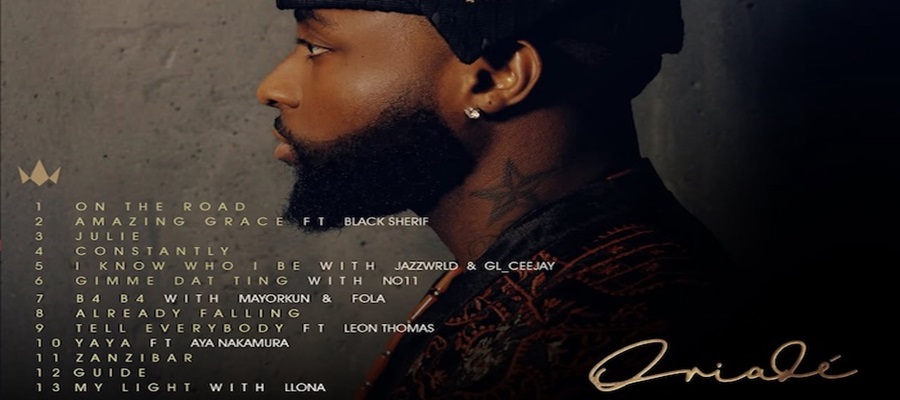
David Adedeji Adeleke, known professionally as Davido, has shared his past suicidal thoughts as he dropped Oriadé, his sixth studio album yesterday.

Davido
Davido said he chose the date on purpose as it marks exactly 15 years since he began his professional music career.
Oriadé is a Yoruba word combining “Ori,” meaning destiny, and “Adé,” meaning crown.
It translates to “the crowned head.” The album has 13 tracks and features Black Sherif, Aya Nakamura, Leon Thomas, Mayorkun, and Llona.
It follows his 2025 project, 5ive, which reached number two on the Billboard World Albums chart.
Davido also announced an international tour to support the new record.
In the days leading up to the release, Davido gave interviews that revealed personal details about his past and his current life.
Speaking to Vibe Magazine on Thursday, he described a 2014 incident in Ghana that left him feeling suicidal.
He said he invited a woman back to his hotel room after a show, and she later posted a photo of him sleeping online.
He said the fallout overwhelmed him.
“My daddy was calling me. My sisters were calling me. If I saw the balcony that day, I would have jumped,” he said.
He said he was young at the time and did not fully understand the consequences of his actions.
He described the experience as a turning point that changed how he thinks about privacy and fame.
In the same interview, he explained why he often dresses down in public despite his wealth.
He recalled a trip to the South of France where he went out in shorts and slippers without his watch.
“I’ve been on jets, I’ve been flying, I’ve been in all these places since I was a baby. I’ve been seeing money since I was a baby. So all these things don’t really excite me,” he said.
He added that he sometimes prefers to drive a Toyota to the supermarket in Atlanta instead of one of his luxury cars.
In a separate livestream with Davrel, Davido spoke about how his life has changed since marrying his wife, Chioma, and becoming a father.
He said his home no longer holds the large crowds it once did.
“I can no longer have 100 people in my house like before,” he said.
He said he speaks to Chioma every day regardless of his schedule.
He also disclosed that he spends between $200,000 and $300,000 a month on himself, not including costs for his wife, children, jewelry and cars.
He said the amount is lower when he is in the United States, where he described his lifestyle as quieter.

Fake Agency: ICPC Indicts NITDA, Others over Inadequate Due Diligence

Tax Reform Built on Taxing Prosperity, Not Poverty– Adedeji

UNESCO Taps Oguamanam,Nigerian Scholar to Advisory Body on Science, Tech Ethics

MTN Alerts Subscribers over Fake 25GB Anniversary MTN Data Giveaway

X Replaces Revenue Sharing wit New Creator Rewards Programme

EFCC Busts NIS Visa Overstay Racket, Uncovers N700m in an Account

Fact-Check: Elon Musk’s “Tesla Pi Phone” is Internet Rumor

NBC Tasks Broadcasting Stations over 2028 DSO Global Deadline

NBC Scraps Annual Digital Access Fee on DSO

Glo Sponsored African Voices to Feature Netflix’s “The Polygamist” Stars




 General News3 days ago
Guinness Rewards Consumers with ₦17 Million in First Week of ‘Open for More’ Promo Draw

 News3 days ago
World Bank Debars United Aviation Services, Owner over Fraudulent Activities

 E-Business3 days ago
NITDA Introduces Cloud Certification Boost Data Localisation Compliance

 Telecom3 days ago
NCC, Enugu Sign Deal to Operate Digital Industrial Park, Learning Centre

 E-Financial3 days ago
BOI Opens N250Bn Bond Offer to Fund Businesses

 Telecom3 days ago
GITEX Nigeria to spotlight Africa’s $1trn AI economic potential

 News3 days ago
Enugu State Approves Land for ITF’s Digital Fabrication Centre

 General News3 days ago
Meta Hit With $567m US Court Order Over Alleged Harm to Children