

Broadcasting
NBC Says ITU’s Deadline on Digital Television is Sacrosanct

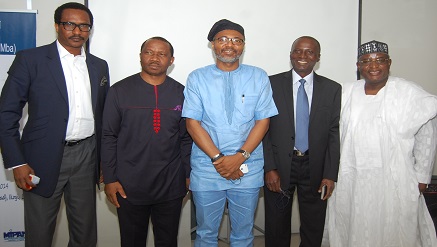
With 10 months left for the deadline set by the International Telecommunications Union (ITU) for television stations in Africa to migrate from analogue broadcasting to digital terrestrial television (DTT), the regulatory body, National Broadcasting Commission (NBC), has said the June 2015 deadline is sacrosanct.
Addressing operators at the Breakfast Session jointly organized by Advertisers’ Association of Nigeria (ADVAN) and Media Independent Practitioners Association of Nigeria (MIRAN) in Lagos on recently, Mr. Emeka Mba, director general of NBC, said, after the ITU deadline, there would be no more international support for analogue spectrum as any operator still operating on the platform would be technically hedged out.
Dr Hamadoun Toure, ITU secretary general, had said that the June 2015 deadline was agreed on by all the 193 members of the organizations, which consists of governments as well as 70 private sector members.
His words: “We knew it was doable when we set the migration deadline in 2005. The benefits of the migration exercise to both consumers as well as broadcasters are also enormous.” According to him, the migration exercise will lead to freeing up of about one-third of frequencies which can then be used for the provision of other services”.
On the steps taken by the Federal Government so far to actualise the ITU vision, Mba disclosed that the government had finalized and harmonized discussions over the transmission network parameters with all ECOWAS member states.
He added that specifications for the Basic Set Top Box and Digital Television Receivers had been finalized with other countries in the sub-region.
Unlike now when there is no separation of functions in the Broadcast Industry, the DG disclosed that the reverse would be the case under the proposed era.
According to him, Broadcasters would be responsible for the content while a Signal Distributor or Carrier would be saddled with Transmission of the Signals to viewers.
Apart from the Nigerian Television Authority (NTA), the NBC Boss said the Federal Government would licence two other Signal Carriers for optimum benefit for viewers across the country.
Meanwhile, the Federal Government has begun the process of licensing the second Signal Distributor.
Mr. Mba disclosed that the focus of the NBC is ensuring more broadcasting services are created such that the current gaps in the industry are effectively addressed.
His words: “Our focus at the NBC is promoting more broadcasting services to fill current gaps in content and services such as themed channels, special interest channels, educational and children’s channels, regional channels as well as new HD services.”
According to him, the regulatory body will encourage interoperability through the use of open standards as well as credible audience measurement and advertising.
However, he identified deep collaboration among the existing analogue broadcasters, advertisers, regulators, content producers and government as a necessary yardstick for the success of the ITU initiative.
Speaking at the occasion, Mr. Tolu Ogunkoya, president, MIPAN acknowledged that digitization of the industry would bring real transformation in the nation’s Broadcast industry in terms of content development, quality service and job creation.
According to him, the ITU initiative would definitely herald a new era when operators will be open to keen competition. His words: “For me, this is the start-off of the relationship. There is definitely going to be a transformation.”
Similarly, Mr. Kola Ayeni, president of ADVAN said he was aware of the prevailing scarcity of spectrums in the country; assuring that digitization would help to address the issue.


Dr.Shaibu Husseini, the Executive Director/Chief Executive Officer of the National Film and Video Censors Board (NFVCB), has called for stronger distribution frameworks within Nigeria’s film industry to ensure that locally produced content achieves global visibility.

He urged film festivals across the country to evolve beyond networking platforms into active marketplaces where filmmakers could secure distribution deals. He stressed that festivals must attract distributors, exhibitors, streaming platforms, and marketers to create tangible opportunities for filmmakers.
Husseini made this call while delivering the keynote address at the opening ceremony of the 2026 edition of the Coal City Film Festival held in Enugu.
“Film festivals must become gateways to distribution where filmmakers leave not just with applause, but with real opportunities,” he said.
Husseini expressed personal delight at hosting the event in Enugu, his birth state, noting the city’s rich cultural heritage and longstanding contribution to Nigeria’s creative landscape.
He commended the festival organisers, particularly the Festival Director, Uche Agbo, for their resilience and commitment in sustaining the
initiative. According to him, the Coal City Film Festival has grown into a significant cultural platform and a must-attend cinematic event in South East Nigeria.
Speaking on the festival’s theme, “Local Stories, Global Screens,” Husseini emphasised the importance of authenticity in storytelling. He noted that films rooted in local realities, languages, and cultural truth often resonate more strongly with global audiences.
He cited notable Nigerian productions such as King of Boys by Kemi Adetiba, The Wedding Party by Mo Abudu, Anikulapo by Kunle Afolayan,
“Black Book” by Editi Effiong, and “Lionheart” by Genevieve Nnaji as examples of culturally grounded stories that have gained international recognition on platforms such as Netflix and at global film festivals.
While acknowledging the growth in film production across Nigeria, the NFVCB boss identified distribution as a major bottleneck in the industry. He observed that many high-quality films struggle to reach audiences both locally and internationally due to limited distribution channels.
Reaffirming the Board’s commitment to industry development, Husseini stated that the NFVCB has continued to reposition itself as a partner in progress by engaging stakeholders, improving classification processes, and promoting a balance between creative freedom and social responsibility.
However, he raised concerns over increasing non-compliance with regulatory requirements, noting that some filmmakers bypass the Board by releasing unclassified films or operating without proper licensing.
He said all films and video works must be submitted to the NFVCB for classification and registration before being released on any platform, including digital platforms such as YouTube.
“This is a legal obligation, and the Board will not hesitate to take decisive action against defaulters,” he warned, adding that regulation is essential for protecting the industry, audiences, and national values.
Looking ahead, Husseini assured stakeholders of the Board’s continued collaboration with filmmakers and festival organisers to build a structured, sustainable, and globally competitive Nigerian film industry.
He concluded by commending the organisers of the Coal City Film Festival for their vision and contribution to Nigeria’s cultural economy, urging filmmakers to continue telling authentic stories that can resonate across global screens.

Mr. Charles Ebuebu, director General of the National Broadcasting Commission (NBC), has called on Nigerian content creators to actively participate in the country’s Digital Switchover (DSO), describing the transition as a major opportunity for visibility, revenue growth, and industry collaboration.

Mr. Charles Ebuebu, DG, NBC
Speaking as Special Guest of Honour at the induction ceremony of the Electronic Media Content Owners Association of Nigeria (EMCOAN) in Lagos, Ebuebu stressed that the success of the DSO depends on engaging content to populate the nation’s new digital channels.
“Without content, the DSO’s success would be incomplete. We are urging content owners to collaborate with the Commission to ensure Nigeria’s digital future is rich, diverse, and sustainable,” he said.
The NBC boss highlighted that the upcoming FreeTV Direct-to-Home (DTH) platform, along with its mobile applications, would provide content creators with nationwide reach, advanced analytics, and brand partnership opportunities.
Nigeria’s DSO, which marks the shift from analogue to digital broadcasting, is being implemented by the NBC using the Nigcomsat satellite infrastructure. The programme aims to deliver over 100 nationwide channels and expand access to Nigerians in remote areas via hybrid decoders, addressing long-standing infrastructure and funding challenges. The project, which has experienced delays since 2012, now has strong government backing and is scheduled for launch in April 2026.
Ebuebu commended EMCOAN members for their contributions to strengthening Nigeria’s creative economy and encouraged them to leverage the opportunities offered by the DSO to promote local stories, culture, and creativity on both national and global stages.
During the ceremony, EMCOAN honoured its distinguished members, naming Wale Adenuga, MFR, as Grand Patron and Mr. Yinka Adebayo as Patron.
Prominent figures in the broadcasting content industry, including Wale Adenuga, Opa Williams, Agatha Amata, Jibe Ologeh, High Chief Emeka Ossai, Debbie Odetayo, Amina Mohammed, and Frank Elaboya, attended the event.
Representing the NBC at the event was Mr. Ralph Akpan, director of the Lagos Zone, while EMCOAN president, Mr. Adeniji Omirin, MD of ADNOM Media, urged members to fully engage in the digital switchover.
Canal+ is to cut jobs at MultiChoice as part of a sweeping restructuring plan aimed at stabilising the African pay-TV operator, following years of operational and financial pressure.

The move comes alongside a planned $115 million capital injection, underscoring the urgency of efforts to revive the business after the French media group took control.
The planned layoffs are expected to form a core element of a broader cost-cutting and efficiency drive, as Canal+ seeks to streamline MultiChoice’s operations and improve profitability.
The restructuring signals a shift toward leaner operations, with a focus on eliminating redundancies and optimising the company’s cost base.
MultiChoice has struggled in recent years with declining subscriber numbers across key African markets, weighed down by macroeconomic pressures, currency volatility, and changing consumer behaviour.
The rise of global streaming platforms has intensified competition, chipping away at the company’s traditional pay-TV dominance.
Canal+’s intervention marks a pivotal moment for MultiChoice, reflecting a more aggressive approach to repositioning the business.
By combining fresh capital with structural reforms, the new owners are aiming to both stabilise short-term performance and lay the groundwork for longer-term growth.
The $115 million injection is expected to provide immediate financial relief, supporting operations and potential strategic initiatives.
However, the accompanying job cuts highlight the depth of the challenges facing the company and the scale of transformation required to restore competitiveness.

EFCC Waxes Worriedly over $160Bn Crypto Crime Losses

Dangote Refinery Debunks Speculations on IPO

FG Awards N50m Each to 45 Students under S-VCG

NGX REGCO Fines 5 Firms N291m for Market Manipulation

FG Launches Cross-Border Digital Payments Report

Spotify’s Loud & Clear Report Reveals Over ₦60Bn Revenue for Nigerian Artists in 2025

Madonna University Taps Tech Guru Adote for Strategic Board Role

China Threatens to Shut Nigeria’s Satellite Over $11.44m Unpaid Debt

Jumia Tech Week 2026 Begins with Tech Deals on Smartphones, Electronics, and Everyday Technology

FCCPC Bans Lagos ‘No Refund’ Policy, Vows Fines and Shutdowns for Traders



 General News3 days ago
Anti Graft Agencies Raise Alarm over Rising Crypto-Linked Financial Crimes

 E-Business3 days ago
NITDA Takes Over National Digital Architecture System

 E-Financial1 day ago
CBN bars large‑ticket loan defaulters from banking services in tough new crackdown

 General News1 day ago
ARN Rejects Medical Bill over Attempt to ‘Scrap’ Profession

 Telecom1 day ago
NIGCOMSAT Supports Startups Growth with the Launch of Accelerator 3.0

 Telecom1 day ago
FG Unveils Digital Economy Research Fund Scheme

 News1 day ago
Stakeholder says AI is Crucial to Nigerian Data Centres Amid Persistent Grid Collapse

 News1 day ago
Meningitis Kills a Quarter Million People a Year -Study