

/home/kenneth/web/nigeriacommunicationsweek.com.ng/public_html/wp-content/themes/zox-news/parts/post-single.php on line 153
">
Warning: Undefined array key 0 in /home/kenneth/web/nigeriacommunicationsweek.com.ng/public_html/wp-content/themes/zox-news/parts/post-single.php on line 153
Warning: Attempt to read property "cat_name" on null in /home/kenneth/web/nigeriacommunicationsweek.com.ng/public_html/wp-content/themes/zox-news/parts/post-single.php on line 153
NCC Assures Improvement in Telecom Services

Nigerian Communication Commission (NCC) has assured that it would continue to put pressure on telecom operators in the country to provide optimal services to customers.
Eugene Jumah, executive vice chairman of the commission, gave the assurance in a message to the 62nd edition of the NCC Consumer Outreach Programme, held at Ahmadu Bello University, Zaria, Kaduna State.
Represented by Dr Femi Atoyebi, deputy director, Consumer Affairs, Juwah said the commission would sanction any service provider for unapproved increase in tariff and poor services.
He allayed the fears that the use of mobile phones have adverse effect on the health of users, saying the claim has no scientific basis.
“There has not been any scientific proof that radiation from mobile phones is harmful to the health of subscribers,” he said.

According to him, all telecommunication masts have recommended heights, to which the commission always ensured strict compliance to prevent harmful radiation from getting down to human beings and animals around.
“As it is now, for someone to be affected by radiation from masts, that person must have climbed the mast naked.
“If such radiation is so harmful, all the people in United State of America would have died, because they have been using it a long time ago,” he said.
He said the consumer outreach programme was aimed at bringing together telecom service providers to address some of the challenges of their subscribers.
“It is an avenue to rub minds on issues developing within the telecom industries.
“We give opportunity to the customers to have a voice to ask many questions, and it is a forum for the commission to also make enquiries and if possible make suggestions on how to move the industry forward,” he added.


Warning: Undefined array key 0 in /home/kenneth/web/nigeriacommunicationsweek.com.ng/public_html/wp-content/themes/zox-news/parts/post-single.php on line 493
Warning: Attempt to read property "cat_ID" on null in /home/kenneth/web/nigeriacommunicationsweek.com.ng/public_html/wp-content/themes/zox-news/parts/post-single.php on line 493

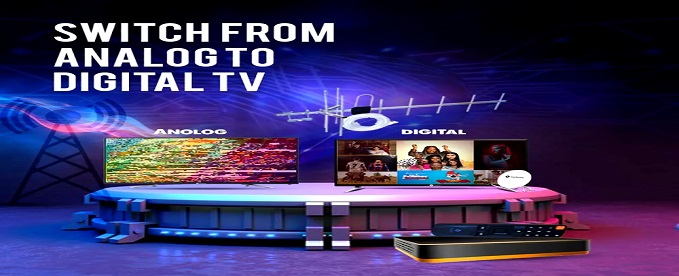
National Broadcasting Commission (NBC) has said that Nigerians will no longer pay annual Digital Access Fees under the renewed Digital Switch Over (DSO) project.

Charles Ebuebu, director-general, NBC, disclosed this in an exclusive interview with the News Agency of Nigeria (NAN) on Wednesday in Abuja,
Ebuebu said viewers only need to purchase an approved decoder and satellite dish which cost below N20,000 to enjoy free television permanently.
“Previously, users paid an annual digital access fee of about N1,500, described as an administrative charge.
“The new system removes that annual fee. It provides free access to free-to-air television channels without any payment.
“Premium channels will be introduced later. Viewers who want those additional channels will be able to access them through paid services.
“Nigerian content on free-to-air channels remains free to watch. Unlike Pay TV, this platform does not require monthly subscriptions for its basic service,” he said
Ebuebu said approved decoders for the FreeTV will cost less than N20,000 and authorised sales outlets will soon be announced.
He urged Nigerians to wait for official information on approved dealers for the DSO decoders, warning that unauthorised sellers are exploiting growing public demand.
He reiterated that people only need a free-to-air decoder, along with a satellite dish instead of the old antenna system to receive the DSO signal.
“Once the equipment is installed, viewers can access all available channels across the country without paying any subscription fees,” he stressed
The DG dismissed claims by some retailers that there are different categories of decoders sold at varying prices, stressing that such sellers are not authorised by the commission.
According to him, the NBC will soon publish the list of approved dealers, official prices, and locations where genuine decoder boxes and accessories can be purchased.
The NBC boss said the DSO project is designed not only to improve television broadcasting but also to stimulate economic growth by creating jobs, attracting investment, and opening up opportunities for businesses that support the broadcasting industry.
Ebuebu noted that content producers and broadcasters stand to benefit significantly from the nationwide reach of the DSO platform.
Unlike the previous system, where many stations had limited regional audiences, he said the new platform will make their channels available to viewers across Nigeria.
He added that the introduction of audience measurement technology will provide scientific and reliable data on television viewership.
Ebuebu added that audience measurement technology will give advertisers greater confidence in placing adverts and enable broadcasters to demonstrate the true size and reach of their audiences nationwide.
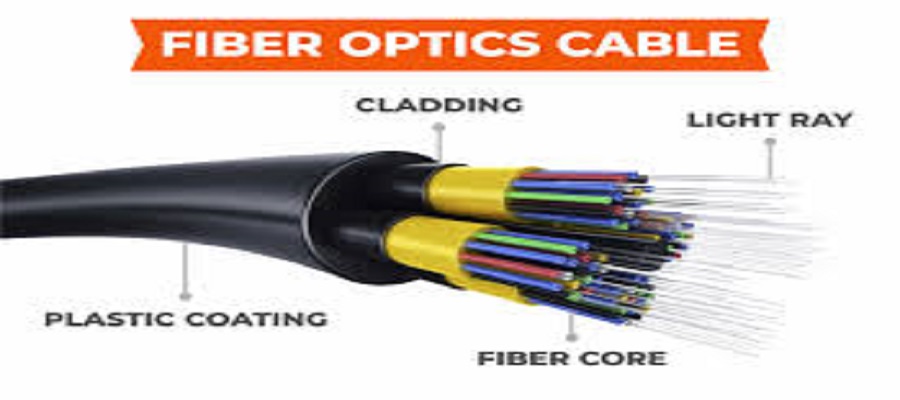
Nigeria’s telecom operators recorded 155, 397 fibre-cut incidents between April and May 2026, and these they blame on why internet or calls suddenly stop working.

Data from the Nigerian Communications Commission (NCC) showed fibre-cut incidents increased from 74 276 in April to a record 79 121 in May, bringing the two-month total to the highest level recorded by the industry.
This represents a 2 428% increase from the 5 934 incidents reported during the first quarter of 2026.
Vandalism remained the leading cause of fibre cuts, accounting for more than 54 000 incidents despite telecom infrastructure being designated as Critical National Information Infrastructure, a classification intended to strengthen protection of key digital assets.
Also road construction constantly damages fiber where iggers and machines tear up buried cables during road repairs or construction.
Even with all these, some state governments make it hard for companies to fix cables quickly across different areas with all manners of fees and levies.
The NCC designation provides for penalties of up to 10 years’ imprisonment for offenders, but operators continue to face widespread infrastructure damage.
Proposed solutions, including Nigeria’s Dig-Once policy and AI-powered fibre sensing technologies, have yet to achieve widespread adoption.
The NCC is developing a cost-based framework for shared underground duct infrastructure, while operators are exploring AI-powered fibre sensing technologies that can detect cable damage in real time and improve network resilience.
Nigeria is pursuing ambitious broadband targets under its National Broadband Plan and has expanded fibre deployment to about 35 000 kilometres.
However, infrastructure protection has not kept pace with network expansion, leaving subscribers vulnerable to unreliable connectivity despite continued operator investment.
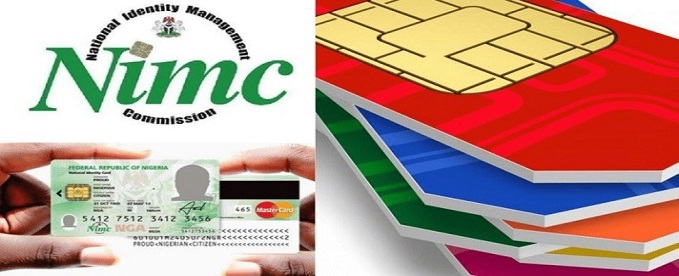
National Identity Management Commission (NIMC), has explained why kidnappers and terrorists are not always traceable despite the country’s expanding digital identity infrastructure.

NIMC explanation pointed to a simple but significant gap in the system.
Abisoye Coker-Odusote, director-general of the agency said that: “A lot of the time, you find out the kidnappers use the phones of the people they have abducted, which means how do you trace them because they are not using their own phones?” she said.
Coker-Odusote spoke during an appearance on Channels Television, where she was asked to explain why criminals remain difficult to trace despite the mandatory NIN-SIM linkage policy.
She said criminals frequently frustrate investigations by using mobile phones belonging to their victims, instead of their own registered lines.
“We already know the NIN is the foundational identity for the security architecture, but a lot of the time, you find out the kidnappers use the phones of the people they have abducted. Which means, how do you trace them because they are not using their own phones?” she said.
She also suggested that some criminal elements involved in kidnapping operations may not even be captured in Nigeria’s identity database.
“There is a theory that it may be possible that these kidnappers are not Nigerians and are brought into the country 48 or 72 hours before a kidnapping takes place specifically for that purpose. I’m not insinuating anything, but if that were the case, they naturally would not be captured in our database,” she added.
The comments have revived questions about whether expectations placed on the NIN-SIM linkage have exceeded what the system was designed to deliver.
The NIN-SIM linkage exercise was introduced by the Nigerian Communications Commission (NCC) in collaboration with NIMC to strengthen identity management, eliminate anonymous SIM ownership and support national security.
Over the years, the exercise resulted in millions of subscribers linking their SIM cards with their National Identification Numbers, while telecom operators also deactivated millions of lines that failed to comply with regulatory directives.
Earlier, the NCC maintained that the policy was aimed at improving the integrity of Nigeria’s SIM registration database, strengthening identity verification and supporting security agencies in criminal investigations.
The regulator also described the exercise as an important component of the country’s digital economy and national security framework.
Telecommunications operators have consistently maintained that while they play a critical role in implementing the NIN-SIM linkage policy, they are not responsible for tracking criminals.

NBC Scraps Annual Digital Access Fee on DSO

Surge in Fibre Cuts Hobbles Service Provisioning

Why Bandits, Kidnappers are Hard to Trace despite NIN-SIM Linkage – FG

First Securities Brokers Empowers Nigerians to Trade in the Stock Market with the Launch of FirstInvest App

Quest Merchant Bank Hosts Great Place to Work® Nigeria Study Mission

NRC, Ponzi Scheme Collapses Resulting Loss of Billions of Naira
Nigeria Launches FreeTV Nationwide

NASENI Moves to Digitize CCB’s 5m Assets Declaration and Operations

Lebara Nigeria Launches Lebara Play, Africa’s First Telecom-Owned Micro-Drama Platform

CANAL+ Partners Samsung to Pre-Load DStv Stream on New Samsung TVs In Nigeria, Other African Countries




 Telecom3 days ago
MTN Nigeria Slashes Cost of Broadband Internet Router, Unwraps New Data Bundles for Low-Budget Users

 E-Financial3 days ago
Nigerians Accumulate $59Bn in Cryptocurrency Assets —FDC

 E-Financial3 days ago
Flutterwave Partners Xoom on Transfers into Nigeria

 General News3 days ago
Nearpays, Nigerian Fintech Becomes First African Startup to Win UN’s AI for Good Innovation Factory

 News3 days ago
DataPro Upgrades Dangote Cement’s Credit Rating to AA+

 Telecom3 days ago
Nokia’s 14 Years of Mobile-Phone Supremacy Ended in an Afternoon

 E-Business3 days ago
Tinubu Orders NIMC to Enrol Every Nigerian by End of this Year – DG

 General News3 days ago
Fintech Brands Should Communicate Right in a VUCA Economy