

Telecom
NCC/MTN Reach 3-Year Payment Agreement, MTN to List on NSE

MTN Nigeria and the Nigeria Communications Commission (NCC) have allegedly reached an amicable settlement in the matter of the N1.04 Trillion fine imposed by the Regulator in October 2015 for MTN’s delay in disconnecting 5.1 Million improperly registered lines within the prescribed deadline.
Further to several weeks of negotiations between MTN, NCC and the Federal Government, the following agreed terms have been announced. MTN will pay the NCC the sum of pay N330billion over the next three years under an agreed payment tranche.
In addition to the monetary settlement, MTN Nigeria undertakes to: subscribe to the voluntary observance of the Code of Corporate Governance for the Telecommunications Industry and will ensure compulsory compliance.
The company also undertakes to take immediate steps to ensure listing of its shares on the Nigerian Stock Exchange as soon as is commercially and legally possible.
And, always ensure full compliance of its license terms and conditions as issued by the NCC.

Mr. Ferdi Moolman, MTN Nigeria CEO, was quoted in a statement by the Company on Friday afternoon quoted that, “MTN Nigeria once again offers its most sincere apologies for the series of unfortunate events that led to the imposition of the fine.” Elaborating further, he said, “It was of critical importance to reach a solution that would be of universal benefit to all stakeholders given the importance of the ICT industry in Nigeria and its tremendous impact on socio-economic growth. Along with the authorities, we believe that has been achieved.”
Regarding the company’s undertaking to list, Moolman said “MTN Nigeria is undoubtedly one of Nigeria’s success stories. Broader public participation exemplifies this.”
It will be recalled that the initial fine of N1.04 Trillion was later adjusted by 25% to N780 billion. MTN Nigeria considered the fine inimical to the sustainability of its business and sought judicial determination in December 2015 to protect the extensive local ecosystem, valued and supported by MTN’s business.
However in February 2016, at the request of the Federal Government, MTN announced the withdrawal of its case against NCC and made an initial “goodwill” payment of N50 Billion in order to create a conducive atmosphere for further negotiations.
At the time, MTN Nigeria’s CEO Ferdi Moolman said, “This is another manifestation of good faith and intent by MTN Nigeria. We have the equally good intentions of the Nigerian authorities and the strength of our mutual commitment to an amicable resolution. The high priority that the Government is giving to the sustainability of the industry assures us of a truly integrated approach amongst all parties, to the growth of ICT as a critical enabler of socio economic development in Nigeria.”
Commenting on the final resolution of the NCC fine, Phuthuma Nhleko, MTN Group Executive Chairman, expressed his thanks to the Federal Government of Nigeria for the spirit in which the matter was resolved saying “this is the best outcome for the company, its stakeholders, the Federal Government and the Nigerian people and the relationship between MTN, the Federal Government and the NCC has been restored and strengthened.’’
Meanwhile, a statement signed by Tony Ojobo, director, Public Affairs at NCC, shows that MTN will now pay N330billion over the next three years.
This amount, NCC said, includes the “goodwill” payment of N50Billion earlier made by MTN to the government.
“The balance of N280Billion will be made in six tranches in the following order. By the terms of agreement, MTN will pay N30Billion into NCC’s Treasury Single Account (TSA) with the Central Bank of Nigeria (CBN) 30 days from the date of the agreement dated June 10, 2016.
Other dates of payments include: March 31, 2017- N30Billion; March 31, 2018- N55Billion; December 31, 2018- N55Billion; March 31, 2019-N55Billion and the balance will be in May 31, 2019- N55Billion.
The agreement and resolutions were signed by Executive Vice Chairman (EVC) of NCC, Prof. Umar G. Danbatta, NCC Commission Secretary, Mr. Felix Adeoye, Chief Executive of MTN, Fredinand (Fredi) Moolman and MTN’s Company Secretary, Mrs. Uto Ukpanah, and witnessed by Mr. Tony Ojobo, NCC, Director, Public Affairs; Mr. Usman Malah, Chief of Staff to the EVC, NCC; Ms Helen Obi, Assistant Director, Legal, NCC and Ms. Amina Oyagbola, Corporate Executive, MTN.
The NCC statement also indicates an agreement was reached that MTN shall undertake the followings:
“Tender an apology in line with the apology previously tendered in correspondences relating to this matter to the Government of Nigeria and Nigerians within the one month of the execution of this Agreement;
“Subscribe to the voluntary observance of the Code of Corporate Governance for the Telecoms Industry and would ensure compulsory compliance when the said Code is made mandatory for the telecommunications industry; and
“Undertake to take immediate steps to ensure the listing of its shares on the Nigerian Stock Exchange as soon as commercially and legally possible after the date of execution of this Settlement Agreement.
Both parties agreed that these terms of settlement cannot be altered, varied, annulled or modified in any respect, except by writing duly executed by both parties; and the terms of settlement constitute all the terms and conditions of the settlement and supersede and replace any previous offers, representations and terms.
It will be recalled that the NCC on October 20, 2015, imposed a fine of N1.04Trillion on MTN for infraction of the provisions of the Nigerian Communication Commission (Registration of the telephone subscribers) Regulations, 2011; for failure to disconnect 5.1million improperly registered lines within the prescribed deadline.
In arriving at the agreement, the EVC said our decision was taken based on professionalism and global best practices, and in line with the NCC core value “to be fair, firm and forthright”
According to the EVC, the Commission has always carried industry and stakeholders along in taking transparent regulatory actions, adding that at no point will the regulator do anything to jeopardise the business health of the entire sector.
“We were careful not to take decisions that were likely to cripple the business interest of the operators we regulate. Besides, the downturn of the global economy is biting hard on everybody and every sector, so we must therefore be sensitive and flexible in our decisions”
This perhaps is one of the attractions of the global communities to the activities of the Commission through multiple awards recently.
A week ago, the NCC got the European Award for Best Practices by the European Society for Quality Research (ESQR) based in Switzerland. The award ceremony involved over 63 Countries and global business giants like United Air-lines, Cathay Pacific airlines amongst others took place in Brussels, Belgium.
Only two weeks ago, the NCC was named Africa Regulator of the year in Accra, Ghana.
“Africa and global communication investors are excited about the Nigerian telecommunication environment and have made Nigeria investors first choice”, Danbatta explained.


Clydestone Ghana Plc has filed a writ of summons and statement of claim against MTN Ghana, MTN Group Limited and Mobile Money Fintech Limited, alleging unauthorized use of its intellectual property.

The company announced the court action at the Ghana Stock Exchange, confirming proceedings in the Commercial Division of the High Court of Ghana.
The case relates to work commissioned in 2007 that Clydestone alleges was later used without authorisation or compensation.
Clydestone said the claim involves proprietary intellectual property, confidential commercial information and operational methodology developed during the engagement. The company is seeking declarations, damages and equitable remedies.
In a statement, Clydestone said MTN Ghana engaged it in 2007 to develop a commercial and operational framework for a mobile money business.
“The work was developed and delivered by the company’s founder and Group CEO, Paul Jacquaye, and included a full mobile money ecosystem covering the commercial model, operational architecture, implementation methodology and business case.”
Clydestone said the work was commissioned on the understanding that a non-disclosure agreement and memorandum of understanding would be signed.
It alleges these agreements were not finalised despite repeated requests.
The company further alleges MTN Ghana later used its proprietary work and methodology without authorisation or compensation, including in MTN Mobile Money Ghana and other markets.
Clydestone said the alleged use has continued since the launch of MTN Mobile Money Ghana in 2009.
“The wrongful use of that work has been ongoing since 2009. What has changed is the availability of independently verifiable information that documents its scale and commercial significance,” the company said.
It cited the GSMA State of the Industry Report on Mobile Money 2026 and MTN Ghana’s 2025 annual report as evidence of the platform’s scale.
According to Clydestone, the reports show approximately 19.3 million active users and annual revenue of about GHS 6.0 billion ($516m).
The company said it reviewed its records following these publications and concluded there were sufficient grounds to initiate legal proceedings.
It added that it has received no payment or acknowledgement for the work since December 2007, and that pre-action correspondence in 2026 received no substantive response.
“The Board of Directors has unanimously authorised the commencement of these proceedings,” the company said.
Jacquaye said: “This case is about accountability for commissioned intellectual property.
“When independent publications in 2025 and 2026 revealed the scale of the mobile money business, we reviewed all documentation relating to the original engagement and concluded these proceedings were necessary.”
MTN Group Limited, named as a defendant, had not commented at the time of publication.

National Information Technology Development Agency (NITDA) has reaffirmed its commitment to expanding digital inclusion through strategic partnerships aimed at equipping underserved communities with digital skills and access to technology.

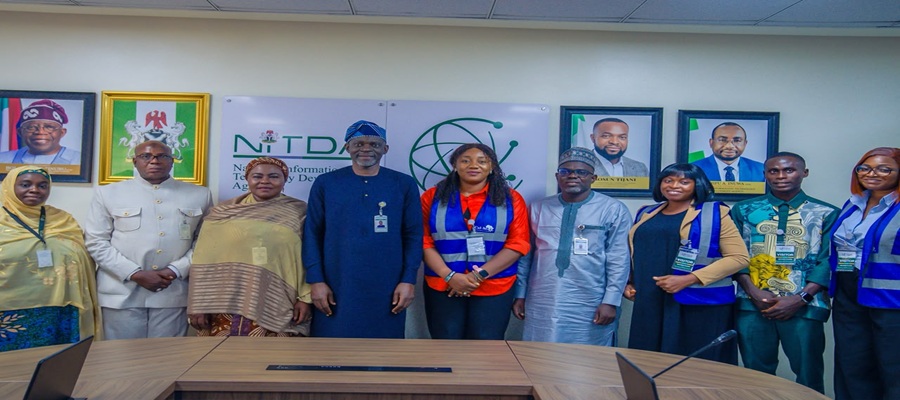
Mr. Oladejo Olawunmi, Director, Digital Development Services representing the Director General of NITDA, and the Executive Director of Cal-Maji Foundation, alongside members of their respective delegations, pose for a group photograph following a strategic engagement on advancing digital literacy, capacity building, and digital inclusion for women, youth, and underserved communities.
Director-General of NITDA, Kashifu Inuwa, made the commitment during a courtesy visit by the Executive Director of Cal-Maji Foundation, Mrs Faith Ayuba, to the agency’s headquarters in Abuja.
Represented by the Director of Digital Development Services, Mr Oluwunmi Oladejo, Inuwa said collaboration with community-based organisations remained central to NITDA’s vision of ensuring that no Nigerian was left behind in the country’s digital transformation journey.
He noted that feedback from beneficiary communities demonstrated the long-term impact of the agency’s interventions across the country.
“It is always gratifying to receive feedback from communities that have benefited from our interventions.
“Many of these projects were implemented years ago, and it is rewarding to know they are still creating opportunities,” he said.
The NITDA boss explained that the agency continued to monitor the performance of its intervention centres nationwide while leveraging emerging technologies to enhance digital learning and virtual capacity-building.
According to him, the National Digital Literacy Framework remains the foundation of NITDA’s efforts to equip children, students, artisans, farmers, professionals and other groups with digital competencies needed in a technology-driven economy.
Responding to requests for additional support, Inuwa disclosed that the agency would consider training community-based instructors to sustain digital literacy initiatives at the grassroots.
He encouraged the foundation to submit a formal request, accompanied by evidence of activities at its digital centre, to facilitate further intervention.
The director-general, however, acknowledged that maintaining internet connectivity across numerous intervention centres nationwide remained a major funding challenge.
He stressed the need for innovative financing models and stronger collaboration to ensure the sustainability of digital inclusion projects.
Earlier, Ayuba commended NITDA for its openness to partnerships and its commitment to supporting initiatives that deliver measurable impact in underserved communities.
She described the agency as one of the few government institutions that prioritised impactful programmes over personal connections.
According to her, the Cal-Maji Foundation focuses on improving access to education, strengthening food systems, enhancing food security and providing social protection for women and young people, particularly in remote communities.
Ayuba said NITDA’s Knowledge Access Centre, established at the foundation’s community school in a border community in Kogi State, had significantly transformed learning by providing students and residents with access to computers, internet services and digital education.
“The ICT centre became an equaliser.
“Young people who ordinarily would never have had access to computers or the internet suddenly had the opportunity to acquire digital knowledge.
“We came back simply to say thank you because this partnership has changed lives,” she said.
She disclosed that more than 1,000 children had benefited from the foundation’s educational programmes.
Ayuba also presented a former student who progressed from the community school to a Nigerian university after utilising the digital resources available at the centre.
She described the student’s achievement as evidence of the enduring impact of the collaboration.
The foundation’s executive director appealed for deeper collaboration through the training of community instructors, upgrading of computer systems and expanded access to NITDA’s digital capacity-building programmes.
She stressed that rural communities must not be left behind as Nigeria advances in emerging technologies such as artificial intelligence, cybersecurity and digital innovation.
The meeting ended with both organisations reaffirming their commitment to strengthening collaboration to expand digital opportunities, promote inclusive technology adoption and support Nigeria’s digital economy agenda.

National Information Technology Development Agency (NITDA) has unveiled the National Software Quality Assurance (SQA) Framework to improve software quality, strengthen cybersecurity and enhance public confidence in Nigeria’s digital infrastructure and government services.

The framework, approved by the Director-General of NITDA, Kashifu Inuwa Abdullahi, under the provisions of the NITDA Act 2007, establishes national standards for the design, testing and deployment of software across Federal Government institutions, regulated industries and the broader digital ecosystem.
According to the agency, the initiative is aimed at reducing costly information technology failures, improving service delivery and ensuring that software powering critical national infrastructure meets globally accepted quality standards.
The framework comprises three regulatory instruments, namely the National Software Development Guideline, the National Software Testing Guideline and the Software Testing Organisations Licensing (STOL) Guideline.
NITDA explained that the National Software Development Guideline mandates structured software development processes, secure coding practices based on the Open Worldwide Application Security Project (OWASP), standardised system documentation and compliance with Web Content Accessibility Guidelines (WCAG) 2.1 AA for citizen-facing digital services.
The National Software Testing Guideline introduces mandatory testing benchmarks covering software functionality, cybersecurity, system performance under peak demand and interoperability before deployment.
Under the STOL Guideline, independent Licensed Software Testing Organisations (LSTOs) will be accredited and regulated to evaluate and certify software before it is deployed.
The agency stated that all Federal Government software projects would now be required to undergo independent third-party testing and obtain official certification before deployment.
It added that compliance with the framework would become a mandatory requirement for obtaining IT Project Clearance.
To strengthen risk management, the framework introduces a three-tier software classification model based on the criticality of systems.
Under the classification, Class A covers high-risk and critical national infrastructure such as core banking systems, national identity platforms and electricity grid control systems.
Class B applies to medium-risk enterprise platforms, while Class C covers lower-risk internal software applications.
NITDA said Class A systems would undergo more rigorous security assessments, including advanced penetration testing and specialised audits conducted by top-tier accredited software testing organisations.
The agency identified three major benefits of the framework.
It said the initiative would improve the reliability and security of digital public services, protect government investments from software failures and cyber threats, and enhance service delivery to citizens.
It also noted that regulating independent software testing would stimulate the growth of Nigeria’s software assurance industry, create employment opportunities for technology professionals and promote indigenous innovation.
According to NITDA, the framework will further strengthen international confidence in locally developed software, enabling Nigerian technology companies to compete more effectively in global markets and attract foreign investment.
Speaking on the development, Inuwa said quality remained fundamental to building trust in Nigeria’s digital economy.
“Quality is the foundation of digital trust.
“With this Framework, every software solution serving Nigerians, whether built for government or the private sector, will meet clear national standards for security, reliability and interoperability.
“This is how we modernise government technology and position Nigerian software to compete on the global stage,” he said.
The agency disclosed that the framework would take full effect in the second quarter of 2027.
It said the implementation period would include nationwide stakeholder engagement, capacity-building programmes and the accreditation of software testing organisations.
NITDA added that an Expression of Interest (EOI) would soon be issued to qualified organisations seeking licences to operate as independent software testing bodies under the new regulatory regime.

Nwokolo, Nollywood Actor Claims Internet Fraud is “Keeping Economy Afloat’

SEC Begins Full e-Registration for Capital Market Operators

Elon Musk Launches Invite-only X Money with Visa Debit Card

CBN Fines Banks N430m for Ignoring Customers’ Complaints

Kaspersky Uncovers New Mirage Kitten Malware Used in Cyber-espionage Campaign Across Africa, Others

NRC, Ponzi Scheme Collapses Resulting Loss of Billions of Naira

EFCC Busts NIS Visa Overstay Racket, Uncovers N700m in an Account

From Scarcity to Scale: What Africa Can Learn from India’s Agricultural Transformation

Tokenization, Blockchain Technology will Transform Financial Institutions – IMF

BON Establishes Six Ad Hoc Committees to Modernize Broadcasting




 Telecom2 days ago
Fact-Check: Elon Musk’s “Tesla Pi Phone” is Internet Rumor

 News3 days ago
History as Lagos Becomes First Nigerian State to Launch Greenhouse Gas Registry

 E-Business3 days ago
UNN to Partner Firm on AI, Smart Mobility Innovation Centre

 Telecom3 days ago
AI Investment Gap Threatens Africa’s Future Growth

 Telecom3 days ago
AMCON Puts ntel Up for Sale, Seeks Investors

 E-Financial3 days ago
Remita Raises Alarm Over Nigeria’s Digital Divide, Calls for More Investment

 E-Financial2 days ago
Malpass, Ex World Bank Chief Raises Alarm over Nigeria’s Secretive Debt Structures

 Telecom2 days ago
How and Why Apps Deplete Data – ALTON