

News
NGO Accuses Police of Raking in N2.5Bn Monthly through Bribes


International Society for Civil Liberties & the Rule of Law (Intersociety), Onitsha-based frontline research-based rights group, has described the Nigeria Police Force (NPF) as the most corrupt agency of the federal government, claiming that the police collect some N2.5 billion monthly as bribes through proxies.
The Anambra State-based Intersociety also said in its latest report that men and officers of the Nigeria Police, military and paramilitary formations raked in about N100 billion from roadblocks in the country’s South-East region in only 40 months: August 2015 – December 2018.
A Special Report released on Monday entitled “Welcome To Southeast Region-Nigeria’s Headquarters Of Official Highway Robbery”, signed by Emeka Umeagbalasi, Anayo Okoli, Chidinma Udegbunam, Esq., Obianuju Joy Igboeli, Esq. and Chinwe Umeche, Esq, the group declared the police under the watch of outgoing IGP Ibrahim Idris as “the most corrupt security organization in Nigeria with chronically incurable corruption indices.”
According Intersociety, Nigeria’s Southeast Region has become the country’s headquarters of official highway robbery with largest number of security roadblocks in the country.
This special report: welcome to Southeast Region-Nigeria’s headquarters of official highway robbery, is originally contained in Intersociety’s just released special report, titled: Under Buhari & Osinbajo: Many Have Gone & Crippled for Life in Eastern Nigeria; an 82-page research report attached with a 62-page photo album of victims of the military massacre operations; perpetrated between August 2015 and September 2017 or a period of two years.
The report: Southeast as Nigeria’s headquarters of official highway robbery also arises from a sub research done by Intersociety to ascertain the economic costs of the military massacre operations in Eastern Nigeria particularly in the Southeast and the Igbo Delta area of Delta State. The economic costs of the Nigerian military massacre operations in Eastern Nigeria was a sub-research done to ascertain the quantifiable costs of the massacre operations and their negative effects on general economy and its activities in the Region, covering August 2015 to December 2018 or a period of 40 months.
The official highway robbery in Southeast Nigeria is targeted at exposing the rabid corruption going on in the country’s security forces particularly the Nigeria Police Force and the Nigerian Army as well as paramilitary formations stationed or drafted to the Southeast Roads and others linking the Region with the rest of the country.
The research and its findings not only made mockery of the present central Government’s so called “anti corruption crusade” but also exposed the NPF under outgoing IGP Ibrahim Idris as the most corrupt security organization in Nigeria with chronically incurable corruption indices.
Police corruption under the outgoing IGP particularly roadblock, station or custody extortion or bribery is promoted has digitally tripled and risen to an apogee.
The outgoing IGP Idris, who has severally been accused of corruption and abuse of office, is one of the loudest noise makers or paper noise makers against corruption in Nigeria, yet he is still seen my most Nigerians as a vicarious promoter of police corruption in the country.
Apart from the outgoing IGP reportedly seeking for an illegal tenure extension from the country’s ruling cabal, having been due for legal retirement on 3rd January 2019; he had probated and reprobated on the issue of “police roadblocks in Nigeria” particularly in the Southeast Region.
Lately on 17th December 2018, he ordered for “immediate removal of all police roadblocks in Nigeria to facilitate free movement or flow of traffic during the Christmas season”. According to the Guardian Newspaper report of 17th December 2018, the IGP’s order was “with immediate effect”. The outgoing IGP also warned the newly recruited 6,000 police constables “against engaging in corruption and denting the image of the Nigeria Police Force, which has maintained a zero corruption stance”. According to Punch newspaper report of 22nd December 2018, titled: no place for corruption, indolence in today’s Nigeria Police, IG warns new officers, the outgoing IGP’s warning was given to the newly recruited 6,000 police constables in Nigeria. He specifically gave the anti corruption “warning” in Ibadan, Oyo State in Southwest Nigeria during the passing out of 285 police constables June 2018 intakes that graduated from the Police Training College, Eleyele, Ibadan in Oyo State.
Contradictorily, Intersociety’s research findings contained in this special report have found the NPF under outgoing IGP Ibrahim Kpotum Idris as Nigeria’s den of official corruption, perpetrated in blue collar patterns. As a matter of fact, the Nigeria Police force is stinking faeces of corruption in the country. Apart from the textual content of this special report, it is also backed with 16 photos and two video clips. The photos were pictured or captured by Intersociety’s field under-covers and other concerned members of the public.
Attached below, with each graphically described, the 16 photos were taken in different locations within Southeast Region including in the cities of Onitsha and Aba with most of them taken in early December 2018. One of the two video clips involves a member of the Mobile Police Force (MPF) caught collecting and pocketing bribe from a commercial motorist on a Southeast Road while the second video involves a young male passenger travelling to Port Harcourt with AGOFERE Motors from the Southeast, shot on his leg and critically wounded by one of the mobile police personnel that mounted a roadblock along Aba-Port Harcourt Expressway in Rivers State.
The passenger was shot following arguments over N50 roadblock extortion. The police officers manning the roadblock including the one that shot and wounded the passenger later converged to take him to hospital. Such is a clear instance of what innocent passengers and commercial motorists and other road users pass through on daily basis in the hands of personnel of the NPF and other security personnel stationed on Southeast Roads. The 16 photos attached below involve police personnel, soldiers and civilian extortionists hired by soldiers; caught in the act or extorting money or collecting bribes from commercial motorists and other road users on Southeast Roads.
The compliance or otherwise of the outgoing IGP’s order for “the removal of all roadblocks across the country” particularly in the Southeast Region and roads linking the Region with the rest of the country was also monitored by Intersociety’s monitoring team and as expected, the IGP’s directive ended up as “a paper directive or order”.
Intersociety’s monitors had crisscrossed several Federal and State roads on Saturday, 22nd December and Sunday, 23rdDecember 2018 and found the IGP’s directive in gross breach. Roads visited included Atani-Ogwuikpere, Onitsha-Owerri and Asaba-Benin Federal Roads as well as Onitsha Niger Bridge end and Upper Iweka/Borrowmeo Roundabout end of the Onitsha-Enugu Expressway and couple of State roads. Calls made across Abia, Enugu, Ebonyi and Imo States clearly indicated same results or failed compliance with the outgoing IGP’s directive.
At Atani-Ogwuikpere Federal Road and its adjoining Ozubulu Road in Ogbaru, Anambra State, seven police roadblocks were sighted on Saturday, 22nd December 2018. Between Upper Iweka end and Ozubulu end of the Onitsha-Owerri Dual Carriage Way, ten police roadblocks were sighted same date at each of the two lanes making up the Dual Carriage Way. Between Coker Junction in Asaba and the entry point or Asaba end of the Niger Bridge, which is less than one kilometer, five roadblocks (three police roadblocks and two FRSC roadblocks) were sighted.
At each of these roadblocks visited, it is “business as usual”. Vehicles particularly private vehicles were indiscriminately being parked or delayed for several minutes on queue; causing serious gridlock or long traffic jams, before being impounded for silly reasons such as “checking vehicle papers”. Between Asaba Coker Junction and the entry point of the Niger Bridge in Delta State, the personnel of the Nigeria Police and the Federal Road Safety Corps (FRSC) were busy parking vehicles and collecting bribes, causing queue leading to blockage of the Onitsha Premier Brewery and Niger Bridgehead axis of the Onitsha-Enugu Dual Carriage Way particularly the lane leading into Asaba.
Each of the commercial vehicles in the named area is instantly forced by police personnel to part with N50 or N100 notes while private vehicles are indiscriminately parked and impounded for “incomplete vehicle papers or particulars”. For personnel of the FRSC, theirs include collection from each of the commercial vehicle drivers, using hired civilians, of N200 to N500 notes, as case may be, for “overload“. The personnel of the FRSC also impound and book private vehicles with reckless abandon, for “traffic offenses” or not having “complete traffic toolkits” or having “faulty break and trafficator light or signs”.


News
Galaxy Backbone Confirms Over 150,000 Active Official Government Email Accounts, Clarifies Status of GOVMAIL


Galaxy Backbone Limited (GBB), Nigeria’s foremost ICT infrastructure and shared services provider to the Federal Government, wishes to reiterate and clarify the availability, maturity, and ongoing expansion of the Federal Government’s official email infrastructure, widely known as GOVMAIL.

GOVMAIL is a secure and centralized official email platform established for use by Ministries, Departments, and Agencies (MDAs) to facilitate professional, auditable, and efficient communication across all arms of government.
The platform was launched by the Office of the Head of the Civil Service of the Federation, Mrs, Didi Esther Walson-Jack as part of a broader digital transformation agenda aimed at modernizing public service workflows and reducing reliance on paper-based correspondence and fragmented, external email services.
Recent statements by the Head of the Civil Service of the Federation, Mrs. Didi Esther Walson-Jack, underscore the strategic importance of GOVMAIL in the wider push towards a paperless civil service.
In late 2025, she announced that over 100,000 official GOVMAIL accounts had been created for civil servants across federal MDAs under an expanding paperless policy and that the transformation reflects a clear shift away from traditional paper correspondence to secure digital communication at scale. Today, that number has grown to over 150,000 Official government email accounts, current in use by government workers across MDAs.
Galaxy Backbone also affirms that these email accounts operate within a protected sovereign government domain environment hosted on secure local infrastructure, supported by enterprise-grade cybersecurity architecture.
The platform underpins centralized identity management and ensures compliance with national data protection standards, reinforcing accountability, audit-trail visibility, and overall digital governance efficiency.
In addition to GOVMAIL, Galaxy Backbone operates secure national Tier III and Tier IV Data Centres, a robust National Fibre Backbone, a Security Operations Centre (SOC), and a Network Operations Centre (NOC) that jointly power mission-critical government digital services. This infrastructure is closely aligned with the Federal Government’s digital economy strategy and its efforts to deepen digital service delivery, transparency, and efficiency across MDAs.
To accelerate adoption and ensure that every government worker who is expected to have an official email has one, GBB is working collaboratively with MDAs to close existing gaps and onboard remaining staff within the shortest possible time. These coordinated efforts reflect the shared objective of equipping public servants with the digital tools necessary for responsive, efficient, and secure inter-agency communication.
Galaxy Backbone remains committed to working with stakeholders across the different arms of government to sustain and build on this progress. The company appreciates the emphasis placed on strengthening digital governance and remains ready to provide technical clarifications and support collaborative engagements that further advance Nigeria’s digital public service ecosystem.
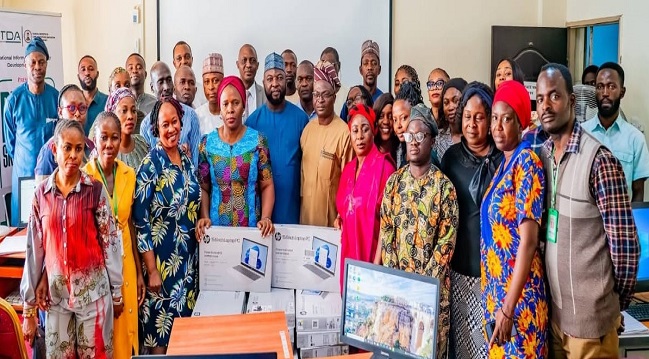
In a strategic move to modernise Nigeria’s public service, the National Information Technology Development Agency (NITDA) has concluded a specialised digital capacity-building programme for the Federal Character Commission (FCC).

The initiative, which included the donation of 35 laptops, aims to transition the Commission from manual processes to a data-driven oversight model, ensuring more transparent and equitable representation across all government MDAs.
In alignment with President Bola Ahmed Tinubu’s key priority area of reforming the economy for sustained and inclusive growth, as well as improving governance for effective service delivery, it forms part of NITDA’s Digital Literacy for All (DL4All) programme aimed at strengthening digital capacity across public sector institutions and building a workforce equipped to drive Nigeria’s digital transformation agenda.
The training, held at the Commission’s headquarters, focused on enhancing participants’ competencies in critical areas such as data analysis and data management, skills considered essential to improving institutional performance and service delivery.
Representing the Director General of NITDA, Kashifu Inuwa CCIE, the Acting Director of Digital Literacy and Capacity Building, Dr Ahmed Yusuf Tambour, explained the purpose of the intervention.
“We are here at the Federal Character Commission to carry out a training for staff of the Commission in the area of digital literacy to enhance their proficiency,” he stated.
He noted that the training was deliberately tailored to align with the Commission’s statutory responsibilities.
“We are particularly focusing on data analysis and data management, because this really aligns with the core mandate of the Commission,” he said.
The Federal Character Commission, which is responsible for monitoring and ensuring equitable representation in public service across Ministries, Departments and Agencies (MDAs), relies heavily on accurate and well-managed data to carry out its oversight functions.
By strengthening staff capacity in data handling and digital tools, NITDA aims to enhance the Commission’s ability to manage nationwide datasets efficiently and transparently.
Describing the programme as impactful and well-received by participants, Inuwa said, “So it’s been a great journey. We’ve trained 35 participants here, and the training has been very well received.”
As part of the intervention, NITDA donated 35 laptops to the Commission to facilitate continuous learning and enable staff to seamlessly integrate digital tools into their daily operations.
The gesture is expected to reinforce the sustainability of the training outcomes and improve workflow efficiency within the Commission.
Expressing optimism about the long-term benefits of the initiative, Inuwa added, “We are hoping that this will help the Commission to manage the very, very important data that they collect across all MDAs.”
The intervention reflects NITDA’s sustained commitment to deepening digital inclusion within government institutions under the Renewed Hope Agenda. By equipping public servants with practical digital skills and the necessary tools, the Agency is advancing institutional efficiency, strengthening data-driven decision-making, and supporting the Federal Government’s vision of a modern public service capable of driving inclusive national development and economic reform.

Nigeria and the European Union have inked a scientific and technology deal that grants access to about €100 billion in research and innovation funding for scientists, start-ups, and public institutions.

The agreement is a significant boost to the country’s tech environment, providing new prospects for research, innovation, and start-up growth.
The arrangement was signed in Abuja by Gautier Mignot, head of the EU delegation to Nigeria and ECOWAS, and Kingsley Udeh, Nigeria’s minister of innovation, research, and technology.
After more than two decades without a formal framework, the agreement transfers cooperation from informal to structured, large-scale collaboration.
The European Commission’s Horizon Europe programme, the world’s largest public research budget, is at the heart of the deal, which will bring together Nigerian researchers and firms to work on cross-border projects in health, agriculture, climate, food systems, and new technologies.
Udeh stated that the relationship puts Nigeria as a continental powerhouse for science and enterprise, with an emphasis on translating research into commercially viable products and assisting startups in scaling into global players.
Gautier Mignot noted that Nigerian organisations are already active in several Horizon-backed and global health research projects, but the new pact provides a legal and political framework to significantly expand participation, funding access and visibility.
To ensure delivery, both parties created a Joint Science and Technical Cooperation Committee to drive implementation and track measurable outcomes.
Beyond academia, the agreement aims to support innovators, boost university–industry collaboration, and help more Nigerian tech firms compete globally, strengthening Nigeria’s position as a leading startup hub in Africa.

Galaxy Backbone Confirms Over 150,000 Active Official Government Email Accounts, Clarifies Status of GOVMAIL

More 14m Farmers to Benefit from AfDB-backed Initiative

Dimension Data Nigeria Secures ₦20Billion Funding to Strengthen Digital Infrastructure

Newmark Webinar Explores How AI Could Transform Healthcare in Africa

Alerzo Liquidates Delivery Fleet as N4.38bn Moniepoint Loan Row Deepens

Kaspersky Launches OT Calculator to Align Cybersecurity Investments with Business Goals

Accidental Billionaire Opts for Jail Instead of Returning Money Credited Him by Mistake

New Horizons Nigeria Breaks Ground: First to Fuse Mandarin into ICT Curriculum

Kaspersky Brings more Transparency to Threat Detection with New Hunt Hub

NDPC Commits to Balancing Data Privacy, Protection Information




 News2 days ago
NITDA Equips Federal Character Commission with Data Tools to Drive Public Sector Reform

 Telecom2 days ago
Telecom Giant MTN Injects N1.0 Trillion CAPEX into Network Expansion

 E-Financial2 days ago
History is Watching: Tinubu’s Moment to Rescue Nigeria’s Stolen Future

 E-Business2 days ago
Kaspersky Discovers New Phishing Campaign Exploiting Google Tasks Notifications to Steal Corporate Credentials

 Telecom2 days ago
Samsung Unveils Galaxy S26 Series, Powered by Smarter, Background AI

 E-Financial2 days ago
Union Bank Assures Safety of Deposits Post-Cardoso MPC Remarks
- Telecom1 day ago
MTN Nigeria Posts Record N1.70 Trillion Pre‑Tax Profit, Declares N20 Dividend for 2025
 Telecom1 day ago
Dimension Data Nigeria Secures ₦20Billion Funding to Strengthen Digital Infrastructure