

General News
Nigeria and Looming Cyberwarfare

Cyberwarfare is no longer an abstract threat to countries—it is happening. It is a clear and present danger.
The recent systematic crash of the computer systems of banks and broadcast media in South Korea — reportedly the result of an attack that was widely speculated to have been launched by North Korea — points to vulnerability of nations to the new and unexplored area of cyberwarfare.
Today, advances in technology that connect utilities, industries and information in real time have changed the nature of the threats facing nations.
Digital networks could be used as a conduit to gas lines, power grids and transportation systems to silently deliver devastating cyberattacks to countries.
Case in point, a computer worm was discovered in June 2010 that is called Stuxnet.
The malware is spread via Microsoft Windows, and targets Siemens industrial software and equipment.
The Siemens industrial software and equipment infected is literally the equipment that runs the world as we know it.
These industrial systems run everything imaginable, traffic light systems, subway systems, power generating systems (including the grid and nuclear plants), food processing plants, warehouses, emergency alert systems, every form of manufacturing, hospitals, police and fire departments, and even the air traffic control systems.
The danger from this worm is that it preys specifically on industrial systems and has a very complex programmable logic controller (PLC) rootkit.
That means it can be programmed to target a specific operating system and take over the running of the program unbeknownst to even the most observant operator.
Terrorists are increasingly using online technology, including Google Earth and Street View, for attack planning.”
Concerns about potential damages that could be caused by cyber terrorism, have prompted official responses from responsible governments around the world.
In Nigeria either by ignorance or lack of knowledge or both; the federal government has been unable to secure its official websites thus raising questions over claims by the government of efforts to reduce the growing threat of violation of its digital presence.
Any cyber attack on Nigeria’s critical infrastructure will shut down the country because she lacks any form of protection,
Terrorists are increasingly using online technology to plan and disguise attacks and there will be more cyber-terrorism in the future.
The country’s security managers must understand that tackling these new and emerging threats requires that the country’s technology must constantly evolve and adapt.
The federal government must heed the warnings of experts who have called for building of “high technical skill” including the setting up of “ethical hackers” to protect networks by hacking and stealing vital information and later returning them to show their vulnerability.
Nigeria must also learn lessons from attacks that have happened elsewhere and prepare for the possibility that they could be replicated here.
Additionally, legislation that encourages participation by streamlining processes and reducing legal uncertainty for industry is necessary to help the public and private sectors be more responsive and accountable. In the process, care must be taken to protect privacy and civil liberties.



Federal government has announced plans to end the separation between Junior Secondary School (JSS) and Senior Secondary School (SSS) as part of efforts to improve school retention and reduce the high number of pupils dropping out before completing secondary education.

Tunji Alausa, minister of Education
Tunji Alausa, minister of Education, announced the proposal on Tuesday during the inauguration of the Ministerial Implementation and Monitoring Committee of the Universal Basic Education Commission (UBEC) in Abuja.
Alausa said the existing “disarticulation policy,” which requires junior and senior secondary schools to operate independently with separate principals, management structures and facilities, has failed to achieve its intended objectives and has instead worsened access to education.
According to him, the Federal Government will present a proposal to abolish the policy at the next meeting of the National Council on Education (NCE), the country’s highest education policymaking body.
“We have 20 million dropouts from primary school to JSS. Where are those students?” the minister queried.
“We also found we have 80,000 public primary schools and only about 15,000 junior secondary schools. That’s a one-to-eight ratio.”
He explained that the mismatch between the number of primary and junior secondary schools has created severe bottlenecks in the education system, leading to overcrowded classrooms at the junior secondary level while many senior secondary school facilities remain underutilised.
Alausa cited Kaduna and several northern states as examples where the policy has contributed to poor transition rates between basic and secondary education.
“This disarticulation policy has failed. We will phase it out. We can’t be creating positions because we want to create director-level appointments for people while we harm our education system. It’s about doing what is best for every Nigerian child,” he said.
The minister said the proposed reform forms part of broader efforts by the Tinubu administration to improve access to education, increase retention rates and enhance learning outcomes across the country.
He acknowledged previous shortcomings in tackling the out-of-school children crisis but expressed confidence that the current administration would reverse the trend.
“This government will not fail. We are fixing it,” Alausa declared.
At the ceremony, the minister also inaugurated the UBEC Ministerial Implementation and Monitoring Committee, chaired by Prof. Rashid Aderinoye, to supervise the execution of UBEC-funded Smart Schools, Bilingual Schools and Alternative Schools nationwide.
He said the committee had been tasked with ensuring that the projects are completed, handed over to state governments and opened for teaching and learning.
Although UBEC has invested in hundreds of Smart Schools and related educational projects across the country, Alausa lamented that many remain abandoned, unfinished or yet to admit pupils, describing the situation as an unacceptable waste of public resources.
He stressed that improving education requires more than constructing schools, insisting that completed facilities must become fully operational and accessible to learners.

Federal government has said that it plans to establish a National Skills Database as part of efforts to reduce unemployment, address the growing mismatch between available skills and industry needs, and strengthen workforce planning through data-driven policies.

The proposed database, to be developed under a Nigerian Skills Observatory, is expected to provide real-time information on the supply and demand of skills across sectors, enabling better job matching, improved policy formulation and targeted investments.
The plan was unveiled at the second National Skills and Industry Alignment Roundtable Series held in Abuja with the theme, “The Role of Data in Job Creation, Coordination and Linkages.”
Delivering the keynote address, Yemi Kale, group chief economist and managing director of Research and Trade Intelligence, Afreximbank, said Nigeria’s labour market challenge was no longer the absence of data but the inability to convert existing information into actionable intelligence.
“The challenge for us as a nation is not one of data accumulation. It is one of data integration and intelligence,” Kale said.
He explained that although vast amounts of information on education, employment, wages and skills development already exist across government agencies, educational institutions and the private sector, the data remains fragmented, making effective labour market planning difficult.
“Data tells you what exists. Intelligence tells you what is happening, what is likely to happen next and what actions should be taken,” he said.
Kale lamented that while Nigeria produces thousands of graduates annually, employers in critical sectors continue to struggle to recruit qualified workers, even as millions of Nigerians remain unemployed or underemployed.
“The problem is that employers are searching, workers are searching, policymakers are searching and investors are searching independently rather than collectively. Opportunities that should be visible remain hidden because the information needed to connect them is fragmented,” he said.
According to him, the disconnect has created structural inefficiencies that discourage investment, suppress productivity and prevent Nigeria from fully leveraging its youthful population.
He added that countries that successfully transformed their economies deliberately aligned education, skills development and workforce planning with the needs of industry.
Kale urged Nigeria to view its youthful population as an economic asset by ensuring young people acquire skills demanded by modern industries.
Speaking on the proposed National Skills Database, Rimam Nuhu, special assistant to the President on Workforce Development, said the platform would serve as the foundation of the Nigerian Skills Observatory.
“At the most foundational level, the Skills Observatory is to create a database on the demand and supply of skills,” Nuhu said.
He explained that the National Council on Skills, chaired by Vice President Kashim Shettima, would rely on data generated by the observatory to formulate evidence-based policies on workforce development.
“Skills development is an input for job creation. We have a market where there are a lot of skills mismatches. Understanding exactly where those shortages exist will help us plan better and improve workforce planning.
“Ultimately, that contributes to a more productive economy,” he added.
Nuhu acknowledged ongoing debates over whether Nigeria is facing an actual shortage of skilled workers or merely a mismatch between available skills and labour market demand, stressing that the database would provide the evidence needed to guide interventions.
Earlier, Akubo Adegbe, senior special assistant to the President on Coordination and Delivery, said the roundtable was convened to tackle the fragmentation of labour market information across government institutions and the private sector.
He noted that despite huge volumes of workforce data being generated daily, the lack of coordination often leaves policymakers without a comprehensive understanding of labour market realities.
“If our first Roundtable challenged us to better align skills with industry, this second Roundtable challenges us to better align information with action,” Adegbe said.
Also speaking, Massimo De Luca, head of Cooperation at the European Union Delegation to Nigeria and ECOWAS, said the EU would continue supporting Nigeria’s efforts to build a labour market capable of meeting investors’ needs.
“We have a shortage of skilled labour when it comes to big investment projects. On the other hand, we have a lot of untapped talent that is not adequately recognised.
“Those are realities that investors take into account,” De Luca said.
He commended the Office of the Vice President for leading reforms aimed at strengthening Nigeria’s skills development ecosystem.
The Federal Government’s plan comes amid persistent unemployment and skills mismatch in Nigeria, where many graduates remain jobless despite employers reporting shortages of qualified workers in critical sectors.
The National Skills Database will serve as the foundation of the proposed Nigerian Skills Observatory, an initiative designed to provide real-time labour market data to guide workforce planning, skills development and evidence-based job creation policies.

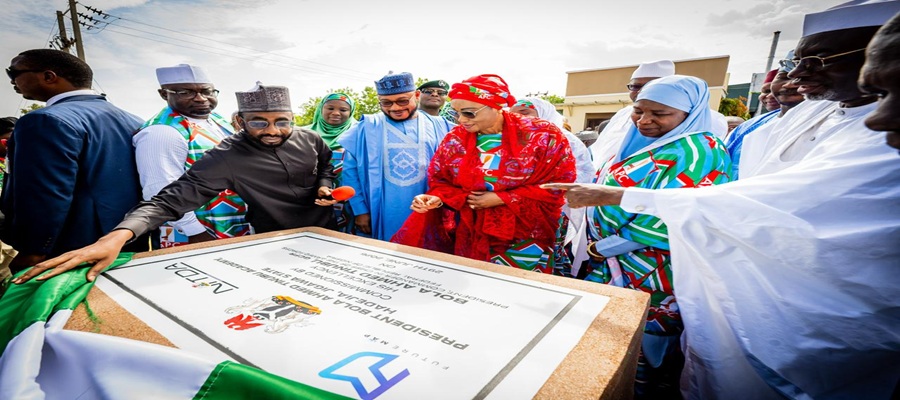
Nigeria’s First Lady, Senator Oluremi Tinubu, on Monday commissioned the President Bola Ahmed Tinubu Academy, alongside a modern clinic and dialysis centre named in her honour, describing the projects as “clear evidence of the government’s commitment to improving infrastructure, expanding access to quality healthcare, and investing in the future of the young.”

The First Lady of the Federal Republic of Nigeria, Senator Oluremi Tinubu, cuts the ceremonial ribbon to officially commission the Senator Oluremi Tinubu Clinic and Dialysis Centre in Hadejia Local Government Area of Jigawa State. She was joined by the Governor of Jigawa State, Malam Umar A. Namadi, and the Director General of the National Information Technology Development Agency (NITDA), during the commissioning ceremony.
The commissioning took place in Hadejia, Jigawa State, where Senator Tinubu emphasised that the state-of-the-art clinic would bring “relief and hope to many patients and their families in Hadejia, neighbouring communities, and beyond.”
She added that the academy represents President Tinubu’s dedication to human capital development and educational excellence, which secures “a better tomorrow” for Nigeria’s children.
In addition to the health and education projects, Senator Tinubu also launched the National Food Bank Programme, a deliberate and sustainable response to food insecurity and malnutrition among vulnerable households.
The initiative is designed to ensure that children under six, pregnant women, and lactating mothers have access to nutritious food, directly advancing President Tinubu’s Renewed Hope Agenda on food security and improved health outcomes.
The programme is being implemented through a strategic partnership between the Office of the First Lady, the Federal Ministry of Health and Social Welfare, the National Primary Health Care Development Agency, and the Bank of Agriculture.
According to Senator Tinubu, the initiative will “build a stronger and more prosperous Nigeria” by safeguarding the health and future of its most vulnerable citizens.
The clinic and dialysis centre were built and fully equipped by FutureMap Foundation and eHealth Africa, in honour of the First Lady’s passion for uplifting underserved communities and vulnerable people.
The President Bola Ahmed Tinubu Academy was established with the support of His Excellency President Bola Ahmed Tinubu GCFR and the National Information Technology Development Agency (NITDA), underscoring the administration’s commitment to innovation and education.
Both projects are designed to work hand in hand. The academy, with its fabrication laboratory and advanced learning facilities, will support the clinic by developing prototypes of body organs — especially kidneys — to aid research, early detection, and prevention of chronic kidney disease.
This synergy ensures that education directly fuels healthcare innovation, creating practical solutions to pressing medical challenges.
The First Lady, who expressed deep appreciation to the NITDA Director-General for the honour, re-emphasised the benefits of the academy and the clinic saying: “We are grateful for these honours done to us. Thank you.
“These projects are clear evidence of the state and federal government’s commitment to improving infrastructure, expanding access to quality healthcare, and investing in education and the future of young people.”
The First Lady further highlighted that the Bola Ahmed Tinubu Academy represents the President’s commitment to human capital development and educational excellence. She added, “By investing in the education of our children today, we are securing a better tomorrow for them.”
While speaking on the National Food Bank Programme, the First Lady described it as “a deliberate and sustainable response to food insecurity and malnutrition among vulnerable households in Nigeria.”
She stressed that the initiative is designed to ensure that children under the age of six, pregnant women, and lactating mothers have access to nutritious food, adding that “this programme aligns with the Renewed Hope Agenda of His Excellency President Bola Ahmed Tinubu, advancing food security, improving healthcare outcomes, and building a stronger and more prosperous Nigeria.”
She explained that the programme is being implemented through a strategic partnership between the Office of the First Lady, the Federal Ministry of Health and Social Welfare, the National Primary Health Care Development Agency, and the Bank of Agriculture.
Recalling its rollout, she noted that, “We have launched the National Community Food Trust Fund and inaugurated the Board of Trustees in Abuja on 2 April 2026. On 27 April, we conducted the first launch in Borno State for the North-East Zone, and today, by the grace of God, we are launching the second National Community Food Bank here in Jigawa State for the North-West Zone.”
Commending the swift implementation in Borno, she observed that the programme has already enrolled 560 beneficiaries and reached 468 vulnerable children, pregnant women, and lactating mothers in less than two months. “This impressive achievement gives me confidence that Jigawa State will set even higher standards for others to follow,” she declared.
The First Lady emphasised that Jigawa’s agrarian potential makes it a strategic choice for the North-West launch and called for “sustained collaboration to build a transparent, accountable, and efficient food bank system that reaches vulnerable households across Nigeria.”
Earlier in his remarks, the Jigawa State Governor, Mallam Umar A. Namadi, expressed deep appreciation to Senator Oluremi Tinubu and all distinguished guests, noting that their presence in the state for the North-West launch of the National Community Food Bank Programme was “a strong demonstration of solidarity with families who need support and a reaffirmation of our shared duty to protect the vulnerable segment of our population.”
He emphasised that the event served as a reminder of the duty at the heart of public service — ensuring that every child’s health, survival, and development are safeguarded.
Governor Namadi described the initiative as “a timely intervention that will not only bring food resources closer to the people who need them most but will also contribute to better nutrition indices among our children.”
He acknowledged the vision and compassion of the First Lady, stressing that the food bank programme addresses both immediate needs and the long-term well-being of children.
He added that the programme provides a platform for nutrition and support to vulnerable households through partnerships with community leaders, farmers, civil society organisations, and the private sector.
Linking the initiative to constitutional responsibility, the Governor cited Section 16, Subsection 2 of Nigeria’s Constitution, which mandates the government to provide “suitable and adequate food for all citizens.”
He commended President Bola Ahmed Tinubu for fulfilling this responsibility through national food security and food bank programmes.
He further explained that Jigawa State had already established strong policy foundations through its State Food and Nutrition Policy and State Social Protection Policy, which support targeted nutrition assistance for mothers and children.
According to him, the food bank initiative “strongly complements our existing commitments, serving as an effective mechanism for delivering direct benefits to vulnerable families.”
Highlighting progress already made, Governor Namadi pointed to Jigawa’s homegrown nutrition programme implemented across 300 communities, which screened over 240,000 children in 2024 and 382,000 in 2025.
He noted that the programme successfully transformed thousands of children from moderate acute malnutrition to healthy status, while 600 women were trained to produce locally made nutritious formulas such as Tom Brown.
He assured that North-West governors would give the food bank programme the support it deserves, pledging to provide storage and distribution facilities, strengthen food centres, and ensure transparency and accountability in reaching vulnerable households. “A nutritious meal for a pregnant woman can safeguard two lives, and nutritious food for a child can support learning and growth,” he said, calling for diligence and compassion from all stakeholders to ensure lasting impact.
The newly commissioned projects in Hadejia, especially the President Bola Ahmed Academy and the Senator Oluremi Tinubu Clinic represent a deliberate effort to integrate advanced technological innovation with critical healthcare delivery. The Academy is structured as a sustainability-oriented institution, designed to transform technical knowledge into practical community solutions.
Its infrastructure includes a fabrication laboratory and maker space for prototyping health wearables and prosthetics, an innovation lab with AI-driven tutoring, and a pitch space for start-ups and research ideas. Complementary spaces such as the atrium, auditorium, and residential hostel ensure that the academy functions not only as a training ground but also as a hub for collaboration, digital upskilling, and community engagement.
The clinic serves as the healthcare counterpart to the academy’s innovation ecosystem. It houses a dedicated dialysis centre to address the region’s burden of chronic kidney disease, alongside a fully equipped operating theatre and maternity rooms for safe maternal care. Every ward is integrated with continuous piped oxygen, ensuring readiness for respiratory emergencies, while the facility’s reliance on renewable energy systems guarantees uninterrupted power for critical medical equipment.
This design reflects a strong emphasis on resilience, sustainability, and accessibility, bringing life-saving services closer to underserved communities.
Together, the academy and clinic form a symbiotic model in which education and healthcare reinforce each other. The academy’s fabrication laboratory is expected to provide diagnostic tools and organ prototypes, while the clinic applies these innovations in real-world patient care.
This collaboration offers a pathway for early detection and prevention of chronic illnesses, particularly kidney disease, while also strengthening Nigeria’s broader health technology ecosystem.
The integration of infrastructure, innovation, and medical service delivery positions Hadejia as a potential model for how technology and healthcare can be combined to address pressing community needs.
It may be recalled that last week, the President launched the establishment of the National Health Technology and Data Analytics Office, a move expected to strengthen Nigeria’s capacity for medical research, data-driven healthcare delivery, and the integration of technology into public health systems.
The event was attended by all seven governors from the North-West geopolitical zone and their spouses; the Minister of State for the Federal Capital Territory (FCT), Hajiya Mariya Mahmoud Bunkure; the Minister of State for Education, Professor Suwaiba Sa’id Ahmad; and the Director-General of the National Primary Health Care Development Agency (NPHCDA), Dr Muyi Aina, who represented the Coordinating Minister of Health and Social Welfare, Professor Muhammad Ali Pate.
Also present were the NITDA Director-General Kashifu as well as other government functionaries and traditional rulers.

UBA Surprises Thousands of Customers with Over ₦400 Million Cash Bonus

Lebara Nigeria Becomes Member of GSMA Network

FG to Abolish JSS-SSS Separation Policy after 20m Pupils Drop Out

Vitel Wireless Warns Public, Says it Not Running any Investment Scheme

Army Says Terrorists Now Recruiting, Raising Funds Online

Mobile Internet Gender Gap Widest in Africa – GSMA

London Strengthens Global Investment Ties with Africa @ First Ever London-Africa Business Summit

FG Targets Alleged N3tn Capital Flight, Opens Airtime Credit Market to Nigerian Fintechs

Japan, UNESCO Boost Digital Learning in 15 CoEs with Donation of ICT Equipment

Good News for DStv Users: Watch over 160 Channels Without Paying Extra




 E-Business3 days ago
LG Showcases AI-Powered Smart Living Innovations @ Africa Technology Expo 2026

 Telecom3 days ago
OADC Reaffirms Abundant Capacity in Data Centres in Nigeria to Host Financial Data

 E-Financial3 days ago
UBA mobilises employees across Africa for environmental clean-up, wellness campaign

 General News3 days ago
LASTMA Launches 3367 Toll-Free Hotline for Emergency Response, Traffic Management

 E-Financial3 days ago
PalmPay Calls for Trust, Infrastructure and Responsible AI to Drive Payment Ecosystem Innovation

 E-Business3 days ago
Want a Business Loan Without Interest? SMEDAN Launches N500m Fund

 Telecom3 days ago
ALTON Backs NCC’s Local Smartphone Manufacturing Drive to Widen Digital Access

 E-Financial3 days ago
ngCERT Raises Alarm over Surge in Banks’ ATM Cyberattacks