

General News
Nigeria Can Become Africa’s Internet Hub If… – MainOne

Vremudia Oghene-Ruemu, MDXi’s product manager, Data Center in this interview assesses the data centre market in Nigeria, challenges confronting the line of business, the partnership with IXPN, MainOne’s Open Connect Service, among others. Excerpts
Data Centre Operations in Nigeria
The Data Center landscape in Nigeria is still new, gradually developing. We have a few data centers for our economic size and population, which means there is opportunity for more operators to come in.
We are gradually building a digital economy, which requires cloud-based services and applications and data centers.
A rising confluence of demand and supply factors is making Nigeria’s data center business one of the most dynamic ICT market segments in Africa.

As broadband adoption has boomed, demand for cloud services has emerged and is expected to surpass supply soon.
To cater to this demand, MainOne’s Data Center Company, MDXi is also building more Data Centers not only in Nigeria, but other parts of West Africa. We have started our second Tier III Data Center in Nigeria in Sagamu, Ogun State; we have a Data Center in Accra and should launch another in Cote D’Ivoire soon.
We believe that other players will follow suit and build to match the growing demand. Right now, South Africa has the largest data center presence on the continent, with North Africa following closely but Nigeria and other West Africans countries are expected to deepen Data Center penetration over the next few years.
Main Challenges Confronting Your Line of Business
The major challenge for Nigerian businesses right now is the high cost of operation. Data Centers have huge power requirements and usually recourse to direct connection to the national grid, which is a significant investment in addition to backups, which include huge generators with attendant costs of diesel ad maintenance.
Operators need to import equipment into the country, but do not have access to FOREX, as the Central Bank has refused to give telcos priority. It has been ingenuity and financial knowhow that has kept players like us going in this tough terrain.
Nigeria is yet to fully implement data domiciliation and a lot of government and enterprise businesses still hosts Nigeria’s data abroad, rather than patronize indigenous data centers.
The Federal Government needs to enable policy to drive our diversification from oil-dependent to services-focused; such as pioneer status for indigenous operators, tax exemptions, data residency and priority access to Forex will go a long way to help Nigeria’s data center operators and enable us be at par with South Africa and other climes.
In China for example, foreign operators are mandated to keep Chinese data within the country. Europe, Russia, Malaysia and Indonesia have also implemented Data Domiciliation regulation.
Nigeria must also proactively protect its citizen’s data and mitigate huge security risks by repatriating all Nigerian data in-country. This will limit the country’s exposure to cyber-attacks, save us huge international internet transit costs and enable Nigeria’s data center capacity to grow quicker.
We need to understand that apart from glaring issues such as national security and capital flight; local data hosting has the ability to drive job growth and improve the lives of our teeming youth population.
Local data domiciliation has worked and is still working in countries with strong digital economies around the world. All you have to do is look around the globe to see what having data hosted in-country has done for local innovation, technology development and economies in general.
Partnership with The Nigerian Internet Exchange (IXPN)
This move is significant in many ways. As a data center provider, there are two goals. The first goal is to ensure that businesses that have high availability requirements can run their technology operations without breaking the bank.
The second goal, is to ensure that the infrastructure running these highly available services can be reached irrespective of the networks that users connect from.
To ensure that end users communicate effectively in this rapidly evolving digital ecosystem, network providers need to enable the exchange of user data in the quickest and most efficient manner using a process called peering. Peering is made possible by an Internet exchange point which in the simplest of terms is a physical meeting point where networks, content and service providers connect and directly exchange data.
This results in the significant reduction of costs and increase in speeds at which data is exchanged thereby leading to consumer friendly network subscription rates and superb end user experiences.
This is where our partnership with the Internet Exchange Point of Nigeria (IXPN) is relevant. By hosting and partnering with the IXPN, our data center customers now have quicker, less costly access to local, regional and global connectivity via simple physical cable connections called cross connects.With these cross connects and close proximity to the Internet Exchange, our customers immediately have instant access to an ecosystem of network providers, cloud platforms, content providers and business partners while saving costs on expensive wide area network links and ensuring high network performance.
By combining our vast local, regional and global network resources with the IXPN’s capabilities, we can now directly connect and provide interconnection services to local operators, regional operators, global carriers, content providers, ISPs among others. Our data center’s value proposition is thus to ensure that people that host in our data center are able to reach their users seamlessly with great user experience and at lower costs.
Role of The IXPN
The Internet Exchange is the backbone of digital economies around the world and a key ingredient to growing the online economy in Nigeria.
The role of the IXPN is to ensure the local exchange of data between users by enabling peering between the networks that serve these users; hence the popular saying “keeping local traffic local”.
An example is a situation where an email from User A in Lagos to User B in Lagos needs to travel across User A’s provider network to an International location where User A and User B’s networks connect just because they cannot connect locally.
You can also view this practically from the standpoint of regional airport hubs which serve as an exchange point for passengers between different airlines served by that airport.
Airline passengers will definitely not fancyif they travel long hours to switch flights outside their country to reach a destination in their country just because a common airport that serves multiple airlines in the country does not exist. Routing internet traffic is similar to you flying to Ghana to get a connecting flight to Abuja, because there is no local interconnection point.
Mainone’s Open Connect Service
With Open Connect we are creating a powerful Internet ecosystem in the same physical location as the Nigerian Internet Exchange, and providing a platform for participants to exchange data in real-time at lightning fast speeds.
The idea behind Open Connect is that we are enabling owners of products, services and content with high response requirements become more service-oriented by bringing the networks closer to them. Being closer to the networks significantly enhances their ability to improve their end user experiences. For instance, today’s customer will seriously consider changing banks if they have an internet banking application that takes thirty seconds to open a login page, and takes several other painstaking minutes to conduct a transaction.
Main Benefits of Open Connect
Open Connect provides better network performance for the networks and their end users. It also ensures low latency connections which in turn enhance the end user experience while enabling local data exchange, local content and local hosting.
Before Open Connect, How Did Operators Connect?
In the past, operators connected Internet traffic via networks outside the country at interconnection locations where global content providers reside. This put more costs on internet providers, slowed down internet connections and put the end user at a disadvantage from a cost and user experience.
For voice services, interconnections were achieved through clearing houses some of which are present locally today. These methods of interconnection are no longer sustainable with the volumes of broadband traffic we are experiencing in Nigeria today via current explosion in content and smartphones.
The Nigerian Internet Exchange is currently enabling a limited amount of interconnection between operators today but we believe that a synergy between MDXi and the Exchange using Open Connect as a platform will take interconnections to the next level in Nigeria and West Africa.
With The Launch Of Open Connect Would You Now Consider Yourself A Carrier Neutral Data Centre?
We have always been a carrier neutral data center. For the benefit of your readers, a carrier neutral data center is a facility that allows its customers connect their hosted infrastructure to any network of their choice.
MDXi is structured as a totally separate legal entity from MainOne even though we are a subsidiary company. Customers in MDXi are free to choose any network provider that suits their business requirements and have done so since Day 1. As a result, customers in MDXi are connected to their various locations by over 20 different network operators and ISPs today.
Launching Open Connect expands our commitment to providing that open access, carrier neutral environment and bringing it closer to the Internet Exchange for all our customers to thrive.
Of What Benefit Is This To Over-The-Top (OTT) And Content Providers Across The Continent?
Until around 4 years ago, OTT operators like Facebook and Google hosted outside the continent because the infrastructure to host locally wasnot available and the traffic they generated in Nigeria was quite limited with low internet penetration.
This narrative is however changing as the facilities to host such infrastructure is now available on the continent. Africa’s huge population and rapid mobile broadband adoption is also a major business driver for these large players as they recruit these large number of users to their platforms.
Nigeria is the most populous country on the continent and we are beginning to see more content providers, producers and distributors develop significant interest in our local market. Five years ago we didnot have applications like Facebook Live, Instagram live and WhatsApp video. We also did not have Internet banking and the level of E-Commerce applications that require real-time online connections as we do today.
One of the key value propositions for content is a robust user experience. Accessing content hosted outside the country provides a significantly diminished user experience compared to content hosted within the country. By leveraging local hosting and Open Connect, content providers will improve their user experiences significantly, scale their products and increase user subscriptions which will lead to more revenue.
Plans to Build an Internet Hub in West Africa
By hosting the Nigerian Internet Exchange and leveraging our already active connections to the Ghanaian, Amsterdam and London Internet exchanges we have significantly expanded the reach of our network to other networks in the region and globally.
What is next is to ensure that our partnership with various internet exchanges and content providers across the continent continues to grow using products such as Open Connect to explore new frontiers for interconnections.
We will leverage our strengths as West Africa’s most connected data center to continually localize traffic, reduce transmission costs and improve user experiences which will catalyze the development of other industries such as gaming, content and media which are highly dependent on superior internet connections.


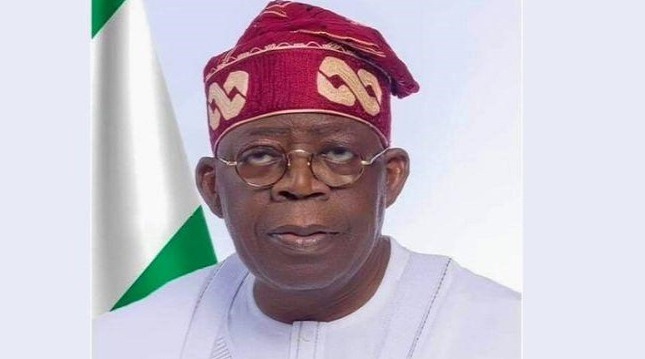
United States Government has said that Nigeria is not making significant progress in fiscal transparency, referencing gaps in the country’s budget disclosure, expenditure reporting, public procurement transparency and audit processes.

The assessment is contained in a report by the United States Department of State, which reviewed Nigeria’s fiscal transparency practices in its 2026 fiscal transparency report for countries published on Tuesday.
The report noted that the US government stated that Nigeria made some key fiscal documents available to the public, significant shortcomings remained in the disclosure of budgetary information and the management of public finances.
The report noted that “the government made its enacted budget and end-of-year report widely and easily accessible to the public, including online, but did not publish its executive budget proposal within a reasonable period.”
It also stated that while the Nigerian government had made information concerning the country’s debt obligations publicly available, its budget documents failed to provide a comprehensive picture of government revenues and expenditures.
“The government made information on debt obligations, including major state-owned enterprise debt, publicly available, but budget documents did not provide a substantially complete picture of the government’s revenues and expenditures, or break down expenditures to support executive offices in the budget,” the report stated.
The US government further raised concerns about discrepancies between Nigeria’s approved budget and the actual revenues and expenditures recorded during implementation.
It said, “Actual revenues and expenditures did not reasonably correspond to those in the enacted budget.”
The report also criticised the country’s supreme audit institution, stating that it did not meet international standards of independence and did not publish substantive reports, although it had access to the entire executed budget.
“The supreme audit institution did not meet international standards of independence or publish substantive reports but did have access to the entire executed budget,” it stated.
The assessment, however, acknowledged that Nigeria’s sovereign wealth fund had an adequate legal framework and disclosed information about its funding and the general approach to withdrawals.History
“The sovereign wealth fund had a sound legal framework and disclosed its source of funding and general approach to withdrawals,” the US government said.

The World Bank Group is supporting the expansion of Africa’s digital commerce infrastructure to help small businesses reach new markets, create jobs, and strengthen economic opportunities across the continent.

Through Jumia, Africa’s leading e-commerce platform, the investment is expected to enable approximately 60,000 local annual active sellers to participate more fully in the digital economy, support around 1,800 direct jobs, and create income-generating opportunities for more than 100,000 independent sales agents.
As digital commerce continues to grow across Africa, reliable access to online marketplaces, logistics networks, and digital payments are becoming increasingly important for entrepreneurs and small businesses seeking to expand beyond local markets. Strengthening this infrastructure can help firms increase sales, improve productivity, and connect consumers with a wider range of affordable goods and services.
To support this effort, the International Finance Corporation (IFC), the private sector arm of the World Bank Group, is investing US$25 million in equity in Jumia Technologies AG (Jumia), Africa’s largest public e-commerce platform. The investment will support Jumia’s next phase of growth across its core African markets, strengthening its integrated marketplace and logistics network.
By expanding access to digital commerce tools and services, the investment will help businesses grow, improve price transparency, and contribute to more inclusive and resilient private sector development across Africa.
“The support of the World Bank Group is a milestone for Jumia and for African e-commerce more broadly. It validates both the discipline we have brought to our business in recent years and the tangible impact our platform has on small businesses, jobs, and consumers across our eight markets. With partners like the IFC, we can accelerate the digital commerce infrastructure Africa needs” said Francis Dufay, CEO of Jumia.
“Jumia demonstrates how pan-African e-commerce platforms can expand economic opportunity at scale. Our investment supports the company’s next phase of growth while contributing to create jobs, digitizing supply chains and distributions channels and mobilizing private investment” said Farid Fezoua, Director for Equity, Funds, and Venture Capital at the International Finance Corporation, World Bank Group.

Nigerian Upstream Petroleum Regulatory Commission (NUPRC) has cautioned the public against fake recruitment offers and fraudulent employment letters circulating in the agency’s name.

Eniola Akinkuotu, head of Media and Corporate Communications of the Commission, stated that NUPRC has received reports of counterfeit and AI-generated appointment letters bearing names not known to the regulator.
The Commission also said fraudsters have been extorting money from jobseekers by promising placement within the agency.
NUPRC has reported the incidents to law enforcement and said investigations are underway.
The regulator reiterated that there is no ongoing recruitment exercise and warned members of the public not to make any payments for supposed job offers.
“Whenever the Commission decides to recruit, the process will be conducted strictly in accordance with extant laws and government regulations,” the statement said.
The Commission urged jobseekers to verify any purported offer and to rely only on official NUPRC communications for recruitment information.
The warning follows growing concerns about the misuse of digital tools, including artificial intelligence, to fabricate apparently authentic documents that can deceive the public.

Nigeria Not Making Progress in Fiscal Transparency –US

NCAA to Introduce RFID Technology to Tackle Missing Luggages

SEC Directs Operators to Subscribe to NigSac Alerts, Freeze Terrorists-Linked Funds

Davido Bets $1m in Hit-for-Hit Battle with Colleagues

GSMA Industry Services Unveils Circularity Services to Help Operators Reduce E-Waste and Unlock Value

EFCC Busts NIS Visa Overstay Racket, Uncovers N700m in an Account

Fact-Check: Elon Musk’s “Tesla Pi Phone” is Internet Rumor

NBC Tasks Broadcasting Stations over 2028 DSO Global Deadline

NBC Scraps Annual Digital Access Fee on DSO

Glo Sponsored African Voices to Feature Netflix’s “The Polygamist” Stars




 News3 days ago
Moove Achieves Unicorn Status With $250m Funding

 Telecom3 days ago
MTN Nigeria Clocks 25, Connects over 90m People

 E-Financial3 days ago
FG Suspends NAICOM’s N680m Insurance Recapitalisation Fees

 Broadcasting3 days ago
Affordable, Flexible Streaming Platforms May Kill PAYtv – Report

 E-Business3 days ago
Microsoft to Unveil Next-generation AI Chip in September

 Telecom3 days ago
Subscribers to Seek Legal Redress if Poor Quality of Service Continue in September

 E-Financial3 days ago
SEC Moves to Recover Unclaimed Dividends, Inherited Investments Nationwide

 Telecom3 days ago
ipNX Collaborates with ICT Stakeholders on the Future of Fibre-to-the-Home in Nigeria @ ATCON Forum