

News
Nigeria Loses N126.2Bn on Abandoned FG Properties in Lagos – Unilag Don

The Federal Government has again been charged to either concession or sell all its buildings that are not being utilized across the country to private investors in order to forestall further deterioration as a result of continued abandonment.
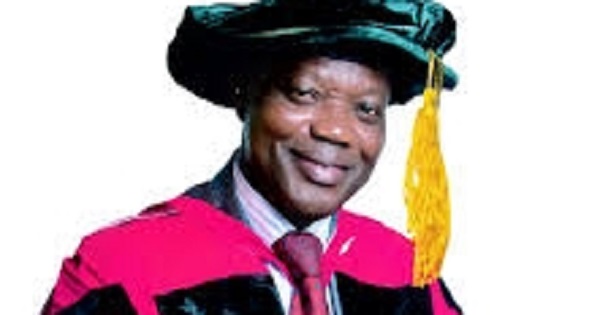
Prof. Olumide Afolarin Adenuga, professor of Building, who gave the charge in his inaugural lecture at the J.F Ade Ajayi Memorial Hall, University of Lagos, Akoka, on Wednesday, said, N126.2 billion revenue have been lost since 2006 on the Federal Government properties in Lagos State alone, because the government have refused to either sell or concession the assets.
Adenuga, a professor of building management lamented that the nation have been hemorrhaging as a result of the neglect of the buildings, warning that the huge economic benefits of these iconic structures would continue to elude the nation if the government continue to ignore the need to restore them to beneficial use for Nigerians.
The university don who said maintenance is as old as creation, said man have had to contend with managing his space and the ecosystem since he abandoned a wandering lifestyle to adopt a settled life, pointing out that maintenance was responsible for increased lifespan of structures such as the Egyptian pyramids, the Papal States in the Vatican City, The White House in the United States and the Golden Temples, and other monuments, most of which have been kept in same serviceable condition as they were at the time of their construction.
For him, it is regrettable that many of the nation’s iconic assets, which were pleasant to look at, at the time of their construction, had been allowed to degenerate due to lack of maintenance and planned repairs that could have reversed the trend and turned them into positive economic assets.
“It is a glaring fact that our buildings are in very poor and deplorable conditions of structures and decorative disrepair, abandoned and reduced more or less to refuse dumps and natural homes for rodents and vermins in spite of billions of Naira spent to build and commission them.”
Adenuga listed among such assets wasting away in Lagos State to include; the National Stadium, Surulere, the Federal Secretariat Complex, Ikoyi, The Nigerian Eternal Telecommunications (NET) building, Marina, the Defence House (formerly Independence Building), and the former NAVY Headquarters building in Marina. Other buildings according to him are: the National Arts Theatre, Iganmu, former National Assembly complex, Tafawa Balewa Square, and the Supreme Court building among others.
He said: “All these buildings are in deplorable states of structural and decorative repairs because we do not have any maintenance culture, a fact which manifests in the general apathy for maintenance coupled with ignorance on the part of occupiers of the benefits of planed preventive maintenance and care of buildings.”
According to him, the cumulative potential economic loss at the National Stadium alone, between 2004 to date, is about N52.6 billion, while the Federal Secretariat, which has been overgrown with weeds and is now home to reptiles and rodents, could have been yielded over N72 billion, if it had been converted to luxury residential apartments as proposed by Resort international Limited since 2006, while the 32-storey NET building with about 720 sq. metres of lettable space could have attracted over N1.6 billion in rent annually if well maintained and optimally utilised.
He said apart from the loss of the huge revenue which could have been ploughed back into provision of social amenities for Nigerians, the 480 units of luxury residential apartments being proposed by RIL could have contributed to reducing the shortfall in the nation’s housing stock.
“Because of their present deplorable state, these once iconic structures have become a nuisance not only to the city of Lagos and her residents, but is also a source of economic loss arising from abandonment and gross under-utilisation,” he added.
He said since it hardly feasible to construct buildings that are maintenance free, it is desirable for experts to think of building maintenance projections even at the design stage to reduce the cost of maintenance work throughout the lifespan of a building.
“All elements of buildings deteriorate at a greater or lesser rate depending on the materials used, methods of construction, environmental conditions, and the use of the building,” he said.
To reverse the trend of improper maintenance of public or private properties, Adenuga recommended a formulation and formalization of regular minimum repair programme, regular and effective inspection of all the fabrics of the buildings, including their sorroundings, as well as the comfort of the occupants to detect signs of disrepair, prompt attention to repair needs of buildings, to prevent further deterioration in order to keep the buildings in acceptable standards.
He canvassed planned preventive maintenance, which according to him are best accommodated at the design and construction stages of building development, even as he urged occupiers of buildings to be adequately educated to report, as soon as noticed, defects for prompt maintenance even as he charge them to use the property in such a way as to keep them in good tenantable conditions.
He canvassed that occupiers of public properties should be responsible for repairs and maintenance of the properties, the avoidance of deliberate alterations, which may lead to immediate or eventual decline in the state and aesthetic value of property, the standardization of building components.
He added that property owners, both private and public, should guide against overcrowding which may result in over-use of facilities and undue pressure on sanitary facilities.
Adenuga, a product of the polytechnic system, who described the lecture as his debt to academic and scholarship, is the second professor to have given his inaugural lecture in the Department of Building and the ninth professor in the Faculty of Environmental Sciences of the University of Lagos.



The Nigeria Customs Service (NCS) has rolled out an artificial intelligence (AI) driven capacity-building programme to improve revenue generation and reconciliation across its operations.

The initiative, unveiled during a three-day training event in Abuja, aims to transition the agency toward data-driven administration as Nigeria seeks to boost non-oil revenue.
The adoption of AI will enable the service to better manage complex trade systems, detect anomalies and reduce revenue leakages, says Bashir Adewale Adeniyi, comptroller-general of the NCS.
AI-powered tools are already being integrated into risk management and cargo scanning systems to allow for real-time analysis of trade patterns.
The technology marks a transition from manual, reactive processes to predictive and automated decision-making, Adeniyi adds.
The programme also reflects a shift in the relationship between the NCS and the National Assembly toward a collaborative framework focused on transparency and efficiency.
The training is a strategic intervention to address persistent gaps in revenue management, says Kikelomo Adeola, deputy comptroller-general of the NCS.
AI applications, ranging from automated data analysis to predictive intelligence, will significantly enhance the integrity of public financial systems, she says.
The initiative aligns with broader efforts to modernise governance and improve compliance across revenue-generating agencies, says Bamidele Salam, chairman of the House Public Accounts Committee.
Lawmakers and fiscal authorities at the event underscored the urgency of adopting advanced technologies amid rising budgetary pressures.
This move comes as the federal government increases scrutiny over revenue leakages and audit discrepancies.
The partnership between the NCS and the legislature is critical to strengthening fiscal discipline and ensuring all revenue due to the federation is accurately captured, Adeniyi concludes.

Lagos State Government has intensified efforts to strengthen its social protection framework with a fresh push to update the state’s Single Social Register.

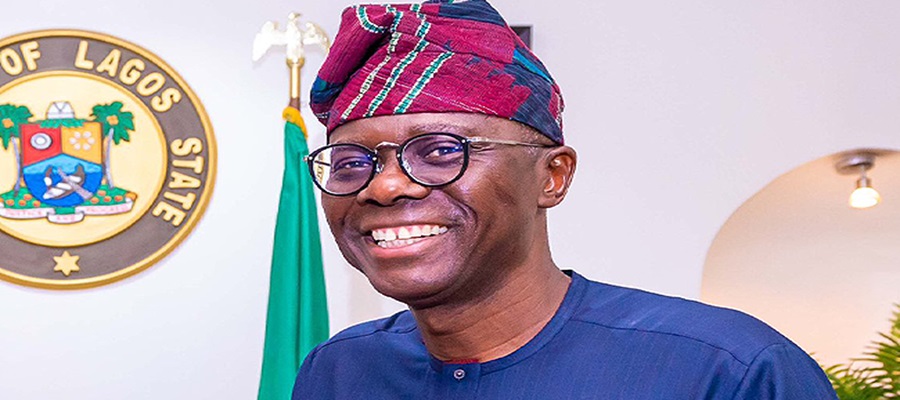
Babajide Sanwo-Olu, Governor, Lagos
This was contained in a press statement on the government’s Facebook page on Wednesday.
The initiative, led by the Lagos State Ministry of Economic Planning and Budget, formed the focus of a strategic engagement held on Monday with Community-Based Targeting teams, local government coordinators and field enumerators across the state’s 57 Local Government Areas and Local Council Development Areas.
The meeting, themed “Closing the Gap: Accelerating Lagos State Single Social Register Update,” took place at the Radio Lagos Multipurpose Hall in Agidingbi, Ikeja.
Officials said the exercise is aimed at improving the accuracy and reach of the register, which serves as a critical tool for planning and delivering targeted social interventions, including financial support, healthcare and education services.
Speaking at the session, Ope George, commissioner for Economic Planning and Budget, commended field workers for their commitment while urging them to scale up their efforts.
He called on participants to be “more intentional by intensifying their commitment,” reaffirming the government’s resolve to “continuously strengthen and refine the Register to reflect evolving realities.”
Also speaking, Olayinka Ojo, permanent secretary in the ministry, described the register as central to effective governance and service delivery.
She said “it remains a cornerstone for effective planning and delivery of social intervention programmes,” adding that the ongoing update is designed to “further enhance data reliability, coordination, and service delivery outcomes.”
Ojo noted that sensitisation efforts would be expanded across all councils to ensure wider inclusion of residents, stating that “the advocacy and sensitisation will scale throughout the 57 LGAs and LCDA to give more to Lagos residents.”
According to the government, the updated register is expected to expand access to social protection programmes and improve the targeting of interventions for the most vulnerable populations.
The engagement also provided a platform for stakeholders to strengthen collaboration, improve data quality and reinforce transparency in grassroots data collection.
The state government reiterated its commitment to leveraging accurate data and partnerships to drive inclusive development, reduce vulnerability and improve living standards across Lagos.

A new study by Bayero University, Kano, has found that 38 per cent of women in Northern Nigeria do not have access to financial services.

The study, carried out by the Aminu Kano Centre for Democratic Studies of the university, was supported by the Gates Foundation. It examined how social norms and behavioural factors influence financial inclusion across the 19 Northern states.
The report, titled “Understanding Influence and Behaviour in Northern Nigeria” and unveiled in Abuja on Wednesday, stated that while 52 per cent of women are financially served, only 45 per cent access formal financial services through deposit money banks, merchant banks, interest-free banks and microfinance institutions.
It stated that “38 per cent of women across the region lack access to financial services. “52 per cent of women are financially served, while 45 per cent access formal financial services through Deposit Money Banks, merchant banks, interest-free banks and microfinance institutions. An additional seven per cent utilise other formal non-bank financial products, including insurance services. ”
Speaking at the unveiling, the Director of Academic Planning at Bayero University, Prof. Yusuf Garba, who represented the Vice Chancellor, Prof. Haurna Musa said the research was designed to uncover why the region lags in financial access.
“This study, which started in 2024, aims to examine how social norms influence attitudes and behaviour of various groups across Northern Nigeria, particularly to find out why states in the region fall behind in access and use of financial services,” he said.
Garba explained that the research, conducted over 18 months, produced two volumes detailing how influence structures, trust hierarchies, gender norms, and religious considerations shape decisions around finance, health and education.
He added, “The report is structured into volumes to provide a unified explanation of how social norms, authority structure, and trust shape financial behaviour across Northern Nigeria.”
On the findings, the Principal Investigator, Prof. Ismael Zango, said the data aligns with figures from the National Bureau of Statistics, particularly on poverty and unemployment.
According to him, “unemployment in the region stands at about 37 per cent,” while “poverty levels average about 80 per cent across Northern Nigeria, with Sokoto State recording the highest rate at over 80 per cent.”
Zango stressed that addressing financial exclusion requires more than temporary interventions.
“Economic empowerment must go beyond token financial support,” he said, adding that “sustainable development requires equipping women and youths with relevant, market-driven skills.”
He cited women-led initiatives such as groundnut processing groups in Kebbi State and the Women in Agriculture programme in Kano State as practical models.
“These initiatives should be scaled up to bring more people into productive economic activities and reduce poverty,” he said.
In her remarks, the Chief Executive Officer of Enhancing Financial Inclusion and Advancement, Mrs. Foyinsolami Akinjayeju, described financial inclusion as both an ethical and economic imperative.
Akinjayeju called for stronger collaboration among stakeholders, including government, financial institutions and development partners, as well as policy reforms to address existing gaps.
“Everyone has a role to play, but commitment must come from the top,” she said.
The findings come amid growing concerns over low financial inclusion rates in Northern Nigeria, driven by poverty, unemployment, and entrenched social norms that limit women’s economic participation.

MTN Suspends Data, Airtime Borrowing Service over New FCCPC Lending Rules

Nigeria Customs Deploys AI to Cover Revenue Leaks

Top 7 Reliable Virtual Cards for Running Ads in Nigeria

Nokia, Orange Partner on AI-native 6G Networks

NDPC Issues Critical Advisory as Hackers Target Nigeria’s Key Digital Systems

Kuda MFB Increases Kuda for Her Business Grants to ₦10 Million

Canal+ to Cut Jobs as Part Sweeping Restructuring

Nigeria tops global rankings for USDT, USDC ownership

NBC Boss Urges Content Ceators to Participate in DSO

NITDA Takes Over National Digital Architecture System




 General News2 days ago
Guinness Nigeria Surpasses ₦1Trillion Market Capitalisation, Signalling Strong Investor Confidence and Sustained Value Creation

 News2 days ago
CISA Asks NDPC, Police to Act on Alleged Data Breach by NIPSS

 Telecom2 days ago
Amazon Satellite to Challenge Starlink in Africa with Globalstar Acquisition

 E-Financial2 days ago
FG Investigates ‘Sharp Sharp’ Loan Operators over Alleged Privacy Violations

 E-Financial2 days ago
Ecobank Delivers Strong Results, Posts $801m in Pre-Tax Profit for 2025

 News2 days ago
Tinubu Tasks NRS to Restore Public Trust Amid Fiscal Changes

 Broadcasting2 days ago
Fela Makes History as First African to be Inducted into Rock and Roll Hall of Fame

 News2 days ago
Kaspersky Reports Online Scam Exposure Remains Widespread Despite High Levels of Self-assurance