

Telecom
Nigeria May Re-introduce Telecom Tax to Obtain new $750m World Bank Loan


Nigeria may reinstate a previously suspended telecom tax and other fiscal measures as it seeks to secure a new $750 million loan from the World Bank, as per Nairametrics report.

This is according to the Stakeholder Engagement Plan for Nigeria – Accelerating Resource Mobilisation Reforms (ARMOR) P-For-R (P177308) program dated March 2024, between Nigeria and the World Bank.
A copy of the plan’s document was obtained and seen by Nairametrics suggest the government reintroduces the excises on telecom services, EMT levy on electronic money transfers through the Nigerian Banking System among other taxes.
President Bola Tinubu in July 2023 ordered the suspension of the 5% excise duty on telecommunications and the Import Tax Adjustment levy on certain vehicles.
However, it appears that this suspension may be lifted to meet the program targets for a new, yet-to-be-approved World Bank loan.
Nairametrics has confirmed that negotiations are ongoing between the Federal Government and the World Bank.
The program’s development objective is to strengthen the government’s financial position by enhancing its capacity to manage and mobilize domestic resources effectively, which includes improving tax and customs compliance and protecting oil revenues.
Affected stakeholders and sectors
The planned tax reforms under the ARMOR program are expected to have significant implications across various economic sectors.
According to the plan, affected stakeholders will include manufacturers of goods such as alcoholic beverages, tobacco products, and sugar-sweetened beverages (SSBs), telecom and banking service providers, as well as the general tax-paying public.
Importers and international traders will also feel the impact of these new fiscal policies.
Key industry groups such as the Association of Licensed Telecom Operators of Nigeria (ALTON) are engaged regarding the excise duties on telecom services.
The banking sector, represented by the Committee of Bankers, are engaged regarding the introduction of an Electronic Money Transfer (EMT) levy on transactions processed through Nigerian banks.
Additionally, the Manufacturers Association of Nigeria (MAN) will play a crucial role, particularly for those involved in producing targeted products such as tobacco and alcoholic beverages.
The plan document read:
“Domestic Revenue Mobilisation drive in the government ARMOR program seeks to increase revenue on some targeted industries and sectors of the economy. Specific groups and agencies within affected sectors include
“1. Association of Licensed Telecom Operators of Nigeria: The introduction of excises on telecom services requires that all telcos are mobilised to fully participate in the collection of such revenue.
“2. Committee of Bankers: Introduction of EMT levy on electronic money transfers through the Nigerian Banking System would need the buy-in all banking institutions
“3. Manufacturer’s Association of Nigeria: Manufacturers of tobacco products, sugar sweetened beverages(SSBs) and alcoholic beverages who would be required to collect excises on their products are critical stakeholders for the introduction of the new excise regime. They are currently organised into various sectoral groups under the Manufacturer’s Association of Nigeria (MAN). Producers of alcoholic beverages organised under the Distillers and Blenders Association of Nigeria also need to key into the reforms
“4. Importers: Strategic partners involved in importation of different items into the country will be mobilised to participate in the ARMOR program. A key stakeholder group is the Association of Nigeria Customs Agents (ANCLA).
“5. Vehicle Importers and Manufacturers: Stakeholders in the automobile trade industry must be engaged on reforms involving the introduction of green taxes on high GHG emission vehicles. Local manufacturing and assembly of vehicles is growing through a phase of growth in Nigeria. The demand for vehicles is mostly met through importation by vehicle importers under the aegis of Association of Motor Dealers of Nigeria (AMDON).”
The document also emphasized the importance of engaging vulnerable groups to ensure they are not disproportionately affected by these changes.
It also said:
“Services that will be subjected to the newly introduced excises are regulated by key public sector agencies. The introduction of the new revenue measures will require the application of existing regulatory mechanisms available within these institutions. The concerned institutions include
“1. Nigerian Communication Commission
“2. Central Bank of Nigeria.
“There are also agencies with the mandate for making policies on some of the issues covered in the ARMOR program with respect to policy framework on matters of public interest in Health and Environmental Protection. The government institutions relevant to ARMOR in this regard are.
“1. Federal Ministry of Environment
“2. National Environmental Standards Regulatory and Enforcement Agency (NESREA)
“3. Federal Ministry of Health”


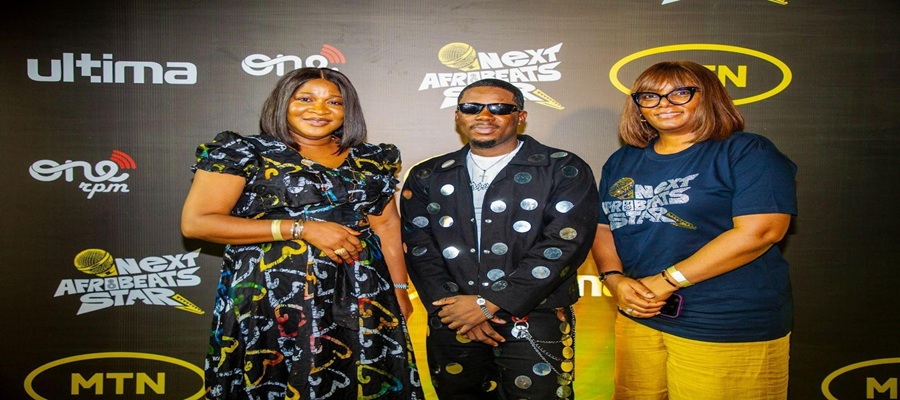
MTN Nigeria, in collaboration with ONErpm and Ultima Studios, has announced Ayodeji Benson, popularly known as Ayo Benzi, as the winner of the maiden edition of the Next Afrobeats Star reality show.

L-R: Onyinye Ikenna-Emeka, Chief Marketing Officer, MTN Nigeria; Ayodeji Benson, Winner, Next Afrobeats Star Reality Show (Season 1) and Emamoke Ogoro, General Manager, Brand and Communication, MTN Nigeria, at the grand finale of the Next Afrobeats Star Reality Show (Season 1), held at the Ultima Studios, Lekki, Lagos on Saturday, December 13, 2025.
The grand finale, held on Sunday night at Ultima Studios in Lekki, Lagos, marked the climax of a nationwide talent search that began in September with over 15,000 aspiring musicians.
After weeks of auditions, mentorship, and rigorous training, five finalists – Ayo Benzi, Dave Cash, Kaeko, Somto O’Laker, and Lucky Yay – battled for the top prize in a high-energy showcase of performance and artistry.
At the end of the electrifying contest, Ayo Benzi emerged victorious, securing a ₦150 million music deal. Dave Cash was named first runner-up with ₦100 million, while Kaeko, Somto O’Laker, and Lucky Yay received ₦75 million, ₦50 million, and ₦25 million respectively.
Throughout the season, contestants were mentored by leading Afrobeats producers Sarz, Puffy Tee, P Prime, and Andre Vibez. Benzi, who was part of Puffy Tee’s team, credited the mentorship programme for sharpening his craft and stage presence.
Speaking at the event, Onyinye Ikenna-Emeka, Chief Marketing Officer of MTN Nigeria, said the initiative reflects the company’s commitment to youth empowerment and cultural expression.
“The Next Afrobeats Star platform is about creating real opportunities for young Nigerians and giving their talent the structure, visibility, and support it deserves.
“Afrobeats continues to place Nigeria on the global cultural map, and MTN is proud to be enabling the next generation of artists who will take this sound even further,” she said.
She added that the finale was not just a competition but a celebration of growth and readiness for the global stage.
In his acceptance speech, Ayo Benzi described the victory as a defining moment in his career.
“A big thank you to MTN. From the audition days, the treatment MTN has given us has been amazing. God bless the brand,” he said.
The finale also featured guest performances by Afrobeats stars Iyanya and Bella Shmurda, adding glamour to the night and reinforcing the show’s connection to the wider music ecosystem.
With the successful conclusion of the season, MTN Nigeria and its partners reaffirmed their role in championing youth ambition, supporting creative industries, and shaping the future of Nigerian music through platforms that turn potential into opportunity.

T2, formerly known as 9mobile, is under investigation by the Nigerian Communications Commission (NCC) in Benue State for an undisclosed incident disrupting USSD, SMS, voice, and data services across nine local government areas.

T2
The affected areas include Ado, Agatu, Gwer East, Gwer West, Konshisha, Obi, Ohimini, Okpokwu, and Otukpo, as detailed in an advisory on the NCC Major Outages Portal, which tracks significant disruptions reported by Mobile Network Operators (MNOs) and Internet Service Providers (ISPs).
Neither T2 nor its public relations firm, Chain Reactions, has responded to inquiries on the outage’s cause or restoration efforts as of this report.
The NCC’s continued reference to the operator as 9mobile, months after its public rebranding to T2 in August 2025, has sparked questions about whether the name change was formally notified to the regulator.
This probe aligns with NCC mandates requiring operators to disclose major outages, their impacts, and timelines for fixes, with compensation obligatory for disruptions exceeding 24 hours under the Consumer Code of Practice Regulations.
Industry watchers note that such incidents, often linked to fibre cuts, power failures, or infrastructure faults, underscore ongoing challenges in Nigeria’s telecoms sector, particularly amid T2’s subscriber losses post-rebrand. NCC vows transparency via its portal to hold operators accountable and protect consumers.
Telecom
NCC Unveils Draft 5-Year Spectrum Roadmap, 60 GHz License-Exempt Guidelines to Boost Broadband, Innovation

Nigerian Communications Commission (NCC) has unveiled two pivotal regulatory draft documents aimed at reshaping Nigeria’s communications sector over the next five years and fast-tracking deployment of ultra-high-speed wireless technologies.

NCC
In a public notice dated December 19, 2025, and issued pursuant to its mandate under the Nigerian Communications Act (NCA) 2003, the Commission published the Draft 5-Year Spectrum Roadmap for the Communications Sector (2025–2030) and Draft Guidelines for the Use of the 60 GHz License-Exempt Band for Multi-Gigabit Wireless Systems.
Both documents are accessible on the NCC website for stakeholder review, with the roadmap outlining strategic spectrum planning, allocation, and management to optimise utilisation, support emerging technologies like 5G and IoT, expand broadband access, and align with global best practices.
The Spectrum Roadmap emphasises four core pillars: bridging the digital divide through low-band spectrum and satellite services, attracting investments via flexible licensing models, enhancing service quality with mid-band optimisation, and fostering innovation in areas such as direct-to-device connectivity and secondary spectrum trading.
It sets ambitious targets including universal 4G coverage nationwide, 50 per cent 5G penetration in state capitals, and average broadband speeds of 100 Mbps by 2030, while addressing rising data demand through band refarming and efficient management.
Complementing this, the 60 GHz Guidelines establish a license-exempt framework for the 57–66 GHz band, enabling multi-gigabit speeds up to 10 Gbps for short-range applications like WiGig, fixed wireless access, enterprise connectivity, urban broadband, and backhaul solutions.
The rules mandate NCC type approval for equipment, site registration for outdoor use, and interference mitigation measures, while prohibiting wide-area networks to safeguard primary users.
In line with Section 58 of the NCA 2003, NCC invites comments from industry operators, equipment manufacturers, consumer groups, and the public, with submissions due by Friday, January 16, 2025, via email to [email protected], [email protected], and [email protected].
The notice, signed by Mrs Nnenna Ukoha, Head of Public Affairs, stresses that stakeholder inputs will refine the frameworks to drive innovation, investment, competition, and sustainable growth in Nigeria’s telecoms ecosystem.

NDIC Reinforces Full Oversight Compliance to Safeguard Depositors

GTCO Secures Regulatory Approvals to Raise N10bn in Private Placement

Jumia CEO says Black Friday Signals Nigeria’s E-Commerce Maturity

MTN Nigeria Crowns Ayo Benzi Winner of Next Afrobeats Star

T2 Faces NCC Probe in Benue Over Major Service Outage in 9 LGAs

Nigeria Records Highest Weekly Cyberattacks in Africa — Report

Financial Sector Faced AI, Blockchain and Organised Crime Threats in 2025 – Report

Cyber Tsunami Hits Nigeria as Breaches Surge 1,047%, esentry Q3 Report Reveals

Minister Claims Bandits Exploit Poor Network, Bounce Calls Off Multiple Towers

Report Reveals Half of 2025’s Compromised Passwords were Already Leaked




 Telecom3 days ago
Google Finally Allows Users to Change Gmail Address, Keeps Data and Services Intact

 News3 days ago
InsomniaQ Spotlights African Creativity in Lagos

 General News3 days ago
T2 Backs Youth Excellence as NCBC Wins Bosun Tijani Foundation Basketball Tournament

 E-Financial2 days ago
Nigeria’s N58.18trn Budget and Rising Cost of Deficit Governance

 Telecom2 days ago
Nnaemeka Ani – The Architect of ‘Code and Courage’

 Telecom2 days ago
MTN Nigeria Appreciates Partners, Customers at Lagos Prestige Experience

 Telecom20 hours ago
NCC Grants 45 Days for Telecoms Firms to Fix Unapproved Shareholding Changes
 Telecom20 hours ago
T2 Faces NCC Probe in Benue Over Major Service Outage in 9 LGAs