

News
Nigeria Needs Broadband Connectivity – Van Schalkwyk

Jacques Van Schalkwyk, general manager Sub-Saharan Africa at Intel Corp has emphasized the need for government to pay attention to broadband connectivity by making sure that the right regulatory environment is put in place with the right spectrums and bandwidths being allocated. He said also that the right policies should be made around education.
Schalkwyk, observed the hunger and high desire for the adoption of new technologies in Nigeria and said Intel as a matter of fact is ready to collaborate a lot more with both the private and public sector in a bid to jointly tackle some of the big issues than what had been seen in the past. Looking at it from the usage models perspective, Schalkwyk said “you will observe that this is also evolving. For instance, media delivery over the Internet is becoming a reality.”
“Nigeria is increasingly becoming a more focused usable society as well for people to communicate with relatives abroad or business people to exchange ideas. But there are some challenges like credit systems being in state of instability. However, there is somewhere to go. In general, I think the feedback I am getting is that the latest technologies are being implemented; there is really the intent for that change to happen. And people are striving step by step forward to drive change”, Schalkwyk disclosed
Speaking on competition, he said mobile is going very fast and that mobile technology market will continue to grow. The overall growth even in a fairly tight environment and the available market according to him is becoming impressive and promising. He said this year was a particularly tough year everywhere in the world but, there have been good signs of recovery, even in Nigeria believing that the growth and transformation are as a result of the adoption of technology all over the world.
Van Schalkwyk explained Intel’s involvement in corporate social responsibility and said there is a component of corporate social responsibility in Intel as it is essentially a company that is concerned about the well-being of the communities where it operates. At the same time, he said if you look at the activities they are involved in, you notice they are drivers for ICT adoption and growth. “At the end of the day, ICT adoption means more PCs being sought. So I think it is creating the man and also doing the right thing. It is good business because it has to do with human development.” he said.
Keeping afloat in the era of economic recession, Schalkwyk foresees demand especially in the consumer market coming back worldwide saying there are two drivers of this new development. First, according to him are the new users coming to the Internet, and that is what we mean by connecting the next one billion people; people who never owned laptops before, who are buying new laptops into their homes.
Another component, he said obviously is a very fresh market. There are a number of reasons for people to do that which are hinged on usage models, the process in demand behind those usage models. Just look at the digital camera for instance; every year new cameras come with higher mega pixels. Video conferencing is becoming a reality. People are skyping. We shall continue to see new people come into the Internet. We shall continue to see new usage models evolving for that niche technology. Intel will continue to invest in future technologies.
How do you react to Intel’s domination of the market?
We certainly do not see ourself intensely dominating but we do compete rather fairly. And as we drive new technologies, we want to be leaders, help in developing communities and continue to sponsor programmes that will encourage and promote technology adoption.
How committed is government in all of these partnerships?
Like every other place in the world, government has so much money to spend at any given time. Everybody would want to have a government that is rich enough. With my experience in Nigeria working with the government, it is not deliberate for the government to delay in the adoption of technology. One area I think we have to look at and which needs attention and acceleration, is broadband connectivity. We should make sure that the right regulatory environment is put in place and that the right spectrums and bandwidths are allocated. We should make sure too that the right policies are made around education. Those are some of the challenges that cannot be tackled overnight.
How successful is the Computer for All Nigerians initiative (CANi)?
CANi is successful and continues to run; I can’t be specific about the volumes behind it. The programme is up and running. But I don’t think that should be an indicator of the slowdown within technology adoption because we see a share of our business which was traditionally a government thing shifting; and of course the revenue shifting towards the consumer. At the end of the day, the CANi products will end up in the hands of the consumer.
At the time CANi was launched, there were no PC retail shops in the country but all that has changed now as you can now see retail shops selling PCs. This you couldn’t see about four years ago. It has now become a consumer market. And if that is the end result then, CANi has done a good job.
Intel is always upgrading its products, why is this so?
Technology has increased in performance and the price over the years has actually dropped. Certainly, new technologies have benefited the consumer. The reason why we are still in business is because we bring out new technologies. Companies who do not innovate, who do not maintain leadership, how can they expect competition, which is the core of business? And there is a specific need for that evolution. There is an absolute need to continuously innovate.


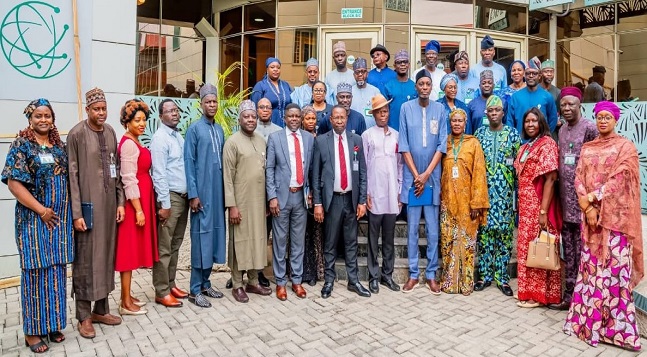
The National Information Technology Development Agency (NITDA) has reinforced its commitment to advancing Nigeria’s digital transformation agenda through strengthened collaboration with key strategic institutions, as it hosted the Director General of the National Institute for Policy and Strategic Studies (NIPSS), Professor Ayo Omotayo, alongside participants of the Senior Executive Course (SEC) 48, 2026.

The visit, which builds on an earlier strategic study tour, provided a platform for in-depth engagement on the role of digital innovation in driving sustainable economic growth, with particular focus on the Orange Economy.
Representing the Director General of NITDA, Kashifu Inuwa CCIE, the Director of Stakeholder Management and Partnerships, Dr Aristotle Onumo, highlighted the Agency’s commitment to fostering a vibrant digital ecosystem through inclusive policies, strategic partnerships, and capacity development initiatives.
“NITDA is committed to creating an enabling environment where innovation can thrive by bringing together government, private sector, academia, and creatives to drive Nigeria’s digital economy,” he stated.
Inuwa underscored the growing importance of the Orange Economy, describing it as a critical driver of innovation and economic value through intellectual property. He identified sectors such as digital content creation, film, animation, and digital art as key contributors to national development.
“The Orange Economy represents a powerful opportunity to transform our rich cultural heritage and creativity into sustainable economic growth,” he noted.
He further highlighted Nigeria’s unique advantage, particularly its youthful and creative population, while calling for stronger collaboration among stakeholders to fully harness the sector’s potential.
“With our youthful population and rich cultural assets, Nigeria is well-positioned to become a global leader in the Orange Economy if we deepen collaboration and investment across the ecosystem,” he added.
During the engagement, NITDA also presented its strategic initiatives aimed at supporting the digital and creative sectors, including digital infrastructure development, promotion of digital literacy, and implementation of policies that enable startups and innovators to scale.
Addressing challenges facing the sector, Inuwa pointed to issues such as limited access to funding, infrastructure gaps, weak intellectual property protection, and ecosystem fragmentation, while emphasising the need for coordinated action.
“Addressing challenges such as funding gaps, infrastructure deficits, and intellectual property protection is critical to unlocking the full potential of Nigeria’s creative economy,” he said.
The Agency reiterated its target of achieving 70 per cent digital literacy by 2027, noting that ongoing programmes are equipping millions of Nigerians with essential digital skills, including those in underserved and informal sectors.
In his remark, Professor Omotayo described the visit as an important opportunity to deepen understanding of how digital technologies are reshaping economic sectors, particularly the creative industry. He noted that the insights gathered would contribute significantly to policy recommendations aimed at strengthening Nigeria’s economic framework.
Participants of the SEC 48 programme engaged actively during the session, raising questions on capacity development, access to tools, and frameworks for protecting digital content. NITDA highlighted its ongoing collaborations with industry stakeholders to provide training, innovation hubs, and access to digital tools for young Nigerians.
The engagement concluded with a renewed commitment from both NITDA and NIPSS to strengthen collaboration in research, policy development, and capacity building, aimed at positioning Nigeria as a globally competitive force in the digital and creative economy.

Nigeria Revenue Service (NRS) has assumed responsibility for collecting mineral royalties from mining operators nationwide, following new tax laws effective January 1, 2026.

NRS
The shift emerged from a Thursday meeting between Solid Minerals Development Minister Dele Alake and NRS Chairman Dr. Zacch Adedeji. Their joint statement, endorsed by both, confirms NRS now administers all federally collectible revenues, including royalties.
Enacted by President Bola Tinubu on June 26, 2025, the Nigeria Tax Laws 2025 empower this transition. The Ministry of Solid Minerals Development remains a key partner, supplying pricing data, geological insights, and sector coordination.
NRS Special Adviser Dare Adekanmbi’s statement outlines collaborative steps: a nationwide sensitization program for operators on filing and payments; development of a digital royalty system; and regular joint technical sessions to address issues.
Both agencies pledge orderly, transparent implementation to boost the mining sector. Operators must comply with obligations and join upcoming programs.
The move aims to streamline revenue collection while fostering mining growth.
Microsoft has rolled out a new set of features for its Microsoft 365 Copilot platform, including tools for complex, multi-step work and deeper research tasks, as competition in workplace artificial intelligence (AI) intensifies.

The update introduces Copilot Cowork, a capability aimed at handling long-running tasks across Microsoft 365 applications.
The feature is being made available through the company’s Frontier programme, which typically gives early access to experimental tools.
Microsoft is also integrating technology linked to Claude – an AI model developed by Anthropic –into Copilot, signalling a broader shift toward using multiple AI systems within a single product rather than relying on a single model.
Jared Spataro, chief marketing officer for AI at Work at Microsoft, says the company is positioning Copilot as a system embedded directly into workplace software, rather than a standalone tool.
“Microsoft 365 Copilot is your AI for work,” he says, adding that it draws on multiple AI models and is integrated into existing workflows.
Alongside this, Microsoft has upgraded its Researcher feature, which is designed to analyse information from multiple sources and generate structured reports.
A new “Critique” function separates the drafting and review process between different AI models – one generates an initial response, while another evaluates and refines it.
The company says this approach improves output quality, with Researcher showing gains on its internal benchmark for accuracy, completeness and objectivity.
Another addition, called Model Council, allows users to compare outputs from different AI models side-by-side, highlighting differences in responses and reasoning.
The updates form part of what Microsoft calls “Wave 3” of Copilot, as it pushes to embed generative AI deeper into enterprise software. The move reflects a wider industry trend towards combining models from multiple providers, including OpenAI and Anthropic, to improve performance and reliability.

Union Bank Looted: How Former Directors Gambled with Billions and Nearly Destroyed a National Bank

N4.65 Trillion in the Vault, but is the Real Economy Locked Out?

FG, Others Say Nigeria Wastes 38m Tonnes of Food Annually

Ecobank Assures of Seamless Easter Banking Services

Anchor Gets Nigerian, Canadian Licences as Transactions Crosses $2.5Bn

Spotify’s Loud & Clear Report Reveals Over ₦60Bn Revenue for Nigerian Artists in 2025

Madonna University Taps Tech Guru Adote for Strategic Board Role

China Threatens to Shut Nigeria’s Satellite Over $11.44m Unpaid Debt

FCCPC Bans Lagos ‘No Refund’ Policy, Vows Fines and Shutdowns for Traders

Healthcare Under Attack: Why Cybersecurity is Now Critical Care




 E-Financial3 days ago
CBN Says 33 Banks Raise Fresh N4.65 Trillion in Recapitalisation Exercise

 Telecom3 days ago
NITDA Urges Joint Action to Drive Nigeria’s Digital Innovation

 E-Business3 days ago
Cybersecurity Firm Uncovers CrystalX RAT which Steals Data, Mocks its Victims

 Telecom3 days ago
NCC Insists Telcos Must Compensate Subscribers for Poor Quality of Service

 Telecom3 days ago
Oracle Corporation Axes 30,000 Workers in Brutal AI Shake-Up

 E-Business3 days ago
Oracle Sacks 12,000 in India, Begins Shift to AI

 E-Financial3 days ago
Nigeria, Others Lose $88bn Yearly to Illicit Flows —Edun

 E-Financial2 days ago
UBA Beefs Up Mobile App Security to Stop Fraudulent Debits, Withdrawals