

Telecom
Nigeria, Others to Lag as Latest Mobile Technologies Adoption Soar

Nigeria and other sub Saharan African countries have been predicted to still retain second generation (2G) mobile technology in the next five years when other regions of the world would have migrated to newest technology, according to Ericsson Mobility report released recently.
Responding to its forecast that 2G will remain relevant in Nigeria and Sub-Saharan Africa, Nora Wahby, head of West Africa, Ericsson Middle East and Africa, who released the report in Lagos, attributed this to none availability of smartphones for fast technologies such as 3G, 4G and LTE in the region.
“Penetration of smartphones required for higher technologies are still low in this region and will continue for few more years to come. This has also affected subscription of 4G, LTE services,” she said.
Oladipo Raji, chief executive officer, InfraFocus Partners, explained that for 2G technology to remain relevant in Nigeria is not a matter of none availability of devices, but purchasing power of the subscribers as well as value and education.
“I think that the challenge is not that smartphones are not available but the resources to buy those high end devices are not there for many Nigerians, more so, some people in rural areas are not well educated on how to use some applications in these smartphones which to them does not add value to them,” he said.
On poor service delivery in the country, Raji attributed it to lack of investment on capacity. “In the last three years there has not been any investment on expansion of capacity by operators because of unhealthy business environment. Operators have rolled out 4G and LTE technologies, but no infrastructure to distribute it. Function of every government is to act as an enabler for businesses to thrive.
“In Nigeria, the case is different, there is no power, no cable operators, and infrastructure is not protected. The problems are obvious we just have to live with it,” he added.
Olusola Teniola, president, Association of Telecommunications Companies of Nigeria (ATCON) agreeing with the prediction said: “This is very true indeed and brings to reality the situation the industry finds itself after 10 years of a mobile voice telephony boom on the back of 2G network rollouts in sub Saharan Africa.
“2G represents the most viable and economical network for both rural and urban cities. The challenge still for Nigeria is to cover the 192 market gaps that 2G has failed to address. On the back of a pervasive 2G network subsequent upgrades to LTE/4G may be considered for true high speed broadband services,” he said.
On difficulty subscribers of GSM services in Nigeria face to enjoy 4G and LTE services, he said: “There are several challenges to the deployment of 4G in Nigeria. The first one is the lack of affordable 4G / LTE handsets that are available in Nigeria.
“Secondly, the lack of fiber to towers hosting current 4G BTS(s) this meant that true high speed broadband is not being truly experienced by consumers that have subscribed to those services on offer. Thirdly, lack of local content that is highly relevant has not created the demand that can justify the deployment of 4G beyond certain cities in Nigeria,” he added.
Responding to deployment of newest technology to less economic viable areas, Teniola said: “Unfortunately, Return On Investment is a key motivator for any operator to roll out services in a particular location. Beyond this it is the responsibility of Government to ensure universal service accessibility is achieved for those citizens residing in communities outside those attractive to commercial.


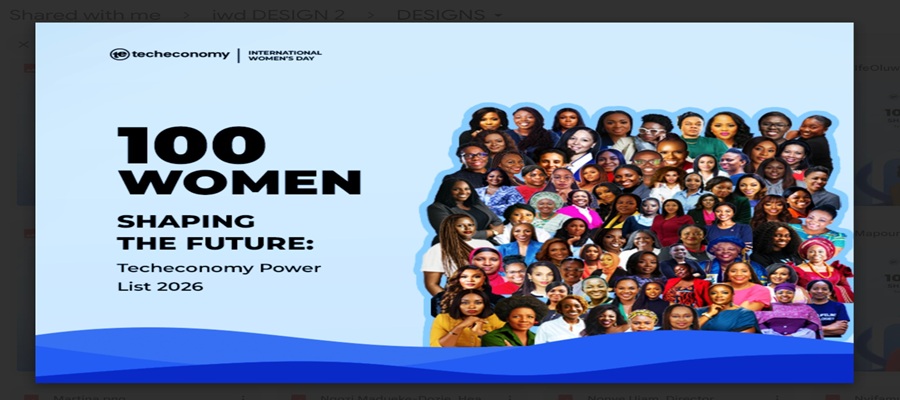
In celebration of International Women’s Day (IWD) 2026, Techeconomy, a leading business news platform in Nigeria, has unveiled its “100 Women Shaping the Future: Techeconomy Power List 2026,” recognizing exceptional women driving innovation, leadership, and impact across technology and the broader digital economy.

Techeconomy
The annual recognition spotlights women who are transforming industries through entrepreneurship, policy leadership, digital innovation, financial inclusion, media, education, and emerging technologies.
The initiative is part of Techeconomy’s commitment to promoting gender inclusion and highlighting female leadership shaping Africa’s technology ecosystem.
The Techeconomy IWD Power List features a diverse group of women, from corporate executives and startup founders to policymakers, ecosystem builders, and social innovators, whose work continues to influence the future of technology, business, and digital transformation in Nigeria and across Africa.
Speaking on the initiative, Joan Aimuengheuwa, the Managing Editor at Techeconomy, noted that the recognition goes beyond celebrating titles, focusing instead on impact, resilience, and the ability to shape the future through innovation and leadership.
According to her, “the women on the list represent different sectors including fintech, banking, healthcare, agriculture, education, communications, and the creative economy, demonstrating the growing role of women in advancing technology-driven development.
The unveiling aligns with the global celebration of International Women’s Day, which highlights the achievements of women and calls for accelerated progress toward gender equality. Across the world, the technology sector continues to push for greater female representation and leadership as part of efforts to build more inclusive digital economies.
Also speaking, Oluwatosin Aloba, the Brand Manager at Techeconomy, said: “Techeconomy IWD 2026 Power List is specially designed to inspire the next generation of female innovators and leaders by showcasing role models who are breaking barriers and redefining possibilities in the technology landscape.
“Techeconomy encouraged industry stakeholders, institutions, and the broader public to celebrate the achievements of these women while continuing to support policies, programs, and investments that expand opportunities for women in technology”, she added.
The full list of the “100 Women Shaping the Future: Techeconomy Power List 2026” is available on the Techeconomy website or visit: https://techeconomy.ng/techeconomy-iwd-2026-power-list-celebrates-100-women-shaping-the-future-of-tech/.

National Information Technology Development Agency (NITDA), via its Office for Nigerian Digital Innovation (ONDI), has partnered with the Japan International Cooperation Agency (JICA) to launch applications for the fifth cohort of the iHatch Startup Incubation Programme, targeting 37 innovation hubs—one per state and the Federal Capital Territory (FCT).

NITDA
The initiative selects hubs as state-level managers to run incubation programmes, addressing uneven support outside Lagos and Abuja. “Nigeria’s startup ecosystem has grown rapidly, but access remains uneven,” said ONDI National Coordinator Victoria Fabunmi. “iHatch builds stronger hubs, standardises quality, and boosts investment readiness across all regions.”
Amid Africa’s $3.42 billion startup funding in 2025, Nigeria’s innovation clusters in major cities, sidelining rural founders. Selected hubs will incubate five startups each for at least one year, providing structured guidance for growth and funding. Hubs gain operational support, resources, and performance rewards—prioritizing ecosystem leadership over cash grants.
Eligibility and Timeline
Eligible hubs must:
Operate for at least one year with local engagement.
Possess infrastructure for incubation activities.
Applications close March 16 at ondi.nitda.gov.ng/#/ihatch.
Fabunmi emphasized: “By equipping hubs with tools, curriculum, and oversight, iHatch ensures consistent outcomes for founders everywhere,” tackling geographic gaps to scale local innovation.
French media group Canal+ has announced a €100 million turnaround plan to revive growth at MultiChoice, Africa’s largest pay-TV operator, after the DStv owner lost hundreds of thousands of subscribers and suffered a decline in revenue in 2025.

MultiChoice
The move follows Canal+’s full takeover of the South Africa-based broadcaster, which has been squeezed by weaker household purchasing power across Africa and intensifying competition from global streaming platforms.
According to Canal+’s latest financial disclosures, MultiChoice ended 2025 with 14.4 million subscribers, down from 14.9 million a year earlier, while revenue fell 6 per cent to €2.4 billion.
Adjusted earnings before interest and tax dropped 14 per cent to €159 million, prompting Canal+ to describe 2025 as “another challenging year” marked by falling subscriber numbers and an unsustainably high cost base.
The group cited currency depreciation in key markets such as Nigeria and persistent electricity shortages as major headwinds making it harder for households to maintain pay-TV subscriptions.
Canal+ also pointed to problems at Showmax, MultiChoice’s streaming service, describing one of its key contracts as an “expensive failure” and confirming that the arrangement is being shut down as part of a wider refocus on the core pay-TV business.
Under the new “boost plan,” which will roll out from 2026, Canal+ aims to restart subscriber growth and improve profitability across MultiChoice’s footprint by investing in content, pricing, distribution and sales.
On content, the French group says it plans to assemble the “best content on the African continent” by blending premium international programmes with more locally produced films, series and sports tailored to African audiences.
It will also simplify subscription packages and adjust pricing structures to make DStv and related offerings easier for customers to understand and afford.
To expand reach, Canal+ intends to subsidise hardware such as decoders and satellite dishes, lowering entry costs for new users.
In addition, the company will recruit more than 1,000 sales staff across African markets as it shifts MultiChoice towards a more aggressive, “sales-focused” model designed to win back and attract subscribers.
Alongside this investment push, Canal+ is embarking on significant cost-cutting measures, including a voluntary severance plan for some MultiChoice support staff and a restructuring of Irdeto, its technology and cybersecurity subsidiary.
Canal+ now expects to generate over €250 million in synergies by 2026, up from an earlier €150 million estimate, driven by the shutdown of loss-making Showmax contracts, operational restructuring at MultiChoice and rationalisation of company-owned properties.
The cost of delivering these savings is projected at between €70 million and €100 million. Despite the planned reforms, the group still anticipates a slight further decline in MultiChoice’s subscriber base in 2026, though the pace of losses is expected to slow, with adjusted earnings before interest and tax forecast to rise modestly to about €170 million as cost savings begin to offset weaker revenue and higher expenses.
Canal+ gained effective control of MultiChoice on 20 September 2025 after acquiring a majority stake, later buying out remaining shareholders and delisting the company from the Johannesburg Stock Exchange in December 2025.
The French media group has said it intends to complete a secondary listing on the JSE before June 2026 to reinforce its presence in Africa’s fast-growing media and entertainment market.
The €100 million boost plan underlines the mounting pressure on traditional pay-TV operators across the continent as currency weakness, rising living costs and rapid expansion of streaming services force a strategic rethink of legacy television business models.

Court Freezes Bank Accounts of Petrocam, Founder over Alleged N9Bn Zenith Bank Debt

FG Approves First National Policy on Cosmetic Safety, Health

FCCPC Says Telcos, Energy Firms Lead Consumer Complaints in Nigeria

Microsoft Expands Africa AI Push while DeepSeek Gains Users

Mobile Phones Used by Food Vendors Could Spread Infections- Experts

Dr. Cairo Ojougboh Foundation Bolsters Nigeria’s Education Drive with ₦2.7m Student Support

Kaspersky Brings more Transparency to Threat Detection with New Hunt Hub

Kaspersky Discovers New Phishing Campaign Exploiting Google Tasks Notifications to Steal Corporate Credentials

esentry 2025 Report Shows Healthcare, Financial Services and Telecoms as Staging Grounds for Increased Cyberattacks in Africa

AfDB, UNDP Launch $10Bn AI Initiative for Africa




 Telecom2 days ago
US Court Dismisses All Claims Against Binance in Major Anti-Terrorism Lawsuit Victory

 Telecom2 days ago
China Threatens to Shut Nigeria’s Satellite Over $11.44m Unpaid Debt

 Telecom2 days ago
TikTok Pumps $200k into AI Media Literacy for Sub-Saharan Africa at Nairobi Summit

 News3 days ago
Africa Startups Raised $272m in Funding in February

 General News2 days ago
More Nigerians Emerge Millionaires in Week 9 of NIVEA’s Consumer Campaign

 E-Business2 days ago
NITDA, Nkenne AI Seek to Localise AI for Nigerians

 E-Business1 day ago
FG Moves to Strengthen Children’s Online Safety

 Telecom2 days ago
NCC Orders Telcos to Report Cyberattacks Within 4 Hours from 2027