

Broadcasting
Nigeria PR Industry Witnessed 20% Drop in Profitability- According to Report

The Nigerian PR Industry has been suffering from a slow decline in profitability, as competing practices continue to encroach on the public relations space.
This and other revealing data are contained in the third edition of Nigeria PR Report, issued today in Lagos, Nigeria’s commercial capital, and the city with the most concentration of PR consultancies in the country.
Published by BHM Research and Intelligence, the 2018 Nigeria PR Report, records a 20% drop in respondents’ assessment of profitability in PR and a 33% increase in the number of respondents who think profitability is dwindling, reaffirming the fact that PR is mostly the first casualty when companies initiate a cost-cutting exercise.

Dwindled PR spend caused by the 2016/17 economic recession in the country manifested in the profitability of PR businesses.
‘The state of affairs has been driven largely by currency volatility, macro-economic shocks and policy issues with big spenders like MTN and Etisalat (now 9Mobile) in the Telecom sector, the Unilevers and the P&G’s in the FMCG sector crawling back with consequent squeeze on the local PR industry”, says Bolaji Okusaga, one of the key respondents whose think piece is also featured in the report.
The report, which gathers and analyses data on trends, perceptions, challenges and prospects within the industry, is a joint product of the BHM Research team and Brentt Consulting, one of Nigeria’s most respected market research companies.
Since its inaugural publication in 2016, PR industry stakeholders – practitioners, clients, investors, regulators, media and students – have come to look forward to the annual release of the report due to the useful insights that the report offers.
As in previous editions, the 2018 Nigeria PR Report looks at current trends, backed up by both quantitative and qualitative analyses.
Also, this year’s report is a product of online surveys, focus group discussions and individual interviews covering key stakeholder groups like agency CEOs, PR consultants, media practitioners and clients being served by PR experts.
The facts are presented in a reader-friendly format, employing infographics in data presentation for better understanding.
Over 400 practitioners were surveyed, over a period of 4 months. At least 25 professionals participated in focus group discussions.
Expert opinion articles were collected from Nigeria, South Africa, Canada, the United Kingdom and the US.
The 2018 edition is divided into seven sections covering various areas of interest – Research Findings,, Perspectives on Improving Nigeria’s PR Industry, Ethics and Professionalism in PR in Nigeria, Regulatory Bodies of Nigeria PR industry, Measurement in Public Relations, Perspectives from the Global PR Industry and a directory of Public Relations Agencies in Nigeria.
The first section of the report, Research Findings, is further divided into two parts of industry overview and state of Nigeria’s PR industry.
This section is a hugely quantitative presentation of industry facts and figures. It highlights a trend that more agencies in the country are recording some increase in their annual revenue.
The data shows that only 14% of agencies were billing below N5 million annually in 2017, compared to the 33% recorded in 2015.
The report noticed a 166% rise in the number of agencies who recorded annual revenues of N6 – N10 million between the 2015 and 2017 data.
There was also a 58% increase in the number of agencies who earned N150m and above, when comparing the 2015 and 2017 figures.
However, the report shows there were drops in the numbers of agencies whose annual revenue bands were N11m – N20m (9%), N21m – N50m (16%) and N100m – N150m (42%) between the years 2015 and 2017.
Overall, the report indicates that mid-sized agencies (billing-wise) did not have it as rosy as their micro- and mega counterparts.
It also highlights the fact that alcoholic beverages, with approximately 200% increase over its standing in 2016, upstaged the banking/finance, which dropped by 11 percent, telecoms (with a 38% drop) and manufacturing (even with a 15% increase) in the sectors serviced in 2017.
Over 80% of respondents checked digital/social media marketing as the most sought after/offered service in the Nigeria PR industry.
The reason may not be unconnected with the ease of measuring digital media results. Calculating reach, impressions and engagement on social media and online platforms is easy and the numbers are considered more accurate than those of traditional media.
“Digital and social media channels provide the platform for engagement and advocacy amongst a youthful, tech-fuelled population and with that comes the reputational challenges of a society that now has the power to communicate in real-time with its global ‘neighbours’.
“Now, more than ever before, PR professionals are under pressure to be more thoughtful, more creative and focused on delivering value for their clients.
“What makes a PR person different from the regular ‘tweet’ is their ability to bring to bear the traditional principles of PR in a technologically sophisticated communications terrain,” specialist in Strategic PR, Media and Reputation Management, Moliehi Molekoa, reiterates in the report’s foreword.
On PR Spend, the report indicates that most micro-, mini and mid-sized companies avoided PR agencies in 2017, leaving the space for mostly the large companies.
The data shows that companies whose PR Spend were in the bands of N0 – N5m, N6m – N10m, in 2015 did not engage PR agencies for the year 2017.
Those companies whose bands are N11m – N20m and N51m -N100m recorded a 25% increase in the PR Spend in 2017.
The disposition of communication managers in corporate organisations towards PR is the reason PR is the most hit of all companies’ supplies items in times of cost rationalisation.
This disposition even manifests more in these managers’ perception of the PR landscape as highlighted in the report.
There is almost a general consensus that the landscape is declining, with the group of respondents who are of the view that the landscape is improving dropping by 26%; those who said it is deteriorating increasing by 33%, while those who said it remains the same had also increased by 10%.
According to 70% of respondents, the skills required for success in PR are business, content and storytelling while 62% are of the opinion that creative thinking is important and 55% propose that media relations is equally important.
The report offers perspectives on improving the Nigeria’s PR industry, authored by some of the industry’s bests.
Bolaji Okusaga, a PR and communications strategist in his paper titled, Precise Projections On The Nigerian PR Industry In 2018, highlighted the performance of PR in 2017 and posited that “2018 promises to be brighter and better, given the obvious recovery of the economy and a projected increase in government and political spending being a year before the general elections.”
Nkiru Olumide-Ojo, an integrated marketing communications professional, in her article, PR: What Clients Want, highlighted some of the attributes that clients expect from their agencies.
These attributes include increased stakeholders reach, creativity and innovativeness, pedigree and good track record, professionalism, clear understanding of clients’ business, quick turnaround time, among others.
In her words, “there’s a lot that goes into being a successful PR consultancy or consultant.
“And while everyone takes a unique path, there’s one prerequisite that stands in the way of becoming successful: You have to possess a weighty understanding of who you are and what you bring to the table.
“In order to help others, you need to be acutely aware of your strengths, weaknesses, past experiences, and future aspirations and limitations.”
Ikem Okuhu, an editor of a brand publication reviewed the relationship between the PR agencies and their media partners.
In his article, Media and PR: Reviewing the relationship between two sides of same coin, Okuhu called on PR practitioners and the media men to dialogue and renegotiate how news stories should be treated, as most of the items PR practitioners pass off as earned media should actually be paid media.
Femi Falodun, a Marketing and Digital Communications Consultant, in his article, How ‘Influencers’ Are Killing Agencies and Why Clients Enable Them, advises brand managers, who run to social media influencers instead of PR agencies to promote their brands, to ensure that these influencers “really deliver value in terms of sales growth, marketing ROI, consumer behavioural change, brand recall and TOMA — the real outcomes that matter, and not just vanity metrics of Likes and Impressions.”
In his treatise, Moruff Adenekan, Marketing Communications and Reputation Management professional, also focuses on influencer marketing, expressing regret that some clients are beclouded by the sheer number of social media following of paid influencers, instead of first ascertaining whether these followers actually believe in them.
Although the report is billed to focus on Nigeria’s PR industry, there is the conscious fact that our local PR industry is not an island on its own but is also a part of the global PR industry.
This prompted the dedication of a section of the report to important perspectives on the global PR industry, which offers insightful articles by renowned practitioners on the trends of PR on the world stage.
Like the previous editions, the Nigeria PR Report 2018 is truly a collector’s item for all PR stakeholders, both in Nigeria and outside our shores.
It fills in for the omission of our local landscape in the Global PR Report, whose major focus is the top 250 agencies around the world, which unfortunately no agency in Nigeria currently belongs.
It is very informative, thrilling and presented with the reader in mind.


National Broadcasting Commission (NBC) and the Independent National Electoral Commission (INEC) are set to introduce a joint broadcast monitoring framework ahead of the 2027 general elections as part of efforts to curb unethical broadcasting and promote responsible election coverage.

Charles Ebuebu, director-general, NBC, who disclosed the plan recently, said the collaboration would strengthen election monitoring through the deployment of advanced technology and closer coordination between regulatory agencies.
According to him, the increasing influence of digital and online platforms has made it imperative for regulators to work together rather than operate independently.
“We have written to INEC, and we are going to have a joint monitoring outlook over the elections. Gone are the days when agencies work in silos. When we coordinate, we’re able to monitor more effectively,” Ebuebu said.
He explained that the partnership would enable both agencies to jointly identify and address violations of broadcasting regulations during the election period instead of handling such issues separately.
Beyond INEC, Ebuebu said the NBC is also partnering with other key regulators to strengthen oversight of election-related content across digital platforms.
According to him, the commission is finalising agreements with the Nigerian Communications Commission (NCC) and the National Information Technology Development Agency (NITDA) ahead of the polls to reinforce its monitoring capabilities.
“We are calling in other stakeholders to reinforce the election monitoring. We are signing agreements with the Nigerian Communications Commission and the National Information Technology Development Agency before the elections,” he said.
Ebuebu also revealed that the NBC is upgrading its monitoring infrastructure with artificial intelligence (AI)-powered tools to keep pace with the rapidly expanding media landscape.
He noted that the proliferation of online platforms has made traditional monitoring methods inadequate.
“With online platforms, there are thousands of them. You need more than staff; you need AI monitoring facilities,” he said.
The NBC chief added that the commission has significantly improved its monitoring capacity and can currently track nearly 50 broadcast channels from its monitoring centre in Abuja.
He said additional monitoring facilities would be established across the country in line with evolving broadcasting technologies.As part of preparations for the 2027 elections, Ebuebu announced plans for a sensitisation workshop in Ibadan that will bring together broadcasters, INEC officials, security agencies and other stakeholders.
He said the engagement had become necessary as political discussions surrounding elections continue to grow more heated, including on television, stressing the need for broadcasters to adhere to professional standards.
Ebuebu noted that the commission has had to issue several warnings to broadcast stations for violating the broadcasting code during election periods.
“We have had to write several of them because they simply forget what the code says,” he said

Mrs. Clementine Wamba, head, Digital Switch Over (DSO) at the National Broadcasting Commission (NBC), has stressed the need for broadcasting stations and practitioners nationwide to work towards meeting the 2028 global deadline for the switch over.

She made the call in her presentation titled, “DSO Big Picture: Free TV Audience Measurement and the Evolving Media Landscape”, at the 2026 NBC South West Summit held in Ibadan.
Wamba harped on the need for practitioners to adopt DSO in the transmission of news and other programmes in order to meet future challenges, stating that any country that fail to align with the DSO by 2028 will be shut out of practice.
This development, according to her, may result in job losses and other consequences that could hinder the growth of the industry in Nigeria, noting that Free TV is tailored towards the DSO, with provision for many channels in contrast to the age-long analogue system.
According to her, “The Digital Switch Over is a technological improvement on the age-long analogue style of broadcasting in the country. With the adoption of the DSO, practitioners will be in tune with global practice of broadcast journalism.
“Also, its benefits include efficient use of spectrum, changing of industry landscape, more access to national development programmes and better viewing experience.”
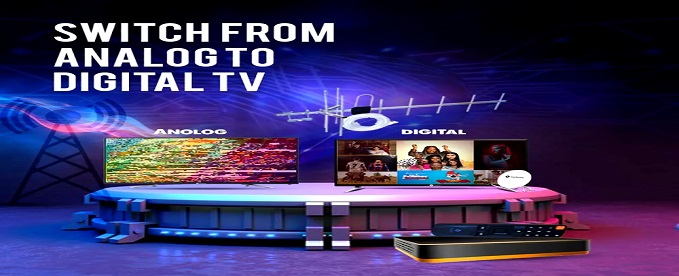
National Broadcasting Commission (NBC) has said that Nigerians will no longer pay annual Digital Access Fees under the renewed Digital Switch Over (DSO) project.

Charles Ebuebu, director-general, NBC, disclosed this in an exclusive interview with the News Agency of Nigeria (NAN) on Wednesday in Abuja,
Ebuebu said viewers only need to purchase an approved decoder and satellite dish which cost below N20,000 to enjoy free television permanently.
“Previously, users paid an annual digital access fee of about N1,500, described as an administrative charge.
“The new system removes that annual fee. It provides free access to free-to-air television channels without any payment.
“Premium channels will be introduced later. Viewers who want those additional channels will be able to access them through paid services.
“Nigerian content on free-to-air channels remains free to watch. Unlike Pay TV, this platform does not require monthly subscriptions for its basic service,” he said
Ebuebu said approved decoders for the FreeTV will cost less than N20,000 and authorised sales outlets will soon be announced.
He urged Nigerians to wait for official information on approved dealers for the DSO decoders, warning that unauthorised sellers are exploiting growing public demand.
He reiterated that people only need a free-to-air decoder, along with a satellite dish instead of the old antenna system to receive the DSO signal.
“Once the equipment is installed, viewers can access all available channels across the country without paying any subscription fees,” he stressed
The DG dismissed claims by some retailers that there are different categories of decoders sold at varying prices, stressing that such sellers are not authorised by the commission.
According to him, the NBC will soon publish the list of approved dealers, official prices, and locations where genuine decoder boxes and accessories can be purchased.
The NBC boss said the DSO project is designed not only to improve television broadcasting but also to stimulate economic growth by creating jobs, attracting investment, and opening up opportunities for businesses that support the broadcasting industry.
Ebuebu noted that content producers and broadcasters stand to benefit significantly from the nationwide reach of the DSO platform.
Unlike the previous system, where many stations had limited regional audiences, he said the new platform will make their channels available to viewers across Nigeria.
He added that the introduction of audience measurement technology will provide scientific and reliable data on television viewership.
Ebuebu added that audience measurement technology will give advertisers greater confidence in placing adverts and enable broadcasters to demonstrate the true size and reach of their audiences nationwide.

NDIC Begins Payment to Depositors of 46 Failed Microfinance Banks

Telcos Seek Clear Regulatory Framework on Airtime Credit Services

FG Says Rumours, Fear, Can Crash Banks

MTN Warns Customers against Fake Promo

EU Debunks Fake Compensation Scheme Targeting West African Bank Customers

NRC, Ponzi Scheme Collapses Resulting Loss of Billions of Naira

NASENI Moves to Digitize CCB’s 5m Assets Declaration and Operations

Lebara Nigeria Launches Lebara Play, Africa’s First Telecom-Owned Micro-Drama Platform

Tokenization, Blockchain Technology will Transform Financial Institutions – IMF

EFCC Busts NIS Visa Overstay Racket, Uncovers N700m in an Account




 News3 days ago
YEDC Warns Customers, Says 20 Percent Electricity Bonus is Scam

 News3 days ago
PFIPC Probe: Dollar, Pounds Accounts of Fake Agency Inactive – CBN

 Broadcasting3 days ago
NBC, INEC, Plan Joint Broadcast Monitoring Framework ahead of 2027 Elections

 News3 days ago
STEM Africa Fest to Nurture Nigeria’s Future Innovators

 E-Business3 days ago
Jumia Nigeria Expands Flexible Payment Options with Klump Partnership

 E-Financial3 days ago
No Going Back on July 31 Deadline for Insurance Firms’ Recapitalisation – NAICOM

 E-Business3 days ago
Lagos Unveils N10m Single-digit Loan Scheme for MSMEs

 E-Financial3 days ago
Court Affirms FCCPC’s Power to Regulate Digital Lending