

Telecom
Nigeria Requires Immediate Reform In Telecom Sector To Unleash Industry 4.0- Teniola


Olusola Teniola is the president, Association of Telecommunication Companies of Nigeria (ATCON); providing industrial leadership in steering the association’ collaborations with government, civic society, academia, and international organizations seeking to invest in Nigeria’s telecommunication space. He also doubles as the Client Partner at Detecon International, a leading edge Telecom consultancy for important Government, MNO(s) and 4G-5G projects across Nigeria and West Africa. Prior to that, Teniola was the CEO & Managing Director Company of Internet Solutions (IS) with critical focus on growing Internet Solutions (Part of Dimension Data & NTT Group) into a fully-fledged provider of converged communication solutions in Nigeria’s growing data broadband space. Teniola, a MBA in Management holder from the University of Bath; BEng (Hons) Computer & Information Engineering, London South Bank University, had worked as a director at Kinten Telecom Ltd and COO, Phase3 Telecoms. In this interview with peter oluka, Teniola urges the government to address the ICT industry pain-points, as a means to encourage more investments.
ATCON Presidency: The Journey So Far
The journey has been insightful and rewarding in many ways. Firstly, it has provided me with a perspective of the multi-faceted challenges facing our members, this insight has been gained from the numerous courtesy visits I and members of the ATCON National Executive Council (NEC) have made to a cross-section of our members, it is through this channel and exposure to the day-to-day issues in front of the management of these companies that has cemented and focused the advocacy that I have led to date. Secondly, it has been rewarding in the manner that as President I’ve been able to forge further partnerships and collaborations with other associations across ECOWAS and Morocco. In particular emphasis has been made to our recent ATCON MoU signed with a prominent association in Casablanca in September 2017 to strengthen the Morocco-Nigeria ties in ICT outsourcing opportunities and investments. This is a typical theme that speaks to one of my 6 point agenda that I shared with the press when I took over the leadership of this great association.
Telecoms’ Industry and Economic Disequilibrium

The changing dynamics in the industry are no different from other sectors, so I’ve tried not to treat our industry as a special case, however, when we note that inflation is in mid-double digits and FOREX/currency risks were critical and still are pressure points in the way and manner that our members’ business models have been impacted, it is encouraging to have observed that our members have adapted to the challenges and still put in a stellar quarter-on-quarter trillion naira revenue contribution to the Nigerian GDP.
The country risks have not helped in attracting further increases in FDI, however, a stable customer base across the industry albeit at lower ARPU rates in both the consumer and Enterprise segments has meant that the key to survival has been a focus on operational efficiencies and a drastic reduction on CAPEX spend – so in the short term we are weathering the storm but in the long term there appears to be a great deal of uncertainty in the forecasts. Our members are now seeking a more robust form of capital structure for their business models to ensure continued sustainability.
Vanguard For A System, Backed by Policies, That Will Guarantee Investors’ Confidence In The Telecoms’ Sector.
When I look at how other climes in Africa have performed in terms of policies in the telco space, it appears that Nigeria is ahead in policy formulation, however, we are predominantly viewed by investors as an Oil & Gas producer and with the cyclical nature of commodity prices, it has meant that policies to diversify the economy including our ICT policies have been met with healthy skepticism from a view point that suggests that Nigeria is treated as a consumer led ICT market and not one that has sufficient local capacity to develop into a knowledge based society. So the policies that are in place in our industry are predominantly infrastructure focused requiring a high degree of debt leveraging to undertake the execution of these projects and as money (both local and foreign) is no longer inexpensive, then the only guarantee left for our industry is for government backed incentives and an enabling environment to exist to allow and encourage the inflow of non-portfolio investments to accommodate the risks that are evident in our business environment.
Critical Areas Requiring Immediate Policy Interventions
(1) Immediate removal of ICT equipment from the 41 restricted items on the CBN list that are banned from accessing the official FOREX market; (2) Recognition that Telecoms equipment is a critical national infrastructure and therefore needs the same protection given to the electricity infrastructure to avoid the continuous destruction of optic fiber cables, the prevention of closure of base stations, the removal of multiple taxes and regulations at both state and local government levels; (3) The immediate implementation in full of the National Broadband Plan 2013 and the continuation of the update and/or review of the ICT 2012 policy document approved in principle. Finally (4), we need government to further encourage opening up and sharing of backbone infrastructure already present in the market to all our members at a price that ensures fair competition for all our members and the wider industry players – this will create a sustainable and healthy industry. We need NCC’s wise leadership and mature intervention in achieving (4).
Why Operators Are Unable To Expand Networks
The current economic environment does not lend itself to further investments in the short to medium term and requires a level of appropriate concessions being provided by government to retrigger the potential investors’ appetite to take on risks that are no longer immaterial. The current roll-out of 4G LTE and LTE-A networks is broadband in terms of speed of access with minimum configurations typically in the region of 2 to 10Mbps and in some cases even more. Technically this is achievable under ideal conditions and not a guarantee all the time, so ‘upto’ a certain specified speed is more appropriate for best-effort internet access speeds over broadband cellular mobile networks, so it is not necessarily true that 4G LTE services are offering narrowband speeds as a default. An enabling environment that supports a certain return on investment over a period of time is a key requirement to attracting further investments in this sector. Any possibility that the eco-system is vulnerable to adverse risks in current investments of capital will send the wrong signals to new investors, so it is very important that our members are showing a healthy growth and more importantly enthusiasm for further investments, as this is then read by others that there are still genuine opportunities that exists in Nigeria that exceeds the risks that are now constants in doing business in Africa.
At The Recent Nigeria- India Ict Summit, In Your Presentation, You Mentioned The Need For Nigeria To Come Up With Viable Policies To Ensure These International Pacts, Partnerships And Agreement Favour The Local Investors. NOTAP is there to do this or are there specific areas you were referring to?
There are indeed areas we can now begin to adopt that creates a buoyant local content driven eco-system that goes above just being a conduit for the distribution of foreign based technology. The need to adopt the Oil and Gas local content policies in place in Nigeria is a start and needs to be seriously taken on board by the Ministry of Communications to ensure that NOTAP and ONC within NITDA are able to be more impactful in its quest to ensure that capital flight is considerably reduced. The execution of NOTAP’s mandate should be non-negotiable and in line with SON, reduce the prevalence of substandard ICT products imported into the country and also to enforce Nigerian standards in the way ICT infrastructure is deployed, both hardware and software.
The National Broadband Policy
It appears that the execution of the NBP 2013 is falling behind and we may more than likely miss the set targets that were set to gauge our progress on an ongoing basis. However, without the experts or industry players being involved in the Nigeria National Broadband Council it will create a situation where the wider stakeholders will not want to ‘own’ whatever the council seeks to achieve. This divide will create a gap that will create more problems going forward and may lead to a ‘white elephant’ syndrome to take shape. The issues that the NBP 2013 raised were by experts and players in the industry and with this knowledge, it is only possible to find solutions from the players who are fully aware of the issues raised and not a set of people who do not come with the domain knowledge or expertise to over-come the challenges or even understand the complex issues that exist. The implications of continuing within this construct is that we shall have missed opportunities to resolve some very critical issues raised by the NBP 2013 and the reinvention of the wheel is more than likely to happen with little or no tangible progress. My best advice is to have all stakeholders involved in the execution, especially those critical to the council’s success and this can only be achieved through proper stakeholder ownership.
Do You See Nigeria Meeting Up With The 2018 Target Of 30% Broadband Penetration
I believe that the minimum target should be 30% and not that we meet 30% and that is the end. This is a journey and right now we have 21% broadband penetration as suggested by NCC, quoting ITU statistics. Really, when we look at the situation we found ourselves in in terms of broadband in 2012 when the National Broadband Plan (NBP) was written, it was evident that a combination of 3G and 4G networks at a level of 80% network coverage for 3G and 50% for 4G will suffice to achieve the minimum 30% at speeds of 1.5Mbps download for the right consumer experience that will create an increase in productivity and this may positively impact our GDP by another 1.x %. If we want to attain the benchmark set we need to accelerate the removal of barriers that exists in Rights of Way (RoW) permits, reduce the costs associated with fiber deployment across the country and create a compelling reason that brings much needed funds from the private sector to Nigeria to build the infrastructure that will enable this to happen. These were some of the underlying assumptions that were prerequisite during the drawing up of the NBP in 2012 and supported holistically by the industry at that time as the only way forward to realistically achieve and surpass the 30% target.
Both NCC And The Industry, Seemingly, Are Quite About The Proposed InfraCos. Why?
NCC will soon announce the outcome of the five outstanding INFRACO licenses. However, our concern in ATCON is that our members have yet to reap any benefit from the earlier two licences awarded back in 2014 and as of yet there appears to be no end in sight as to when they will roll-out infrastructure that was expected to have been deployed by now. This is something that requires the immediate attention of the recently inaugurated Nigeria National Broadband Council.
What’s You View About ‘Digitizing Nigeria’?
There are two parts to ‘Digitizing Nigeria’: One, is people and the mindset required to be creators of value and innovative solutions in agriculture, power management, health, water, transportation and logistics. Second, are the processes that will make for transparent working environments utilizing systems across our day-to-day lives. The critical steps are the evolving requirements to update our many technology deficient citizens so that they become comfortable with the new digital paradigm – this needs to be imbibed from an early age and especially an infusion into the youth population through massive training in ICT and adoption of science based application relevant curriculum that solves basic society’s needs. Another step is for Government to move all the 3 tiers of governance onto a digital platform and examples exist in other climes where this is the norm, so that the Nigerian Citizen is able to interact with government without having to march to Abuja for basic administrative tasks or their Local/State headquarter/secretariat on a daily basis for menial tasks that can be carried out by automated processes instead. Then once we have some of these in place then we can envision the deployment of Smart Cities and Internet of Things (IoT) that fully enmeshes our homes with utility companies, service providers, and other critical institutions that exist to improve our quality and standard of life.
Need For Reforms
We need a reform of the telecom sector in a way that it identifies the opportunities that exists in truly exploring the emerging digital realm. The funding of all this is a steeple chase hurdle to the realization of this new future and it requires continuous change in the way regulation and policies are formulated. Right now, we are undergoing consolidation in the market what we seek are for the Government to react quickly to these changes and adapt as the technology adapts to the new Industry 4.0. paradigm.



Viral rumors about a “Tesla Pi Phone” a new phone, being developed by Elon Musk, CEO and largest shareholder of Tesla and SpaceX, are entirely fake.

AI Generated Tesla Pi Phone and Elon Musk
Instead, the tech giant said on Monday it has filed an application with the US Federal Communications Commission for permission to deploy the constellation by 2028.
It said the system would provide voice, messaging, data and emergency services.
A quick fact-check revealed that Tesla Inc. has never manufactured, developed, or released a smartphone.
Videos and articles claiming a release (often priced between $150 and $800 with solar charging or satellite-only connections) rely on AI-generated concept art and recycled internet hoaxes dating back to 2021.
Musk has only mentioned a phone in hypothetical remarks, stating Tesla would build one only if major app stores completely blocked or censored essential apps like X (formerly Twitter).
On Monday however, his company said that “Amazon looks forward to delivering on the promise of D2D [direct-to-device] connectivity, including to the millions of people living, travelling and working in places beyond the reach of existing networks today,”
The filing is the first step from Amazon into satellite mobile connections, which has until now been dominated by SpaceX’s Starlink service.
Musk’s group has signed partnerships with existing operators such as T-Mobile US and the UK’s Virgin Media O2 to provide phone services for customers where their conventional networks do not reach.
Starlink operates across more than 150 countries, offering high-speed internet connections through its constellation of satellites.

Association of Licensed Telecommunications Operators of Nigeria (ALTON) has attributed rising mobile data consumption to increased use of smartphone applications, cloud services and emerging digital technologies.

Mr Gbenga Adebayo, chairman, ALTON
Mr Gbenga Adebayo, chairman, ALTON, disclosed this on Tuesday at the Lagos Chamber of Commerce and Industry (LCCI) conference in Lagos.
Adebayo said smartphones had transformed access to digital services, with many applications consuming data continuously, even when users were not actively browsing the internet.
He explained that automatic software updates, cloud backups, application synchronisation, video streaming, social media autoplay and location services significantly increased data consumption.
According to him, internet usage had changed considerably from a decade ago when consumers mainly relied on direct browsing with fewer digital applications running simultaneously.
He said growing adoption of artificial intelligence, cloud computing and other emerging technologies would further increase demand for reliable connectivity and greater network capacity.
“The evolution of smartphones has fundamentally changed how consumers access digital services, with many applications now consuming data continuously,” Adebayo said.
He stressed that digital literacy had become increasingly important because consumers needed to understand how their devices and applications consumed mobile data.
He advised subscribers to monitor application activity, adjust device settings and use built-in data management tools to better control their data consumption.
Adebayo said greater understanding of digital tools would help dispel misconceptions about data usage and strengthen public confidence in Nigeria’s telecommunications industry.
Responding to allegations that operators deliberately depleted customers’ data, Adebayo dismissed the claims, insisting telecommunications companies had no commercial incentive to engage in such practices.
He said every megabyte consumed on telecom networks was recorded through internationally standardised billing systems supplied by recognised technology vendors and regulated by authorities.
“Such a practice would be unlawful, unethical, commercially self-defeating and subject to stringent regulatory oversight by the Nigerian Communications Commission,” he said.
Adebayo explained that operators’ billing systems were designed to guarantee accuracy, transparency and verification, while genuine consumer complaints were investigated through established protection channels.
He added that the Nigerian Communications Commission’s complaint resolution mechanisms and technical audits provided consumers with credible avenues for seeking redress over billing concerns.
According to him, trust remains essential to expanding Nigeria’s digital economy because telecommunications infrastructure supported banking, healthcare, education, commerce and government services.
He said the telecommunications sector had evolved beyond basic communication services into a critical driver of productivity, investment, innovation and national economic growth.
Adebayo noted that emerging technologies, including artificial intelligence, financial technology, smart manufacturing and digital agriculture, depended on resilient telecommunications infrastructure.
He said Nigeria could only maximise these opportunities through sustained collaboration among government, regulators, telecommunications operators and consumers.
Adebayo reaffirmed operators’ commitment to improving customer experience, strengthening network resilience and promoting transparency in telecommunications service delivery.
He urged stakeholders to encourage evidence-based discussions on digital services, stressing that public trust remained indispensable for the sustained growth of Nigeria’s digital economy.
(NAN)
Telecom
Galaxy Backbone Soft Launches Government Service Portal to Simplify Access to Public Services

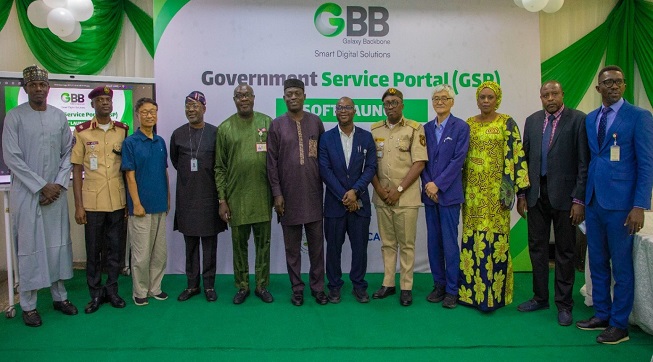
Galaxy Backbone (GBB), in partnership with the Federal Ministry of Communications, Innovation & Digital Economy (FMCIDE) and the Korea International Cooperation Agency (KOICA), officially conducted the soft launch of the Government Service Portal (GSP), a groundbreaking digital platform designed to transform how citizens, businesses and government institutions interact.

The event, held at the Galaxy Backbone National Shared Services Centre (NSSC) Headquarters in Abuja, brought together senior government officials, development partners, technology stakeholders and members of the media to unveil services.gov.ng—Nigeria’s new one-stop digital gateway for accessing government services.
The Government Service Portal is designed to provide a single, trusted platform through which Nigerians can easily discover, access and interact with digital services offered by Ministries, Departments and Agencies (MDAs). By consolidating government services into one unified portal, the initiative aims to improve accessibility, enhance service delivery and create a more seamless citizen experience.
Speaking at the event, the Managing Director/Chief Executive Officer of Galaxy Backbone. Professor Ibrahim Adeyanju, stated that the launch represents another significant milestone in Nigeria’s digital transformation journey and reflects the Federal Government’s commitment to building a more connected, efficient, transparent and citizen-centred public service.
He emphasized that the Portal is more than a website; it is the foundation of a unified digital gateway that places the needs of citizens and businesses at the centre of government service delivery.
He further noted that while the event marks the beginning of the Portal’s journey, the soft launch provides an opportunity to onboard pioneer MDAs, gather user feedback, strengthen system integrations and continuously improve the platform ahead of a wider national rollout.
Representing key stakeholder institutions at the launch were the Deputy Director of KOICA Nigeria, Mr. Ki Yun Baik; the Permanent Secretary of the Federal Ministry of Communications, Innovation & Digital Economy, represented by Mr. Joseph Bareiye, Director of e-Government; the Permanent Secretary, State House, represented by Mr. Oguntuyi Olusegun, Head of ICT; and the Executive Director, Digital Exploration and Technical Services, Galaxy Backbone, Olumbe Akinkugbe.
The Government Service Portal aligns with the Renewed Hope Agenda of President Bola Ahmed Tinubu, GCFR, and supports Nigeria’s broader Digital Public Infrastructure (DPI) agenda by creating a citizen-facing gateway that complements existing investments in digital identity, secure infrastructure, cloud services, cybersecurity and digital government platforms. It can be accessed using the link: services.gov.ng . The initiative is expected to strengthen public service delivery, increase transparency, improve operational efficiency and foster greater trust between government and citizens.
Galaxy Backbone reaffirmed its commitment to supporting all Ministries, Departments and Agencies in integrating their digital services into the Portal, noting that collaboration across government will be critical to building an inclusive, interoperable and efficient digital ecosystem that benefits every Nigerian.
The Government Service Portal is expected to evolve into Nigeria’s central digital gateway for public services, making government services simpler, faster and more accessible for citizens and businesses alike.

Fact-Check: Elon Musk’s “Tesla Pi Phone” is Internet Rumor

Dangote Plans to Donate One-Third of Wealth to Charity as Legacy

NDPC Directs DCPMIs to Register with Agency or Face Legal Consequences

Malpass, Ex World Bank Chief Raises Alarm over Nigeria’s Secretive Debt Structures

How and Why Apps Deplete Data – ALTON

NRC, Ponzi Scheme Collapses Resulting Loss of Billions of Naira

EFCC Busts NIS Visa Overstay Racket, Uncovers N700m in an Account

Tokenization, Blockchain Technology will Transform Financial Institutions – IMF

From Scarcity to Scale: What Africa Can Learn from India’s Agricultural Transformation

BON Establishes Six Ad Hoc Committees to Modernize Broadcasting




 News3 days ago
See Verified 20 Countries Nigerian Passport Holders Can Travel Visa-Free

 E-Business3 days ago
Report Says Cybercriminals Deploy Malware to Hijack Crypto Wallets, Monitor Browsers Telegram

 Telecom3 days ago
NCC, REA Partner to Cut Telecom Costs with Renewable Energy

 Telecom3 days ago
Subscribers, Telcos Warn FCCPC over Airtime Lending Enforcement

 E-Business3 days ago
NPC Opens 131 Births, Deaths Registration Centres in Anambra

 General News3 days ago
AfDB, Nigeria Urge African Control of Mineral Resources

 News2 days ago
History as Lagos Becomes First Nigerian State to Launch Greenhouse Gas Registry

 Telecom2 days ago
AI Investment Gap Threatens Africa’s Future Growth