

General News
Nigeria to become “Christmas tree” in Bandwidth- Kruyt

David Kruyt, managing director, Dimension Data West Africa has over 20 years experience in the ICT industry.
Kruyt joined Dimension Data in 2003 as customer advocate: sales, operating in South Africa’s Western Cape Province but in his current position, he is responsible for the management of the entire Western African region, from Cameroon to Liberia.
Over the past four years, Kruyt, has been instrumental in establishing Dimension Data’s Nigeria office.
Cisco Telepresence
I have taken customers to Cisco to sell them the option of Telepresence. Our biggest challenge in Nigeria is bandwidth, and Telepresence is largely dependent on bandwidth. Companies want to communicate internationally or locally – then Telepresence could be an option. Provided it is international, the bandwidth required to deploy it becomes very expensive. International connectivity here is going to stifle any growth in the Telepresence market. Telepresence is a fantastic product but the problem is bandwidth. If there is enough bandwidth – no problem. The issue is that you have a supply and demand situation here, so as long as the demand exceeds the supply, we are going to have issues. If the bandwidth is good and you can afford to pay for it, fantastic!
Environmental Monitoring Solutions and Businesses
Environmental monitoring can be related to a situation whereby you have a bank which is running multiple branches throughout the country, and they have requirements to keep their operations running at 99.99 percent. For power generation, environmental monitoring helps in monitoring the fuel level or charging the batteries. That and a number of others are the kinds of environmental monitoring solutions we put in place. It could be remote access control – for someone accessing a cell site of a GSM company without the right permission, we can have monitoring on that, whereby we send SMS or e-mail to the company, if it is connected. To ensure that technicians are not deployed to field for no reason, this kind of solution connects you pin-point to business-critical areas and issues are brought to your attention. You can understand sometimes if an ATM at The Palms or some remote village goes down, the priority is to get the one at The Palms up before that at the village. Those kinds of solutions would give you detailed information to make decisions around business.
Fibre Backbone
Dimension Data is an infrastructure company but it has a subsidiary called Internet Solution (IS), which is an ISP. IS leverages the likes of MTN using multiple options. Dimension Data does not provide their own infrastructure, but takes existing infrastructure, carry along on top of that and then maximize it for customers.
Putting in Place Customer Interaction Solutions
It all depends on the business needs. You have different applications around business requirements. If you look at the GSM world, their customers need to get information around their billings and issues concerning the network. In their interactions with their customers, the first touch point is the call centre. Now the call centre is not just about the telephone; it is a multiple channel to get hold of call centre agents whether by voice, e-mail, fax, SMS or whatever. So, the complexity of the solution that the service providers put in place to communicate with their customers, determines the kind of service we can offer such service provider. A call centre that cannot be reached either by e-mail, SMS or phone call has a big problem. As it is, 90 per cent of the call centres are over subscribed – you can never get through and you end up getting an automated message. I think there is a lot to be desired around the management of a call centre. The technology is the easy part; it is only about 10 per cent. Actually, the staffing, training and understanding of customers’ requirements are very crucial in the field. In the banking sub-sector, Internet banking, telephone banking, require a mature call centre agent to understand the needs of the customer and also have a history of what the customer has done. If I have an issue about a money transfer that was meant to have been deposited the day before and my feedback is that it is not in yet and I should call later; if I call the agent later on, he/she would be required to have a history of how many times I have called. The trend worldwide was to reduce the number of bank branches and go to call centres, but I think generally people like to have human contact. You see that in Nigeria now, and that is why you find numerous bank branches scattered all over. There are challenges around call centres per se, but you cannot do without them.
Idea of Good Network Security Solution
Security is not just network security, there is internal security, wider area network security – there is a bunch of stuffs which goes around security. So, I would say that security is something that needs to be monitored all the time, and you have to have a security provider who would actually proactively update from inside the business through the edge of the business, to the external business. Our biggest challenge today is data integrity and people stealing data. There are lots of good solutions coming up to address that issue. Dimension Data has a security business which uses the best of breeds from various vendors, and we put them together to give customers a holistic solution.
What are the implications of using products that have reached end-of-life?
Manufacturers provide support which lasts for a period of time – say 3 or 5 years. Once it gets to end of life, the support either ceases or becomes very expensive. There are certain devices that can run forever and you would never have an issue. The problem is, if you are running mission critical applications say banking, oil & gas applications or payroll, can you afford to run on equipment that are of end of life with no support? I would say no! If you are an enterprise business, you need to be able to provide services to your customers, it is imperative that you ensure you stay ahead of the game because if you do not, your competitors are going to provide a better service with innovations. That is what it is all about. People develop equipment that cannot last forever. Things change, we change; we want more out of our lives while doing it with less.
Strengths of IT as a Service
IT as a service is becoming a real part of our business now. An enterprise with a massive IT department could call on a company like Dimension Data that has a pool of resources in all levels that can be deployed on time required basis. IT as a service is difficult for customers to understand, but we are getting to a stage where we have the outsource and the in-source model – we would be providing manpower to do the job and the customer makes some service level agreements. If the system goes down or if the manpower is not available, we have to provide an alternative. Dimension Data is not a company where we provide services and not meet our service level agreements. We provide 100 per cent service level agreements, and are priority driven. That is a great opportunity for customers to leverage their kind of solutions. So I believe IT as a service is going to grow tremendously in the next 18 months to 3 years as the demand for it increases.
Dimension Data’s Global Services Operating Architecture in Nigeria
GSOA literally is a global services operation which cuts across the entire world. If a call is logged today in Nigeria, that call can be tracked to Europe, America and Asia. If we have an engineer who is based in London, he should able to offer support without stress. So we have become a global support centre. Having said that, Dimension Data does not manufacture anything. We provide 1st, 2nd and 3rd level and sometimes 4th level support. With the right agreement with the OEMs, we pass on the 4th level support to them to sort out. We are in global partnership with Cisco, Microsoft, IBM and a score of others.
Collocating for Best Results?
I am baffled how six operators can lay their own fibre throughout the country while in elsewhere, there are two or three national providers who provide infrastructure and everybody leverages on them. The infrastructure on ground in Nigeria now is non-functional. It could have provided a platform for every GSM and fixed line operator to carry their traffic on. Now with a situation whereby each operator puts his own fibre in the ground, I think there would come a time when all the operators realize that they need to work together, and would cooperate and provide interconnect not just on the GSM platform but in infrastructure, in order to make the best use of it. When two or three more offshore Internet cables come into this country, Nigeria would become like a “Christmas tree” in terms of bandwidth. When offshore cables arrive here, I think we would see a lot of interactions among all the operators – using one another’s fibre to get Internet and voice traffic to the end of Nigeria. So, maybe it is not a bad thing that these cables are laid now, but it is at a cost to the end users of ICT services. Mark my words, when reliable offshore cables come into this country, you are going to see business, education, healthcare and government grow to a higher level. Moreover, the more offshore cables, the better because those would drive down the cost of bandwidth in the country.



The International Monetary Fund (IMF) has recommended introducing taxes on fuel products and telecommunications services in Nigeria.

According to the IMF, this is part of broader measures to increase government revenue and create fiscal space for development spending and social interventions.
The international financial organization argued that stronger revenue mobilisation had become increasingly important as Nigeria’s fiscal position remained under pressure despite recent reforms.
This comes as Nigerians are protesting against worsening standard of living made worse by widespread insurgency.
The recommendation was contained in the IMF’s 2026 Article IV Consultation report on Nigeria, where the Fund argued that additional tax measures would be needed over the medium term despite the recent overhaul of the country’s tax system.
“Further tax policy changes will likely be needed—such as increasing the VAT rate, extending VAT to fuel products, rationalising tax expenditures in particular VAT exemptions on extractive industries and some customs duties, and introducing telecom excises—to complement administrative gains,” the IMF said.
The institution, however, cautioned that the timing of any new taxes must take into account Nigeria’s rising poverty levels and worsening food insecurity.
“The timing of reforms must consider the poverty and food insecurity situation and ensure that the cash transfer system is in place and funded,” the Fund added.
A previous attempt by the Federal Government to impose a five per cent excise duty on telecom services met strong resistance from operators, subscribers and consumer advocacy groups before it was suspended and eventually scrapped.
Telecommunications firms had maintained that the industry was already weighed down by multiple taxes, rising energy costs, foreign exchange challenges and infrastructure constraints.
They warned that any additional levy would likely be transferred to consumers through higher call and data tariffs.
Similarly, proposals to tax fuel products have faced opposition from labour unions and private sector organisations amid concerns over the rising cost of living following the removal of petrol subsidies and increases in transport and food prices.
The IMF’s latest recommendation comes as the Fund projects that Nigeria will require stronger revenue mobilisation efforts to sustain planned increases in public spending and provide support for vulnerable households.
According to the report, revenue-enhancing tax policies could generate additional revenue equivalent to 3.9 per cent of Gross Domestic Product within three years of implementation.
The Fund identified a two-percentage-point increase in the Value Added Tax rate as the largest contributor, with a projected revenue gain of 0.8 per cent of GDP.
The report also projected that removing pioneer status incentives and revising free zone regulations would generate an additional 0.7 per cent of GDP.
Reforms to capital gains taxation and adjustments to personal income tax bands, allowances and rates were each estimated to contribute 0.6 per cent of GDP.
The IMF further estimated that a top-up tax on multinationals and large firms could raise 0.5 per cent of GDP, while rationalising investment allowances would contribute another 0.4 per cent.
Notably, the category labelled “others”, which includes telecom excise duties and measures such as a carbon tax on fuel, was projected to generate an additional 0.4 per cent of GDP in revenue.
Beyond new tax measures, the Fund said Nigeria could achieve even greater gains through improved tax administration.
It projected that administrative reforms would generate an additional 3.1 per cent of GDP through better compliance, stronger enforcement and efforts to reduce informality in the economy.
According to the report, measures such as fiscalisation, electronic invoicing and cross-validation of tax deductions could generate 1.5 per cent of GDP, while expanded tax identification registration and consolidation of taxpayer databases could contribute a further 1.6 per cent of GDP.
The IMF acknowledged that some of Nigeria’s recently enacted tax reforms would reduce government revenue in the short term because they were designed to support households and small businesses.
It estimated that revenue-reducing measures would lower revenues by 2.4 per cent of GDP.
Expanded VAT input credits, additional zero-rated items and broader exemptions on basic consumption goods were projected to account for 1.7 percentage points of the decline.
Lower corporate income tax obligations for smaller firms would reduce revenues by 0.4 per cent of GDP, while lower personal income tax rates and expanded exemptions for low-income earners would account for another 0.3 percentage-point reduction.
Overall, the IMF projected that the combined impact of revenue-enhancing measures, administrative reforms and revenue-reducing policies would result in a net increase in government revenue equivalent to 4.6 per cent of GDP over the medium term.Nigerian investment opportunities

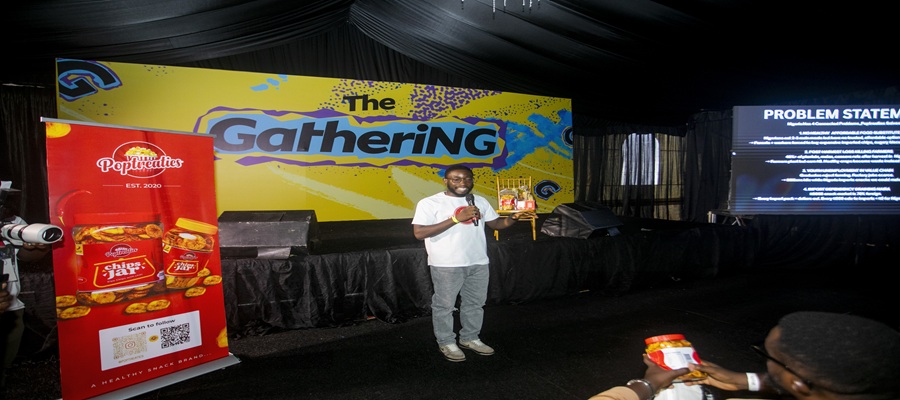
MTN Nigeria, through The Gathering on 100, has officially unveiled the next chapter of its youth cultural and creative movement in Aba, the home of entrepreneurship and innovation in Eastern Nigeria.

The initiative transformed the Prime Time Event Centre in Osisioma into a vibrant hub of innovation, culture, lifestyle, and entertainment.
As the second major activation of MTN’s ‘Live It 100’ campaign, this event underscores a bold commitment to encouraging young Nigerians to live life to the fullest of their potential, whether in business, tech, culture, or entertainment.
Central to this immersive experience is the highly anticipated Pitchathon, where 10 standout startups are vying for a total prize pool of ₦5 million.
The participating startups represent a cross-section of Aba’s burgeoning innovation ecosystem, tackling challenges ranging from logistics to artisanal tech.
Among them are Trashverse Recycling Technology Limited, a climate-first recycling solution founded by Charles Ikechukwu; SkillsCircle by Together, an ed-tech platform championed by Ijeoma Irene to empower young professionals in Nigeria; and Poptreaties, a healthy snack alternative founded by Ifeanyichukwu Dominion to curb junk food consumption.
These founders and their peers are showcasing solutions that blend local ingenuity with scalable technological frameworks, highlighting the immense potential of the region’s entrepreneurial spirit.
The pitchathon is judged by three esteemed figures in the African innovation ecosystem: Chiemela Anosike (Founder, Solaris GreenTech Hub), Dr. Chime Chimezie-Uche (Founder, Abia Startup Limited), and Justina Nwokedi (Digital Transformation Specialist).
This competition is designed to spotlight and empower early-stage founders in the city, providing them with a platform to validate their business ideas before investors, consumers, and industry stakeholders.
The prize structure offers ₦2.5 million to the winning startup, ₦1.5 million for the first runner-up, and ₦1 million for the third-place winner.
This Aba edition builds on the success of the Lagos edition, which took place from April 22 to 26 at the National Stadium, Surulere. There, eight startups received a collective ₦45 million in seed funding for solutions ranging from fintech to creative technology.
By bringing this platform to Aba, a city renowned for its industrial and entrepreneurial spirit, organizers aim to deepen access to opportunity and support the next generation of business leaders.
For these 10 startups, the Pitchathon is a vital opportunity to gain visibility, engage with potential partners, and accelerate their growth within a high-density environment of innovation.

Central Bank of Nigeria (CBN) has proposed new guidelines aimed at separating the operations of banks and other closely linked financial entities, including financial technology (fintech) companies, to strengthen consumer protection and safeguard financial stability.

CBN
The proposal is contained in a circular dated June 10 and titled, “Exposure of the Draft Guidelines on Ring-Fencing Operations of Closely Linked Entities in the Nigerian Financial System.”
According to the apex bank, the proposed framework is designed to establish clear operational and functional boundaries among related entities while addressing regulatory arbitrage arising from the commingling of activities across different licence categories.
The CBN said the guidelines would cover governance, intra-group transactions, segregation of customer funds and data, operational independence, recovery and resolution planning, as well as consolidated supervision.
“The Guidelines is intended to strengthen consumer protection, enhance transparency and accountability, mitigate contagion risks among closely linked entities, and preserve financial stability while supporting innovation and fair competition within the financial services sector,” the bank stated.
The apex bank explained that a closely linked entity refers to any organisation that directly or indirectly controls, is controlled by, or is under common control with another entity through ownership, voting rights, common directors or senior management, shared systems or branding, or contractual dependence.
Under the proposed framework, such entities would be required to operate independently, maintain separate governance and risk management structures, and individually meet capital adequacy and liquidity requirements regardless of group-level resources.
The CBN also proposed stricter controls on transactions between related entities.
It stated that no closely linked entity would be permitted to extend loans to or guarantee the obligations of another related entity without prior written approval from the regulator.
According to the draft, all intra-group exposures must be conducted on an arm’s-length basis and reported to the CBN on a quarterly basis.
The proposed guidelines further seek to strengthen consumer rights by requiring financial institutions to obtain customers’ express consent before onboarding them onto products or services offered by related entities.
The regulator said institutions would also be required to clearly disclose such arrangements in simple language and provide customers with alternative options where available.
To protect depositors and consumers, the CBN proposed that customer funds must not be used for intra-group lending, proprietary trading, servicing group debts or covering the operational expenses of affiliated companies.
The draft also includes provisions for enhanced data protection, requiring customer information to be stored independently from the systems of related entities to prevent unauthorised access or commingling.
In addition, promoters of closely linked entities would be required to establish non-operating holding companies to oversee their businesses.
However, shareholders unwilling to adopt the structure may opt to merge their operations and surrender excess licences.
The CBN said the draft guidelines had been released for stakeholder consultation and public review.
It invited comments and recommendations from stakeholders, noting that submissions must be made on or before July 9.
The proposal follows another draft guideline on financial holding companies issued by the apex bank on June 10, which seeks tighter ownership requirements, including a minimum 51 per cent stake in subsidiaries.
The CBN said the reforms were part of ongoing efforts to strengthen regulatory oversight and ensure the resilience of Nigeria’s financial system.

IMF Urges FG to Introduce Fuel, Telecom Taxes

CBN to Expand eNaira for Salaries, Pensions and Welfare Payments

CSOs Raise Alarm over Nigeria’s Data Protection Crisis

CBN to Bar HoldCos from Influencing Banks’ Lending Decisions

₦5m up for Grabs as 10 Startups Clash at the Gathering on 100 Pitchathon Aba

CBN Extends PoS Geo-Fencing Enforcement Deadline to August 2026

NCC Drafts New Rules for Virtual Mobile Operators

TD Africa, HPE Drive Conversations on the Future of Intelligent Networking

Anthropic Raises $65 Bn to Expand AI Research, Innovation

Easybuy Partners WAWUAfrica to Upskill 10 Million Youths and Women, Boosting Nigeria’s Economic and Financial Inclusion




 News2 days ago
UK, Nigeria Launch £15m Growth Programme to Accelerate Economic Transformation

 General News2 days ago
Haleon Introduces New Corporate Identity in Nigeria

 Telecom2 days ago
NITDA Unveils Ambitious Strategy to Turn Southwest into Nigeria’s Next Innovation Powerhouse

 General News2 days ago
Elon Musk Makes History as the World’s First Trillionaire
 General News2 hours ago
₦5m up for Grabs as 10 Startups Clash at the Gathering on 100 Pitchathon Aba
 General News2 hours ago
IMF Urges FG to Introduce Fuel, Telecom Taxes

 Telecom2 hours ago
NASENI Unveils Ambitious Plan to Produce 600 Million Diagnostic Kits Annually
 E-Financial2 hours ago
CBN to Bar HoldCos from Influencing Banks’ Lending Decisions