

General News
Nigeria Will be Industrialised, Transformed Economy- Coker

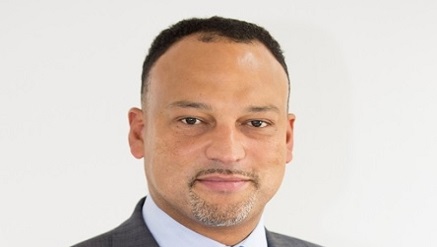
Tunde Coker, managing director of Rack Centre since July 2014 has within a short time built a reputation for innovation and the democratisation of IT business in Nigeria.
Coker, a Mechanical Engineering graduate from Glamorgan University, Wales has worked with Ford of Europe; and Cap Gemini, a global top 5 business and technology consultancy.
During the 2000s, he held various roles; MD/CEO at an eMC Saatchi, an M&C Saatchi company, Global IT Applications Director at BP the oil major, and prior to coming to Nigeria in 2009, he was Chief Technology Officer for Criminal Justice in the UK and CIO for Ministry of Justice.
Access Bank brought Coker back to Nigeria as Group CIO in 2009; and he was engaged on the exciting journey to transform the bank to one of the leading banks it is today.
In 2013, he left to join Emerging Markets Payments as MD West Africa.
He believes that Nigeria will be an industrialised and transformed top 20 global economy and is very pleased Rack Centre is a key part of that journey.
About Rack Centre
In late 2012, Jagal, a Nigerian conglomerate holding that operates leading energy businesses and manages a diverse portfolio of investments identified a significant market opportunity and potential demand for high quality, reliable, secure and scalable carrier neutral colocation space, leveraging 20,000 square metres in Oregun, 30 metres above sea level, private secure access within an industrial area and access to a wide range of utilities; an ideal location for a data centre.
The vision was for Rack Centre to be the leading data centre in Sub-Saharan Africa; delivering robust colocation services to world class standards. A modular, off-site constructed facility was preferred for two key reasons:
1. To allow for the site to scale to meet demand over multiple phases. Modular scalability is ideal for what was a nascent market at the time and projected to grow at double digits.
2. To provide a facility with a finished build quality to match any new build in Europe or America.
Rack Centre is built to world class standards and the first West African data centre to receive Tier III Design certification in 2014.
It is truly carrier neutral; this means it has all the leading telecommunications providers connected, the widest choice in West Africa and more than any of the local Tier lll data centres.
It is the primary host for the Internet Exchange Point of Nigeria. This is significant as customers located at Rack Centre have direct connection to the IXPN giving significant benefits in customer experience for Internet services.
Rack Centre Level of Certification and Benefits
Rack Centre is Design Certified to Tier III by the Uptime Institute, the global authority for data centre certification. The Uptime Institute is “The Global Data Centre Authority” that facilitates and certifies data centres around the world on their reliability and uninterruptible availability.
It also delivers due diligence assessments and certifications of site infrastructure and site management in accordance with the Tier and Operational Sustainability Standards in over 40 countries worldwide.
Tier certification is the validation of the reliability inherent the design of the data centre. There are four tiers of certification.
Tier I being the lowest, Tier IV, the highest and are subject to stringent qualification criteria. Tier III is the highest possible in most parts of the world.
For instance, a Tier II data centre has a design downtime of 22 hours per year, a Tier III just 1.6 hours allowable. A large difference that matters for companies that must have reliable IT.
If the data centre is down, the business is down. I am pleased to note that since commissioning over 24 months ago, Rack Centre has had 100% uptime.
Tier certification is analogous to a driving licence. It is the stamp of minimum certified proficiency. You would not hire a driver without a driving licence, just as it is not advisable to trust critical IT assets to uncertified data centres or where the tier level does not meet your enterprise risk criteria.
Managing the Power Supply Challenge in the Country
We have designed and in place very sophisticated power architecture that is a component part of the design certification.
At the time of commissioning we assessed and found grid utility did not meet our reliability and dependability standards.
So we currently run on fully redundant diesel power generation. The utility power situation has since changed and we are now implementing industrial dedicated utility power with a substation at Rack Centre.
This will be live in Q 1 2016. We are undergoing detailed design for gas power which will come into play in 2017 giving multiple sources of power; utility, gas and diesel.
We may then consider getting the Tier IV certification, which may well be another first in West Africa. Our technology is highly efficient and we achieve average Power Utilisation Effectiveness (PUE) of 1.5 compared to a typical PUE of 2.5 in the region. This is outstanding for the local climatic conditions we have.
Some content providers as well as state governments have attributed security concerns as responsible for them hosting their servers outside. How would you react to this and does Rack centre have any security certification to address this concern?
Our data centre is designed and sited with effective security within a private estate. There are ten (10) layers of physical security combined with both card and biometric access control devices.
CCTV monitoring of the entire facility is available 24/7/365 with six months of footage immediately available for review on request.
This is monitored round the clock by our Command Centre. The physical security/access control system is a major innovation on its own. The ten (10) layers of physical access control starts right from the first gate all the way to the racks combining manned gates, card access control systems, biometric access control systems and physical locks and keys that ensure that access is strictly on an “authorised-need-to-access” basis. Customers are able to limit access to racks down to individual employees.
This gives our clients a high level of assurance that infrastructure colocated with Rack Centre “lives” in a very secure environment. We operate the business to international security and service management standards.
Software security is down to the responsibility of the clients, although we ensure the delivery of communications links to the racks are highly secure.
Customers who colocate their assets at Rack Centre have been amazed at quality of installation and ongoing service, which then gives the confidence and peace of mind on the security of their IT assets.
Data centre outsourcing is a new line of business for Banks, Telcos among others. Why should a bank or any other organization consider Rack centre data centre?
A data centre is the bedrock of an organisation’s IT systems. If the data centre is down, all systems are down, and more importantly your business.
So CEOs want to ensure reliable data centre however, many organisations today cannot afford the huge upfront capital cost of building a new, efficient data centre to meet new demands for reliable IT.
It takes millions of US dollars to build an efficient data centre; a key asset, but non-earning asset. Not only does building a data centre require specialist expertise, running and sustaining the quality requires continuing focus and investment. By outsourcing, they;
1. Avoid immediate and future growth fixed infrastructure investments,
2. Have immediate access to required capacity. Data centers can typically take up to 18 months to construct,
3. Access to future capacity is matched by Rack Centre’s scalability to their business IT demands,
4. Can invest capital and time into earning assets and their core business, and
5. Option of colocating prime or disaster recovery infrastructure,
6. Leave the growing complexity of managing power and environmental issues to data centre specialist such as Rack Centre.
CIOs and CEOs that colocated at Rack Centre say they can sleep at night with the reliability they get from colocating at Rack Centre.
As a carrier neutral facility, the broad range of telecommunications companies connected to Rack Centre gives choice of connectivity providers to our clients. Rack Centre is modular and highly scalable.
The significant growth of IT and data demand means client owned data centres are reaching capacity or over loaded with the headache of having to extend their data centre facilities.
What is nature of your support in terms of tailored services to SMEs? We work with our Reseller partners to provide hosting, cloud, managed services and connectivity.
The hosting requirements for SMEs including cloud services can be tailored to meet individual requirements. This is significant as it now gives SMEs access to computing resources previously beyond their reach enabling them to focus on growing their businesses.
Challenges of Operating in Nigeria
There are two key challenges; power and talent. We address both by ensuring we put in place the right processes and focus on enterprise risk management. I have mentioned our sophisticated power architecture.
We have tightly managed processes in place to ensure diesel quality; have a fuel testing lab, and we test and segregate all deliveries.
Our minimum standards are to the European and US standards of 9% and 5% maximum impurity levels respectively.
On people, we have a high level of focus on our people development to world-class standards.
Our staff are exposed to the same training experienced by any leading data centre provider in the world. People and competency management is central to our core values.
Assessment of IT Regulations in the Country
We do have some regulations that support local content that are being increasingly enforced. When we did not have the data centre quality such as Rack Centre in the country, companies that sought quality had no option but to look abroad.
At that time, insisting on local content where local quality was not there would embed mediocrity. Now we have proven world class facility and the capacity locally, those laws can be enforced.
We do have local manufacturing of computers and other hardware and carefully thought out policies that encourage the patronage of locally produced products should be considered.
Not ban imports, but make local products as competitive and more attractive based on normal market forces.



Conoil Plc is spreading joy this Valentine season as the first group of winners in its Valentine Bonanza promotion have been announced and rewarded. Launched on February 14, the campaign continues to delight customers at participating retail outlets.

The initial raffle draw, conducted on February 21, saw fortunate customers receive ₦10,000 worth of free petrol each. The draw was carried out publicly, with media representatives present to ensure full transparency. With the promotion still ongoing, more customers have the opportunity to join in and potentially be among the next winners.
A Conoil Management spokesperson explained that the initiative is a way to show appreciation to loyal customers for their ongoing support. “Our customers have responded impressively to the bonanza, with strong participation recorded across our stations,” the spokesperson said.
The second and final phase of the promotion is now in motion. Customers who purchase at least 10 litres of petrol at any participating Conoil station remain eligible to win in the grand finale raffle.
The grand finale is set for February 28 at 12 noon. Motorists in Lagos and Ogun states are encouraged to visit Conoil outlets to collect their tickets and take part in the exciting conclusion of this Valentine celebration.

PalmPay users took to the #LoveWithPalmPay campaign to show how experiences are powered through seamless banking.

It’s the month of love and social media has been filled with couples showing affection with gifts. As digital payments become embedded in everyday life, the way relationships are planned, funded, and experienced is evolving.
Recent insights from SBM Intelligence 2025 ‘Love in the Air’ report show that despite economic pressures, most Nigerians still set aside dedicated budgets for Valentine’s Day, with the largest percentage planning to spend between N51,000 and N100,000, while less than 5% are willing to spend above N500,000.
This growing intentionality highlights the need for platforms that help people manage their money more effectively, offering features like free transfers and tools that make it easier to send, track, and preserve funds while still showing up for meaningful moments.
Through the #LoveWithPalmPay campaign, PalmPay set out to show how the platform is enabling users to plan, pay, and celebrate meaningful moments with greater ease.
During the Valentine’s season, PalmPay invited couples across Nigeria to share their stories through the #LoveWithPalmPay campaign, celebrating how digital banking supports their individual expressions of love.
The campaign saw strong participation, with many PalmPay couples submitting entries that showcased how they use the app to plan surprises, pay for outings, and stay connected through everyday transactions.
From these entries, four couples were selected, each showcasing how PalmPay has enabled fast and reliable transactions in key moments.
One video from @simply.omotoshan, one of the selected couples, captures the role of seamless payments in making their spontaneous moments possible.
She said in her entry video: “Our cutest money moment with PalmPay was when we planned our Valentine’s picnic and realized we had forgotten half of the things we needed; literally, half of everything. We rushed to the mall to get cakes, food, decorations, and all the essentials. When it was time to pay, we used PalmPay.
“The transaction was smooth, fast, and stress-free. In no time, we were done setting up our Valentine-themed picnic with everything perfectly ready. Honestly, all our experiences with PalmPay have been easy and satisfying, but this one is definitely our cutest money moment. Thank you, PalmPay.”
A testimonial from the fourth selected couple, Mohammed and his wife, reflects his excitement: “Hello PalmPay, thank you so much for selecting us as one of the winners of the #LoveWithPalmPay campaign. We truly appreciate this. My wife and I are very grateful. Thank you, PalmPay, for the love and support. We’re so happy and thankful for the N100,000 reward. We love you, PalmPay, and long live PalmPay. Thank you so much.”
Beyond the feel-good stories, the campaign reflects a broader shift: fintech is no longer just about transactions, it’s about enabling experiences. Reliable payments, fast transactions, and accessible financial tools reduce the friction that can disrupt important moments, allowing users to focus on connection rather than logistics.
From paying for dinner to managing other expenses, PalmPay continues to demonstrate how digital financial services support modern relationships, proving that in today’s economy, love is not only felt, it’s funded digitally.

KPMG has appointed Tola Adeyemi as Chief Executive Officer for KPMG one Africa, alongside the addition of Professor Olayinka David‑West and Dr. George Njenga as independent members of the Africa Governance Council (AGC).

Effective from March 2026, the appointments reinforce the firm’s leadership expertise, underscore a long‑term commitment to Africa and highlight confidence in the continent’s growth potential.
“Africa is one of the most dynamic and promising regions in the global economy, and KPMG is committed to playing a meaningful role in its growth story,” said Tola Adeyemi, incoming CEO for KPMG One Africa.
He continued: “It is a privilege to step into this role at such a pivotal moment for both KPMG and the continent. I look forward to building on our strong, connected and high‑performing base to deepen collaboration and deliver consistent quality and impact across our markets.”
KPMG is recognised globally for its commitment to quality, integrity and professional excellence, supported by a strong global network of member firms. Trust remains the foundation of the audit and accounting profession, with high standards of governance, ethics and audit quality increasingly demanded across Africa’s public and private sectors.
KPMG One Africa’s approach brings the continent closer together with strong leadership to strengthen cross-border collaboration and offer shared expertise and consistency which is business‑critical to help clients navigate complex risks and unlock sustainable growth opportunities.
Commenting on the appointment, Professor Ben Marx, Chairman of the Africa Governance Council, said: “Tola Adeyemi is exceptionally well positioned to lead KPMG One Africa. In addition to his global perspective as a member of the KPMG Global Council, he brings significant influence and credibility as a respected business leader across the continent.”
The appointments of Professor David‑West and Dr Njenga to the Africa Governance Council, which provides board level governance, further strengthens independent oversight, bringing strong academic credentials alongside deep strategic and business expertise.
“These appointments reinforce KPMG’s commitment to strong governance, accountability and leadership depth,” Marx added. “They complement our established African leadership team, in‑country managing partners and regional senior partners, further enhancing our client‑centric approach across Africa.”

Conoil Bonanza Winners Emerge

PalmPay Couples Show How Love Is Funded Digitally

KPMG Strengthens Africa Leadership to Support Long‑term Growth Across the Continent

Nigeria, EU Ink Research, Innovation Deal Worth €100Bn

esentry 2025 Report Shows Healthcare, Financial Services and Telecoms as Staging Grounds for Increased Cyberattacks in Africa

NITDA, NBC Explore Strategic Collaboration on Digital Transformation, Media Regulation

Kaspersky Launches OT Calculator to Align Cybersecurity Investments with Business Goals

Accidental Billionaire Opts for Jail Instead of Returning Money Credited Him by Mistake

Why the Future of PR Depends on Healthier Client–Agency Partnerships

Kaspersky Brings more Transparency to Threat Detection with New Hunt Hub




 E-Business2 days ago
AfDB, UNDP Launch $10Bn AI Initiative for Africa

 News3 days ago
NITDA Urges Stronger State Partnerships as Key to Digital Economy Goals @ South-South Stakeholders Forum

 Telecom3 days ago
GSMA Launches Innovation Fund to Accelerate Green Transition Through Mobile Technology

 Telecom2 days ago
Grey Expands Cross-Border Banking with USD Accounts, USDC Support

 Telecom3 days ago
Prof. Adeyanju is Strengthening Nigeria’s Digital Backbone for a Connected Future in Two Years of Purposeful Leadership

 E-Business3 days ago
Firm Identifies RenEngine Loader Distributed Through Pirated Games and Software

 E-Financial3 days ago
Fidelity Bank Launches HerFidelity Apprenticeship Programme 2.0 to Boost Women Entrepreneurship

 Broadcasting3 days ago
Spotify Marks 5 Years in Nigeria with 163.5% Listening Surge, Afrobeats Boom