

E-Financial
Nigerian Banks Face Cash Crisis-CBN

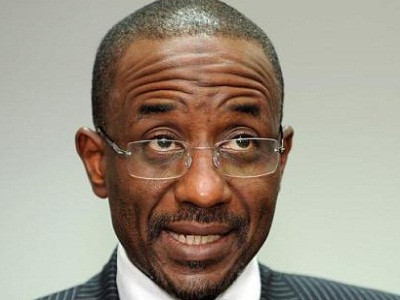
A Capital Adequacy Ratio (CAR) audit of the 23 banks in the country by Central Bank of Nigeria (CBN) showed that some have “high level of liquidity crisis”, meaning that some have cash crisis.
The report showed that only 16 banks have CAR above 15 per cent; five have CAR above 10 per cent, but less than 15 per cent.
The Nation Newspaper said that an analysis of the report showed that a bank’s CAR is below 10 per cent but greater than five per cent. Another one’s CAR was below five per cent.
The report said the minimum ratio of capital to total risk-weighted assets shall remain 10 per cent for Regional and National Banks and International Banks, 15 per cent.
According to the CBN Monetary, Credit, Foreign Trade and Exchange Policy Guidelines for 2012 -2013, the banks’ lenders should maintain a higher level of capital commensurate with their risk profile.
The Financial Stability report showed that after a careful study of the liquidity stress test conducted on the banks at the end of June, last year, the CBN mandated them to carry out internal CAR audit at least once yearly to ascertain their liquidity positions.
According to The Nation, the results showed that the industry liquidity ratio fell to 16.7 and 13.3 per cent after the respective five-day and cumulative 30-day shocks were applied, from the pre-shock position of 67.8 per cent.
“The banking industry solvency stress test assessed the resilience of the industry based on historical worst case and hypothetical strained macroeconomic situations. The overall banking industry was resilient to liquidity shocks, though a few banks were found to be vulnerable.
“The diagnostic study earlier commissioned by the CBN to examine the Nigerian financial system, taking into account specific tools required in the light of international developments since the 2007 crisis, was completed in the period under review,” it said.
The report suggested the enhancement of existing supervisory tools and institutional arrangements based on three major components, namely: macro-prudential policy; micro-prudential policy, and crisis management, necessary for the achievement of financial stability in the country.
“Henceforth, banks are required to carry out their Internal Capital Adequacy Assessment Process (ICAAP) on an annual basis, as at December 31, and forward copies of the report to the CBN for review,” Mrs. Tokunbo Martins, CBN Director Banking Supervision, said.
According to her, the full adoption of Basel Accords will be executed by June but preliminary works would start this month. The Basel Accord is a financial analysis principle expected to give banks’ financials better credibility.
She said the policies specified approaches for quantifying the risk weighted assets for credit risk, market risk and operational risk for the purpose of determining regulatory capital.
According to her, the computations are meant to ensure that banks have sufficient high quality capital to support their risk taking activities.
The lenders, she said, are also expected to establish effective risk management systems commensurate with their level of operations.
She said all banks and banking institutions are expected to adopt the basic approaches for the computation of capital requirements for credit risk, market risk and operational risk, adding that the adoption of the Standardised Approach for Operational Risk and other sophisticated approaches will however be subject to the approval of the apex bank.
“The guidance notes are applicable to all banks and banking groups licensed to operate in Nigeria and should be applied on a solo as well as a consolidated basis. The minimum capital requirement is retained at 10 per cent and 15 per cent for local and internationally active banks,” she said.


Securities and Exchange Commission (SEC) said it has handed a six-week deadline to capital market operators to submit board-approved recapitalisation or license downgrade plans.

The directive was disclosed in the revised minimum capital guidelines issued by the Commission on March 18, 2026.
The Commission stated that all capital market operators must submit their board-approved and comprehensive implementation plans within six weeks of the June 30, 2027, compliance deadline.
“All CMOs are required to submit their recapitalization or downgrade plans within six weeks, with clear timelines and execution strategies.”
“Each plan must detail current capital position, minimum requirements, funding strategy, risk considerations, and governance structure.”
“Operators that fail to provide credible plans risk sanctions, including licence restrictions and regulatory delays under the ISA 2025 framework.”
“Pending applicants are not exempt, and applications older than 12 months will lapse and require fresh filings.”
The Commission added that this directive applies across all categories, including brokers, dealers, fund managers, custodians, exchanges, and digital asset operators, reinforcing the urgency of compliance.
The latest development followed its recent announcement on a sharp increase in minimum capital requirements across the capital market ecosystem, signaling one of the most significant regulatory adjustments in recent years.
Broker-dealers are now required to hold N2 billion, up from N300 million, while dealers must meet N1 billion, compared to the previous N100 million threshold.
On the other hand, Registrars face a new requirement of N2.5 billion, rising from N150 million, and Underwriters and clearing firms are benchmarked at N5 billion, while composite exchanges must now have N10 billion.
The Commission emphasised that the recapitalisation is not a one-time exercise but a long-term structural reform aimed at strengthening market resilience and aligning Nigeria with global standards.
A key feature of the new guidelines is the tightening of what qualifies as regulatory capital, which could significantly impact operators’ effective capital base.
The SEC has narrowed the definition to ensure only high-quality, loss-absorbing capital is recognised.
Recognized capital includes fully paid-up ordinary shares, qualifying irredeemable preference shares, share premium, and retained earnings from audited profits.
Unrealised gains are excluded, ensuring capital reflects actual financial strength.
Disallowed items include revaluation reserves, borrowed funds, shareholder loans, client funds, deferred tax assets, and encumbered capital, while Non-cash capital injections are permitted but must meet strict valuation criteria, including quoted equities, CIS units, government bonds, and eligible OTC-traded securities.
The Commission added that exclusion of debt and quasi-debt instruments underscores the regulator’s focus on enforcing genuine capital adequacy rather than leveraged compliance.
E-Financial
DLM SPV PLC Lists ₦9.00bn AAA-Rated Medium-Term Notes on FMDQ Exchange, Sets Benchmark in Corporate Bond Market

FMDQ Securities Exchange Limited (“FMDQ Exchange” or “the Exchange”) has approved the listing of DLM SPV PLC’s ₦7.30 billion Series 1 (Tranche A) and ₦1.70 billion Series 3 (Tranche B) Plain Vanilla Returns Sovereign Bond-Backed Composite Notes under its ₦30.00 billion Medium-Term Notes Programme.

This approval by the Exchange’s Board Listings and Markets Committee reinforces FMDQ Exchange’s position as the preferred platform for innovative debt structures that serve both investor requirements and issuer funding needs.
DLM SPV PLC (“DLM SPV” or “the Issuer”), a special purpose vehicle established to facilitate structured financing arrangements, represents an innovative approach to capital mobilisation within Nigeria’s evolving financial landscape. The dual-tranche issuance structure provides investors with differentiated risk-return profiles while enabling efficient capital deployment. The net proceeds from this Notes issuance, sponsored by DLM Advisory Services Limited, a Registration Member (Listings) of FMDQ Exchange, will be utilised in accordance with the terms of the underlying transaction structure to support productive economic activities aligned with the Issuer’s strategic objectives.
Commenting on this listing, Dr. Sonnie Ayere, Group Chief Executive Officer, DLM Capital Group, stated, “The listing and premium pricing of the DLM Series 1 Tranche A Bond at ₦112.14 making it the most valuable AAA corporate bond in Nigeria is a defining milestone, not just for DLM Capital Group, but for the evolution of Nigeria’s fixed income market.
Achieving AAA/AAA credit ratings from Global Credit Rating and DataPro Limited, and commanding benchmark pricing, underscores the market’s recognition of its robust credit structure, disciplined risk framework, and sovereign-level credit protection underpinning the instrument.
This transaction validates our strategy of engineering high-quality, de-risk investment products that attract deep domestic capital. It also sets a new reference point for how structured corporate issuances can be priced when backed by strong credit fundamentals and investor confidence. Building on this momentum, DLM is strategically positioned to expand its issuance, deepen liquidity across future Series and continue delivering innovative, high-quality instruments that strengthen the Nigerian capital markets while creating sustainable value for investors.”
Also commenting, Mr. Nwabu Okonkwo, Managing Director, Investment Banking, DLM Advisory Limited, stated, “DLM Advisory Limited is delighted to have acted as Financial Adviser, Transaction Structurer and Joint Issuing House on the ₦7.30billion Series 1 Tranche A 40.62% Hold-To-Maturity Returns and ₦1.70billion Tranche B 19.07% Plain Vanilla Returns Sovereign Bond-Backed Composite Notes issued by DLM Funding SPV PLC and promoted by DLM Capital Group. The promoter’s solid corporate profile and strong credit rating of the bond were evident in the pricing and subscription of the Series 1 issuance.”
FMDQ Exchange continues to play a leading role in fostering a dynamic and inclusive capital market that accommodates both conventional and structured financing instruments. By maintaining a robust regulatory framework, promoting operational excellence, and ensuring market transparency, the Exchange remains committed to facilitating capital formation that supports infrastructure development, sectoral diversification, and sustainable economic growth across Nigeria.
FMDQ Group PLC (“FMDQ Group”) is Africa’s first vertically integrated financial market infrastructure (“FMI”) group, strategically positioned to provide registration, listing, quotation and noting services for financial markets securities; an integrated trading platform, clearing & central counterparty, and settlement services for financial markets transactions; depository of securities, as well as data and information services, across the debt capital, derivatives and equity markets, among others, through its wholly owned subsidiaries – FMDQ Exchange, FMDQ Clear Limited, FMDQ Depository Limited and FMDQ Private Markets Limited. As a sustainability-focused FMI group, FMDQ Group, through FMDQ Exchange, operates Africa’s premier Green Exchange – FMDQ Green Exchange – positioned to lead the transition towards a sustainable future.

Central Bank of Nigeria (CBN) has been named Central Bank of the Year 2026 by an awards committee in London.

The award recognises the bank’s major reforms that helped stabilise Nigeria’s economy and improve investor confidence.
The award is part of the 13th annual Central Banking Awards. It highlights how the CBN helped turn around Nigeria’s economy, which was close to crisis in 2023.
At that time, Nigeria faced serious problems such as high inflation, a weak currency, low foreign reserves, and about $7 billion in unpaid foreign exchange obligations.
There was also a big gap between official and black-market exchange rates.
After Olayemi Cardoso was appointed governor in October 2023 by Bola Ahmed Tinubu, the CBN introduced strong reforms. These reforms focused on proper monetary policies, transparency, and market-based systems.
One major change was in the foreign exchange system.
The CBN removed multiple exchange rates and introduced a “willing-buyer, willing-seller” system. This made the market more transparent and reduced manipulation.
The bank also cleared old foreign exchange debts owed to sectors like aviation and manufacturing.
This helped restore trust in the economy. By late 2025, the gap between official and black-market exchange rates dropped to less than 2%.
Nigeria’s foreign reserves also improved, rising to $46.7 billion by November 2025 the highest level in almost seven years.
This was due to better foreign exchange inflows, stronger exports, and renewed investor confidence.
The International Monetary Fund praised these reforms, saying they improved the foreign exchange market and made pricing more reliable.
Inflation, which peaked at 34.8% in December 2024, dropped to 15.1% by January 2026. The CBN achieved this by raising interest rates and carefully managing the economy.
The bank also improved its internal operations. It stopped some programmes that were increasing money supply and causing inflation.
It strengthened its systems, improved compliance, and introduced digital tools, including artificial intelligence.
In the banking sector, the CBN introduced new rules requiring banks to increase their capital. This is expected to make the financial system stronger.
Nigeria also improved its fight against financial crimes. In 2025, the country was removed from a global watchlist for money laundering after improving its monitoring systems.
These reforms boosted Nigeria’s global image. Credit rating agencies upgraded the country’s outlook, and investor interest increased. Nigeria’s 2025 Eurobond attracted more than five times the expected subscriptions.
Although progress has been made, the CBN says challenges still remain, such as maintaining low inflation and completing banking reforms.
Overall, the award shows that Nigeria is regaining its position in the global financial system, thanks to strong policies and reforms by the CBN.

Nigeria Spends $470m on AI-powered Surveillance Devices- Report

Metaverse Collapses, Horizon Worlds Shuts Down on Quest

FG Plans New HIV Prevention Injection in 8 States, FCT

SEC Issues Six-Week Ultimatum to Market Operators to Submit Recapitalisation Plan

NIMC Disowns Fake NIN Portal

Kaspersky Discovers New Phishing Campaign Exploiting Google Tasks Notifications to Steal Corporate Credentials

esentry 2025 Report Shows Healthcare, Financial Services and Telecoms as Staging Grounds for Increased Cyberattacks in Africa

AfDB, UNDP Launch $10Bn AI Initiative for Africa

MultiChoice Suspends Yearly DStv Price Hike as Canal+ Pushes Growth

MTN Nigeria Posts Record N1.70 Trillion Pre‑Tax Profit, Declares N20 Dividend for 2025




 General News1 day ago
Tech Firms Sack over 45,000 so Far in 2026

 E-Financial1 day ago
CBN Wins Central Bank of the Year Title @13th Global Awards

 Telecom1 day ago
FG Taps Quest Merchant Bank for Advisory on 90,000km Fibre Project

 General News1 day ago
Rockefeller, Global Energy Alliance Cross $100 million Mark in Africa Electrification Push

 General News1 day ago
Jury Finds Elon Musk Liable for Misleading Twitter Investors

 News1 day ago
Morney Launches in Nigeria as E-invoicing Drives Finance Digitisation

 News1 day ago
Dr Krishnan Ranganath to Lead UniCloud Africa in Continental Digital Infrastructure Push

 General News1 day ago
SEC, NYSC Partner to Combat Ponzi Schemes