

E-Business
Nigerian Health Tourism & Part Data Ought to Play


The tale of the decrepitude of the Nigerian health sector is one now told by many pundits, health writers, professionals, and other activists; it is a fable that you all already know.
But this is not the tale I’m telling today, I want us to ask ourselves these questions, how did the we get here, a place where our hospitals are only ‘world class’ on the pages of newspapers, a most shameful point where the country looses billions to other economies due to ‘medical tourism’ and not ashamed of it.
For as long as I can remember, the UK, US, Canada, has been destination for ailing Nigerians to get health treatment and also for pregnant Nigerian women who could afford the expenses to travel to deliver their babies.
It seemed so normal for a trend which started in the 70s and 80s, until recent times when countries like Malaysia, China, Singapore and India became hot-spots too.
Of over $500million Nigeria loses to these economies, a whopping $260Million goes to India alone. Many times on the newspapers we read stories of white elephant projects; top notch hospitals built by serving governors who seem to prefer to be flown overseas rather than utilize institutions built by themselves, a serious case of a food seller refusing to eat out of the food he/she sells.

In September 2012, former Enugu State governor Sullivan Chime awarded the sum of N13.6 billion to Arab Contractors for the construction of a new Secretariat complex, while demolishing the existing one.
Concerned statesmen spoke up, pointing out that it was needless and that there were more important things the resource could have gone into.
In October of the same year he was reported to have been flown to a London hospital for medical treatment, the story according to Bellanaija was that he had cancer of the nose.
Looking back, what was more important, a medical institution that could handle such rare cases of cancer or a Secretariat complex?
In April 2013, despite opposition by the Economic and Financial Crimes Commission, EFCC, a Federal High Court granted former governor of Enugu State, Chimaroke Nnamani leave to travel abroad on medical grounds.
Documents presented to the court showed that the former governor was suffering from “chest pain, shortness of breath, cough and tiredness”, which could otherwise be treated in the 6 billion naira “project for posterity” Teaching Hospital he built in 2005/06, or could it not be?
The governor of Imo State, Rochas Okorocha in April 2013 was flown abroad for medical treatment after sustaining ‘minor injuries on his forehead’ in a car accident. Should we assume that none of the specialist hospitals in his state could treat this injury? This also brings us to the question of the 27 world class general hospital presently under construction in 27 local governments in Imo state.
Would the people be asking too much of the governor if they request that he begins to use one of the hospitals for treatment upon completion; after all they are world class?
In May this year, Godswill Akpabio the immediate past governor of Akwa Ibom state unveiled a 30billion naira ‘world class’ hospital shortly before leaving office.
This hospital Nigerians were told would attract medical tourism to the state due to its world-class specialist standards and ultra-modern medical facilities; “640 city scanners, digital mammography, endoscopy surgery, highly sophisticated intensive care units and medical gas plants with fully automated laboratories.
Newspapers wrote, blogs blogged, many clapped not knowing that Mr Goodswill perhaps was ‘bo-bo-ing’ Nigerians. In September the ‘bo-bo’ was made manifest.
The same Akpabio now a Senate Minority Leader was reported to have travelled abroad for medical treatment due to injuries sustained in a car crash after violating traffic rules.
According to Premium Times, the former governor ‘preferred’ to seek medical help overseas.
The Federal High Court in Lagos in July 2008, granted the then ex-governor and present governor of Ekiti State, Mr Ayodele Fayose leave to travel overseas for medical treatment while he was standing trial for a 51-count charge of money laundering.
In a similar circumstance, the former governor of Bayelsa state, Timipre Sylva in December 2013 was also granted permission by an Abuja Federal High Court to travel to South Africa for medical treatment while facing a 6.5billion naira fraud charge.
Data seems to show that for one to be fit to stand trial for fraud cases brought against one’s person, one must go overseas and sip from the most addictive juice of wellness served at the canteens of their medical institutions.
We can go on and on, but you see, despite all these similar act of let-down by these individuals who were at some point charged with the cardinal responsibility of ensuring the health and wellness of their people, there was a very rare occasion whence it was proven that the Nigerian health sector still has very good hospitals with credible and well trained professionals.
In December 2012, former governor of Kogi State Idris Wada was said to have rejected the option of being flown abroad for further treatment after undergoing what was described as inter-locking nail surgery on his thigh broken in the crash.
A Thisday article in Jan 2013 wrote that the Federal Government had concluded plans to place a ban on Nigerians seeking medical treatment that could be handled by some public and private health facilities in the country abroad. Two years after it seems like that ‘conclusion’ was not concluded because groups are still calling on the president to put an end to medical tourism.
Last week the Nigerian Medical Association (NMA) urged President Muhammadu Buhari to ban all public office holders from seeking medical services overseas. It is said that a ban on medical tourism was one of the methods Chief Obafemi Awolowo leveraged as Premier of Western region, to make sure the children of political officeholders in Action Group (AG) and later, Unity Party of Nigeria (UPN) controlled states utilized the public schools and health institutions.
So yes we keep going back and forth on this issue of medical tourism, the need for it to be banned, but that steers us away from the real issue.
Lack of medical information has always been the ‘Judas factor’, it’s the key problem.
Our long loved tradition of going abroad for even the most treatable ailments has caused people to lose faith in the system, most are even unaware that several complex issues can be treated here in Nigeria.
Truth be told our medical advantage has for long been poorly communicated.
What makes these foreign hospitals better than ours? Policy and data. In recent years, a growing number of governments from cities to states to regions have committed to opening up the vast repositories of data they hold across agencies and departments, and in many cases to collecting new kinds of data for public use.
In the UK for example, departments, hospitals, providers, trusts, institutions and other agencies in particular have come under increasing pressure to allow greater access to healthcare data and information.
Over a decade ago, the Society for Cardiothoracic Surgeons began publishing the results of surgeries done by individual physicians across the UK.
Surgical outcomes improved rapidly, and a report by the Society stated that the marked, sustained, incremental improvement in the quality of care the surgical teams have achieved is directly associated with the process of recording, reporting and publishing outcomes at the level of the individual clinician.
Greater data accessibility has radically transformed the health sectors of these economies who have invested substantial resources (financial and intellectual) into developing comprehensive open health data strategies from whence incipient ecology of innovation, analysis and research began to emerge thereby transforming the delivery and experience of their healthcare.
This is why today our rich troop to these economies so as to enjoy the greater efficiencies, innovation, and, perhaps better health outcomes there-in.
Blaise Aboh is co-partner at Orodata, a civic tech organization transforming government and public health sector data into insightful narratives to uphold transparency, accountability, and civic inclusion. He can be contacted via: 08126267941 or [email protected]


E-Business
Kaspersky Uncovers New Mirage Kitten Malware Used in Cyber-espionage Campaign Across Africa, Others


Kaspersky Global Research and Analysis Team (GReAT) has discovered a previously undocumented malware set used by Mirage Kitten APT. The findings were revealed at its annual Kaspersky Cyber Security Weekend for the Middle East, Turkiye and Africa (META).

The malicious tools were used in a targeted campaign aimed at maintaining long-term access to victim networks and stealing sensitive data.
The company’s researchers have identified victims of this campaign across the Middle East and Africa, including organisations in Egypt, small and medium-sized businesses and government entities in Jordan and Tanzania, aviation organisations in Pakistan, telecommunications companies in Ethiopia and financial-sector entities in Burkina Faso.
The toolset consists of three custom programs. At its core is NightLedger, a newly discovered Windows backdoor attributed to the group based on code and behavioural similarities to its previously known malware, which gives the attackers remote control over infected machines: they can run commands, explore and transfer files and capture screenshots.
It is complemented by two covert tunneling tools, ArcBridge and BridgeHead, which effectively turn a compromised computer into a relay node: the attackers run their tools on their own servers, while all the resulting traffic is quietly funneled through the victim’s machine, as if it originated from inside the victim’s network.
This lets them slip past network defences and preserve long-term access without drawing attention. The first of these tools was identified in April 2026 in activity targeting victims in the Middle East.
While the initial access vector remains unclear in most cases, Kaspersky GReAT researchers observed BridgeHead being deployed during post-compromise activity in victim environments in Egypt and at an aerospace and aviation organisation in Pakistan. In those cases, the intrusion activity followed targeted spear-phishing attempts consistent with the group’s known methods.
The lures were highly tailored including recruitment-themed messages impersonating trusted brands and hiring platforms, as well as fake videoconferencing pages that redirected victims to malicious archive files hosted on third-party file-sharing services.
“Based on our latest findings, we conclude that Mirage Kitten continues to evolve its malware arsenal in support of targeted cyber-espionage operations across the Middle East and Africa.
“Another notable aspect of the campaign is the group’s continued reliance on tunneling utilities as part of its operational toolkit: in practice this enables attackers to bypass network controls, maintain covert access to compromised environments and significantly complicate detection efforts.
“Given the persistence and sophistication of these techniques, organisations and defenders should incorporate these findings into their threat assessments and strengthen their detection and response capabilities accordingly,” says Omar Amin, senior security researcher at Kaspersky GReAT.

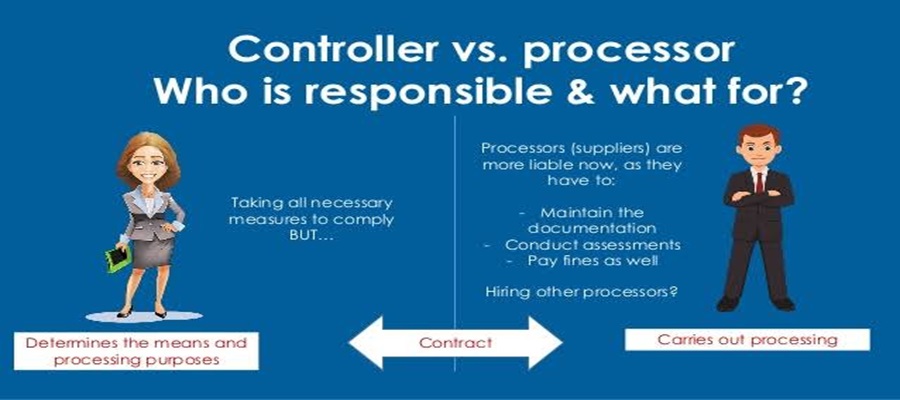
Nigeria Data Protection Commission (NDPC) has directed all Data Controllers and Data Processors of Major Importance (DCPMIs), yet to register with the commission to do so immediately.

This followed a Federal High Court judgment affirming NDPC statutory powers to designate and register such entities.
DCPMIs are entities operating in Nigeria that handle sensitive personal data or large volumes of information, requiring mandatory registration with the NDPC under the Nigeria Data Protection Act (NDPA).
In a statement issued on Tuesday by Babatunde Bamigboye, head of Legal, Enforcement and Regulations at the NDPC, described the judgment as a major milestone for data accountability and regulatory oversight in Nigeria.
The commission said the ruling arose from a suit filed by Emmanuel Harunna against the NDPC in Emmanuel Harunna v. NDPC (FHC/L/CS/1116/2024), in which the applicant sought a declaration that Point of Sale agents were not Data Controllers or Processors of Major Importance under the Nigeria Data Protection Act and requested a perpetual injunction restraining the commission from registering them.
According to the statement, Justice F.N. Ogazi examined the commission’s Guidance Notice on Registration alongside Sections 5(d), 6(c), 44, 45 and 65 of the Nigeria Data Protection Act before concluding that the commission acted within its statutory powers in designating entities under the Major Data Processing – Ordinary High Level category as Data Controllers and Processors of Major Importance.
Quoting the judgment, the statement read, “The Nigeria Data Protection Act was enacted to promote accountability, transparency and responsible data governance. Registration enables the Respondent to identify entities engaged in significant data processing activities, monitor compliance.”
It added that the court held that, “Far from undermining the constitutional right to privacy, the registration framework is one of the statutory mechanisms designed to safeguard that very right by subjecting data controllers and data processors to effective regulatory oversight.”
The statement further quoted the court as saying, “Looking at the recitals of the Guidance Notice, there is every indication that the Guidance Notice is also aimed at protecting the privacy and security of data subjects, thus bringing the registration requirement of the Guidance Notice within the protective shield of Section 45 of the 1999 Constitution.”
According to the commission, the court also held that, “Remarkably, Section 63 of the Data Protection Act provides that the provisions of the Act shall prevail over any other law inconsistent with its provisions on matters relating to the processing of personal data.”
Reacting to the judgment, the commission described the decision as a significant boost to Nigeria’s data protection regime.
“The Commission appreciates the ground-breaking efforts of the court towards the advancement of the jurisprudence relating to data accountability in Nigeria, as eloquently demonstrated in this case,” the statement read.
Following the ruling, Vincent Olatunji, national commissioner and chief executive officer, had directed every Data Controller and Processor of Major Importance that had yet to comply with the registration requirement to register without delay.
The commission warned that entities failing to comply with the registration requirement could face legal consequences.
“Failure to register creates serious legal liabilities under the law, while compliance with registration requirements builds public trust and safeguards the fundamental rights and freedoms of data subjects in Nigeria,” the statement added.

The University of Nigeria (UNN) is set to partner with The Roxettes Group to establish a research and innovation centre focused on artificial intelligence (AI), smart and green mobility, and digital technologies, in a move aimed at strengthening research, entrepreneurship and technology-driven industrial development.

Chairman of The Roxettes Group, Arc. Dr. Kaycee Orji-Kelechi, announced the proposed partnership while delivering his acceptance speech after receiving an Honorary Doctor of Business Administration (Honoris Causa) during the university’s convocation ceremony.
The proposed facility, to be known as the Dr. Kaycee Orji Centre for Artificial Intelligence, Smart/Green Mobility and Digital Innovation, is expected to provide a platform for research, innovation and collaboration between academia and industry, with a focus on developing commercially viable solutions to local and continental challenges.
Orji-Kelechi said the initiative was conceived as a long-term investment in human capital and technological advancement rather than simply another physical infrastructure project.
He said the vision was to position the University of Nigeria among Africa’s leading institutions in artificial intelligence, smart mobility and digital innovation through research, entrepreneurship and technology development.
According to him, the centre will house five specialised laboratories covering artificial intelligence and machine learning, smart and green mobility, robotics and the Internet of Things (IoT), digital finance and financial technology, as well as cloud computing and advanced data centre technologies.
He also announced plans for the proposed Kaycee Orji Founders Innovation Challenge, an annual programme intended to identify, mentor and support innovative ideas from students, researchers and academic staff with the potential to become scalable businesses.
“Every student of this University should know that a great idea conceived in a classroom should have a pathway to becoming a patent, a startup, a global enterprise, and a solution that transforms society,” he said.
Orji-Kelechi disclosed that preliminary conceptual work on the project had commenced, with architectural and engineering designs being prepared by K.KH Contractors Ltd., a subsidiary of The Roxettes Group.
He added that discussions with the university would begin on identifying a suitable site for the project, while a comprehensive proposal containing architectural drawings, engineering designs and an implementation framework would be submitted after completion of the design phase.
Reflecting on his career, Orji-Kelechi said Africa must move beyond consuming innovation to creating it through investment in manufacturing, technology and entrepreneurship.
“We have pursued one simple vision: that Nigeria and Africa must move from consumption to production; from importing innovation to creating it; and from waiting for opportunities to building them,” he said.
He urged graduating students to see their education as a foundation for solving societal challenges through innovation, leadership and enterprise, adding that he remained committed to promoting industrial development, youth empowerment and sustainable economic growth.
The proposed collaboration forms part of broader efforts to strengthen university-industry partnerships, which are increasingly seen as critical to improving research commercialisation, innovation capacity and technology-led economic development in Nigeria.

Nwokolo, Nollywood Actor Claims Internet Fraud is “Keeping Economy Afloat’

SEC Begins Full e-Registration for Capital Market Operators

Elon Musk Launches Invite-only X Money with Visa Debit Card

CBN Fines Banks N430m for Ignoring Customers’ Complaints

Kaspersky Uncovers New Mirage Kitten Malware Used in Cyber-espionage Campaign Across Africa, Others

NRC, Ponzi Scheme Collapses Resulting Loss of Billions of Naira

EFCC Busts NIS Visa Overstay Racket, Uncovers N700m in an Account

Tokenization, Blockchain Technology will Transform Financial Institutions – IMF

From Scarcity to Scale: What Africa Can Learn from India’s Agricultural Transformation

BON Establishes Six Ad Hoc Committees to Modernize Broadcasting




 News3 days ago
See Verified 20 Countries Nigerian Passport Holders Can Travel Visa-Free

 News2 days ago
History as Lagos Becomes First Nigerian State to Launch Greenhouse Gas Registry

 E-Business2 days ago
UNN to Partner Firm on AI, Smart Mobility Innovation Centre

 Telecom2 days ago
AI Investment Gap Threatens Africa’s Future Growth

 Telecom2 days ago
AMCON Puts ntel Up for Sale, Seeks Investors

 E-Financial2 days ago
Remita Raises Alarm Over Nigeria’s Digital Divide, Calls for More Investment

 Telecom1 day ago
Fact-Check: Elon Musk’s “Tesla Pi Phone” is Internet Rumor

 Telecom2 days ago
Court Affirms NDPC’s Powers to Register Major Data Controllers, Processors