

General News
Nigerian market is still at Growing Stage -Westman


Eran Westman is the EVP Worldwide Sales, Ceragon. He has been with the company for 12 years and has done several cell zones in Europe, Middle East and Africa. He was in Nigeria and spoke to ken nwogbo on industry issues.
Declining ARPR in Nigeria
ARPU is going down everywhere, the perfect ARPU in the world is in India and India is our biggest market as a company. Largely 30 percent of our business is done in India, in a very competitive environment.
The two growth engines for Ceragon throughout the years have been more coverage, meaning the customer needs to cover new areas, new territories, then we need a lot of microwave. People require more capacity to deliver to their growing subscribers, mainly by the smartphone in the use of data, things like iphone or the 3G dongle that uses twice the number of data. These are forcing operators to put higher capacity radios such as IP radios, with which they can serve the customer better. As you can see all over the world, the networks are choked. When AT & T launched its iphone, its network collapsed because people were surfing, downloading, streaming without enough capacity on the network. You need to have the network to support the iphone. This is the reason, why I am optimistic because the first trend is not over, meaning we can cover more geographical areas for customers and on the other side, the people here have not caught up with smartphones but I am sure the time would come. People in Nigeria like phones and you can see that everybody has two or more phones. Soon, it will be those of smartphones because they are more affordable and the network would be able to support it. I am sure some of the operators are not offering smartphone services because their networks are not catered to support this. We believe this will come, penetration on the cellular here is high but there is still room for growth. Part of the growth is covering smaller towns and cities and for this to happen, you need more transmission and microwave is one of the main means of transmission in Nigeria. Again, in major cities, operators would like to serve their subscribers with higher capacities or higher data demanding vices. Smartphones and 3G dongles will force operators to upgrade their networks or upgrade their transmission networks to support these requirements. Let us not forget also some of the Wimax networks that are going to be launched here and those of the backhaul, full IP, native IP, POIP to support those kinds of Wimax networks with some nice deployment around the world and we think we can do it here as well.
Preparedness to Compete in the Nigerian Market
Competition is great because if there is no competition, there is no market. We compete with competitors in every country where we are present and in those that we are very successful. One of the many advantages of Ceragon is that we control the complete design and intellectual properties of our products. Unlike some of our competitors who buy systems and use third party equipment to get the system running, we control the complete design, the complete know-how of the equipment; therefore, we are able to optimize it with the feature and with the cost. The products on the stable of Ceragon today come with very low cost and we are not ashamed to compete by dwelling aggressively on price and for the fact that we have very feature rich products, especially when operators here will look at the feature they need to support 3G requirements, for higher demand of data and definitely for Wimax arrival. Competition is here, it is very strong and well established; we have to be aggressive as we did in other countries of the world and come up with our product feature set and be aggressive on the commercial side.
Plans to make Nigeria the African hub?
I believe personally that Nigeria can be the hub in Africa, similar to what India is for Asia. The major part of our business in Asia goes to India, so the major part of our business in Africa should go to Nigeria, therefore we will also put in the right investment and the right focus because there are many countries in Africa and you can get lost. The main focus we are going to have in Africa is Nigeria. Ceragon’s strategy is for every focus country in which we decide to establish a subsidiary, in which we decide to work locally to create a full fledged subsidiary with full capability and that is fully self sufficient to support the requirements in that country. Two feet on the ground, no one foot in London, Cairo or New York. The same description we have in any country that we operate with local force, be it whatever country that we have our subsidiaries, those companies are capable to sell, to support and to implement. The company’s focus today is on turnkey project, majority of our business is turnkey projects for cellular operators, this is our bread and butter and this is what we know how to do best and that is what we are going to implement in Nigeria. We do not believe in two legs split between two locations. With relevant resources that we need to support carrying out business, short term, mid term and long term, this is what we would like to grow. We have some investments and hopefully sooner than later, this will grow to support activities in the country. We believe in the people, in the country; it is expensive, inefficient and very clumsy in a way to support activities in a country like Nigeria from outside. Of course, all the companies work together and we need experts on certain issues, we have to bring them from where they are but the core competence on running the business should be here because the people understand the mentality, the culture and how things are done in Nigeria so the best is to count on the people here.
Is Nigeria Nearing the Broadband Banquet?
I believe that the situation in Africa is general, it is not peculiar to Nigeria. People almost do not own access to broadband here. I live in New York and you can get access to broadband everywhere, either by DSL, by 4G, Wimax or by your cable modem provided by the cable provider. This is not the case here so people are thirsty; the people here do not like the internet less than other people, they just do not have the access. So I think it is a great thing that these capacity enable or broadband enable devices have been in the submarine like the Glo 1 coming in. This will give stable internet and increase speed and I think the people deserve more. More capacity gives more opportunity and the operator will have more to sell to their customers.
Capability to Spread fibre across Nigeria
I guess that part of the way of reaching the people in this business is either through microwave or wireless solution because unlike other countries in the world that are doing fibre today, they all combine fibre to cable and to the business path, this will not be feasible here. It is a great opportunity for microwave as it can carry data and voice very smoothly and Ceragon is capable of giving you native TBN, native IP and a combination of both. I believe that broadband availability would be a big driver for microwave growth in Nigeria.
Comparing Regulation of the Nigerian Telecom industry with others
I believe there are lots of operators here, I am not an expert here but I guess some consolidation should take place. I have seen that the regulator enable other technologies like Wimax, which is very good for the people in Nigeria because unlike other countries, wireless is probably one of the means that can bring broadband to homes and offices. In that respect, I think the regulator is doing a very good job by allowing more technical solutions in the market. The number of cellular operators altogether is big and this has given them the opportunity to cover a big country like Nigeria. Moving forward is a challenge for them because the low ARPU and the competition is very aggressive. The coming of Bharti, a very successful operator will stiffen the competition because we have been leasing equipment to them for many years and I’m sure they will be very aggressive here, knowing them from other places and this might change the rule of the game here. I think there is still room for the growth of cellular as well as other technologies so I think the regulator is doing a good job and there is the potential to serve the good people of Nigeria; that is the most important thing.
Do you Foresee Mergers and acquisition?
We see that there are lots of mergers and acquisitions going on in the world today. Looking at the joining between Orange and Tmobile, you see Narrow head telephony at Dubai, Portugal Telecom, even in Brazil. You see a lot of consolidation and acquisitions happening, you see Bharti and Zain, the discussion between MTN and Reliance, which has not been concluded but you see a lot of those trends. I think it is migrating from several aspects to several sectors. Wherever money is, people are ready to migrate and they think they have the expertise and success to move from one region to another. Second is that, competition is getting tougher so people believe that with consolidation, they can compete more successfully in the market. The third is the point that, sometimes, there is no room for so many players in a given market and the natural way of the market is to consolidate because it is difficult to accommodate so many operators. I think the Nigerian market is still at the growing stage, maybe people have not reached the stage of looking at this but I foresee this happening in the future. Some of the CDMA operators are small scale and together, they can come together and serve as a lesser competitor to the big ones.
Ceragon’s Mission in Nigeria
Ceragon is one of the market leaders in terms of independent market providers for big companies. We have been in operation for more than 10 years and one of our focus areas of growth is Africa. We embarked on the journey more than eight months ago and it is quite obvious that Nigeria is the biggest market for almost every product in Africa. Telecommunications has been here for a good number of years, we definitely want to be part of the business here and we have got a lot of focus. We established a subsidiary here a few years ago and now we are making a face lift by hiring Mr. Bekele, a veteran in the microwave industry who has been in Nigeria and has got many years of experience in Harris Stratex, now Aviat. Ceragon is a complete portfolio of microwave starting from the access, the CVM on the IP even to the SDH and on the long haul backbone solution which is some unique solution. It can help operators save a lot of money on the capex because there is no need to install a wave guard and dehydrators. Also, on the apex because maintenance and user consumption are cheaper. Wimax is coming more and more into IP so there is need for people to strengthen their backbone capacity and reach in some other places they have not reached before. We see huge potential in the market with all the cellular operators- GSM, 3G and CDMA and with Wimax operators where fibre optic in the region is very limited; we believe we can serve them in a very good way. On top of this, there is an increase in internet usage mainly by the arrival of sub marine cables. We believe that the application of serving the enterprise by the operator is also a good application with which again, microwave can take a major share and we have the right solution that can serve customers either with IP or VVM or the combination of both to get access for their internet or other services they would like to do.
Ceragon’s Target
We need to establish our name, we need to make sure that all the operators and some of the private organizations here are familiar with Ceragon’s products and its local support abilities. We target mainly cellular operators and the Wimax, so we are to target them and penetrate as many as we can to establish our presence here and to take it to the next level. I will say that at least for the second half of 2010, we need to focus on establishing our name, reputation and support and I am sure we can get some of the local operators to start using our equipment and we would like to take it from there to 2011.


General News
Leo Stan Ekeh Foundation to Open Portal for 1,000 University Tech Scholarships on Monday

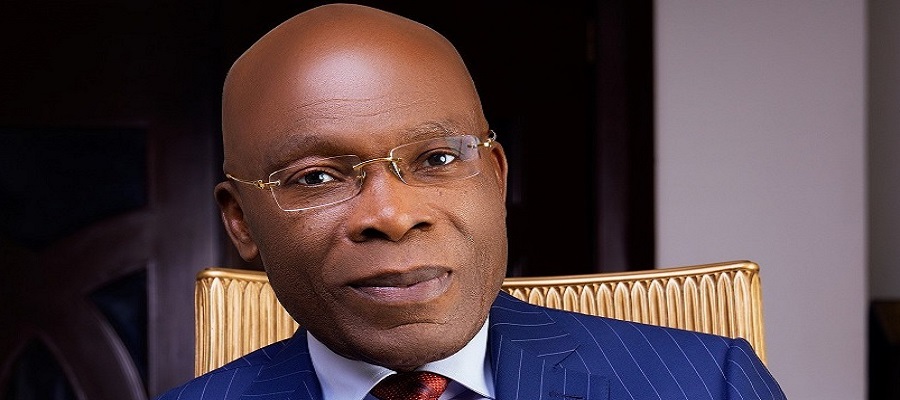
The Leo Stan Ekeh Foundation (LSEF), in collaboration with TD Africa, Konga Group, Zinox Technologies, and Task Systems, is set to officially launch its highly anticipated scholarship programme aimed at empowering 1,000 exceptional Nigerian indigent whiz-kids in the field of technology.

Leo Stan Ekeh
The dedicated application portal, initially scheduled to go live on April 22, will now launch on Monday, April 27, 2026, following final technical enhancements to ensure a seamless, secure, and transparent application experience for prospective candidates nationwide.
This landmark initiative, first announced by Leo Stan Ekeh, Africa’s foremost tech icon and chairman of Zinox Group, forms part of his unwavering commitment to national development and youth empowerment.
The programme was unveiled on February 22, 2026, when Ekeh marked his 70th birthday. Rather than host an elaborate celebration befitting a man of his stature, he chose to channel resources into a cause that would create long-term impact for an economy, offering university scholarships to indigent but brilliant Nigerian youths to study Computer Science in federal institutions.
Building on a legacy of over 6709 beneficiaries trained over four decades by him and his companies, Mr. Ekeh at the time said the goal is to nurture a new generation of highly skilled technology professionals capable of supporting both the private and public sectors, while positioning Nigeria for greater competitiveness in the global digital economy.
This vision reflects his decades-long commitment to building sustainable positive disruptive capacity within Nigeria’s technology ecosystem that shall alter the nation’s GDP.
The scholarship programme is designed to transcend mere financial support, offering beneficiaries access to a comprehensive ecosystem powered by the initiative’s distinguished partners. Beneficiaries will receive technical support, mentorship by very successful members of Nigeria Compute Society, and industry exposure to ensure that recipients are equipped with practical, market-relevant skills.
This multi-faceted approach ensures that scholarship beneficiaries gain not only theoretical knowledge but also hands-on experience and professional networks that will propel their careers in technology.
By leveraging the combined expertise and infrastructure of these industry leaders, the initiative is poised to deliver a transformative learning experience that prepares young Nigerians to compete effectively on the global stage. Beneficiaries will emerge as future-ready innovators capable of driving digital transformation across sectors and contributing meaningfully to Nigeria’s economic growth.
The initiative builds on the longstanding legacy of Leo Stan Ekeh, whose contributions to Nigeria’s technology landscape and by extension Africa have spanned decades and fundamentally reshaped the nation’s digital infrastructure. From pioneering indigenous computer manufacturing through Zinox Technologies to driving digital transformation across public and private sectors, Ekeh has consistently demonstrated a commitment to building sustainable technological capacity within Nigeria.
His investments in digital infrastructure, talent development, and indigenous innovation have positioned Nigeria as a formidable player in the global technology landscape.
This scholarship programme represents the latest chapter in that transformative journey, directly addressing the critical need for skilled technology professionals in an increasingly digital global economy.
As anticipation builds ahead of the April 27 launch, interested applicants are advised to visit the Konga.com website and click the Foundation banner on 1000 Tech Scholarships Awards where the application link and detailed participation guidelines will be published on the launch date. The organisers have assured that the selection process will be merit-driven, inclusive, and transparent, with a focus on identifying truly outstanding young talents from across Nigeria’s diverse regions.

Westerville Public Library, a public library that serves the community of Westerville, Ohio, a suburb of Columbus in United States is in the news after its social account urged violence against Nigerian politicians.

Library staff said the inflammatory messages were not written by any employees and moved quickly to purge the feed and regain control of the account, rattling regulars who are used to the library’s usually low-traffic presence in Uptown Westerville.
The Columbus Dispatch reported that the library’s X account first posted a message calling for the death of Nigerian politicians, starting with the country’s president.
According to the paper, most of those posts were wiped from the feed within about half an hour.
The Dispatch also noted that the account had been sitting dormant since 2024 before the violent statements suddenly went live, and its full report includes the timeline and language that circulated on the platform.
After the posts appeared, the library issued a short note on X that read, “Please disregard any recent posts you may have seen from the Westerville Library on this platform today. Thank you for your understanding.” As reported by The Columbus Dispatch, communications director Tamara Murray told the paper the account was hacked shortly before the messages were published and that staff were working to recover passwords.
The library did not immediately say whether law enforcement had been notified.
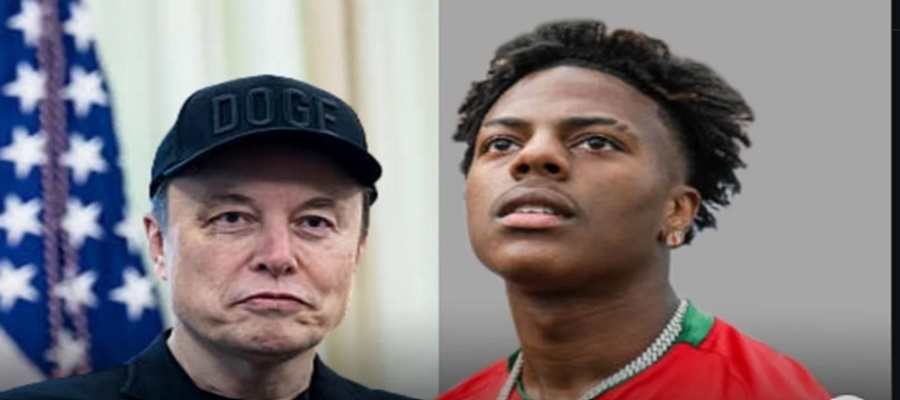
Oluseun Anikulapo Kuti, popularly known Seun Kuti, Nigerian musician, has claimed that IShowSpeed, American streamer’s African tour was was funded by Elon Musk, billionaire tech mogul.

Seun Kuti
According to the singer and the youngest son of Fela Kuti, Afrobeat pioneer, the tour aimed at testing the reach of Musk’s satellite across the African continent.
Seun Kuti also explained that the streamer’s tour was not just to see the beauty of Africa, but was a spy job for Elon Musk.
”They all have the agenda. All that was a spy job for Elon Musk. I hail him and we have our own people pursuing him with us“, he added.
IShowSpeed completed a landmark 28-day tour of Africa, visiting 20 countries between December 29, 2025, and January 27, 2026, aimed at experiencing local cultures and engaging with fans.
The trip, which featured live-streamed visits to nations including Nigeria, South Africa, and Ghana, saw him surpass 50 million subscribers. He described the experience as life-changing.

Leo Stan Ekeh Foundation to Open Portal for 1,000 University Tech Scholarships on Monday

Karex, World’s Top Condom Maker to Hike Prices due to Iran war

US Library Blames Hackers for Viral Posts Urging Violence in Nigeria

IshowSpeed’s African Tour was ‘Spy Job,’ for Elon Musk- Seun Kuti

PalmPay Hits 35m Users’ Milestone

NBC Boss Urges Content Ceators to Participate in DSO

NITDA Takes Over National Digital Architecture System

DLM SPV PLC Lists ₦9.00bn AAA-Rated Medium-Term Notes on FMDQ Exchange, Sets Benchmark in Corporate Bond Market

FG Shifting Focus to “Meaningful Connectivity” to Drive Inclusion – Minister

Jury Finds Meta, Google Liable for Woman’s Social Media Addiction




 E-Business2 days ago
Lagos Unveils Cybersecurity Guidelines to Tackle Rising Digital Threats

 Telecom2 days ago
NBC Warns Broadcasters Against Bullying Guests, Passing Opinions as Facts

 News2 days ago
FG Borrows N100Bn from Unclaimed Dividends, Dormant Bank Accounts

 E-Financial2 days ago
CitiTrust Heads to Appeal Court over Alleged Ponzi Scheme

 Telecom2 days ago
WATRA Secretary sees Resilience as a Critical Link in West Africa’s Digital Economy

 Telecom2 days ago
Why Nigeria Must Embrace .ng Now – NiRA Reveals Five Critical Steps

 Telecom2 days ago
Tech Shake-Up: Snap Cuts Hundreds as AI Drives Efficiency Push

 News2 days ago
FG Carpets W/Bank, Denies Alleged Diversion of Federation Revenue