

E-Financial
Nigerians Cautious over CBN’s eNaira

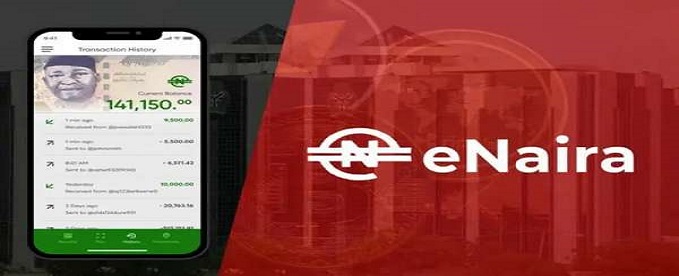
Hundreds of thousands of Nigerians have opened digital wallets to hold the eNaira, Africa’s first digital currency, but sceptics warn that broad mistrust of the government could hurt its adoption.

According to Financial Times, with the launch of the eNaira on October 25, Africa’s most populous country became the latest country to launch a digital currency, leapfrogging many other central banks around the world.
France, China and Germany are all testing e-currencies.
Six Caribbean countries have already launched digital currencies.
In a sign of how the development of official digital currencies is gathering speed, the G7 group of advanced economies last month laid out guidelines to ensure the currencies will “support and do no harm” to the traditional monetary and financial system.
Razia Khan, chief economist for Africa and the Middle East at Standard Chartered Bank, said central banks were reacting to “the demonstrated need to adopt digital payment channels” in the wake of the pandemic, and seeking “to remain in the driving seat of the process, and not see unregulated digital currency alternatives get greater traction”.
A senior Central Bank of Nigeria official said that the currency’s first week and a half — when nearly 400,000 new wallets were registered in dozens of countries and customers made 12,500 transactions worth 46.3m naira ($113,000) — was a “resounding success”. This was despite customers complaining about a cumbersome sign-up process.
Analysts questioned whether the digital version of the naira — which is built on blockchain technology, but is not a cryptocurrency — can fulfil the central bank’s goals for it: lowering transaction costs, boosting cross-border flows including inward remittances, bringing more people into the financial system and allowing for more targeted social and welfare spending.
“The issue is that all of this can already be adequately addressed using the existing financial payments system,” said Adedayo Ademuwagun, analyst at Songhai Advisory.
“Nigeria is the fintech capital of Africa, so there are just so many options, so many ways to pay somebody, and pay them fast, already.”
At the official eNaira launch last month, Nigerian President Muhammadu Buhari said it could boost Nigeria’s gross domestic product — which was $432bn last year — by $29bn over the next 10 years.
Ronak Gadhia, an analyst for emerging markets-focused investment bank EFG-Hermes, said low-cost transactions could make the eNaira “quite significant and disruptive . . . but there’s some uncertainty about how widespread it will be used”.
More than half of Nigerians lack a formal bank account, the informal economy represents more than half of GDP and 95 per cent of transactions are still done in cash.
“The government effectively knows every transaction you carry out [with a digital currency] and in a place like Nigeria where there’s a bit of mistrust between ordinary Nigerians and the government there may be scepticism in terms of adoption,” he said.
He pointed to how the central bank froze the accounts of people involved in the #EndSARS anti-police brutality protests that swept Nigeria last year.
“The eNaira actually makes it even easier if the government wants to shut down someone’s account . . . or even the whole system,” he added.
The eNaira launch comes nine months after the central bank effectively banned cryptocurrencies including Bitcoin, which were used to fund the #EndSARS protests, on the grounds that they jeopardised the financial system and could be used to fund terrorism. Nigeria has quickly become one of the biggest markets for cryptocurrencies in Africa, with citizens using it to get around capital controls, to generate income amid rampant unemployment and to hedge against the perpetually depreciating naira.
The decision to effectively ban crypto was condemned by many in the burgeoning Lagos fintech scene, which has attracted billions of dollars in venture capital in recent years.
Victor Asemota, a Nigerian tech investor, echoing the sentiments of others, said he was “at a loss on what eNaira is meant to solve”, in a post on Twitter last week. He argued that mobile money products offered by some Nigerian fintech companies already streamline payments and reduce transaction costs.
Gadhia agreed, but cautioned that it was too early to discount the eNaira’s potential. “In the context of the scale that Nigeria offers it seems low, but I wouldn’t say it’s entirely disappointing or surprising,” he said. “It seems modest at this stage, but I think it’s still early days.”


By Blaise Udunze
Between 2010 and 2026, a staggering $214 billion, approximately N300 trillion in public funds, has been reported as missing, unaccounted for, diverted, unrecovered, irregularly spent, or trapped in non-transparent fiscal structures across Nigeria’s public institutions.

That figure is not speculative but a conservative estimate of unaccounted funds. It is drawn from audit reports, legislative probes, civil society litigation, executive directives, and investigative findings spanning more than a decade. If it is to go by the accurate figure, the true national loss is likely higher but difficult to quantify precisely due to data gaps, overlapping figures, and incomplete audits.
The challenge is that in many of the most prominent cases, prosecutions have stalled, hearings have dragged without resolution, investigations have gone cold, and no defining jail terms have etched accountability into Nigeria’s institutional memory. The irony is that the number is historic, the silence is louder. And the economic damage is cumulative.
The pattern stretches from the oil sector to social investment programmes, from the Nigeria Central Bank of Nigeria (CBN) interventions to ministry-level expenditures. In 2014, between $10.8 billion and $20 billion in unremitted oil revenues linked to the Nigerian National Petroleum Corporation triggered national outrage. Under the then CBN governor, Lamido Sanusi, who warned that persistent oil revenue leakages were making exchange rate stability “extremely difficult.” He cautioned that without full remittances, the alternative would be currency devaluation and financial instability. This concern spans the 2010 to 2013 oil revenue period. That warning proved prophetic.
This is because, years later, the lack of transparency in the oil industry did not disappear, but rather it festered like cancer. It further led to the elongated audit queries, which have continued to trail the Nigerian National Petroleum Company Limited, including unremitted revenues, questioned deductions, and management fee structures under the Petroleum Industry Act. With an extraordinary move aimed at blocking revenue leakages at source, President Bola Ahmed Tinubu has recently issued an Executive Order suspending certain deductions and directing direct remittance of taxes, royalties, and profit oil into the Federation Account, which involves the reassessment of NNPC’s 30 per cent management fee and 30 per cent frontier exploration deduction under the Petroleum Industry Act.
Such presidential intervention underscores the scale of concern, which means that Nigeria cannot afford a structural lack of transparency in its most strategic revenue sector. But oil is only one chapter.
The Central Bank of Nigeria has faced some of the most far-reaching audit alarms in recent years. In suit number FHC/ABJ/CS/250/2026, the Socio-Economic Rights and Accountability Project (SERAP) is asking the Federal High Court to compel the CBN to account for N3 trillion in allegedly missing or diverted public funds. The Auditor-General’s 2025 report cited failures to remit over N1.44 trillion in operating surplus to the Consolidated Revenue Fund, over N629 billion paid to “unknown beneficiaries” under the Anchor Borrowers’ Programme, and more than N784 billion in overdue, unrecovered intervention loans.
There were also N125 billion in questioned intervention expenditures, irregular contract variations exceeding N9 billion, and procurement gaps running into hundreds of billions. The Auditor-General repeatedly recommended recovery and remittance. No date has been fixed for the hearing. Meanwhile, Nigeria continues to borrow.
Elsewhere, the House of Representatives has launched a probe into over N30 billion recovered during investigations into the National Social Investment Programme Agency (NSIPA). The funds, reportedly frozen during investigation, have not been remitted back into the Treasury Single Account, stalling poverty-alleviation schemes like TraderMoni and FarmerMoni. Millions of vulnerable Nigerians remain exposed while lawmakers search for money already “recovered.” The irony is staggering as funds are found, but programmes remain frozen.
A top discovery recently that put the nation on red alert was made by the Senate committee, which claimed to have found N210 trillion in financial irregularities in NNPC accounts between 2017 and 2023, including unaccounted receivables and accrued expenses. A critical concern is that, as of early 2026, this has sparked commentary but no clear prosecutions.
Only recently, in the power sector, SERAP has urged the President to probe alleged missing or unaccounted N128 billion at the Federal Ministry of Power and the Nigerian Bulk Electricity Trading Plc. Of concern is that despite the enormous funds channeled in this sector, Nigeria’s chronic electricity instability persists, even as billions meant to stabilise the grid face audit scrutiny.
Across MDAs, audit reports between 2017 and 2022 flagged trillions in unsupported expenditures, unremitted taxes, unauthorized payments, and statutory liabilities never recovered. These sums are dizzying and are also alarming; N300 billion here, N149 billion there, N3.403 trillion across agencies, N30 trillion-plus Treasury discrepancies raised at the Senate level.
Individually, they shock. Collectively, they define a structural pattern. And patterns shape economies.
Nigeria operates with structural fiscal deficits and also lives with them routinely and comfortably. Expenditure persistently exceeds revenue. When public funds disappear, fail to be remitted, or are trapped outside constitutional channels, the deficit widens. The government must borrow to fill gaps created not only by low revenue, but by revenue leakage.
Debt servicing now consumes a disproportionate share of federal revenue. Borrowing meant for capital projects increasingly finances recurrent obligations. The country shifts from borrowing to build to borrowing to survive. Every missing naira compounds tomorrow’s liability.
The Treasury Single Account (TSA) was designed to plug such leakages. It consolidated government revenues under Section 80 of the Constitution into a unified framework. International financial institutions commended it as a landmark reform. Yet even today, the Minister of Finance, Wale Edun, has admitted that substantial government funds remain outside the TSA and outside the CBN’s consolidated visibility. Until August 1, 2024, he revealed, the federal government could not fully see its own balance sheet at the apex bank. That admission should alarm any serious economy.
Fiscal lack of transparency constrains planning. It undermines monetary coordination. It weakens debt sustainability projections. It distorts policy responses. And when systems are in flux, money vanishes more easily.
Changing or weakening the TSA in such an environment would be catastrophic. Transitions create windows of vulnerability. Old accounts close. New accounts open. Reconciliation’s lag. Ghost contractors reappear. Double payments slip through.
Albeit, the government must learn to tread with caution as Nigeria’s institutional bandwidth is already strained by simultaneous tax reforms, exchange-rate adjustments, subsidy removal, and fiscal restructuring. One truth that cannot be argued is that layering additional structural upheaval onto fragile systems risks revenue loss that the country cannot afford. Investors are watching.
Credit markets evaluate not just numbers but institutional consistency. A nation that abandons or weakens its most credible fiscal reform sends a destabilising signal. Stability lowers borrowing costs. Institutional drift raises them. But beyond markets lies the human cost.
N300 trillion represents roads not built, power plants not completed, irrigation systems not funded, schools not modernised, and hospitals not equipped. It represents jobs not created and industries not catalysed. It represents stalled productivity and deferred growth.
When intervention loans remain unrecovered, agricultural output suffers. When power sector funds are unaccounted for, electricity remains unstable. When social investment funds are frozen, poverty deepens.
Inflation then compounds the pain. Revenue gaps push borrowing. Borrowing pressures interest rates and by extension, liquidity misalignment fuels price instability. Citizens pay through higher food costs, transport fares, and rent. The poor pay first. The middle class erodes quietly.
Perhaps most corrosive is the trust deficit. When audit queries fade without visible accountability, tax morale weakens. Compliance declines. Cynicism hardens. A nation cannot modernise where trust in fiscal integrity is fragile.
Section 15(5) of the Constitution requires the abolition of corrupt practices. Financial Regulations mandate a surcharge and referral to anti-corruption agencies where public officers fail to account for funds. The Fiscal Responsibility Act empowers citizens to enforce compliance to ensure that government officials follow fiscal rules. But enforcement defines seriousness.
Nigeria’s problem is not a lack of audit findings. It is the distance between findings and finality.
Nations do not collapse overnight due to a lack of funds. They drift. Infrastructure decays incrementally. Debt rises gradually. Growth slows subtly. Confidence erodes quietly. Then one day, stagnation feels permanent. $214 billion (N300 trillion), sixteen years of recurring audit alarms. Few conclusive accountability outcomes are proportionate to the scale. Truly, the consequences have been less strong. For the same reason, the country witnessed President Tinubu nominating ex-NIA boss Ayodele Oke as ambassador despite a $43 million loot in an Ikoyi apartment.
See the research breakdown of some of the audit figures that reveal staggering sums as enumerated above:
– $10.8 billion and separately $20 billion in unaccounted oil revenues at the NNPC in 2014
– $1.1 billion controversial Malabu Oil and Gas oil deal in 2015
– $2.2 billion arms procurement irregularities in 2015
– N3.4 billion from IMF COVID-19 financing flagged in a 2020 audit.
– N149.36 billion, N37.2 billion, and multiple irregular MDA expenditures in 2020 alone.
– N300 billion cited in public audit concerns in 2017.
– N210 trillion in financial irregularities uncovered, N103 trillion in ‘accrued expenses’, and another N107 trillion in unaccounted ‘receivables’ (2017 -2023).
– N57 billion Ministry of Humanitarian Affairs – (2021)
– N3 trillion and N1.44 trillion flagged in 2022 audit issues involving the Central Bank of Nigeria.
– Nearly N630 billion under the Anchor Borrowers Programme is reportedly unrecovered.
– N784 billion in overdue intervention loans flagged.
– Over N3.403 trillion unaccounted for across federal MDAs between 2019 and 2021.
– Roughly 30 trillion+ in Treasury Single Account and Consolidated Revenue Fund discrepancies raised at the Senate level.
– N500 billion in unremitted oil revenues between 2019 and 2024.
– N80 billion tied to alleged fictitious contracts in the Accountant-General’s office.
– N69.9 billion in uncollected statutory tax liabilities.
– Billions more in unauthorized or undocumented expenditures across ministries.
The institutions differ. The years differ. The audit language differs. The pattern does not.
Nigeria’s economic future will not be determined solely by how much oil it produces, how many reforms it announces, or how many executive orders it signs. It will be determined by whether every naira earned enters the Federation Account transparently, whether every intervention loan is tracked and recovered, whether every surplus is remitted constitutionally, and whether every diversion carries consequences. Revenue generation matters. Revenue protection is destiny. Because when government funds go missing, nations do not stand still. They move backwards.
Blaise, a journalist and PR professional, writes from Lagos and can be reached via: [email protected]
In a bid to foster accurate public discourse as well as protect the stability of the financial sector, the Association of Corporate and Marketing Professionals in Banks (ACAMB) has stepped in to educate renowned content creator, Unofficial Osas, following his misrepresentation of facts concerning the Central Bank of Nigeria’s (CBN) recapitalisation drive, and subsequent invitation by the Nigerian Police Force.

ACAMB
The intervention by ACAMB led to the successful retraction of a misleading video regarding the CBN recapitalisation policy, demonstrating the Association’s commitment to its core mandate of public enlightenment.
In his official apology video, the content creator stated, “I was invited by the Nigerian police force national cyber crime centre in Abuja over the video I posted on the 15th of December, where i spoke about 12 banks that were shut down in relation to the CBN recapitalisation policy. I would like to offer an official retraction of that video and want to reiterate that no bank is shutting down.
“As a matter of fact, most of the banks have now met the ₦500 billion minimum capital base for banks with international and the N200bn for national banks recapitalisation requirements, so no bank is shutting down.
“I want to specifically appreciate ACAMB. They were very professional in handling this case and did well to educate and enlighten me on the recapitalisation process. I am now better informed and know better”
Commenting on the resolution, President of ACAMB, Jide Sipe, reinforced the Association’s dedication to protecting the integrity of the banking sector. “ACAMB stands for the restoration of professional banking ethics and public confidence through seamless information management and public enlightenment.
“We believe that an informed public is an empowered public. By engaging Unofficial Osas, we ensured that accurate information regarding the resilience and strength of our banks was disseminated to the millions of Nigerians who follow him.”
The Intervention shows ACAMB is dedicated to evolving strategies that enhance and sustain a good image for the nation’s banking sector as well as assist in fostering better banking habits among Nigerians.
E-Financial
FirstCap MD says Payment Security Remains Biggest Barrier to Bankable Gas and Power Projects


Ukandu E. Ukandu, Managing Director/CEO of FirstCap Limited, a leading investment banking firm and subsidiary of First HoldCo Plc., has reaffirmed that payment security remains the most decisive factor in determining whether gas and power projects in Nigeria secure financing.

He shared this perspective during a panel discussion on project bankability at the 2026 SPE Lagos Energy Week.
Ukandu noted that although several risks influence financing decisions, payment risk consistently emerges as the key barrier to financial close.
“Every major risk matter, but payment risk is the ultimate deal‑breaker. Without strong payment security and disciplined collections, no project can attract sustainable financing,” he said.
He explained that lenders typically evaluate three core risk pillars, payment reliability, foreign‑exchange exposure, and contract enforceability, with payment reliability presenting the greatest challenge across Nigeria’s energy value chain. Persistent collection inefficiencies, rising arrears, and liquidity pressures continue to weaken investor confidence.
To enhance payment security, Ukandu highlighted mechanisms widely used by financiers, including letters of credit, bank guarantees, escrow accounts with payment‑waterfall structures, reserve and sinking funds, sovereign or sub‑sovereign support, and take‑or‑pay offtake agreements.
Addressing foreign exchange risk, he noted that volatility remains difficult to manage, especially for projects with dollar‑denominated costs but naira‑denominated revenues. Lenders typically mitigate this through foreign exchange ‑linked tariff indexation, partial dollarisation for credible industrial offtakers, escrow protections, selective hedging, and foreign exchange reserve buffers.
However, he cautioned that indexation alone seldom eliminates exposure due to regulatory limits and timing delays.
On legal and regulatory certainty, Ukandu stressed the need for contracts that are enforceable and clearly structured, particularly around take‑or‑pay obligations, termination payments, step‑in rights, and dispute‑resolution frameworks. He added that factors such as tariff adjustments, licence changes, and price controls can significantly affect project viability if they are not fully addressed at the contracting stage.
While fiscal incentives such as tax holidays and accelerated depreciation can strengthen project economics, Ukandu emphasised that they cannot compensate for weak fundamentals.
“Incentives make a good project better, but they do not make a weak project bankable. Cash‑flow reliability and disciplined foreign exchange management must come first,” he said. He also noted that naira‑based incentives may lose value if project revenues are not indexed.
He concluded by urging industry players to prioritise revenue security from the earliest stages of project structuring: “Protect returns at the source. Build strong offtake arrangements with solid credit support and currency alignment to ensure cash is received in full and on time.”

NITDA, Abia Partner on Enterprise Architecture Reform

Interswitch Partners Abia to Digitise Public Hospitals

Cyber Immunity Emerges as Shield for Nigerians Amid Rising Scams

WIEG 2026 Summit Shifts to April 22-23 for Maximum Impact

$214Bn Missing, Institutions Silent: Is Accountability Dead in Nigeria?
Nigeria’s 9 Top FinTech Firms Valued at $10.6Bn in January 2026

CBN Upgrades Licences of Opay, Moniepoint, Kuda, Palmpay, Paga to National Status

Kaspersky Launches OT Calculator to Align Cybersecurity Investments with Business Goals

NITDA, NBC Explore Strategic Collaboration on Digital Transformation, Media Regulation

Accidental Billionaire Opts for Jail Instead of Returning Money Credited Him by Mistake




 Telecom3 days ago
Group Condemns Gabon’s Social Media Shutdown Amid Protests

 Telecom3 days ago
IXPN Positions as the Regional Internet Exchange Hub for West Africa

 General News3 days ago
How JustMarkets Is Empowering African Traders with Global Market Access

 E-Business3 days ago
Mutual Benefits Assurance Settles ₦5.9bn Claims in January 2026

 Telecom3 days ago
Menxtt NG Emerges as Nigeria’s Virtual IT Hub for Premium Devices, Solutions

 Broadcasting3 days ago
Pheelz Shares His Journey on Glo-Sponsored African Voices

 E-Business3 days ago
NITDA DG Reaffirms FG Commitment to Responsible and Inclusive AI

 News3 days ago
AI-Driven Memory Chip Fuels Global Phone Price Surge