

E-Financial
Nigerians Fear Political Crisis, Dump Naira for Dollars, Pounds

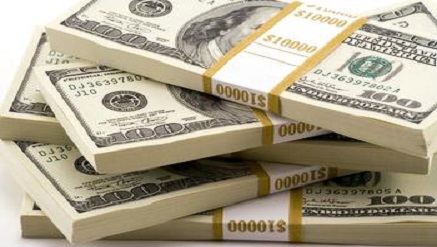
Nigerians are dumping the naira currency as it skids lower by the day, driven by fear of the unknown after authorities pushed back the date of a presidential election.
They are reportedly buying up dollars, pounds sterling as well as other major foreign currencies while wealthy elite looks at property abroad, according to Reuters.
The report claimed that, already mauled by a halving of oil prices since last June, the naira this week fell through the key level of 200 to the dollar, forcing people like Boyin Akinteye to seek ways of protecting their savings.
In the up-market Dunes shopping mall in the capital Abuja, the freelance gift designer and mother of two young children was buying dollars and moving them into her Bank of America account in the United States.
“The naira’s way down,” she said. “We’re uncertain when or where it’s going to end so my husband and I, we took action.”
When Attahiru Jega, electoral commission chairman revealed on Saturday that national security chiefs had urged him to delay the poll by six weeks to March 28, it reminded many of the cancellation of a 1993 election by the military government then in power. Some wonder if the vote will take place at all.
Nigerian author Chimamanda Ngozi Adichie wrote in an editorial that “it has cast, at least for the next six weeks, the darkest possible shroud over our democracy: uncertainty.”
That uncertainty has already sent foreign portfolio investors scurrying for the exit. But for Nigerians that exit is not always easy to find.
Wiring money abroad is difficult as the central bank caps transfers at $10,000 a day and other countries often ask for proof of how the money was earned and taxed, said a wealthy Lagos-based businessman who asked not to be named.
Since a lot of the big bucks in Nigeria are earned in shady or corrupt business deals, using shell companies to avoid tax, such proof can be hard to produce.
Spot checks on Nigerians at airports mean smuggling cash out in a suitcase is not an option, the businessman added.
While some middle-class Nigerians keep dollars in onshore accounts, he said he and his friends were worried about the risk of capital controls that could limit withdrawals later. Some, he said, were taking their dollars out now and stuffing them under the mattress.
MARKET ALARM
Despite a call for calm by Central Bank Governor Godwin Emefiele, the markets are jittery: foreign exchange dealers suspended electronic trading in two consecutive sessions on Wednesday and Thursday because of the pace of the naira’s fall.
The currency is already over 20 percent weaker than the central bank’s target rate of 168 to the dollar, and black market traders are selling for around 210.
Rates on derivatives contracts suggest the naira could fall another 30 percent in the next 12 months.
One well-connected member of the elite, who declined to be named, said friends were looking at property in London, Dubai and the United States. Dubai is favoured since authorities ask fewer questions about where the money came from, he said.
Nasser Mohammed, the chief executive of a small oil and gas firm, is holding much of his savings in dollars and pounds, while opting not to repatriate cash from operations in London.
“The only way to save your money right now is to keep it in dollars or pounds. Otherwise, it’s going to vanish,” he said, tucking into a roast chicken lunch at an Abuja restaurant.
The head of strategy at one bank said he was approached by a customer with 3 billion naira ($14.7 million) who wanted to hold some of it in dollars. He advised her against it in case the naira stabilises and she loses out, especially with a wide spread and high bank charges.
The central bank last devalued the currency in November but a further devaluation has already been priced in, he said. On Thursday the bank said it had burned through $1 billion in nine trading sessions in its efforts to defend the naira.
Foreign companies with earnings in local currency are likely to take a hit, although most try to hedge against currency declines by recycling naira locally.
Soap maker PZ Cussons told Reuters: “While there is uncertainty surrounding the election, PZ Cussons remains confident about the medium- and long-term opportunities.”
Diageo, for whom Nigeria is the biggest market for Guinness stout, declined to comment.
Many Nigerians are greeting uncertainty, as they often do, with a fatalistic shrug of the shoulders.
“The rich guys are moving money out but I earn in naira, so I’m keeping it in naira,” said construction engineer Michael Akinyemi. “What’s the point unless you’re fleeing the country?”



Central Bank of Nigeria (CBN) has released an exposure draft proposing the establishment of a 30-member Mediation and Dispute Resolution Panel (MDRP) aimed at strengthening consumer protection and boosting confidence in Nigeria’s financial system.

Pic credit….aequitasjuris.com
According to a circular signed by Paul Oluikpe, acting director of the Development Finance Advisory Department of the CBN, the establishment of the MDRP, is in furtherance of efforts to strengthen the financial ecosystem, ensure compliance with extant legislation, and enhance the efficiency of financial intermediation.
The draft guidelines and modalities for the operation of the MDRP are in line with the Secured Transactions in Movable Assets (STMA) Act, 2017, which established a MDRP as the first recourse for mediation and settlement over any civil dispute which may arise between the creditor and the grantor in the course of implementing the Act.
The act also mandates the Governor of the Bank to issue guidelines that will set out the modalities and regulate the Panel’s functioning, among others. The circular further noted that the “MDRP is intended to provide a specialised, cost-effective platform for resolving disputes arising from creation, perfection and enforcement of security interests in movable assets.
“The key objective of the MDRP guidelines is to establish a clear and standardised procedure for managing STMA-related disputes, while ensuring transparency, fairness and efficiency to bolster confidence in the secured transactions in movable assets system.”
According to the draft guideline, the CBN will “appoint 30 persons from whom panels shall be constituted, with each panel comprising 3 members.
The members shall serve on a rotational basis for an initial term of four years.
“Upon satisfactory performance, determined through an evaluation by the CBN, members may be reappointed for an additional term of four years. The tenure of members shall not exceed two terms of four years each, which need not be consecutive.
“Members shall be professionals with a minimum of 10 years of relevant experience in any of law, banking, finance, mediation, arbitration, alternative dispute resolution, or financial regulation. Members shall be persons of proven integrity, professional competence and sound judgement.”
Nigeria Deposit Insurance Corporation (NDIC) said that it has commenced the process of liquidating 89 closed Microfinance Banks (MFBs) and Primary Mortgage Banks (PMBs).

This followed their successful acquisition by new owners under the Purchase and Assumption (P&A) resolution model executed by the Corporation.
The corporation disclosed this in a statement on Wednesday, signed by Hawwau Gambo, head of Communication and Public Affairs.
It explained that the affected institutions were part of the 179 MFBs and four PMBs whose licences were revoked by the Central Bank of Nigeria (CBN), on May 22 and 23, 2023.
According to the corporation, under the P&A arrangement, 89 new eligible institutions were subsequently licensed by the CBN to assume the assets and liabilities of the defunct banks.
It noted that the new banks had since commenced operations under different names.
“To legally conclude the liquidation process, the NDIC, in its capacity as liquidator, will file applications at various divisions of the Federal High Court for orders of dissolution of the closed banks and its discharge as liquidator,” the statement said.
NDIC added that the move was in line with provisions of its enabling Act and other relevant laws guiding bank resolution in the country.
The corporation said the exercise would ensure proper closure of the defunct institutions while safeguarding financial system stability.
It reiterated its commitment to protecting depositors and sustaining public confidence in the banking sector.
The affected banks were located across several states, including Lagos, Anambra, Oyo, Kaduna, Kano and the Federal Capital Territory.

Nigeria’s economy is projected to grow at 4.1 per cent in 2026 and strengthen slightly to 4.3 per cent in 2027, even as the International Monetary Fund (IMF) warned that the ongoing Middle East conflict is clouding the global outlook.

The projections, contained in the IMF’s April 2026 World Economic Outlook released at the ongoing IMF/World Bank Spring Meetings in Washington DC, the United States, show a relatively stable trajectory for Nigeria despite rising external risks, particularly from energy market disruptions triggered by the war.
The IMF had earlier projected stronger growth of about 4.4 per cent in early January before the latest global shock, reflecting the impact of domestic reforms and improving macroeconomic conditions.
While Nigeria’s growth outlook remains steady, the IMF warned that countries like Nigeria face growing vulnerability from higher global energy prices, inflation pressures and tighter financial conditions.
The war, which has disrupted oil supply routes and pushed up fuel costs, is already feeding into domestic inflation and cost-of-living pressures.
Recent data show petrol and diesel prices have surged sharply since the conflict began, straining households and businesses.
Although higher crude prices may support government revenues, the broader macroeconomic impact remains mixed, with inflation and exchange rate pressures posing downside risks.
The IMF also cut global growth to 3.1 per cent in 2026, with only a modest recovery to 3.2 per cent in 2027 as the Middle East conflict disrupts trade and energy markets.
Emerging markets and developing economies, including Nigeria, are expected to grow at 3.9 per cent this year before recovering to 4.2 per cent in 2027, reflecting the uneven impact of the shock across regions.
Sub-Saharan Africa is projected to expand by 4.3 per cent in 2026 and 4.4 per cent in 2027, placing Nigeria slightly below the regional average but still among the stronger performers.
South Africa, the continent’s largest economy, continues to lag with growth forecast at one per cent in 2026, rising modestly to 1.3 per cent in 2027.
Among major economies, the U.S. is projected to grow by 2.3 per cent in 2026 before easing to 2.1 per cent in 2027, while China is projected to grow by 4.4 per cent and four per cent respectively.
India remains the fastest-growing major economy at 6.5 per cent through 2027, while the Euro Area continues to struggle with weak growth, particularly in Germany and France.
The IMF warned that many developing economies, particularly energy importers, remain vulnerable to rising costs and external shocks.
The IMF urged central banks to prioritise price stability, warning against easing policy prematurely in response to supply shocks. It stressed the need for clear communication and strong institutional independence.
On fiscal policy, the Fund cautioned against broad-based energy subsidies, describing them as costly and inefficient. It recommended a targeted and temporary support for vulnerable households, funded within existing budgets.
The IMF also warned against the use of trade restrictions to address external imbalances, noting that such measures tend to weaken output without resolving underlying issues. It called instead for coordinated global action to stabilise trade and restore energy supply chains.

MTN Suspends Data, Airtime Borrowing Service over New FCCPC Lending Rules

Nigeria Customs Deploys AI to Cover Revenue Leaks

Top 7 Reliable Virtual Cards for Running Ads in Nigeria

Nokia, Orange Partner on AI-native 6G Networks

NDPC Issues Critical Advisory as Hackers Target Nigeria’s Key Digital Systems

Kuda MFB Increases Kuda for Her Business Grants to ₦10 Million

Canal+ to Cut Jobs as Part Sweeping Restructuring

Nigeria tops global rankings for USDT, USDC ownership

NBC Boss Urges Content Ceators to Participate in DSO

NITDA Takes Over National Digital Architecture System




 General News3 days ago
Guinness Nigeria Surpasses ₦1Trillion Market Capitalisation, Signalling Strong Investor Confidence and Sustained Value Creation

 News3 days ago
CISA Asks NDPC, Police to Act on Alleged Data Breach by NIPSS

 Telecom3 days ago
Amazon Satellite to Challenge Starlink in Africa with Globalstar Acquisition

 E-Financial3 days ago
FG Investigates ‘Sharp Sharp’ Loan Operators over Alleged Privacy Violations

 News2 days ago
Lagos Targets Vulnerable Residents in Expanded Social Register

 News3 days ago
Kaspersky Reports Online Scam Exposure Remains Widespread Despite High Levels of Self-assurance

 E-Financial3 days ago
Ecobank Delivers Strong Results, Posts $801m in Pre-Tax Profit for 2025

 Broadcasting3 days ago
Fela Makes History as First African to be Inducted into Rock and Roll Hall of Fame