

News
Nigerians Reject GMO Crops amidst Safety Concerns

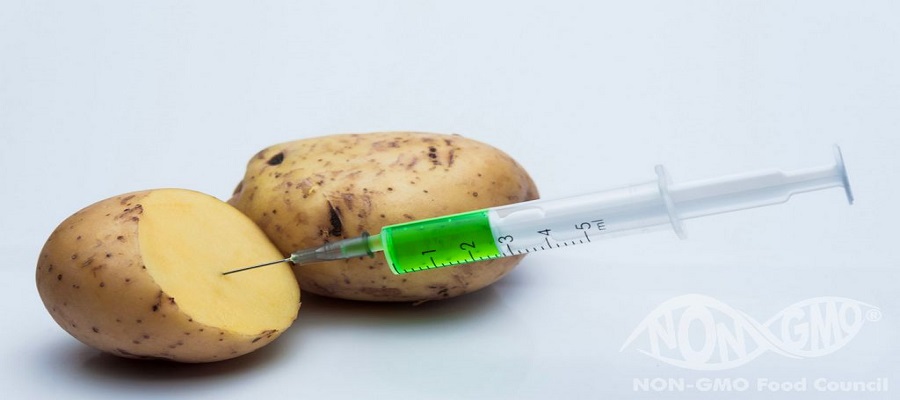
A coalition of over 100 civil society actors, farmers, scientists, legal practitioners, and academics representing some 100 million Nigerian consumers have placed a demand on the federal government to discontinue plans to introduce genetically modified potatoes and out-rightly ban GMOs in the country as, according to them, they (the GMOs) violate fundamental human rights and targets Nigeria’s food system for disaster.

GMOs are food items that have been made using genetic engineering techniques.
The coalition demand was made in a press statement shared with the media, following the announcement that the Federal Government will soon release a report on clinical trials on genetically modified (GM) potatoes.
Similar reports indicate that GM Potatoes will be commercially released in 2025.
Nnimmo Bassey, executive director, Health of Mother Earth Foundation (HOMEF), noted that any further release of GMOs in Nigeria would be confirmed as a deliberate effort to destroy the Nigerian food system, jeopardise consumers’ health and degrade our environment.
“The House of Representatives in May 2024 announced a halt on introducing new GMOs and mandated an investigation on GMOs and the approval processes. To date, four months later, there is no information on the findings or results of this investigation, yet the National Biosafety Management Agency (NBMA) is warming up to release new GM potatoes. There are indeed vested interests on the side of the transnational corporations producing the GMOs and their allies in government undermining the health and safety of the Nigerian populace,” he added.
On the GM Potatoes, Bassey stated that it is a narrow and short-sighted technological fix that is inappropriate for smallholder farmers in Nigeria and that could lead to an irreversible contamination of indigenous potato varieties. GM potatoes are banned in Peru and elsewhere and have been continuously spurned in developed countries. It is a wonder that Nigerian farmers are already been painted to clamour for the Potatoes. This was the same strategy used in Uganda and Rwanda.
Dr Ifeanyi Casmir, a Molecular Biologist, noted that, just like Bt Cotton, Bt Beans, and TELA Maize, the GM Potatoes represents a gradual yet sure erosion of the original germ plasm of Nigerian crops.
He said: “We are being misled by half-baked parochial ‘scientists’ toward adopting a technology, whose products are mostly used as biofuels and feed for animals in other countries – not for human consumption. What our government needs to do is to address the instability in Plateau State and other potato producing states where banditry has caused farmers to abandon their farms – leading to poor productivity and rising cost of potatoes across the country. Potatoes growers in Plateau State and other places who will accept this genetically modified variety are being set up for devastation.”
Mariann Bassey-Orovwuje, Food Sovereignty Activist and Deputy Director of Environmental Rights Action, emphasised the regulatory lapses regarding GMOs.
She stated: “Up till now, there is no information on the application for the field/clinical trials on the GM Potatoes on the website of the NBMA whose mandate it is to regulate the use of GMOs and ensure adequate public participation in the decision-making process. The secrecy and urgency with which GMO applications and approvals are handled is cause of serious concern.
“These GM potatoes are banned at the potato centre of origin in the Andes, with indigenous farmers warning that GM potatoes are a terrible idea. Additionally, Late blight is not a uniquely African problem, which raises the question as to why it is being forced on Africa, on Nigeria. The simple answer is commercial interests.”
According to Joyce Brown, Public Health Scientist and Director of Programmes at HOMEF, “There is no information as to whether there have been long-term feeding studies conducted on these GM Potatoes varieties. It is not sufficient to carry out field trials or short-lived clinical trials. This GM potato is the same which is being pushed on East Africa; a “cisgenic” variant of the Victoria variety that was originally from South America but selected for use in Africa. The GM Victoria was developed by the International Potato Centre (CIP) and is genetically engineered with three genes that were taken from Latin American relatives of the potato plant. Cisgenesis modification is still a new and unproven technique, and it is not yet clear how the stack of three genes will interact with each other or with the genetic material of the host plant.”
Lovelyn Ejim, a farmer and founder of Network of Women in Agriculture, noted that Nigeria does not need genetic modification to address the late blight disease.
“The disease is not new and simple organic methods have over time proven to be affective including choosing naturally resistant varieties, crop rotation, mixed cropping, providing proper crop nutrition, crop spacing, quick removal of blighted plants etc.
Nigerian farmers have not asked the government for GMOs. Late blight is a robust and fast-adapting pathogen and therefore will undoubtedly develop resistance to this technology.
“We are very concerned about the lack of participatory stakeholder engagement with farmers and consumers and the limited information available on the long-term consequences of GMOs, as well as the proprietary issues concerning the GM seeds,” she concluded.




EFCC


The African Development Bank Group last week approved an investment of €6.5 million in the Saviu II fund in order to support technology start-ups through their seed phase and first institutional fundraising, mainly in French-speaking Central and West Africa.

The Bank will invest €4.5 million as equity and €2 million as a first-loss hedging tranche on behalf of the European Commission, under the Boost Africa Programme.
This participation of the Bank Group will enable the Saviu II fund to give priority to companies with a strong technological or digital component.
Saviu II, the second investment vehicle of Saviu Partners, plans to invest between €500,000 and €3 million in about 20 technology or technology-oriented business-to-business start-ups in the seed phase or carrying out first institutional fundraising.
The Saviu II venture capital fund aims to make at least 60% of its commitments in the French-speaking countries of West and Central Africa: Côte d ‘Ivoire, Cameroon, Benin, Senegal, Togo, Burkina Faso and Mali.
The fund can also co-invest in promising technology companies in East Africa that have a strong team and business model, and whose strategy includes entering the market in French-speaking West African countries and establishing a strong presence there.
In addition, the fund will devote a dedicated envelope to pre-seed investments, focusing on minority equity investments, usually in co-investment with studios, incubators or other ecosystem partners.
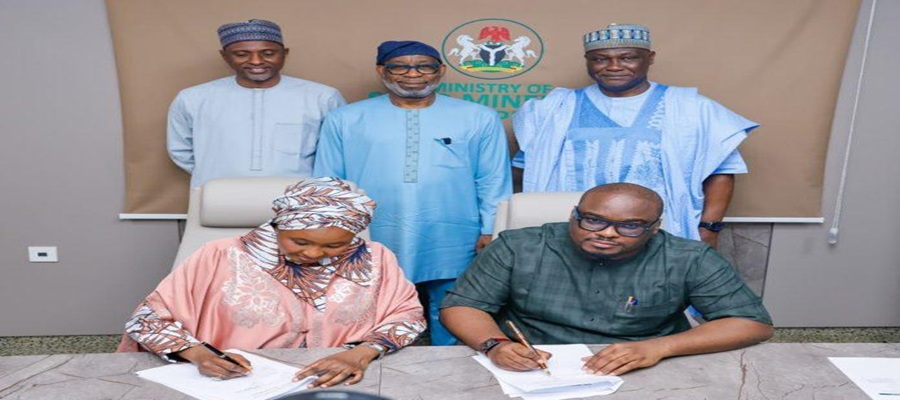
Nigerian Government has signed a $1.3 billion Memorandum of Understanding (MoU) with Africa Finance Corporation (AFC) via the Solid Minerals Development Fund (SMDF) to fund an alumina refinery, national geoscience mapping, and a strategic investment vehicle for mining growth.

Special Assistant to the Minister of Solid Minerals Development, Segun Tomori, said the refinery will process one million tonnes of bauxite yearly using a modern Bayer process, powered by an on-site gas-fired cogeneration plant.
Minister Dele Alake called it a transformative milestone boosting GDP, aligning with reforms that improve investment climate, regulations, and licensing to attract private capital. He directed agencies to fast-track permits.
The 20-year project at 95% utilization eyes 19 million tonnes total output, $1.2 billion annual GDP addition, $25 billion economic impact, and $8 billion forex earnings, per feasibility studies.
SMDF Executive Secretary Fatima Shinkafi termed it the agency’s biggest funding deal, supporting value-addition policy.
The partnership extends to geoscience mapping for mineral data, de-risking exploration, and a joint vehicle for mining assets.
Permanent Secretary Engr. Farouk Yabo praised the reforms. Shinkafi signed for government; AFC’s Franklin Edochie for the corporation, witnessed by AFC CEO Samaila Zubairu.
Tomori positioned it as Nigeria’s largest private mining investment and FDI magnet.

NAICOM Signs MoU with BPP to Deepen Insurance Compliance in Public Procurement

FG Approves GIS-enabled Digital Postcode to Tackle Logistics Gaps, Boost E-commerce

Firm Enhances its Security Awareness Platform with SCORM and PDF Support

AfDB Approves €6.5m for Tech Startups

GSMA, African Operators, Others to Launch Low-cost 4G Devices

Dr. Cairo Ojougboh Foundation Bolsters Nigeria’s Education Drive with ₦2.7m Student Support
Kaspersky Brings more Transparency to Threat Detection with New Hunt Hub

NDPC Commits to Balancing Data Privacy, Protection Information

OADC Lagos Reinforces Commitment to Local Data Hosting and Digital Transformation @ NDPC’s National Privacy Week Summit

PwC Reveals AI Scaling Gap Slows Africa’s Digital Transformation




 Telecom3 days ago
Sunil Bharti Mittal Conferred GSMA Lifetime Achievement Award for Transforming Global Telecommunications

 Telecom3 days ago
Why Digital Trust Matters: Secure, Responsible AI for African SMEs?

 E-Business3 days ago
Jumia Tech Week 2026 Begins with Tech Deals on Smartphones, Electronics, and Everyday Technology

 General News3 days ago
Krishnan Exits Africa Data Centre to Embark on Professional Chapter

 E-Financial2 days ago
NRS Targets N40trillion in Tax, Royalty Revenue in 2026
 News3 days ago
AfDB Supports Francophone Africa Start-ups with €6.5M

 Telecom3 days ago
House Probes Fintech Regulation via Public Hearing on New Commission Bill

 E-Financial2 days ago
SEC Revokes Registration of Kensington Agro Trading Limited