

Telecom
Nigeria’s $1 Trillion Economy Vision Hinges on Digital Backbone


Industry leaders at a summit on the implementation of Critical National Information Infrastructure (CNII) framework in Nigeria have established a direct link between Nigeria’s $1 trillion economy ambition and the critical roles of digital infrastructure in the country.

L-R: Chief Executive Officer, Open Access Data Centre, Dr. Ayotunde Coker; Director, Legal (Global & Regional Business Affairs), Equinix, Abayomi Adebanjo; Chief Executive Officer, Rack Centre, Lars Johannisson; Ass. Business Editor and panel moderator, Yemi Adepetun; and Convener, Policy Implementation Assisted Forum (PIAFo), Omobayo Azeez, at the 7th PIAFo Summit on Critical National Information Infrastructure held in Lagos on Thursday.
During a panel session titled Appraisal of Data Centre Infrastructure Risks in the Scheme of CNII Implementation, they underscored the need for robust investments in data centers, broadband expansion, and cybersecurity.
Moderated by Yemi Adepetun, Assistant Business Editor at The Guardian Newspaper, the session featured insights from top industry executives, who stressed that Nigeria’s digital economy hinges on resilient infrastructure, energy integration, and strategic policy implementation.
Participants are the Chief Executive Officer, Open Access Data Centre (OADC), Dr. Ayotunde Coker; CEO of Rack Centre, Lars Johannisson; and Director of Legal (Global and Regional Business Affairs) at Equinix, Mr. Abayomi Adebanjo.
The panel session formed a part of the just concluded seventh edition of Policy Implementation Assisted Forum (PIAFo) with the theme: “Strengthening Protection of Critical Information Infrastructure through Proactive Implementation and Strategic Coordination.”
Strengthening Nigeria’s Digital Backbone
OADC boss, Coker, highlighted the fundamental role of digital infrastructure in driving economic growth. He pointed out that connectivity, data centers, and power must be aligned to ensure digital resilience.
Dr. Coker acknowledged Nigeria’s recent progress in restoring connectivity through increased subsea cable capacity, citing Meta’s new subsea cable project as a significant boost to global connectivity. However, he stressed the urgency of upgrading outdated subsea cables and fast-tracking infrastructure projects such as the Equiano and 2Africa cables.
With the government’s plan to expand fibre optic capacity by 90,000 kilometers, Dr. Coker emphasized the direct economic impact of broadband penetration, stating that a 10% increase could contribute 2.5% GDP growth. He also noted that while South Africa houses 50% of Africa’s data center infrastructure, Nigeria must scale up investments to bridge the gap and compete on a global level.
“The future of our digital economy depends on the seamless integration of connectivity, power, and data centers,” Dr. Coker asserted, calling for greater collaboration between private and public stakeholders.
Challenges in Execution and Investment
Mr. Johannisson echoed Dr. Coker’s sentiments, applauding Nigeria’s digital progress but warning that execution remains a major hurdle.
He highlighted asset protection policies as a key factor in attracting foreign investments.
Johannisson revealed that every megawatt of data center capacity requires an investment of approximately €12-15 million, with 70 megawatts currently in the pipeline.
He also stressed the importance of decentralizing data centers beyond Lagos to ensure broader access and affordability, especially with the pressing need for edge infrastructure which requires data centre spread across the country.
“If inefficiencies drive up costs, digital services will remain inaccessible to large segments of the population,” he warned.
Looking ahead, Johannisson emphasized the need to maintain cost-effective infrastructure investments to achieve Nigeria’s broadband penetration target of 80% by 2030.
Security, Power, and Government Support
Meanwhile, Abayomi Adebanjo, Director of Legal (Global and Regional Business Affairs) at Equinix, focused on the intersection of digital infrastructure and national security.
He underscored the vulnerability of critical networks to cyber threats and called for stricter security measures at both physical and digital levels.
Adebanjo also identified major gaps in Nigeria’s Critical National Information Infrastructure (CNII) framework, urging the government to take a more active role in enforcing protection programs.
He cited persistent issues such as fiber cable theft and legal obstacles in prosecuting offenders as deterrents to investment.
Recognising the significant power demands of data centers—comparable to large industrial operations such as the Dangote refinery—Adebanjo advocated for incentives such as designated special zones for data centers and priority access to electricity.
“Ireland is a prime example of how a stable regulatory and power supply environment can attract foreign direct investment,” Adebanjo noted, urging Nigerian policymakers to adopt similar strategies.
The Path Forward
The discussions at PIAFo underscored that Nigeria’s ambition to achieve a $1 trillion economy hinges on its ability to create a conducive environment for data centers and digital infrastructure growth.
In his opening remarks, Convener of PIAFo, Mr. Omobayo Azeez, stressed the need for concerted efforts among stakeholders to protect existing infrastructure and attract new investments to secure the digital future of the country.
Industry leaders agreed that increased broadband penetration, strategic investment, and supportive government policies are critical to bridging the digital divide and ensuring long-term sustainability.
With a growing commitment from both public and private sectors, Nigeria stands at a pivotal moment in its digital transformation journey—one that will define its economic trajectory for decades to come.



With the introduction of Travel Saga, a premium, fast-paced gaming experience that is currently live and accessible to customers on its network, Globacom has lifted the bar for mobile entertainment in the country.

Travel Saga is a story-driven, intricately connected role-playing game designed to provide the thrill, complexity, and competitive intensity of some of the most well-known action games in the world.
The game, which has been painstakingly optimized for mobile devices, redefines mobile gaming as a full-fledged digital battlefield by translating a console-grade experience onto data-enabled handsets.
Fundamentally, Travel Saga takes users on quick virtual journeys against recognizable international landscapes. In a dynamic, ever-evolving gaming environment, players are thrown into furious missions, fierce fights, and ever-expanding tales where talent, strategy, and endurance determine who rises through the ranks to become a true war hero.
In addition to the excitement of fighting, users are encouraged to go to various locations, take part in thrilling challenges, and participate in intense competition for in-app rewards like points and victory badges. With each encounter and accomplishment, the immersion increases with each level, maintaining momentum and excitement.
Flexible subscription plans with one-time or auto-renewal choices are available to subscribers for the service, which costs ₦100 per day and ₦250 per week. By dialing *70021#, customers can quickly subscribe and gain instant access to the action.
With Travel Saga, Glo reaffirms its dedication to innovation and high-end digital experiences, making top-notch gaming easily accessible to its customers. The game offers uninterrupted action, adventure, and competition, all smoothly supported by the Glo network.
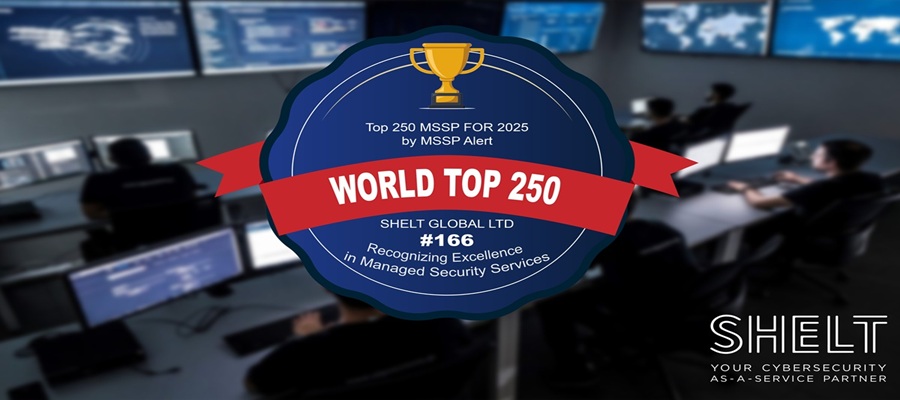
SHELT, a leading cybersecurity-as-a-service provider, has earned inclusion in the 2025 MSSP 250, the annual ranking of the world’s top 250 Managed Security Service Providers (MSSPs) by MSSP Alert, a CyberRisk Alliance publication.

SHELT
The list evaluates firms on business performance, service breadth, and industry impact, spotlighting those excelling in growth, operational excellence, and advanced managed security amid rising cyber threats. Selection criteria include annual recurring revenue, profitability, workforce expansion, business growth, and the depth of managed security offerings.
SHELT’s recognition underscores its investments in scalable security operations, threat intelligence, and tailored managed services across multiple regions, enabling clients to navigate complex risk landscapes effectively.
“Being recognised in the MSSP 250 is a meaningful milestone for our team,” stated Youssef Abillama, CEO of SHELT. “It validates our focus on building practical, resilient security services that help organisations manage risk and respond effectively to today’s evolving cyber threats.”
The company hailed the honour as testament to its teams’ dedication and expertise worldwide, reaffirming commitment to enhancing capabilities and delivering trusted cybersecurity solutions.

Meta Platforms, owner of Facebook, has appointed Dina Powell McCormick, a former adviser to President Donald Trump, as its new president and vice chairman, bolstering its leadership amid aggressive AI and infrastructure expansion.

Dina Powell McCormick
The announcement, made on Monday, positions Powell McCormick – who recently stepped down from Meta’s board after eight months – to guide overall strategy, including multi-billion-dollar investments in data centres and global partnerships.
A Goldman Sachs veteran with 16 years in senior roles and prior stints as deputy national security adviser under Trump and in the Bush administration, she brings deep finance and international ties to the role.
Meta CEO Mark Zuckerberg hailed her as “uniquely qualified” for the company’s next growth phase, while President Trump praised the move on Truth Social as a “fantastic choice”.
The hire signals Meta’s efforts to strengthen White House relations, following recent dinners with Trump and U.S. investment pledges worth hundreds of billions

EFCC to Use Space Technology to Boost Asset Tracking, Investigations

SEC Partners Police in Nationwide Crackdown on Ponzi Schemes, Crypto Frauds

Paystack Expands Beyond Payments into Banking

DalaHill, BoA Partner on $100,000 ACF Climate Finance Initiative

How to Stay Safe Online During Sales Periods

Banks quietly move to enforce new ₦50 transfer levy from Jan. 1

FIRS says NIN, CAC Numbers to Serve as Tax IDs from 2026

Nigeria Takes the Lead in the Global WSIS+20 Digital Agenda

Nigeria Police Arrest Okitipi, Nigerian Allegedly Linked to Microsoft 365 Hack

PalmPay Launches N400 Million World Travel Carnival, Rewarding Users with Free Global Trips




 General News3 days ago
PalmPay, Premier Cool to Reward 10,000 Nigerians with ₦100m in “10k for 10k Campaign”

 E-Financial3 days ago
Ecobank Joins Trillion-naira Club for the First Time in 20 Years

 E-Business3 days ago
Kaspersky Warns Telecom Threats from 2025 will Carry into 2026 as New Technology Adds New Risk

 E-Financial2 days ago
Angst as FG Demands 7.5 Percent VAT on Mobile Bank Transfers, USSD

 E-Business3 days ago
Nigerian Terra Industries Secures $11.8m for Expansion

 Telecom3 days ago
SHELT Named in Prestigious 2025 MSSP 250 List for Cybersecurity Excellence

 News2 days ago
Moniepoint Launches Second Cohort of DreamDevs Initiative to Double Down on Africa’s Tech Talent Pipeline

 E-Financial2 days ago
NGX lists 3.156bn UBA shares, boosting capital to N513Bn