

News
Nigeria’s AGF Demands Share of Abacha’s $550m Loot- Lawyer

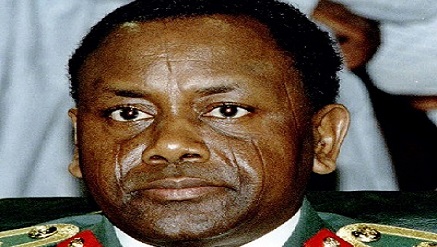
Godson Nnaka, the United States-based attorney involved in the controversy over the repatriation of $550 million Abacha loot, has absolved himself of responsibility in the delay of the funds being returned to Nigeria.
Mr. Nnaka was recruited in 2004 by the Nigerian government to recover funds stolen by late dictator Sani Abacha.
He had instituted a case in a U.S. district court seeking 40 per cent of the recovered loot. He also asked to be made the funds’ exclusive attorney.
He was kicked out of the fund recovery case after he had spent money and time to find and recover the funds.
He also alleged that Nigeria’s Attorney General, Abubakar Malami, jilted him after he turned down his demand to part with a kickback of as much as 70 per cent of his fee in order to access documentations needed for him to act on behalf of the country.

He also threatened to sue the minister for defamation if he did not desist from making false claims about him. He had given Mr Malami 48 hours to publish an apology in PREMIUM TIMES and or be prepared to be slammed with a defamation charge.
However, a statement by Mr. Malami on Monday explained that according to the U.S. law, when stolen funds are discovered, the U.S. Department of Justice would first approach a court for the forfeiture of the funds to the U.S. government.
If the court ruled in favour of the DOJ, the U.S. government, at the end of the process, would repatriate the money to the country from which the funds were stolen.
The AGF then claimed that Mr Nnaka’s suit demanding to be paid for representing Nigeria was the only thing standing in the way of the recovered loot being repatriated to the country.
Mr. Nnaka, in a statement released by his lawyer, Bennett Amadi, on Wednesday, replied that it was Mr Malami’s “corruption” and “greed” which was preventing the repatriation of the funds. He said all he was asking was to be paid for the services he rendered to Nigeria.
“Let it be noted that Nnaka is neither delaying the return of the Abacha loot to Nigeria nor attempting to extort anything from Nigeria. Rather, it is “corruption” and the selfishness and greed of Abubakar Malami that is centrally delaying the quick and safe return of the funds to Nigeria and to Nigerians. As it is commonsensical that every labourer is entitled to his wages, Nnaka is only asking to be paid for his services that he responsibly rendered and benefitted Nigeria with, and the cost and expenses incurred over several years pursuant to his agreement with the Federal Republic of Nigeria regarding the aforesaid loots.”
The statement claimed that since 2013, Mr. Nnaka had reached out to the Nigeria government on several occasions to ensure the funds are speedily returned to the country but he has repeatedly confronted a stonewall.
“However, it is the selfish, rapacity, bad faith, corruption and arrogance of the Nigerian Government officials, Abubakar Malami inclusive, that has forced Nnaka to recently approach the court in the United States to obtain justice. To be precise, when in April 2014, Nnaka and his team filed for the intervention and claim on behalf of Nigeria seeking for the prompt and safe repatriation of the loots to Nigeria to brief the then Attorney-general, Mr Adoke, and other government officials.
But for their deliberate inaction and corruption, the issue would have since been resolved. Following the election of President Muhammadu Buhari in May of 2015, Nnaka, in August of 2015 wrote to President Buhari seeking his intervention to ensure the prompt resolution of this matter. Nnaka also sought the assistance of well-placed Nigerians and even Senators to ensure the return of these Abacha loots back to Nigeria. All his efforts met brick-walls.”
The statement added that Mr. Nnaka’s representatives wrote to Mr. Malami on two occasions – November 17, 2015 and in February 2016 – asking him for an amicable settlement to his claim. He said Mr. Malami fixed a meeting with his representatives in Washington DC in April 2016, but when it became obvious that he was not going to dance to the AGF’s alleged demand for kickback, Mr. Malami cancelled the meeting and appointed a new lawyer for the case.
“Mr. Malami handed over the matter to a new lawyer who knew nothing about the case, for obvious selfish reasons. Faced with such arrogance, greed and selfishness, Nnaka perfected his appeal and petitioned the court for justice. So where in the world is Nnaka responsible for the delay in the return of the loots? Why can’t Nigerians be told the truth? What exactly does Mr Abubakar Malami intend to achieve in his present name-calling and image laundering antics? Does it bother him at all that Nigerian are wiser and more intelligent than he believes or thinks that they are?,” he asked.
“If Mr. Malami is sincere about the immediate and safe return of the present loots to Nigeria and to Nigerians, he knows exactly what to do instead of jumping from one newspaper house to another, Attorney General Malami and/or his attorneys for Nigeria are welcome to contact this office so that we may reasonably exchange ideas for the quick and immediate resolution of the issue in this matter and for quick return of these funds to Nigeria and Nigerians.
Mr. Malami and his lawyers know the telephone numbers and emails of this office. As always, our office is open to Mr. Malami and his lawyers for the sincere discussion and resolution of this matter. The present situation in Nigeria earnestly affirms that this matter should be sensibly looked into and resolved now so that these looted funds should go back to Nigeria without any further delay, and Nigeria can expand efforts to recover additional ones estimated at $20 billion in the next eighteen months.
“If the government of Nigeria fails to take advantage of this window, then Mr. Abubakar Malami should stop deceiving Nigerians with self-serving propaganda and tired image laundering antics, shut up and allow the United States Court to speak on this matter and render justice as it deems fit and proper. The matter is currently in court. Attorney General Malami should understand that civil litigation is not conducted on the pages of newspapers,” he added.


New data from CFA Society Nigeria is reshaping how the country’s financial sector thinks about talent development, with Access emerging as the single largest source of CFA candidates in Nigeria, distinction industry watchers say signals a deeper shift in how leading institutions are building investment expertise from within.

In its Where Nigeria’s Finance Professionals Work series, published in a national daily, CFA Society Nigeria placed Access first among employers of CFA candidates nationwide, with 82 candidates enrolled in the programme, more than double the 38 recorded at the next-placed institution and well ahead of every other bank or financial services firm on the list.
Access also ranked second among employers of CFA charterholders, with 11 professionals who have completed all three levels of the Programme and met its experience and ethics requirements.
For an industry that has long measured itself by balance sheet size and branch count, the rankings point to a different kind of competition: one over who is building the deepest bench of certified, globally credentialed talent.
CFA Society Nigeria compiled the data from its Salesforce Membership Database as at June 2026, and described the exercise as a way of recognising employers whose people “bring rigour, integrity and global best practices into the workplace every day.”
Analysts following the sector say the outcome is notable less for the ranking itself than for what it suggests about talent strategy across Africa’s financial services industry. A single institution developing more aspiring charterholders than the rest of the market combined raises the floor for professional standards nationally, not just within one balance sheet.
Every candidate who advances through the CFA Programme adds to a shared pool of ethics-trained, analytically rigorous professionals that Nigeria’s capital markets, pension funds and asset managers all eventually draw from.
Access Holdings Group Chief Executive Officer Innocent C. Ike, commenting on the rankings, framed the achievement in terms of institution-building rather than recruitment: “Every candidate on that list represents our commitment to building institutions and professionals that endure.”
The remark echoes a broader thesis increasingly voiced by market observers, that talent depth, not scale alone, is what will determine which African financial institutions earn lasting global credibility.
That distinction sits at the centre of Access’s stated ambition to become the World’s Most Respected African Financial Services Group. If the CFA numbers are any indication, the Group’s route to that goal runs less through square metres of branch network and more through the calibre of the people sitting inside it, a bet that Nigeria’s finance professionals, and the institutions that will one day hire them, are already placing alongside Access.


Nigeria Civil Aviation Authority (NCAA) has announced plans to introduce Radio Frequency Identification (RFID) baggage tracking technology across domestic and international airport terminals to tackle the growing problem of delayed, misrouted and missing luggages

Michael Achimugu, director, Public Affairs and Consumer Protection, NCAA, disclosed this at a stakeholder engagement forum in Lagos.
Achimugu said the RFID-enabled system would replace the traditional barcode-based baggage tracking framework and provide airlines and passengers with real-time visibility of checked luggage from check-in to final collection.
According to him, the technology would improve baggage traceability, reduce mishandling and strengthen accountability across the baggage-handling chain.
Unlike conventional barcode systems, RFID technology allows baggage to be automatically scanned at multiple points without requiring direct line of sight, enabling real-time tracking of luggage throughout its journey.
Achimugu said issues involving short-landed, missing, lost or damaged baggage had remained among the major complaints from air travellers, alongside flight delays.
He said the introduction of RFID technology was therefore aimed at improving baggage-handling standards and restoring passenger confidence in the aviation sector.
The NCAA said the initiative also aligns with IATA Resolution 753, which requires airlines to track baggage at key points during the passenger journey.
The authority expects the technology to provide more accurate information on the location of luggage, facilitate quicker resolution of baggage-related complaints and improve the overall passenger experience.
The NCAA said the initiative would also strengthen accountability among airlines and other stakeholders involved in baggage handling at Nigerian airports.

eTranzact International Plc has called for increased adoption of digital payment solutions among micro, small and medium enterprises (MSMEs), saying access to technology is critical to improving business efficiency, financial inclusion and growth.

The company also said it was deepening its partnership with the Small and Medium Enterprises Development Agency of Nigeria (SMEDAN) to expand digital access and financial literacy among small businesses across the country.
In a statement, the Divisional Head, Merchant Services, eTranzact, Mrs. Abimbola Reis, stated this at the SMEDAN/eTranzact Town Hall Engagement in Lagos recently, themed, “Financial Literacy and Inclusion for MSMEs Leveraging on Fintech Innovation.”
Reis described MSMEs as the backbone of Nigeria’s economy, noting that the sector comprises almost 40 million businesses and contributes significantly to economic growth and job creation.
However, she said many businesses continue to face challenges including limited access to finance, inefficient payment systems, weak financial reporting, cash-flow constraints and inadequate access to digital platforms.
She added that trust concerns also affect businesses’ ability to access finance, while heavy reliance on cash increases exposure to theft and makes payment reconciliation more difficult.
Representing the Director-General of SMEDAN, Prof. Yinka Fisher said the town hall was aimed at generating practical ideas and solutions that would support the growth and expansion of MSMEs.
“The essence of this engagement is to share ideas and concepts that will help MSMEs thrive and expand. Our partnership with eTranzact is about expanding the frontiers of MSMEs and ensuring they continue to grow,” he said.
Also speaking, representative of the Director-General of the Nigerian Association of Chambers of Commerce, Industry, Mines and Agriculture (NACCIMA), Dr. Praise Adedigba said businesses could no longer depend solely on hard work to remain competitive.

Airtel Nigeria Adds Over 1,000Cell Sites in Nationwide Expansion to Surpasses 17,000

MacOS Users Report More Cyber Threats than Windows Users – Survey Reveals

Mastercard, TeamApt Collaborate to Expand Digital Payments Across Africa

Access Holdings Sets New Benchmark in Nigeria’s Finance Talent Pipeline

ESUT Workers Get N82,000 Minimum Wage as Enugu Approves Fresh Salary Increase

EFCC Busts NIS Visa Overstay Racket, Uncovers N700m in an Account

Fact-Check: Elon Musk’s “Tesla Pi Phone” is Internet Rumor

NBC Tasks Broadcasting Stations over 2028 DSO Global Deadline

NBC Scraps Annual Digital Access Fee on DSO

Glo Sponsored African Voices to Feature Netflix’s “The Polygamist” Stars




 Telecom2 days ago
ipNX Joins Calls for Innovation-Friendly Ecosystem and Stronger Local Opportunities at Regenesys AI Summit

 E-Business2 days ago
NDPC Probes UNILAG, Lotus Bank, Hackerbella over Alleged Students’ Data Misuse

 News2 days ago
PalmPay Reinforces Commitment to Youth Empowerment on International Youth Day

 E-Financial2 days ago
KudiWave Asks for Clarification over N750m Transfer from PalmPay Account

 Telecom2 days ago
NCC Reports over 5,000 Fibre Cuts in 6 Months

 Telecom2 days ago
Google Selects Six Nigerian News Creators for Emerging Voices Growth Lab

 E-Financial2 days ago
Nigerians Borrow More to Buy Homes as Mortgage Demand Climbs – CBN

 General News2 days ago
NUPRC Warns of Counterfeit, AI-Generated Appointment Letters