

E-Business
Nigeria’s Economy Created 1.2m Jobs in 2013 -NBS


The Nigerian economy created a total of 1.163 million jobs within the 2013 fiscal year, the National Bureau of Statistics (NBS) has said.
The jobs, according to the bureau in its latest job creation survey result released on Monday were created in the formal, informal and public sectors of the Nigerian economy.
A breakdown of the figure showed that the sum of 431,021 jobs were created in the first quarter of 2013.
For the second, the bureau said 221,054 jobs were created while the figure increased in the third and fourth quarters to 245,989 and 265,702 respectively.
Addressing journalists on Monday in Abuja on the outcome of the exercise, Dr Yemi Kale, statistician general of the Federation and chief executive of the NBS said the jobs were created as a result of business expansion, seasonal growth and the need to attract new skills.
“These reasons for employment generation point to a thriving business environment in the country and gives further credence to the economic growth indicators,” he said
Kale explained that contrary to views expressed in some quarters that jobs were not been created, majority of jobs had been created in the economy.
He said in order to feel the impact of jobs creation, the number of jobs created had to surpass significantly the jobs demanded.
He said, “Job creation is, no doubt, a pressing topic in Nigeria as stakeholders struggle with the fact that despite several years of impressive annual growth rates, unemployment and under employment remains relatively high.
“This doesn’t mean that jobs are not being created. The question is whether the jobs being created are enough to meet the demand for jobs which amount to an average of 1.8 million every year.
“Even if jobs being created matched jobs being demanded, there is still the problem of existing pool of millions unemployed.
“Thus, for any meaningful impact on jobs created, the number of jobs created had to surpass significantly the jobs demanded otherwise the impact of jobs being created will not be visibly felt and tis will lead to the understandable suggestion that no jobs are really being created.”
The NBS boss noted that the result of the job creation survey exercise conducted by the bureau revealed that the informal sector continues to lead the way in new employment generated in the economy.
For instance, he said in the second, third and fourth quarter of 2013, the informal sector contributed over 54 per cent of total employment.generated in the economy, making it the highest employer of labour in the economy.
He said, “A breakdown of the jobs created in the second quarter indicates that 80,412 jobs were created in the formal sector, 112,567 jobs in the informal sector and 28,075 in the public sector.
“The formal sector contributed 76,385 jobs to the total jobs generated in the third quarter of 2013, while the informal and public sectors generated 140,673 and 28,931 jobs respectively.
“In the fourth quarter, of the total 265,702 jobs, the informal sector contributed 101,597, while the informal and public sectors created 143,278 and 20,827 jobs respectively.”
The NBS boss gave a further analysis of the job creation survey stating for instance that the education sector recorded the highest number of 37,578 new employees in the second quarter.
This, according to him, was followed by manufacturing with 9,000 new employees.
The administrative and support service sector, he noted, however, recorded the lowest number of new employees.


Interswitch, a technology company, through its health-tech subsidiary, Interswitch eClat, has taken a major step in advancing Nigeria’s public-sector health digitisation agenda following the conclusion of a high-level stakeholders’ engagement with the Abia State Government.

The engagement took place ahead of the phased deployment of eClinic, Interswitch eClat’s Electronic Medical Records platform, across public health facilities in the state, the firm stated in a statement on Friday.
The engagement, convened by the Abia State Ministry of Health in collaboration with Interswitch and held at the State’s Ministry of Health in Umuahia, brought together senior government officials, health administrators, Interswitch representatives, and key ecosystem stakeholders to align on the scope, implementation framework, and expected outcomes of the proposed eClinic deployment.
The initiative reflects a shared commitment to leveraging digital infrastructure to improve healthcare delivery, operational efficiency, and patient outcomes across Abia State’s public health system.
Discussions focused on deploying Interswitch’s eClinic solution in alignment with Abia State’s broader healthcare reform agenda under the current administration, particularly the transition from fragmented, paper-based systems to secure, interoperable digital platforms across public health facilities.
The proposed kick-off phase will span six public health facilities, including three primary healthcare centres, two secondary facilities, and one tertiary hospital, creating an end-to-end digital care pathway that strengthens patient referrals, supports continuity of care, and enables data-driven decision-making across all levels of service delivery.
The EMR solution is built to reduce patient waiting times, strengthen referral processes, and ensure the secure handling of both clinical and administrative data, supported by a hybrid infrastructure that enables local hosting with cloud-based backup.
Speaking at the engagement, Prof Enoch Uche, the Commissioner for Health, Abia State, described the initiative as a major milestone in the state’s healthcare transformation journey and highlighted the importance of private-sector collaboration in achieving sustainable impact.
“The Ministry of Health in Abia State is excited about the digitisation of health facilities, starting with Interswitch’s eClinic pilot phase involving three primary, two secondary, and one tertiary health centre. This initiative will enhance efficiency, accountability, and patient care by linking records across different levels of care.
“Global evidence shows that digital health improves access, reduces the cost of care, and maximises human resources while personalising services for our people. This partnership with Interswitch represents a key deliverable for this administration and aligns with the Governor’s vision for a modern, technology-driven health system,” he said.
During technical sessions led by Babatunde Fadeyi, Vice President, Health Ecosystem (Public Sector), Interswitch, stakeholders were taken through the core capabilities of Interswitch’s eClinic platform.
These include secure patient record management, ICD-11–compliant diagnosis coding, controlled data update protocols, and integrated billing and reporting tools designed to improve efficiency and accountability across health facilities.
Stakeholders were also briefed on the platform’s governance framework, risk mitigation approach, and phased implementation roadmap. Commenting on the engagement, Fadeyi reaffirmed Interswitch’s commitment to delivering measurable impact through technology-enabled healthcare systems.
“Abia State has demonstrated a strong commitment to innovation and system reform. The alignment of the state’s healthcare priorities with national health digitisation objectives creates a solid foundation for meaningful progress. Interswitch’s eClinic platform is designed to improve hospital operations by automating workflows, securing patient data, and providing healthcare managers with reliable insights to guide decisions.
“Beyond improving patient experience, it supports stronger revenue tracking, operational efficiency, and accountability. Our focus is to ensure the success of this pilot phase and deliver tangible improvements across productivity, service delivery, and patient satisfaction,” he said.
Also speaking at the engagement, Dr Ifeyinwa Blossom Uma-Kalu, the Permanent Secretary of the Ministry of Health, Abia State, highlighted the operational and clinical value of Interswitch’s eClinic initiative, particularly in strengthening referrals, improving revenue management, and expanding access to specialist care.
“This digitisation initiative will help us track our finances and internally generated revenue more accurately while reducing leakages. More importantly, it strengthens our referral system by allowing patient records to move seamlessly from primary to secondary and tertiary care.
“With a digital framework, healthcare workers in remote communities can access specialist support through telemedicine, helping to save lives and improve outcomes. This is a critical tool in our efforts to reduce maternal and infant mortality, and we are eager to see the outcomes of Interswitch’s eClinic,” she noted.
The engagement also addressed key success factors for the project, including power stability, user training, change management, and inter-agency collaboration, with both parties emphasising sustainability and scalability as the project progresses.


Organisers of the World International Economic Group (WIEG) 2026 Investment Summit have rescheduled the event to April 22-23, 2026, at Four Points by Sheraton, Oniru, Victoria Island, Lagos, to boost institutional participation, stakeholder alignment, and investment outcomes amid Ramadan considerations.

WIEG 2026 Summit
A statement from the Summit secretariat attributed the shift to extensive consultations with high-level public and private sector players, including government institutions, development finance partners, industry regulators, sponsors, and sector leaders.
It emphasised the need for additional time post-Ramadan to enable deeper engagement, secure internal approvals, and align with senior executives’ and policy leaders’ calendars.
The rescheduling, described as a “strategic enhancement,” allows for substantive contributions from speakers, panelists, and deal partners while mobilising investment networks and sectoral ecosystems.
The secretariat expressed appreciation to stakeholders whose early commitments underscore the Summit’s credibility in building a transformative platform for Nigeria and Africa.
Unlike conventional conferences, the WIEG 2026 Summit targets high-impact deal-making for a Smart City project and key Nigerian economic sectors, ensuring top-level decision-makers deliver measurable results.
The new dates are expected to expand government-private sector representation, strengthen investor pipelines, boost global delegate turnout, foster policy-investment dialogues, and heighten partnership visibility.
WIEG, registered in 200 countries with headquarters in Malaysia, promotes global partnerships for business opportunities across investment, trade, community development, humanitarian action, and sustainable growth in emerging markets. Its Nigeria chapter is fully registered to coordinate local programmes, investments, and partnerships.
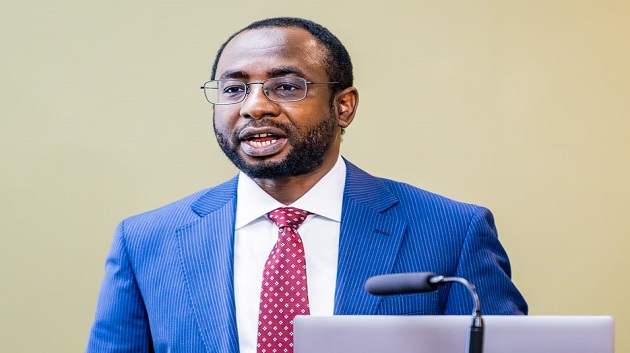
The Federal Government of Nigeria has reaffirmed its commitment to building a responsible, inclusive, and sovereign artificial intelligence ecosystem to enable Nigeria to transition from being a passive consumer of AI technologies to an architect and builder of indigenous AI systems.

This was said by the Director General of the National Information Technology Development Agency (NITDA), Kashifu Inuwa Abdullahi CCIE, while delivering a virtual address at the InnovateAI Conference held in Lagos.
The conference brought together policymakers, technology leaders, innovators, and stakeholders to discuss the future of artificial intelligence and its role in driving Nigeria’s digital economy and national development agenda.
Inuwa outlined Nigeria’s ambition to transition from being a consumer of artificial intelligence technologies to becoming a builder and owner of AI systems that reflect national values and priorities, in line with the National AI Strategy.
“Our goal is not just to use AI, but to architect and build our own AI systems in Nigeria,” he said, stressing that the country must take ownership of its AI future.
He noted that Nigeria’s approach to artificial intelligence extends beyond innovation to include governance, infrastructure, data sovereignty, and policy evolution.
According to him, “Responsible AI is never a finished job; it is an iterative journey. Our policies must evolve as the technology evolves, and we must avoid frozen laws by adopting living policies that adapt over time.”
He cited the implementation of the Digital Economy and E-Governance Bill as a key mechanism for generating insights that will help refine AI regulations and governance frameworks.
Inuwa also highlighted the challenge of data representation in global AI systems, noting that most models are trained on non-African datasets, which often results in bias against local dialects, cultures, and demographics.
“If a model shows bias against a local dialect or demographic, we cannot just patch it. We must reinvest in infrastructure to retrain it with inclusive and representative local datasets,” he stated.
He added that building national AI infrastructure is critical to achieving data sovereignty and ensuring that Nigeria is not merely an end user of foreign AI systems.
He further called for strategic partnerships with global technology companies and hyperscalers to build AI infrastructure in Nigeria while aligning with local values and national priorities.
“The world today is a global village. We need to work with global players, but they must understand our local nuances and help us build the infrastructure to retrain and develop AI models that reflect our context,” he said.
The NITDA Director General explained that adopting a comprehensive AI lifecycle approach, from responsible data collection and governance to deployment and continuous feedback, will enable Nigeria to move from reacting to AI developments to proactively designing indigenous AI systems.
“Without understanding how AI models are trained, how decisions are made, and how models are retrained, it will be difficult to build a responsible and trustworthy AI system,” he warned.
He reaffirmed that the Federal Government is intentional about promoting responsible AI and is working closely with the technology ecosystem to co-design national AI guardrails. He described platforms such as the InnovateAI Conference and other national AI dialogues as critical to shaping Nigeria’s AI future.

NITDA, Abia Partner on Enterprise Architecture Reform

Interswitch Partners Abia to Digitise Public Hospitals

Cyber Immunity Emerges as Shield for Nigerians Amid Rising Scams

WIEG 2026 Summit Shifts to April 22-23 for Maximum Impact

$214Bn Missing, Institutions Silent: Is Accountability Dead in Nigeria?
Nigeria’s 9 Top FinTech Firms Valued at $10.6Bn in January 2026

Kaspersky Launches OT Calculator to Align Cybersecurity Investments with Business Goals

CBN Upgrades Licences of Opay, Moniepoint, Kuda, Palmpay, Paga to National Status

NITDA, NBC Explore Strategic Collaboration on Digital Transformation, Media Regulation

Accidental Billionaire Opts for Jail Instead of Returning Money Credited Him by Mistake




 Telecom2 days ago
Group Condemns Gabon’s Social Media Shutdown Amid Protests

 General News2 days ago
How JustMarkets Is Empowering African Traders with Global Market Access

 Telecom2 days ago
IXPN Positions as the Regional Internet Exchange Hub for West Africa

 E-Business2 days ago
Mutual Benefits Assurance Settles ₦5.9bn Claims in January 2026

 Telecom2 days ago
Menxtt NG Emerges as Nigeria’s Virtual IT Hub for Premium Devices, Solutions

 Broadcasting2 days ago
Pheelz Shares His Journey on Glo-Sponsored African Voices

 E-Business2 days ago
NITDA DG Reaffirms FG Commitment to Responsible and Inclusive AI

 News2 days ago
AI-Driven Memory Chip Fuels Global Phone Price Surge