

News
Nigeria’s Highest Paid CEOs

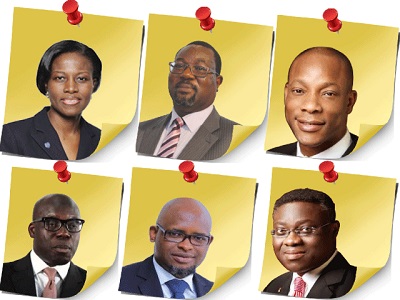
Being a successful and influential chief executive officer takes hard work, guts, sacrifice and a more-than-average knowledge of how the business environment works.
Many who wish to be successful and influential wonder how others have achieved great things, thinking such feats are impossible in their bid to toe same path.
Nigeria boasts a slew of successful CEOs in almost every sector – banking, oil and gas, sports, health and manufacturing.
Leadership Newspaper Friday unveils some of Nigeria’s highest paid CEOs and the stories behind their rise to the top, based on authoritative reports, between 2009 and 2012.
CEO, Stanbic IBTC, Sola David-Borha
As the managing director/CEO of Stanbic IBTC Holdings Plc, David-Borha is one of the country’s highly-rated bankers.
She is the highest paid director in Nigeria’s banking sector, with an annual remuneration of N177m. When broken down, this becomes N484, 931 daily, including weekends when may have no reason to go to work.
David-Borha has patiently risen through the ranks to get to where she is today. She was, at different times, responsible for overseeing the corporate finance and corporate banking, projects and structure finance, as well as asset management and private banking departments.
At a time, she bore the burden of supervising treasury and finance services department.
David-Borha also headed the correspondent banking relationships’ department at Stanbic IBTC and served as a member of the executive committee.
She was appointed to the bank’s board in 1994 and has held other positions, including a spell as director of Stanbic IBTC Bank Plc, Stanbic Nominees Nigeria Limited and Stanbic IBTC Stockbrokers Limited. She was also appointed a member of the board of Financial Institutions Training Centre (FITC).
She did not miss serving as a member of the bank’s board credit, board nominations and risk management committees.
Having passed through these stages before rising to the pinnacle, David- Borha can be said to have, indeed, paid her dues and can be said to have exhibited a great degree of competence, experience, long career plan and hard work to get to her present position.
CEO, Mobil Oil Nigeria Limited, Tunji Oyebanji
Mobil Oil Nigeria (MON) is one of Nigeria’s major petroleum products marketing companies. As its chief executive officer, Oyebanji is on an annual remuneration of N85m. When broken down, this amounts to a daily pay of about N231, 956.
As chairman/CEO/managing director of MON, there is no doubt that Oyebanji’s hard-work, commitment and dedication has been largely responsible for the turn-around which the company’s fortune has experienced, making it stand tall among other competing oil corporates.
The company now operates more than 200 retail outlets spread across the 36 states of Nigeria and the Fedeeral Capital Territory; it owns three plants (in Apapa, Lagos State) where lubricants, petroleum jelly and insecticides are manufactured.
As at 2011, MON had an annual turn-over of N63.1bn, from N58.34bn in 2010. With a combined dividend per share of N5 and bonus issue of one for five shares, MON has, arguably, the industry’s highest priced stock.
CEO, GTBank, Olusegun Agbaje
The managing director/CEO of Guaranty Trust Bank (GTB), Olusegun J.K. Agbaje, is rated as one of the country’s highest paid CEOs.
His GTB prides itself as “the biggest and most profitable bank in Nigeria” and one of the biggest companies on the shores of West Africa.
Agbaje co-founded the GTB in 1990 with Tayo Aderinokun who died in 2011.His annual take-home is a whopping N77m.
Before assuming the current position, Agbaje was the deputy managing director of the bank between August 2002 and April 20, 2011.
He has also served as the divisional head of the bank’s institutional banking division and also as acting MD of GTB (Ghana) Limited, from April 20, 2011.
Interestingly, Agbaje has served in a number of capacities before becoming the man at the helm of the bank’s affairs.
He was, at different points in his career; member, Assets and Liability Management Committee; member, Criticised Assets Committee; member, Board, Information Technology Strategy Committee and member, Board, Risk Management Committee.
On his way to the top, Agbaje also served as member, board, Human Resources and Nomination Committee; member, Management Risk Committee and member, Management Credit Committee. Experience garnered from serving in these committees helped, in no small measure, in preparing him for the current position of CEO.
CEO, Oando Plc, Jubril Adewale Tinubu
According to recent financial reports, the second highest paid CEO in the oil sector is Wale Tinubu, with a total annual remuneration of N69m, an equivalent of N189, 041 per day.
Tinubu is the group chief executive of the company which has been hailed as Africa’s leading indigenous energy solutions provider listed on the stock exchange in Nigeria and Johannesburg.
Tinubu also has a record of long-time service, having served on the board of various blue-chip companies as chairman and director.
His outstanding performance has won him several awards, among which are; Africa’s Business Leader of the Year awarded by the African Business Magazine and the Commonwealth Council on the basis of his contributions to the development of the African oil and gas sector in 2010.
He won the same accolade in 2011, courtesy of the African Investor.
These accolades are proof that Tinubu’s ascension to the pinnacle of the administrative ladder in Oando was no fluke but a function of his doggedness and hard-work. Tinubu also holds key positions in a number of major financial institutions.
CEO, Forte Oil Plc, Akin Akinfemiwa
Forte Oil Plc. (formally African Petroleum Plc.) is a foremost indigenous major marketer of refined petroleum products with strong presence in the 36 states of the federation and Abuja.
According to recent reports, as its group chief executive officer, Akinfemiwa’s annual salary is N64m (N175, 342 per day).
Akinfemiwa has now brought his hard-work to bear on the fortunes of Forte Oil Plc. The public liability company which is quoted on the Nigerian Stock Exchange (NSE) has over 500 dealer-assisted and dealer-developed retail outlets spread across the country.
CEO, UBA, Phillips Oduoza
Phillips Oduoza is the chief executive officer, group managing director, and an executive director of the United Bank for Africa (UBA) Plc.
He is one of the highest paid CEOs in the banking sector, with an annual remuneration of N57m (as at 2010). It suffices to say that Oduoza is one of the few who can beat their chest in fulfilment of a banking career.
He became the CEO and managing director of the bank in August 2010 and has served as its deputy managing director (South) from the 2005.
Besides having the honour of having gained monumental experience from working across different banks for more than 20 years, he has served also as the bank’s executive director of Retail Financial Services. UBA’s fortune, no doubt, has snow-balled, with results from his professional services and investment of talents as proof.
His services in the bank cut across membership of the board risk committee and financial and general purpose committee.
Before assuming the position of CEO, he served as deputy managing director of the bank. Among many other designations, he was an executive director of the defunct Standard Trust Bank (STB) which was acquired by the UBA in the thick of the consolidation exercise introduced by the then-governor of the Central Bank of Nigeria (CBN), Professor Charles Chukwuma Soludo.
CEO, Ecobank Nigeria, Jubril Aku
According to a Banks’ Financial Transparency report, as at 2009, the bank ranked second on the list of highest paid bank CEOs in Nigeria, with N88m per annum as salary for its CEO. But the bank reportedly slashed the CEO’s emolument to N38m per annum, perhaps, as a measure against financial stress.
Jubril Aku is the chief executive officer (CEO) of Ecobank Nigeria Plc. He has been its managing director since March 2010. Aku served as acting treasurer, Citibank, Tanzania and as country treasurer, Citibank Nigeria Plc.
He began his banking career in 1979 with the United Bank for Africa (UBA) Plc., where he worked for three years from September, 1986 to December, 1989. He served at the Continental Merchant Bank Plc., where he worked as a credit and investment analyst.
Aku has served in various capacities with different financial institutions and is, by all standards, an accomplished banker.
Au’s academic brilliance has earned him several accolades, among which are the First Bank of Nigeria Plc Prize for the Best Graduating Student in Banking and Finance at the Ahmadu Bello University, from where he graduated with honours in 1986.
CEO, Zenith Bank, Godwin Emefiele
The CEO and group managing director of Zenith Bank Plc, Godwin Emefiele, is also one of the highest paid CEOs of Nigerian companies.
Emefiele succeeded the pioneer CEO of the bank, Jim Ovia, in August 2010. By his current position in the bank’s hierarchy and the number of branches it can bboast of within the country and in West Africa, it is evident that Emefiele is fulfilled.
Prior to his choice of banking as a career in Zenith Bank, Emefiele was a lecturer in University of Nigeria and University of Port Harcourt where he taught Finance, Bank Management and Insurance. However, he later left the academia for banking.
He joined Zenith as a pioneer staff over 22 years ago and has proved his worth in advancing the bank as well as increasing its fortunes and profitability. In 2001, he was appointed deputy managing director before succeeding Ovia three years ago.
He has also served as member of Executive Committee, member of Board Credit Committee, member of Staff Matters, Finance and General Purpose Committee and member of Board Risk Management Committee.
Emefiele’s services and impact were also felt in Management Global Credit Committee, Risk Management committee, Assets and Liabilities Committee and Information Technology Steering Committee where he served as member.
The advancements made by the bank are not without the inputs of Emefiele who served as executive director in charge of corporate banking.
He as well served in the treasury, financial control and strategic planning department. He has been in the management team of Zenith Bank from its inception
Culled from Leadership Newspaper


Google and UpSkill Universe, Sub-Saharan Africa’s leading AI and business skills training partner, have announced a major redesign of the Google Hustle Academy programme.

For the first time, the free training initiative is open to everyone, not just business owners. The new curriculum is focused on equipping individuals and entrepreneurs with practical AI skills.
Small businesses are the engine of Africa’s economy, creating over 80% of jobs on the continent. To help them grow, the Hustle Academy was launched in 2022, providing bootcamp-style training on business strategy, digital skills, AI, and leadership. The program has since trained over 18,000 SMEs, with many reporting increased revenue and job creation.
Now, as AI reshapes the job market, the program is evolving. The 2026 edition is built for anyone in Sub-Saharan Africa, including employees, students, and jobseekers, who wants to use AI to advance their career.
To meet the needs of a diverse audience, the new format includes short, 60-minute webinars and more immersive, high-impact bootcamps. These sessions are laser-focused on putting AI to work immediately in areas like digital commerce, marketing, and growth strategy.
Speaking about the academy, Gori Yahaya, Founder & CEO UpSkill Universe said “The 2026 Hustle Academy is designed to close the AI Skills gap with hands-on training that is short, focused, and immediately useful. AI is reshaping how businesses win and how careers are built, right across this continent.
“We’re excited to renew our partnership, now in its fifth year with Google, combining their global AI leadership with our deep regional AI expertise. The next wave of AI leaders will come from this continent. We are making sure they are ready.”
The Hustle Academy initiative has strengthened digital competitiveness across emerging African economies by enabling SMEs to move beyond AI awareness to practical implementation, positioning them for sustained growth in an increasingly AI-driven business environment.
“We believe that the future of Africa’s digital economy lies in the hands of individuals and entrepreneurs alike. Our new strategy focuses on scaling reach by training individuals in the latest AI-centered tools and techniques,” said a Google representative.

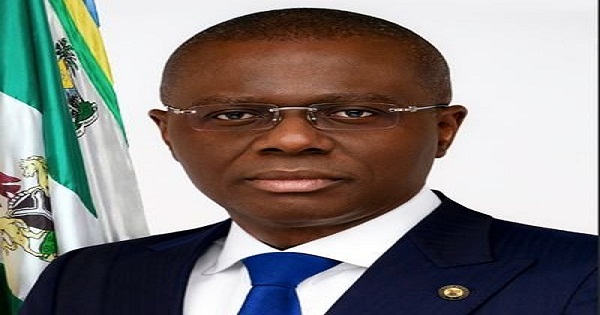
Lagos State has dragged 45 individuals and firms, including Bi-Courtney Aviation, DAAR Communications and Leaders & Company, to revenue court for tax debts running into billions of naira.

Lagos Govt
Bi-Courtney, operators of Murtala Muhammed Airport Terminal Two, faces N38.7 million claim; DAAR, behind Africa Independent Television, owes N22.4 million; ThisDay publishers Leaders & Company allegedly skip N67.1 million.
GMT Energy Resources tops corporates at N145.8 million, followed by Sheriff Deputies at N132.1 million; others like Heyden Petroleum, AA Rescue, BRT operator Primero also listed.
Individuals owe N13.5 million to N35 million each.
Attorney-General Lawal Pedro said suits followed ignored notices, aiming to enforce laws and fund infrastructure.
More defendants: IENG Nigeria, James Fisher, V Care Diagnostics, Venture Garden, Saro Africa, Barry Callebaut, Native Media, First Consulting, Eyowo Payments.
Compliant taxpayers post-notice escaped prosecution; defaulters risk penalties, interest, jail.
Pedro urged prompt filings and payments.


National Agency for Food and Drug Administration and Control (NAFDAC) has alerted Nigerians on counterfeit and unregistered Cerelac Mixed Fruits and Wheat products being sold in Lagos.

NAFDAC said Nestle Nigeria, the genuine Marketing Authorisation Holder of the product, received a complaint of suspected counterfeit purportedly manufactured by Nestlé Spain, bearing Batch Code 308002910.
It said that Nestle Nigeria reported that the complainant described that the counterfeit product emitted an odour suggestive of possible contact with fuel.
NAFDAC said that preliminary review of the product by Nestle Nigeria indicated that it had expired, in spite of the container displaying an expiry date of 10-2026, which suggested that the date coding had been tampered with (revalidated).
Nestle Cerelac Mixed Fruits and Wheat is a nutritious infant cereal, designed to be a delicious first food for infants.
NAFDAC said that its post-marketing surveillance’s directorate officers in Lagos conducted a surveillance visit to Maxland Shopping Centre, 193 Ago Palace, Okota, where the product was purchased by the complainant.
It added that the suspected counterfeit and unregistered Cerelac were found on sale at the premises and subsequently mopped up, while Nestle assisted in identifying the distinguishing features between registered and unregistered product.
According to the regulatory agency, Nestle revealed that the unregistered product used a hyphen (-) to separate the day from the year, while the registered product used a slash (/) to separate the day from the year.
“It is important to note that Nestle Nigeria is not aware of the channels through which the products are supplied into the country.
“Healthcare professionals and consumers are advised to report any suspicion of the sale of substandard and falsified regulated products to the nearest NAFDAC office, call 0800-162-3322, or send an email to [email protected],” NAFDAC said.
The agency warned that counterfeit formula often lacked essential nutrients, vitamins and minerals, leading to stunted growth or developmental issues.
It said that such formula might also contain contaminants that might lead to severe health consequences to infants or even death.
NAFDAC reiterated its commitment to safeguarding public health adding that it would continue surveillance activities to ensure the quality, safety, and efficacy of all NAFDAC-regulated products circulating in Nigeria.
It said that all zonal directors of the agency and state coordinators had been directed to carry out surveillance and mop up the revalidated product, if found within the zones and states.
The agency urged distributors, retailers, healthcare professionals, and caregivers to exercise caution and vigilance within the supply chain, to avoid the distribution, sale, and use of fake products.

PowerLabs to Scale Intelligent Energy Orchestration Across Africa with New Funding

Nigeria Demands Cloud Sovereignty to Anchor Africa’s Digital Independence

Digital Encode Sponsors PAFON 3.0 as CVO Prof. Adewale Set to Deliver Keynote on Cybersecurity and Trust

Polaris Bank Targets Youth with Financial Literacy Drive

As Nigerians Struggle to Save, Mutual Benefits Highlights Power of Structured Financial Planning

Spotify’s Loud & Clear Report Reveals Over ₦60Bn Revenue for Nigerian Artists in 2025

Kuda MFB Increases Kuda for Her Business Grants to ₦10 Million

Why JustMarkets Is a Strong Choice for Gold Trading

Canal+ to Cut Jobs as Part Sweeping Restructuring

Nigeria tops global rankings for USDT, USDC ownership




 E-Financial2 days ago
How Sterling Bank Is Empowering 1m Women with ₦500Bn

 E-Financial2 days ago
See Key Changes in BVN Rule from May 1 by CBN

 E-Financial3 days ago
How Unethical Deals Triggered CBN Takeover of Union Bank -Forensic Report

 E-Financial3 days ago
BVN Database hits 68.6m – NIBSS

 E-Financial2 days ago
Paga Group Rejigs Leadership as Oviosu, Founder Becomes Group CEO

 Broadcasting3 days ago
Multichoice Bleeds Customers in South Africa, Loses 580,000 Subscribers

 E-Business3 days ago
Kaspersky Warns of Digital Medicine Risks on the Occasion of World Health Day

 E-Financial2 days ago
Reputation: The Real Currency Powering Fintechs