

/home/kenneth/web/nigeriacommunicationsweek.com.ng/public_html/wp-content/themes/zox-news/parts/post-single.php on line 153
">
Warning: Undefined array key 0 in /home/kenneth/web/nigeriacommunicationsweek.com.ng/public_html/wp-content/themes/zox-news/parts/post-single.php on line 153
Warning: Attempt to read property "cat_name" on null in /home/kenneth/web/nigeriacommunicationsweek.com.ng/public_html/wp-content/themes/zox-news/parts/post-single.php on line 153
Nimasa, Isan Sign MoU on Cabotage Enforcement

Nigerian Maritime Administration and Safety Agency (Nimasa) and Indigenous Ship-owners Association of Nigeria (Isan), have signed a memorandum of understanding to work together to check the activities of foreign vessels that contravene the Nigeria cabotage act.
This new partnership will further boost current efforts to ensure effective implementation of the cabotage regime in the country.
In the almost seven years of the cabotage law in Nigeria, the nation and indigenous ship owners are still deprived of the needed revenue from haulage of petroleum products which ordinarily should help drive the country’s economy forward.
The cabotage act was passed into law on April 30, 2003 with the release of guidelines for the implementation of the provisions on June 7, 2004. However, the inability of Federal Government to implement the act gives foreigners the leeway to invade the country’s waterways to carry out all sorts of illegal shipping activities, which have in turn impoverished Nigerian ship owners.
Vessels owned by indigenous ship operators are considered substandard with poorly trained crew. This provides the ready-made excuse for the oil majors to ignore indigenous operators. In the past when the cargo allocation and reservation principle worked well, a lot of indigenous operators could charter vessels to carry petroleum cargo, but now, most of them simply serve as agents or representatives to foreign shipping companies in Nigeria.
The foreign shipping lines carry petroleum products while the indigenous shippers beg to be given the crumbs. Indigenous operators account for less than 10 percent of the total domestic crude cargo moved through the nation’s coastline of more than 2,000 km, dotted with eight ports.
The discrimination has placed the indigenous shippers at a massive disadvantage to every other flag in the world. Although the indigenous shippers are being over-taken by the better capitalized foreign shipping companies, the contention is that the cabotage laws reserve the haulage of crude oil within the nation’s territorial waterways to indigenous operators.
According to the act, foreign vessels are not allowed to partake in any domestic coastal trade as obtainable in other developed countries of the world, while it will at the same time, promote the development of indigenous tonnage and establish a Cabotage Vessel Financing Fund (CVFF) and for related matters.
The law stipulates that Nigerians should carry goods, passengers by vessel, or any other mode of transport, from one place to the other, either directly or via a place outside the country. It further stipulates that only vessels wholly owned, manned, built and registered by Nigerian citizens, shall be engaged in the domestic coastal carriage of cargo and passengers within the coastal territorial inland waters or any point within the waters of the exclusive economic zone of Nigeria; except a foreign vessel is given waiver by the Minister of Transport to carry out such job.
But seven years after the law was enacted, none of the provisions of the Law has been fully implemented by the supervising agency. Rather, waivers have been granted to foreign shipping companies to do jobs which Nigerians could do.
Temisan Omatseye, director general of Nimasa, who spoke at the signing ceremony noted that there cannot be an effective implementation of cabotage in the country without collaboration between Nimasa and Isan.
Omatseye, assured Isan members that their interest will be well represented by Nimasa, and disclosed that the agency is presently negotiating with a Malaysian finance group to help indigenous operators access long term loan through alternate source of funding.
Also speaking, Isaac Jolapomo, Isan chairman, commended the initiative and noted that the arrangement would curtail the excesses of foreign ship-owners.
However, Jolapomo called on Nigeria ship-owners to always work in conjunction with Nimasa for effective implementation of the cabotage act.


Warning: Undefined array key 0 in /home/kenneth/web/nigeriacommunicationsweek.com.ng/public_html/wp-content/themes/zox-news/parts/post-single.php on line 493
Warning: Attempt to read property "cat_ID" on null in /home/kenneth/web/nigeriacommunicationsweek.com.ng/public_html/wp-content/themes/zox-news/parts/post-single.php on line 493

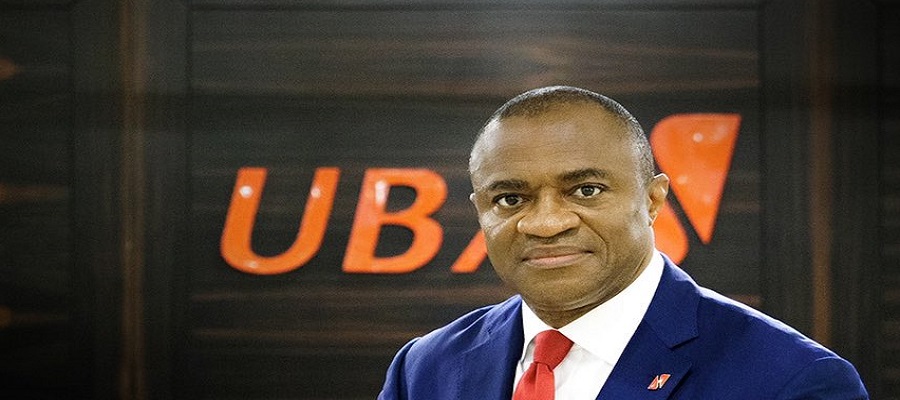
United Bank for Africa (UBA) has said that it has strengthened the security of transactions on its mobile application to stop fraudulent debits, unauthorised transfers and withdrawals.

Oliver Alawuba, Group Managing Director and CEO of United Bank for Africa
UBA announced this in a memo forwarded to its customers via email recently.
“We are pleased to inform you that we have further strengthened the security of transactions on the Mobile App.
“Updated authentication options now apply based on the value of transfers,” the memo reads in part.
UBA said in the memo that it had introduced authentication options for transactions of varying amounts to detect and prevent fraud.
According to the bank, transactions of N200,000 or more will now require customers to provide their Personal Identification Number (PIN) and a token number.
For transactions above N200,000 and N250,000, customers will be required to provide their PIN and a One-Time Password (OTP).
They can make use of their PIN and Biometric or PIN and Token numbers to authenticate such transactions.
Customers will be required to provide a PIN and OTP, or a PIN and Token number, when carrying out transactions between N250,000 and N500,000
For transactions between N500,000 and N10 million, customers must enter their PIN and Token to authenticate the transaction.
For transactions above N10 million, customers must use their PIN, Token, and Biometric to complete the transaction.
“The app will guide you, no need to memorise these thresholds,” the bank assured customers in the memo.

Sunil Mittal led Bharti Airtel has crossed the 650-million customer mark globally, fortifying its position as the world’s second-largest telecom operator by mobile subscriber base, as per a regulatory filing by the telecom operator.

“According to GSMA Intelligence, Bharti Airtel is ranked second globally by mobile customer base, with operations spread across India and Africa,” the filing said.
Commenting on this milestone, Gopal Vittal, executive vice chairman, Bharti Airtel, said: “Achieving the milestone of 650 million customers to be the second largest operator globally is a great responsibility for us to serve our customers better every day,”
He added that the telco strives to raise the bar on innovation, reliability, and experience so that every customer interaction is an opportunity to earn trust and deliver value connection.
Currently, Airtel India serves around 368 million mobile customers, meanwhile over 179 million users have been plugged into its subsidiary Airtel Africa spread across 14 countries.
Its mobile money platform, Airtel Money reached more than 52 million customers.
Additionally, the telco serves around 13 million homes with high-speed internet services and over 15 million through its Digital TV offering.
With operations spanning 15 countries and network coverage reaching over two billion people, analysts say that the latest milestone is a testimony to the natural curve of evolving from a telecom operator into a broader digital services provider.
President Bola Ahmed Tinubu has directed the immediate installation of 5,000 CCTV cameras across identified flashpoints in Plateau State as part of urgent measures to address the worsening security situation in the state.

The President gave the directive during an emergency visit to Plateau on Thursday, where he held a brief stakeholders’ meeting at the Yakubu Gowon Airport following the recent killings in Angwan Rukuba, Jos, where at least 28 persons were killed by unidentified gunmen.
Tinubu also approved the formation of a delegation of key stakeholders to engage in further deliberations on lasting solutions to the security challenges in the state.
He condoled with families of the victims and directed that support be provided to cushion their losses.
President Bola Tinubu while expressing deep sympathy to families of victims said the installation of surveillance cameras was part of a deliberate move towards addressing the kind of attacks that befell residence of the recent attack in the State.
In his remarks, Governor Caleb Mutfwang appreciated the President’s visit and show of concern, but expressed worry over the recent wave of attacks in the state, describing the situation as disturbing and requiring urgent attention.
The meeting had in attendance, former Governors, serving and former National and State Assembly members, traditional rulers, government appointees as well as relatives of those killed in the Angwan Rukuba attack.

UBA Beefs Up Mobile App Security to Stop Fraudulent Debits, Withdrawals

Bharti Airtel Crosses 650m Users

FG Orders Installation of 5000 CCTV Cameras for Surveillance in Plateau

CBN Plans New Payment Systems Vision

Ghana Makes History as First African Country to Integrate Payment National Identity Card

Spotify’s Loud & Clear Report Reveals Over ₦60Bn Revenue for Nigerian Artists in 2025

Madonna University Taps Tech Guru Adote for Strategic Board Role

China Threatens to Shut Nigeria’s Satellite Over $11.44m Unpaid Debt

FCCPC Bans Lagos ‘No Refund’ Policy, Vows Fines and Shutdowns for Traders

Healthcare Under Attack: Why Cybersecurity is Now Critical Care




 News3 days ago
Microsoft Revamps Copilot in Workplace AI Push

 E-Business3 days ago
Kaspersky Warns of a New Phishing Technique Leveraging Bubble, a no-code AI Platform

 Telecom3 days ago
How Recycled SIM Card Linked to N50m Kidnapping Nearly Landed me in Jail – Businesswoman

 E-Financial3 days ago
CBN Directs Banks, Fintechs to Complete Cybersecurity Audit Tool

 Telecom3 days ago
Ouranos Technologies Strengthens Board with Key Leadership Appointments

 General News3 days ago
Senate Gives Tinubu Nod to Borrow Fresh $6Bn

 E-Financial2 days ago
CBN Says 33 Banks Raise Fresh N4.65 Trillion in Recapitalisation Exercise

 Telecom2 days ago
NCC Insists Telcos Must Compensate Subscribers for Poor Quality of Service