

Telecom
NIN Registration will Help Nigeria Curb Crime, Achieve Digital Economy – Pantami

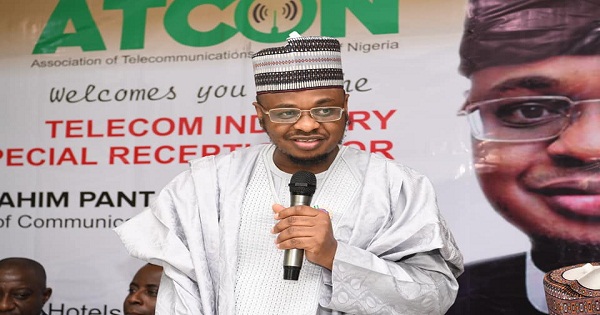
Dr. Isa Ali Ibrahim Pantami, Minister of Communications and Digital Economy, has hinted that the ongoing registration of National Identity Number would help Nigeria to curb crime and criminalities as well as helping the country to achieve digital economy.
Pantami disclosed this on Thursday while presenting a keynote address at the Global Privacy Day Celebration, 2021.
He stated that the value of the registration exercise would become appreciated with the ease at which e-government services would be delivered, the reduction in crime, and general efficiency guaranteed by the database.
According to him, “Identifying every Nigeria is a soft infrastructure needed to achieve our digital economy objective.
“Indeed, the needed pieces for the digital economy are falling in place and we are committed to laying a solid and lasting foundation for a digital Nigeria.
“I am more delighted to see that NITDA, in collaboration with public and private stakeholders has infused a lot of innovation to the organization of this year’s Privacy Week despite the challenges posed by the pandemic.
“The Digital Economy is developing at a remarkable rate and it has been widely accepted as the single most important driver of Innovation, Competitiveness and Growth.
“The digital economy is fundamentally transforming the way societies, businesses including the business of governance operate and deliver services.”
The Minister also disclosed that the COVID-19 pandemic has actually mainstreamed the digital economy as people can now hold events without gathering together physically.
He further extolled the benefits of digital economy, noting that nations of the world are embracing digital economy because of the multiplier effects it can have on other sectors of the economy.
“Most nations are prioritizing the need to develop their digital economies because they realize the multiplier effects that this can have on all other sectors of the economy.
“The currency of the digital economy is personal data. Digital platforms require information such as names, emails, phone numbers, geo-data among other personally identifiable information to be able to fulfill their service promise and to do effective marketing.
“Data must therefore be harnessed and properly regulated in order to achieve an orderly use of such valuable asset.
“When I signed the Nigeria Data Protection Regulation two years ago, I knew it was a fundamental instrument needed to digitally transform Nigeria. I am very proud of the Director General and the NITDA staff who have worked hard not only to implement the NDPR, but have done so seamlessly with local and international stakeholders. The array of partners of the Privacy Week shows that NITDA is representing government well, hence the show of support by the private sector.
“It is very gratifying that Nigeria, under the leadership of President Muhammadu Buhari GCFR approved the National Digital Economy Policy and Strategy (NDEPS) and our recommendation to re-designate the Federal Ministry of Communications to become Federal Ministry of Communications and Digital Economy.
“The 8 pillars of the NDEPS have been our core vision and implementation focus. These pillars are- Developmental Regulation; Digital Literacy and Skills; Soft Infrastructure; Service Infrastructure; Digital Services Development and Promotion; Soft Infrastructure; Digital Society and Emerging Technologies; and Indigenous Content Promotion and Adoption.
“In order to strengthen the NDPR, I want to assure NITDA of the Ministry’s full support in the drive to achieve compliance.
“I therefore encourage the Agency to rev up the engine of enforcement. Public and private sector data controllers must now take note that non-compliance with the NDPR is a breach with administrative, civil and criminal liabilities”.
The Minister also noted that they are working with relevant organs of government to ensure Nigeria passes a well-thought, digital-economy propelling Data Protection Act.
He further assured stakeholders and the international community that they are putting in place requisite mechanisms for the institutional framework to ensure successful implementation of the Bill as soon as it is passed into law.
Pantami explained that the lessons from the NDPR would form the foundation for the Act and hopes that it continues playing a leading role in deepening data protection and digital economy in Africa.
He however called on African Union Commission and international partners to support Nigeria’s call for creating an African Single Digital Market (ASDM).
This he said would enable the continent gain the advantage of economies of 1.3 billion people, stressing also that the ASDM would help Africa have data sovereignty in such a way as to protect data while also protecting the multinational technology investors.



MTN Nigeria, in collaboration with ONErpm and Ultima Studios, has announced Ayodeji Benson, popularly known as Ayo Benzi, as the winner of the maiden edition of the Next Afrobeats Star reality show.

L-R: Onyinye Ikenna-Emeka, Chief Marketing Officer, MTN Nigeria; Ayodeji Benson, Winner, Next Afrobeats Star Reality Show (Season 1) and Emamoke Ogoro, General Manager, Brand and Communication, MTN Nigeria, at the grand finale of the Next Afrobeats Star Reality Show (Season 1), held at the Ultima Studios, Lekki, Lagos on Saturday, December 13, 2025.
The grand finale, held on Sunday night at Ultima Studios in Lekki, Lagos, marked the climax of a nationwide talent search that began in September with over 15,000 aspiring musicians.
After weeks of auditions, mentorship, and rigorous training, five finalists – Ayo Benzi, Dave Cash, Kaeko, Somto O’Laker, and Lucky Yay – battled for the top prize in a high-energy showcase of performance and artistry.
At the end of the electrifying contest, Ayo Benzi emerged victorious, securing a ₦150 million music deal. Dave Cash was named first runner-up with ₦100 million, while Kaeko, Somto O’Laker, and Lucky Yay received ₦75 million, ₦50 million, and ₦25 million respectively.
Throughout the season, contestants were mentored by leading Afrobeats producers Sarz, Puffy Tee, P Prime, and Andre Vibez. Benzi, who was part of Puffy Tee’s team, credited the mentorship programme for sharpening his craft and stage presence.
Speaking at the event, Onyinye Ikenna-Emeka, Chief Marketing Officer of MTN Nigeria, said the initiative reflects the company’s commitment to youth empowerment and cultural expression.
“The Next Afrobeats Star platform is about creating real opportunities for young Nigerians and giving their talent the structure, visibility, and support it deserves.
“Afrobeats continues to place Nigeria on the global cultural map, and MTN is proud to be enabling the next generation of artists who will take this sound even further,” she said.
She added that the finale was not just a competition but a celebration of growth and readiness for the global stage.
In his acceptance speech, Ayo Benzi described the victory as a defining moment in his career.
“A big thank you to MTN. From the audition days, the treatment MTN has given us has been amazing. God bless the brand,” he said.
The finale also featured guest performances by Afrobeats stars Iyanya and Bella Shmurda, adding glamour to the night and reinforcing the show’s connection to the wider music ecosystem.
With the successful conclusion of the season, MTN Nigeria and its partners reaffirmed their role in championing youth ambition, supporting creative industries, and shaping the future of Nigerian music through platforms that turn potential into opportunity.

T2, formerly known as 9mobile, is under investigation by the Nigerian Communications Commission (NCC) in Benue State for an undisclosed incident disrupting USSD, SMS, voice, and data services across nine local government areas.

T2
The affected areas include Ado, Agatu, Gwer East, Gwer West, Konshisha, Obi, Ohimini, Okpokwu, and Otukpo, as detailed in an advisory on the NCC Major Outages Portal, which tracks significant disruptions reported by Mobile Network Operators (MNOs) and Internet Service Providers (ISPs).
Neither T2 nor its public relations firm, Chain Reactions, has responded to inquiries on the outage’s cause or restoration efforts as of this report.
The NCC’s continued reference to the operator as 9mobile, months after its public rebranding to T2 in August 2025, has sparked questions about whether the name change was formally notified to the regulator.
This probe aligns with NCC mandates requiring operators to disclose major outages, their impacts, and timelines for fixes, with compensation obligatory for disruptions exceeding 24 hours under the Consumer Code of Practice Regulations.
Industry watchers note that such incidents, often linked to fibre cuts, power failures, or infrastructure faults, underscore ongoing challenges in Nigeria’s telecoms sector, particularly amid T2’s subscriber losses post-rebrand. NCC vows transparency via its portal to hold operators accountable and protect consumers.
Telecom
NCC Unveils Draft 5-Year Spectrum Roadmap, 60 GHz License-Exempt Guidelines to Boost Broadband, Innovation
Nigerian Communications Commission (NCC) has unveiled two pivotal regulatory draft documents aimed at reshaping Nigeria’s communications sector over the next five years and fast-tracking deployment of ultra-high-speed wireless technologies.

NCC
In a public notice dated December 19, 2025, and issued pursuant to its mandate under the Nigerian Communications Act (NCA) 2003, the Commission published the Draft 5-Year Spectrum Roadmap for the Communications Sector (2025–2030) and Draft Guidelines for the Use of the 60 GHz License-Exempt Band for Multi-Gigabit Wireless Systems.
Both documents are accessible on the NCC website for stakeholder review, with the roadmap outlining strategic spectrum planning, allocation, and management to optimise utilisation, support emerging technologies like 5G and IoT, expand broadband access, and align with global best practices.
The Spectrum Roadmap emphasises four core pillars: bridging the digital divide through low-band spectrum and satellite services, attracting investments via flexible licensing models, enhancing service quality with mid-band optimisation, and fostering innovation in areas such as direct-to-device connectivity and secondary spectrum trading.
It sets ambitious targets including universal 4G coverage nationwide, 50 per cent 5G penetration in state capitals, and average broadband speeds of 100 Mbps by 2030, while addressing rising data demand through band refarming and efficient management.
Complementing this, the 60 GHz Guidelines establish a license-exempt framework for the 57–66 GHz band, enabling multi-gigabit speeds up to 10 Gbps for short-range applications like WiGig, fixed wireless access, enterprise connectivity, urban broadband, and backhaul solutions.
The rules mandate NCC type approval for equipment, site registration for outdoor use, and interference mitigation measures, while prohibiting wide-area networks to safeguard primary users.
In line with Section 58 of the NCA 2003, NCC invites comments from industry operators, equipment manufacturers, consumer groups, and the public, with submissions due by Friday, January 16, 2025, via email to [email protected], [email protected], and [email protected].
The notice, signed by Mrs Nnenna Ukoha, Head of Public Affairs, stresses that stakeholder inputs will refine the frameworks to drive innovation, investment, competition, and sustainable growth in Nigeria’s telecoms ecosystem.

Nigeria Police suspends tinted glass permit enforcement over court injunction

FIRS Rebrands as Nigeria Revenue Service, as New Tax Laws Take Effect

Galaxy Backbone Celebrates the Federal Government’s Paperless Civil Service Milestone

Banks to Impose N50 Stamp Duty on Transfers of N10,000 and Above from January 1

How to Use the Correlation of Gold with Other Trading Assets in the Forex Market

Nigeria Records Highest Weekly Cyberattacks in Africa — Report
Banks quietly move to enforce new ₦50 transfer levy from Jan. 1

Financial Sector Faced AI, Blockchain and Organised Crime Threats in 2025 – Report

Report Reveals Half of 2025’s Compromised Passwords were Already Leaked

Minister Claims Bandits Exploit Poor Network, Bounce Calls Off Multiple Towers




 Telecom3 days ago
T2 Faces NCC Probe in Benue Over Major Service Outage in 9 LGAs

 Telecom3 days ago
MTN Nigeria Crowns Ayo Benzi Winner of Next Afrobeats Star

 E-Business3 days ago
Jumia CEO says Black Friday Signals Nigeria’s E-Commerce Maturity

 E-Financial3 days ago
GTCO Secures Regulatory Approvals to Raise N10bn in Private Placement

 General News3 days ago
NDIC Reinforces Full Oversight Compliance to Safeguard Depositors
 E-Financial2 days ago
Banks to Impose N50 Stamp Duty on Transfers of N10,000 and Above from January 1

 Telecom3 days ago
NCC Unveils Draft 5-Year Spectrum Roadmap, 60 GHz License-Exempt Guidelines to Boost Broadband, Innovation

 Telecom3 days ago
NCC Grants 45 Days for Telecoms Firms to Fix Unapproved Shareholding Changes