

/home/kenneth/web/nigeriacommunicationsweek.com.ng/public_html/wp-content/themes/zox-news/parts/post-single.php on line 153
">
Warning: Undefined array key 0 in /home/kenneth/web/nigeriacommunicationsweek.com.ng/public_html/wp-content/themes/zox-news/parts/post-single.php on line 153
Warning: Attempt to read property "cat_name" on null in /home/kenneth/web/nigeriacommunicationsweek.com.ng/public_html/wp-content/themes/zox-news/parts/post-single.php on line 153
Nipost –From Mail Boats to Electronic Mail Services

The history of the Post in Nigeria dates back to 19th century. The first post office was established by the British Colonial Masters in 1852. It was considered to be a part of the British postal system. It was a branch of London General Post Office and this was the situation till 1874.
In 1862 when the Post Office began its career as a full fledge Department , the Royal Niger Company (RNC) which was actively involved in economic activities in the country, set up its own postal system in Akassa in 1887, Calabar in 1891, Burutu in 1897 and Lokoja in 1899. Mails were being moved from these trading stations to and from Lagos by a weekly mail boat.
In 1898, the British Post Office established post offices at Badagary, Epe, Ikorodu, Ijebu-Ode, Ibadan and Abeokuta. In 1892, the Royal Niger Company became a member of the Universal Postal Union. By 1908, Money Orders and mail were directly exchanged with the German West African Colonies instead of via London, as it was the practice.
In 1925, Royal Airforce planes flew from Kano to Cairo carrying mail for the first time outside the country. From January 1, 1900, the Southern Nigeria Government took over the responsibility of running the postal system in the entire country. There were not too many good roads in those days as such mail were conveyed by canoes, launchers and runners which could only operate at intervals of two weeks or less.
The first post-office in Northern Nigeria was established and located at Lokoja in 1899. While mail delivery was initially the business focus, British Postal orders were being sold and encashed as from 1907 in post offices located at headquarters of all District Commissioners. Internal AirMail flights started in 1931. By 1906, 27 Post Offices were operating and at the time of independence in 1960, 176 Post Offices, 10 sub Post offices and 1,000 Postal agencies were in the country.
At independence, the post was administered jointly with Telecommunications as a government department. Later, postal establishments and services grew in leaps and bounds. The Federal Government by Decree No. 22 of 1966 made the department a quasi-commercial organisation, a step towards making it more efficient and responsive to public needs.
The Nigeria Postal service Department came into being with the establishment of the Nigeria Telecommunications Limited (NITEL) on January 1, 1985. NITEL emerged from the merger of the Telecommunications arm of the defunct Post and Telecommunications Department of the Ministry of Communications with the former Nigeria External Telecommunications Limited (NET). Through the promulgation of decree No. 18 of 1987, NIPOST became an Extra-Ministerial Department.
The decree provided among other functions of NIPOST, the following: To provide and operate facilities for collection, dispatch and distribution of inland and overseas mail at reasonable cost, To provide and operate facilities for remittance of money through the money or postal order systems, To provide and operate philatelic services in Nigeria,
To print and provide postage stamps for payment of postage tariff and payment of stamp duties, and To represent Nigeria in its relations with other postal administrations and other bodies concerned with postal services.
Prior to 1992, NIPOST operated as an Extra-Ministerial Department in the Ministry of Communications while Decree 18 of 1987 went through various amendments.
In response to the call to grant NIPOST some measure of autonomy, the Federal Government promulgated Decree 41 of 1992 and classified NIPOST as a Government Parastatal having the following basic functions: To develop, promote, and provide adequate and efficiently coordinated postal services at reasonable rates, To maintain an efficient system of collection, sorting and delivery of mail nationwide, To provide various types of mail services to meet the needs of different categories of mailers,
To establish and maintain Postal facilities of such character and in such locations consistent with reasonable economics as will enable the generality of the public to have ready access to essential postal services,and To represent the Federal Republic of Nigeria in her relations with other Postal Administrations and International bodies.
In addition to the above stated functions, NIPOST also has powers: To determine the need for Post Offices, Postal facilities and equipment, To prescribe the amount of postage stamps and the manner in which it is to be paid, To provide Philatelic Services, To establish and review Postal Tariff, To explore additional services to boost its revenue, and To provide and establish non-postal or similar services.


Warning: Undefined array key 0 in /home/kenneth/web/nigeriacommunicationsweek.com.ng/public_html/wp-content/themes/zox-news/parts/post-single.php on line 493
Warning: Attempt to read property "cat_ID" on null in /home/kenneth/web/nigeriacommunicationsweek.com.ng/public_html/wp-content/themes/zox-news/parts/post-single.php on line 493

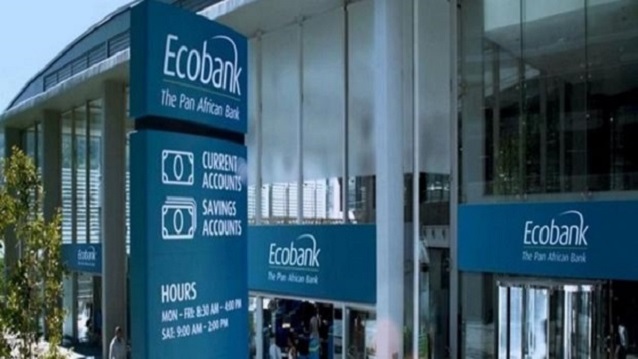
Ecobank Nigeria has announced the successful repayment of the outstanding principal and accrued interest on its original $300 million Eurobond due February 16, 2026, marking a significant milestone in its liability management strategy and overall balance sheet strengthening efforts.

Following the full repayment of the Eurobond obligations, the Bank stated that it will now focus its funding initiatives primarily on the domestic capital markets. T
his strategic shift reflects growing confidence in Nigeria’s local debt market and aligns with Ecobank Nigeria’s long-term objective of optimising funding costs while deepening its participation in the domestic financial ecosystem.
“Going forward, Ecobank Nigeria will prioritise domestic credit ratings and local debt issuance to achieve its funding objectives,” stated Ogorchukwu Okwechime, Financial Controller, Ecobank Nigeria, in Lagos.
He added that the successful repayment reinforces the Bank’s commitment to maintaining a resilient balance sheet and sustaining investor confidence.
The tender offer was conducted with Renaissance Capital Africa (Renaissance Securities Nigeria Limited) acting as financial adviser and dealer manager, while Sodali & Co Limited served as tender agent.
The notes were originally issued by EBN Finance Company B.V., with limited recourse to the issuer, for the sole purpose of financing the purchase of the US$300 million 7.125 per cent Senior Note due 2026 issued by Ecobank Nigeria.
The transaction underscores Ecobank Nigeria’s proactive approach to liability management, prudent capital planning, and strategic alignment with evolving market conditions.
It further positions the Bank to leverage domestic funding opportunities while maintaining financial flexibility and operational stability.
Chams Holding Company Plc, (Chams Holdco), digital payments and verification firm, has created a new subsidiary which is expected to strengthen the push for Africa’s digital transformation.

The creation of the new subsidiary, ChamsCorp Plc, which took effect from February 1, was made known in a filing to the Nigerian Exchange Limited , according to an announcement.
Chams said that the new subsidiary, which is its 5th, will give a new dimension to its more than 40 years of work in building the digital ecosystem not only in Nigeria, but across the continent and the rest of the world.
The newly created company will focus on three major aspects, namely the manufacturing of digital devices and development of digital infrastructure and services; data center design, construction and operations, and the development and implementation of AI infrastructure and intelligent systems.
It will also contribute to its parent company’s digital ID, digital verification, and trust services offering.
“For nearly four decades, we’ve enabled trust in transactions and identity. Now, we go furthe”
Chams is expanding into AI, data centre infrastructure, and intelligent systems, building the backbone for Africa’s digital transformation,” the company wrote in a LinkedIn post.
“We are not just participating in the future. We are engineering it,” the message added.
According to the Chams announcement, a decision of its Board of Directors appointed members of the pioneer board of ChamsCorp Plc, with renowned banker Mohammed Bashir Yunusa designated as Chairman.
He is described as a well-known finance expert who specializes in deal structuring, corporate and retail finance, business strategy, digital transformation, and Islamic Finance and Banking.
With more than 10 years of experience in the financial services industry, Yunusa currently serves as head of Consumer and Digital Banking for Non-Interest Banking Retail at Sterling Bank Nigeria, and will also serve as a non-executive director on the board.
“Chamscorp is designed to take our most ambitious ideas to market at speed and scale. As Africa’s digital economy evolves, we are focused on delivering transformative solutions that empower governments, businesses, and citizens alike,” Femi Oyenuga, CEO, Chams, commented on the development.
Chams has over the years played a major role in contributing to Nigeria’s digital ID ecosystem development to facilitate access to financial services.
In 2023, the company Group Chairman publicly stated that in providing such digital services to the Nigerian government, it had incurred debts estimated at $100 million and were planning to change their business model as a result.
Bank of Industry (BOI) has received approval from the Central Bank of Nigeria (CBN) to operate a Non-Interest Banking (NIB) Window.

Theodora Amechi, bank’s divisional head, Public Relations, said the regulatory nod allows BOI to launch non-interest banking operations, targeting underserved business segments with tailored financial solutions to support Nigeria’s industrial development.
BOI stated that NIB operations will promote inclusive growth, attract ethical funding, bolster the real economy, and finance customer assets and raw materials using approved non-interest products.
“This approval authorises BOI to commence Non-Interest Banking operations, positioning the bank to further advance Nigeria’s sustainable and inclusive industrial development through tailored financial solutions for underserved and high-impact business segments.
“The Non-interest Banking operations will enable BOI to drive inclusive growth, mobilise new ethical funding, expand support for the real economy, and align its financing activities with social and developmental objectives.
According to the bank, under this framework, BOI will be able to finance customers’ assets and raw materials using approved Non-Interest Banking products.
Announcing this milestone, Dr Olasupo Olusi, MD/CEO, Bank of Industry, said, “This licence marks a pivotal moment in the Bank’s journey of transforming Nigeria’s industrial sector. With this licence, we can reach a new category of borrowers who, before now, could not be served.”
He said the approval underscores the CBN’s confidence in the Bank’s commitment to responsible financing, adding that it will allow the bank to scale its operations, introduce innovative financing solutions, and deepen support for Micro, Small and Medium Enterprises (MSMEs), as well as other underserved segments critical to Nigeria’s sustainable economic growth.
“BOI’s decision to commence Non-Interest Banking operations is aimed at expanding access to ethical funding for businesses—particularly those that have traditionally avoided conventional interest-based financing.
This initiative opens new opportunities for ethically motivated and faith-sensitive enterprises, as well as segments of the economy that face challenges accessing traditional credit.
It enables such businesses to access much-needed financing and participate confidently in the formal financial system in a manner consistent with their values and business realities.
Bank of Industry (BOI) is Nigeria’s foremost Development Finance Institution, committed to driving industrial growth and inclusive economic development,” Olusi said.
Established in 1959 as the Investment Company of Nigeria (ICON) and reconstituted as Nigerian Industrial Development Bank (NIDB) under World Bank guidance in 1964.
The Bank assumed its current form in 2001 following the merger of the Nigerian Bank for Commerce and Industry (NBCI) and the National Economic Reconstruction Fund (NERFUND).
The Bank’s primary mandate is to provide financial assistance for the establishment and expansion of large, medium, small-scale, and micro projects.

Ecobank Nigeria Fully Repays $300m Eurobond Notes

Chams Carves Out Subsidiary to Support Africa’s Digital Transformation

BoI Secures CBN’s Approval for Non-interest Banking Operation

Nigeria, South Africa Drive Stablecoin Spending in Africa

Africa’s Active Data Centres’ Capacity on Back Foot, Despite Investment Push
Nigeria’s 9 Top FinTech Firms Valued at $10.6Bn in January 2026

Firm Detected a Fivefold Surge in QR Code Phishing Attacks in the Second Half of 2025

DG NCC Tasks University Dons on Research Commercialization, IP Management to Build Global Competitive Ecosystems

Kaspersky Launches OT Calculator to Align Cybersecurity Investments with Business Goals

Firm Detected a Scam Exploiting OpenAI’s Teamwork Features




 News3 days ago
African Leaders Highlight Africa’s AI Ambitions

 General News3 days ago
NDPC Orders Probe into Temu over Alleged Data Privacy Breaches

 Telecom2 days ago
Terra Moves to Expand in African Drone Sector, Secures $22m Funding

 Telecom2 days ago
Temu Assures Compliance Amid Nigeria Data Privacy Probe

 Telecom3 days ago
Nigeria’s Internet Users Hit 148.2m Amid Data Cost Surge

 Telecom3 days ago
MTN, BUA, Dangote & Other Industry Giants Triumph at NGX Made of Africa Awards

 Telecom3 days ago
X Suffers Global Outage, Millions Barred from Access

 News3 days ago
LG Nigeria Begins Nationwide Search for Oldest Working TV, Rewards Loyalty with AI QNED Upgrade