

General News
NIPOST Workshop Strategic for Economic Diversification- Stakeholders

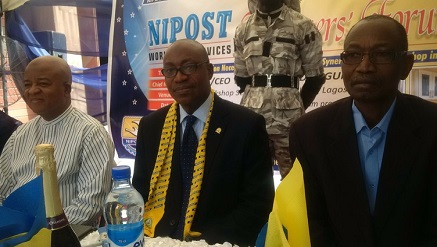
Nigerian Postal Service (NIPOST) Workshop Service has organized its maiden Customers’ Forum showcasing its capabilities as outstanding venture for the Service’s transformation.
At the occasion held at its Centre in Lagos, stakeholders showered encomiums on the management for taken the steps in setting up the Workshop decades ago, while urging the Federal Government enable the Workshop’s autonomy.
Architect Enoch Ogun, acting postmaster general and chief executive officer of NIPOST represented by Malam Bala Wamba, deputy postmaster general, Mail Operations, said that over time, and in response to prevailing global economic recessions, captains of industry were adopting strategies to keep afloat and remain in business, hence NIPOST has queued into the trends.
“We at NIPOST took the initiative by restructuring some of our traditional products and services into strategic business development (SBD). I am proud to tell you that the Workshop service so created in now one of the key ventures of the organization.
“Most recently, we have also repositioned and empowered the Workshop to reach out to the public with excess capacity of the installed machineries by providing quality products and services at competitive prices,” the Acting PMG said.

He pointed out that although it has not been rosy for the Service, they are working assiduously to been in line with President Muhammadu Buhari’s change mantra by contributing to the national GDP growth.
According to Engineer John Ayodele, guest speaker at the occasion, said that restructuring NIPOST and the postal/courier sector in Nigeria is largely dependent on the Postal Reform Bill lying at the floor of the National Assembly since 2004.
Ayodele who spoke on the topic: Global Recession- Necessity for Diversification and Synergy: NIPOST Workshop in Perspective , said that although NIPOST management are not to blame for the steady decline in businesses associated with the Service, however, failure to diversify spells a doom for the national postal agency.
He said that before now, NIPOST boasted of surplus mails and other parcels for deliveries, but the advent of technology brought greater challenge to players in the industry.
“A situation where even ‘bus conductors’ at Jibowu and other places are now courier operators is not good for the economy. We need this Bill to be passed to enable an Independent Regulator and endear fresh impetus in NIPOST operations as it would become the national postal agency and not a regulator-player as being practiced now,” he said.
The guest speaker, said he believes NIPPOST is critical in financial inclusion and other government programmes due to its large network of offices and branches scattered across the 774 local government areas in the country.
On the need for NIPOST Workshop’s autonomy, Ayodele suggested an Equity Trust model for private investors and other financial institutions to partner with the Service to grow its profitability to the nation.
“Also, NIPOST Workshop and NIPOST as an Agency of the Government needs to publicize its achievements; let marketers go to the streets and educate people on the core-competencies of this Workshop. It is a mega edifice and national resource based on human capacity and tools available here. Meanwhile, if NIPOST fails to leverage this window presented by ventures like the Workshop, it may find it difficult to remain in business. Gone are the days you relied on letters/mails and stamp duties. The Global recession calls for strategic thinking and rebranding.
The guest speaker also called for improved remunerations for the Workshop’s staff for continued service excellence and proficiencies in their duties.
Also speaking, Otunba Dele Olapeju, who chaired the occasion expressed delight on the quality of products been developed by the Workshop. He sought for Federal Government’s intervention by way of reducing the in-flock of foreign furniture in the market.
According to Olapeju, “Most of the furniture you buy at Mushin and other markets are not as strong as the one produced by NIPOST workshop. So, why can’t the government project this venture first as a national treasury and help the public to utilize the wonderful products they have here”.
He also suggested for a technical partnership between the NIPOST workshop and technical colleges for knowledge transfer hence the global trends revolve around entreprenurship.
To this end, Sikiru Olawale Sulaiman, general manager, NIPOST Workshop service said that the Customers’ Forum was as a result of the observation that being customer-centric is the hallmark of good organization, whether in the public or private sector.
Sulaiman the workshop in consonance with the NIPOST management has put in place structures and processes that are geared towards satisfying customers’ needs, timely and in good conditions.
He reiterated the Workshop’s resolve to building effective and sustainable collaborations with relevant stakeholders for improved service delivery.
—


Lagos Chamber of Commerce and Industry (LCCI) has urged the Federal Government and the National Pension Commission (PenCom) to suspend the proposed increase in Nigeria’s mandatory pension contribution from 18 per cent to 21 per cent, warning that the policy would raise the cost of doing business, threaten jobs and undermine enterprise sustainability at a time of mounting economic pressures.

Dr. Chinyere Almona, director general of the LCCI, said while strengthening retirement security remains an important policy objective, increasing mandatory pension contributions by three percentage points would impose additional financial burdens on businesses already grappling with high borrowing costs, persistent inflation, foreign exchange volatility, rising energy prices and multiple taxes.
According to the chamber, the proposed increase comes at a period when many businesses, particularly micro, small and medium-sized enterprises (MSMEs), are struggling to remain profitable amid Nigeria’s challenging operating environment.
The LCCI noted that Nigeria’s existing mandatory pension contribution rate of 18 per cent comprising 10 per cent by employers and 8 per cent by employees is already broadly aligned with the Organisation for Economic Co-operation and Development (OECD) average of 18.8 per cent.
It argued that raising the contribution to approximately 21 per cent would place Nigeria above several comparable economies, including the United Kingdom, where mandatory contributions stand at 8 per cent; the United States at 12.4 per cent; Kenya at 12 per cent, subject to earnings caps; and South Africa, where there is no equivalent mandatory private-sector pension contribution.
The chamber warned that implementing the proposed increase would significantly raise employment costs for employers, discourage new recruitment, constrain wage growth and place disproportionate pressure on MSMEs, which account for a substantial share of employment in Nigeria.
According to the LCCI, the higher payroll obligations could also reduce Nigeria’s competitiveness as an investment destination, encourage non-compliance with pension regulations and push more businesses into the informal sector.
“A stronger pension system cannot be built on weaker businesses,” the chamber stated, stressing that economic sustainability and business growth remain critical to expanding pension coverage over the long term.
The LCCI therefore called on the Federal Government to defer the proposal until a comprehensive Nigeria-specific actuarial and economic impact assessment is conducted to determine its implications for businesses, workers and the broader economy.
It also urged policymakers to engage in extensive consultations with organised private sector groups, labour unions and other key stakeholders before implementing any changes to the country’s pension contribution framework.
According to the chamber, the government’s immediate priority should be restoring business confidence, preserving existing jobs, encouraging investment and expanding the formal economy, which it described as the most sustainable pathway to improving retirement savings.
As an alternative to increasing contribution rates, the LCCI advised PenCom to focus on developing more innovative investment instruments capable of generating stronger returns on pension assets.
The chamber said improving investment performance would enhance contributors’ retirement savings without imposing additional financial obligations on employers and employees already facing difficult economic conditions.

Nigeria and the African Development Bank (AfDB), on Sunday, called for stronger African ownership of the continent’s vast mineral resources and advocated greater data sovereignty, regional collaboration and strategic financing to ensure Africa derives more economic value from its natural assets.

They spoke at the Ministerial Forum on Critical Minerals, Value Chain and Beneficiation: Pathways for African Transformation, organised by the African Development Bank in Abidjan, Côte d’Ivoire.
Speaking at the forum, the Minister of Solid Minerals Development, Dr. Dele Alake, urged countries to embrace data sovereignty, regional collaboration and strategic financing to ensure mineral wealth translates into sustainable economic growth across Africa.
Alake urged ministers from Africa’s mineral-producing nations to pursue greater regional cooperation rather than isolated national strategies, arguing that coordinated action would enable the continent to derive greater value from its abundant mineral resources.
Alake said Africa must move beyond exporting raw minerals and adopt practical measures to secure full control of its natural assets through value addition and local processing.
He said: “While the mantra of value addition has ushered in an era of economic independence for mineral-producing nations, we need concrete actionable strategies to take charge and be in full control of our natural assets to ensure total economic freedom.”
The minister, who chairs the Africa Mineral Strategy Group (AMSG), said Nigeria had continued to champion a common continental agenda on mineral development through collaboration with more than 30 member countries focused on promoting value addition.
He also advocated greater African control over mineral resource data, describing the continent’s long-standing dependence on the Australia-based Joint Ore Reserves Committee (JORC) reporting standard as outdated.
Alake added, “For the overall interest of the continent, and to efficiently and effectively safeguard its resources, Africa should take charge of the coding mechanisms utilised to assess its mineral assets.”
He urged African countries to adopt the Pan African Resource Reporting Code (PARC), developed by the Africa Minerals Development Centre (AMDC), saying the framework would promote transparency, consistency and ethical reporting while reflecting Africa’s unique geological and environmental realities.
Alake further proposed the establishment of a West African minerals processing hub and corridor stretching from Lagos to Dakar, modelled after the Lobito Corridor, to reduce infrastructure costs, encourage collaborative investment and enable participating countries to specialise in processing specific minerals.
According to him, the regional model would lower financial burdens on individual countries while promoting shared risks, increased trade and stronger value chains.
He also lamented the low level of intra-African trade, which he said stands at about 16 per cent, compared to roughly 60 per cent in Asia and 70 per cent in Europe.
In his remarks, AfDB President Dr. Sidi Ould Tah, described Africa’s mineral sector as a paradox, noting that despite the continent’s vast mineral endowment, it has yet to achieve corresponding gains in Gross Domestic Product (GDP) or attract sufficient Foreign Direct Investment (FDI).
Tah said Africa must overcome the disconnect between its enormous natural wealth and its limited global economic influence by strengthening financing mechanisms and developing integrated mineral value chains.
The forum concluded with the adoption of the Abidjan Declaration, which commits African countries to coordinate policies on critical minerals, regional infrastructure development, value-chain expansion and capital mobilisation.
Under the declaration, the African Development Bank pledged to deploy its financing instruments, technical expertise and capital mobilisation capacity to support mineral-producing countries, reduce investment risks, finance strategic infrastructure and accelerate the development of competitive and sustainable mineral value chains.
A statement by the Special Assistant on Media to the Minister of Solid Minerals Development, Lara Owoeye-Wise, said the declaration also urged African countries to strengthen national and regional capacities capable of attracting investment, financing viable projects and creating quality jobs through local value addition.
The forum brought together more than 20 ministers responsible for mining, energy, industry, natural resources and the green economy, alongside representatives of the African Development Bank, the African Export-Import Bank (Afreximbank), the U.S. Export-Import Bank and mining companies from Germany, Canada and the United States.
Participants reaffirmed that stronger African cooperation, regional processing infrastructure, strategic financing and greater control over mineral resources remain essential to transforming the continent’s mineral wealth into broad-based and sustainable economic development.

Prof. Chukwuma Soludo, governor, Anambra State, has approved an indefinite ban on graduation ceremonies in kindergarten, primary and secondary schools across the state as part of efforts to reduce the financial burden on parents.

Prof. Chukwuma Soludo, governor, Anambra State,
The directive was confirmed by Dr. Law Mefor, commissioner for Information and Value Reformation, in a statement issued on Friday.
According to the commissioner, the government deemed it necessary to clarify the policy following public inquiries and concerns over the scope of the ban.
Mefor explained that the directive applies to all graduation-related ceremonies in both public and private schools across the state.
He said the ban covers events described as graduation, passing-out, crossover or any other ceremony organised to mark the completion of kindergarten, primary or secondary school levels.
The government said the decision was taken to discourage unnecessary financial obligations often imposed on parents through elaborate school celebrations.
The commissioner clarified that students completing Senior Secondary School (SS3) are exempt from the directive.
However, he stressed that graduation ceremonies for SS3 students are not compulsory and may only be held without imposing any financial burden on students or their parents.
According to him, schools choosing to organise such ceremonies must ensure that no levies, compulsory contributions or hidden charges are demanded from parents.
Mefor warned that the state government would not hesitate to sanction any school that violates the directive.
He said schools found organising prohibited graduation ceremonies or imposing illegal charges on parents risk severe penalties, including possible closure.
The commissioner urged school proprietors and administrators to comply fully with the directive in the interest of parents and the education sector.
The state government said the policy is part of broader efforts to make education more affordable and eliminate unnecessary expenses associated with school activities.
Many parents have previously complained about the increasing costs of graduation ceremonies, including compulsory levies for gowns, entertainment, souvenirs and other related expenses.
The government expressed optimism that the directive would ease the financial pressure on families while encouraging schools to focus more on academic excellence than ceremonial activities.

See Verified 20 Countries Nigerian Passport Holders Can Travel Visa-Free

NPC Opens 131 Births, Deaths Registration Centres in Anambra

Lagos Chamber Opposes 21 Percent Pension Contribution, Warns of Job Losses

Subscribers, Telcos Warn FCCPC over Airtime Lending Enforcement

NCC, REA Partner to Cut Telecom Costs with Renewable Energy

NRC, Ponzi Scheme Collapses Resulting Loss of Billions of Naira

EFCC Busts NIS Visa Overstay Racket, Uncovers N700m in an Account

Tokenization, Blockchain Technology will Transform Financial Institutions – IMF

From Scarcity to Scale: What Africa Can Learn from India’s Agricultural Transformation

Spotify partners Afro Nation Portugal to expand African music experience




 Telecom3 days ago
GSMA Supports Abuja Declaration on Meaningful Connectivity for Africa, Joins Partners to Launch ATLAS Umoja

 Telecom3 days ago
Airtel Secures Another 10-year Spectrum Renewal in Nigeria

 E-Business3 days ago
HURIWA, CLO Protests Bill Asking Social Media Firms’ to Open Shops Nigeria

 Telecom3 days ago
MTN Nigeria Warns Customers Against Fake ‘One Month Free Data’ Promotion

 News3 days ago
Nigeria, Israel Strengthen Research, Technology Collaboration

 Broadcasting3 days ago
Glo Sponsored African Voices to Feature Netflix’s “The Polygamist” Stars

 E-Financial3 days ago
Moniepoint as a Key Driver in Expanding Financial Access for Businesses in Nigeria

 General News3 days ago
Anambra Govt Bans Graduation Ceremonies in Anambra Schools