

News
NIS2016: NCC, Dokita, SFH, Others Discuss Innovation in Nigeria

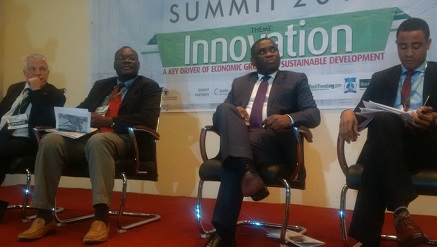
The innovative application of ICT in some other sectors of the economy in Nigeria has become one of the major successful outcomes of the country’s telecommunications regulations, according to Professor Umar Danbatta, executive vice chairman of the Nigeria Communications Commission (NCC).
The EVC who spoke through Mr. Tony Ojobo, director, Public Affairs at the Commission at the opening of two-day Nigeria Innovation Conference (#nis2016), cited the pharmaceutical industry where the authenticity of drugs are now verified through the use of mobile phones, as one of the innovations powered by telecommunications industry.
He said that in the agricultural sector, “We are all aware of the innovation where farmers were equipped with mobile phones and they are able to be reached for distribution of fertilizers and other critical infrastructure that have given them better yields.
“In the movie industry, as represented by Nollywood, the Commission has taken steps to collaborate with the actors and producers evolve better ways to distribute their contents to the worldwide audience and also to improve their production capabilities through the application of relevant technologies available in other parts of the world”.
The EVC said that innovation is one of the main eight-point agenda of the current leadership of the Commission. “The fourth item of that agenda, in particular, seeks to promote ICT innovation and investment opportunities. By this, the Commission makes conscious efforts to promote ICT innovations in ways that improve the nation’s ability to compete in the global economy, increase investments in youths, and promote SMEs for new businesses deliveries and breakthroughs”.
Speaking on ‘How Nigeria Higher Education System can drive Innovation: Opportunities for Collaboration and Partnership for Economic Development’, Dr. Tunde Adekola, senior education specialist at World Bank, said “What it means to be ‘innovative’ in 2015 may be different than it was in 1885 or 1985 (and it will perhaps be different still in 2085). That said, there is little argument that, whatever the year, and wherever you are, basic numeracy and literacy skills are fundamental to one’s education and ability to navigate successfully through life now require learning and innovation skills , statistical literacy, digital literacy skills, life and career skills”.
He said that both innovation and higher education are important for national development and must be value added, as “In midst of competition, time is also of essence. It is not only about what we know but when do we know it. Innovation makes all the difference between a developed and marginalized economy “
“Developing countries will have little success boosting economic growth and reducing poverty unless they can close a growing “S&T Innovation” divide between themselves and richer countries. With on-going recession or depression and the resolve of this gathering to strengthening partnership collaboration and cooperation between states and non-state actors, there is now and unique opportunity for innovation, interconnectivity, invigoration and inclusiveness for quality and S&T education.
He added that quality education remains the critical determinant of a country’s economic growth and standard of living as learning outcomes are transformed into goods and services, greater institutional capacity, a more effective public sector, a stronger civil society, and a better investment climate.
Also speaking, Dr. Daniel Folukoya, founder and CEO, OneDokita, Healthcare Limited, said that as young inventors they were challenged by the poor patient-doctor interface in the Nigeria’s healthcare system, hence the development of 1dokita platform.
“On the course of our research, the need for reliable data in the healthcare system actually informed the innovation- Onedokita. For instance, we may want to pick up cases for treatment like Diabetes; we know people in England have such cases at different levels, because statistics are there to assist your programme. But when we are looking at the Nigerian situation, digitally, there is very little data on that. What we actually is that there are data on HIV, malaria and tuberculoses (TB).
“But these illnesses come and kill quickly in terms of the worst case scenario. But what happens is that as you are treating HIV, malaria and TB, the life span of each person becomes longer, however the lifestyle diseases like hypertension, if you ask anybody about the data, we do not know,” he said.
He however called for more flexible regulatory system to spur more innovations in the country. “Nigeria is economically in recession, but technologically we are turning a corner reaching a threshold that will ‘burst’ and expand, which will trigger a turnaround in the nation’s economy. Due to our optimism we are building relationships and trusts in the market. We just need to recognise innovation in whatever sector of the country by way of flexible regulations”.
Meanwhile, Sir Bright Ekweremadu, managing director, Society for Family Health (SFH), said that over time, the public health sector in Nigeria has experienced increase in the use of innovative strategies and technologies in the delivery of health care services.
He highlighted some of the innovations as include the use of mobile technologies in data management, task shifting strategies to curb the effect of shortage of human resources, the use of mobile doctors to deliver health services in emergencies by the Flying Doctors Nigeria, effective containment of Ebola Virus Disease through prompt case management, surveillance, contact tracing, communication and social mobilization by Ebola Alert among others.
Ekweremadu said that SFH as a leading public health non-governmental organisation in Nigeria, with over 30 years of experience in delivering public health services adopts various innovative strategies in the delivery of health services to empower Nigerians particularly the poor and vulnerable, to lead healthier lives in line with her mission statement.
The speakers unanimously called for improved support from the government for conducive environment, especially to protect ‘weak’ innovators from the giant companies.



The Human Rights Writers Association of Nigeria (HURIWA) has challenged the South East Development Commission (SEDC) leadership to provide transparent details on achievements recorded in its inaugural year despite an approved budget of N140 billion for 2025.

SEDC
HURIWA’s National Coordinator, Comrade Emmanuel Onwubiko, disclosed that the group’s researchers found no concrete evidence of infrastructure projects executed in the South-East region for the benefit of the Igbo people since the commission’s inception.
Efforts to obtain specifics from Senate Committee Chairman on SEDC, Senator Orji Uzor Kalu, and Governing Board Chairman, Chief Emeka Wogu, yielded vague responses, with Wogu citing a mere “road map” and Kalu claiming no information was available.
The rights group recalled that the National Assembly approved N140 billion for SEDC in the N54.9 trillion 2025 budget passed on February 14, matching allocations for other regional commissions like South-West, South-South, and North-Central, while North-West received N145.61 billion and Niger Delta Development Commission (NDDC) got N626.53 billion.
President Bola Tinubu signed the SEDC Establishment Bill into law on July 24, 2024, with the board inaugurated on February 12, 2025, under Chairman Emeka Wogu and Managing Director Mark Okoye.
Okoye, in his inaugural address, quoted the World Bank estimating a $10 billion annual investment need over 30 years to bridge the region’s infrastructure gap, pledging collaboration with states, private sector, and partners to build a $200 billion economy by 2035.
Priorities outlined include security and investment infrastructure, agriculture, industrialisation, technology, innovation, and human capital development, amid challenges like insecurity, low ease-of-doing-business, unemployment, and 2,500 erosion sites displacing thousands.
HURIWA noted that while the commission’s creation sparked optimism to address post-Civil War neglect, bureaucratic hurdles, political meddling, and funding opacity threaten its potential, aligning with President Tinubu’s Renewed Hope Agenda for inclusivity.
The group described SEDC’s performance as a “spectacular failure,” urging Igbo youths and intellectuals to demand accountability to prevent elite capture of funds meant for roads, housing reconstruction, ecological remediation, agriculture, manufacturing, technology, railways, and energy projects in Abia, Anambra, Ebonyi, Enugu, and Imo states.
Onwubiko warned that pocketing the cash-backed N140 billion would betray the Igbo people’s development aspirations, calling for immediate disclosure of expenditures and verifiable outcomes.

Quickteller successfully hosted the maiden edition of InsomniaQ recently in Lagos, delivering a 12-hour non-stop celebration of African music, culture, and creativity.

A statement from the firm on Sunday stated that the event attracted a diverse audience of music lovers, culture enthusiasts, and festive diaspora returnees, marking a strong debut for what organisers described as a potential signature December event.
InsomniaQ featured a dynamic mix of live performances and DJ sets, showcasing Africa’s rich musical diversity and creative depth. From soulful sounds to high-energy performances, the festival offered a thoughtfully curated journey designed to follow the natural rhythm of its audience’s circadian cycle, sustaining energy, connection, and excitement throughout the night.
Beyond the performances, InsomniaQ emerged as a platform for shared cultural expression, creating space for celebration, discovery, and community. The experience reinforced Lagos’ position as the heartbeat of Africa’s December entertainment season and highlighted the growing appetite for premium, culturally grounded experiences.
Commenting on the success of the event, the Executive Vice President, Group Marketing and Communications, Interswitch Group, Cherry Eromosele, described InsomniaQ as an organic extension of Quickteller’s place in everyday moments of connection, culture, and celebration.
“InsomniaQ was created as a space to celebrate African creativity in its full expression, the music, the energy, and the people who make our culture so powerful.
“Seeing that vision come to life, with thousands of people connecting through sound, movement, and shared experience, has been truly rewarding. This debut edition reinforces our belief in creating platforms that bring people together and spotlights the richness of African talent in meaningful ways,” Eromosele said.
The success of InsomniaQ, according to the organisers, reflects a broader commitment within the Interswitch ecosystem to support experiences that extend beyond transactions into everyday life. By championing platforms that blend culture, innovation, and community, Interswitch continues to shape how people connect, celebrate, and experience Africa’s evolving creative economy.
With its strong debut, InsomniaQ has set the tone for future editions and established itself as a new fixture in Africa’s December calendar, celebrating culture, driving connection, and creating memorable experiences.
News
How Moniepoint’s Founders, Tosin Eniolorunda and Felix Ike are Redefining African Tech and Finance


In an era where global tech giants dominate headlines, two Nigerian entrepreneurs are quietly revolutionizing financial services across Africa, proving that world-class innovation can emerge from homegrown talent and local institutions.

Tosin Eniolorunda and Felix Ike, co-founders of Moniepoint Inc, have built one of Africa’s fastest-growing fintech companies, not despite their exclusively Nigerian education, but in many ways, because of it.
Their journey from the lecture halls of Obafemi Awolowo University and the University of Lagos to the TIME100 Most Influential Companies list stands as a powerful testament to the caliber of talent nurtured within Nigerian universities and the transformative potential of locally-rooted vision.
Tosin Eniolorunda’s path exemplifies how Nigerian educational institutions can cultivate entrepreneurial excellence. After earning his degree in Mechanical Engineering from Obafemi Awolowo University, he didn’t follow the well-trodden path abroad but instead chose to build solutions for Nigerian challenges within Nigeria itself. This decision proved prescient.
Understanding the unique financial ecosystem and infrastructure gaps firsthand from the work at TeamApt Ltd where they were building from majority of the country’s banks, Tosin pioneered several industry firsts: introducing instant POS transfers to Nigeria, launching the country’s first virtual account services, and constructing a vertically integrated payments processing switch with full switching and processing licenses.
These feats and technological achievements must be viewed from the prism that these were deeply contextual innovations born from intimate knowledge of local needs, the kind of understanding that comes from being educated and embedded in the communities one serves.
Felix Ike’s contribution complements this vision with technical brilliance equally rooted in Nigerian educational excellence. Graduating with first-class honors in Computer Science from the University of Lagos, Felix brought to Moniepoint the kind of engineering rigor required to build mission-critical financial infrastructure.
As Chief Technology Officer, he has architected systems that are not just functional but scalable, resilient, and secure enough to serve over 10 million businesses and individuals across Nigeria and Africa. His work demonstrates that Nigerian universities are producing software engineering leaders capable of building world-class technology that can compete on the global stage with technology that processes millions of transactions daily and underpins the financial dreams of an entire continent.
Since its founding in 2015, Moniepoint has evolved into Africa’s largest distributor of financial services in Nigeria, with presence across all 774 local government areas. The company’s all-in-one financial ecosystem offering seamless payments, banking, credit, and business management solutions reflects a sophisticated understanding of what African businesses and individuals actually need to thrive.
The accolades have followed: recognition by TIME as one of the 100 Most Influential Companies in 2025, listing among CNBC’s top UK fintech firms, and ranking in the Financial Times’ Africa’s Fastest-Growing Companies for three consecutive years.
The Moniepoint story as an indigenously rooted but globally compliant player challenges prevailing narratives about where innovation must originate and what credentials are necessary for building transformative companies. Tosin and Felix’s success illustrates that Nigerian universities, when their graduates are empowered with vision, opportunity, and determination, can produce founders who don’t just participate in the global economy but reshape it.

Fidelity Bank Appoints Onwughalu as New Chairman After Chike-Obi’s Tenure

DStv Offers Instant Package Upgrade for Customers from January to February

HURIWA Demands Accountability from SEDC Over N140bn Budget Utilisation

FIRS Transforms into NRS as Nigeria Ushers in New Tax Era

MultiChoice Secures 12 Warner Bros. Discovery Channels in New Multi-Year Deal

Banks quietly move to enforce new ₦50 transfer levy from Jan. 1

Financial Sector Faced AI, Blockchain and Organised Crime Threats in 2025 – Report

FIRS says NIN, CAC Numbers to Serve as Tax IDs from 2026

Report Reveals Half of 2025’s Compromised Passwords were Already Leaked

Minister Claims Bandits Exploit Poor Network, Bounce Calls Off Multiple Towers




 E-Business3 days ago
Jumia CEO says Black Friday Signals Nigeria’s E-Commerce Maturity

 E-Financial3 days ago
GTCO Secures Regulatory Approvals to Raise N10bn in Private Placement

 General News3 days ago
NDIC Reinforces Full Oversight Compliance to Safeguard Depositors
 E-Financial2 days ago
Banks to Impose N50 Stamp Duty on Transfers of N10,000 and Above from January 1

 E-Financial2 days ago
How Nigeria’s New Tax Law Could Redefine Risk in the Banking Sector

 E-Financial2 days ago
FIRS Rebrands as Nigeria Revenue Service, as New Tax Laws Take Effect

 Broadcasting2 days ago
How to Use the Correlation of Gold with Other Trading Assets in the Forex Market

 E-Business2 days ago
Galaxy Backbone Celebrates the Federal Government’s Paperless Civil Service Milestone