

News
NITDA, GIZ/DTC Engages Stakeholders in Lagos on NDLF

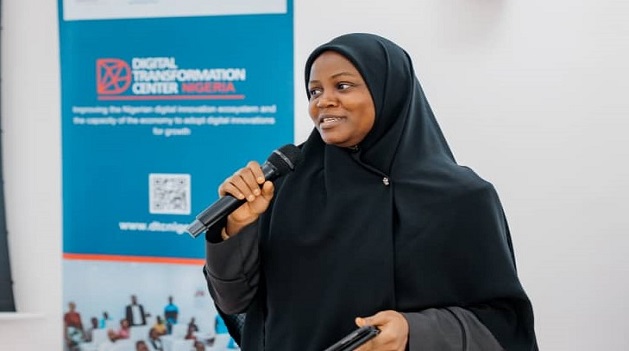
In a continuous effort to bridge the digital divide and empower Nigerians with essential digital skills, the National Information Technology Development Agency (NITDA), in partnership with the GIZ/DTC, held a Stakeholder Awareness on the National Digital Literacy Framework (NDLF) in Lagos.

The Director-General of NITDA, Kashifu Inuwa Abdullahi CCIE, in his opening remarks, emphasised the critical role of digital literacy skills in today’s rapidly evolving digital landscape. He highlighted the NDLF as a comprehensive roadmap developed by NITDA, in collaboration with key stakeholders to equip Nigerians with the necessary digital skills to thrive in the digital age.
Inuwa, who was represented by Dr. Falilat Jimoh, of the Digital Inclusion Unit of the Agency’s South West Zonal Office (SWZO), asserted that the collaborative efforts with the Ministry of Education were underscored, focusing on integrating the framework’s provisions into the national school curriculum. “This initiative aims to equip students from a young age with foundational digital skills essential for future success,” he noted.
Furthermore, he mentioned that NITDA’s partnership with GIZ/DTC is fostered to establish robust standards for digital literacy content, ensuring high-quality and relevant learning materials aligned with the NDLF’s objectives.
Inuwa stressed that NITDA’s commitment to digital inclusion extends beyond formal education, with ongoing digital literacy programs targeting women, artisans, and other underserved segments of the society.
He emphasised the importance of collaborative efforts, stating that the framework enables the implementation of NITDA’s Strategic Roadmap and Action Plan (SRAP) 2.0, 2024–2027 pillars, “Fostering Digital Literacy and Cultivating Talents”.
“The SRAP 2.0 is a living document that is being redrafted to align with the Federal Ministry of Communications, Innovation and Digital Economy policy document “Accelerating Our Collective Responsibility”, which has Five strategic pillars namely, Knowledge, Policy, Infrastructure, Innovation, Entrepreneurship & Capital, and Trade.
According to the NITDA boss, these programs aim to empower individuals to participate meaningfully in the digital economy and access online opportunities.
“This resonates with the Knowledge pillar of the Ministry tailored to accelerate the collective responsibilities of all stakeholders towards achieving inclusivity in all its dimensions which supports the Renewed Hope Agenda that is focused on propelling the Nigerian economy and enhancing the welfare of its citizens”, he said.
Hence, he stated that the workshop goal is to create widespread awareness about the NDLF through interactive sessions and discussions, providing stakeholders with a deeper understanding of its components, target audiences, and potential impact on bridging the digital divide among Nigerians.
Additionally, the Director-General emphasised the importance of collective action in the successful implementation of the NDLF, expressing gratitude for the collaboration with partners and the participation of stakeholders. He affirmed that the significance of tailoring the framework to the specific needs of Nigeria’s diverse population is to achieve maximum effectiveness.
In conclusion, Inuwa expressed confidence that the NDLF, coupled with collaborative efforts, will play a pivotal role in empowering Nigerians with the digital skills necessary to actively participate in the digital economy, and access online information and opportunities while contributing to a more inclusive and prosperous society. He then urged participants to continue collaborations to unlock the full potential of Nigeria’s digital future.
Earlier, Dr. Thuweba Diwani the Commission Manager GIZ/DTC Nigeria in her opening remarks delivered by Olusegun Alimi, the Technical Advisor, GIZ/DTC Nigeria, anticipated that the awareness session would be an avenue to dialogue and come up with a “Participatory Policy Implementation Framework (PPIF)” he added, “for policies to be sustainable they need to be owned by the people”.
The Digital Transformation Centre Nigeria (DTC Nigeria) is a project funded by the European Union and the German Federal Ministry for Economic Cooperation and Development, implemented by Deutsche Gesellschaft Fuer Internationale Zusammenarbeit (GIZ). It focuses on digitalization, innovation, and entrepreneurship in Nigeria, aiming to enhance the country’s digital innovation ecosystem and boost its capacity for adopting digital innovations for economic and societal growth.
Other Ministries, Departments and Agencies (MDAs) at the dialogue were, the National Orientation Agency (NOA), National Identity Management Commission (NIMC), Lagos Public Private Partnership (PPP), Lagos State Technical and Vocational Education Board (LASTVEB), Lagos State Employment Trust Fund (LSETF), also, the private sectors represented were MTN Foundation, CISCO, Tech4Dev, Faith Foundation among others.
The moderator, Mr. Tayo Olosunde an ecosystem industry enthusiast affirmed that the stakeholders’ sessions had also been held in Kano and Abuja.


OpenAI maker of ChatGPT is rolling out a health-focused feature to the generative artificial intelligence (AI) tool that’s used by nearly a billion users.

Named ChatGPT Health, the new feature aims to provide users with health and wellness information. This, as health is one of the most common ways people use ChatGPT, according to OpenAI.
In a blog post, Microsoft-backed OpenAI says de-identified analysis of conversations show that over 230 million people globally ask health and wellness-related questions on ChatGPT every week.
ChatGPT Health will also “securely” connect medical records and wellness apps to ground conversations with a user’s own health information, making responses more relevant and useful.
“Designed in close collaboration with physicians, ChatGPT Health helps people take a more active role in understanding and managing their health and wellness – while supporting, not replacing, care from clinicians.”
According to OpenAI, health information is often scattered across portals, apps, wearables, PDFs, and medical notes making it hard to see the full picture, and people are left to navigate a complex healthcare system on their own.
“ChatGPT Health builds on these so responses are informed by your health information and context. You can now securely connect medical records and wellness apps – like Apple Health, Function, and MyFitnessPal – so ChatGPT can help you understand recent test results, prepare for appointments with your doctor, get advice on how to approach your diet and workout routine, or understand the trade-offs of different insurance options based on your healthcare patterns.”
According to the company, ChatGPT Health is designed to support, not replace, medical care, adding that it is not intended for diagnosis or treatment. “Instead, it helps you navigate everyday questions and understand patterns over time – not just moments of illness – so you can feel more informed and prepared for important medical conversations.
“To keep your health information protected and secure, Health operates as a separate space with enhanced privacy to protect sensitive data. Conversations in Health are not used to train our foundation models. If you start a health-related conversation in ChatGPT, we’ll suggest moving into Health for these additional protections.”
OpenAI adds that access to ChatGPT Health has started with a small group of early users to learn and continue refining the experience, adding that users with ChatGPT Free, Go, Plus, and Pro plans outside of the European Economic Area, Switzerland, and the UK are eligible.
“As we make improvements, we plan to expand access and make Health available to all users on web and iOS in the coming weeks.
“Medical record integrations and some apps are available in the US only, and connecting Apple Health requires iOS.”

Kaspersky experts outline how the rapid development of AI is reshaping the cybersecurity landscape in 2026, both for individual users and for businesses. Large language models (LLMs) are influencing defensive capabilities while simultaneously expanding opportunities for threat actors.

Deepfakes are becoming a mainstream technology, and awareness will continue to grow. Companies are increasingly discussing the risks of synthetic content and training employees to reduce the likelihood of falling victim to it. As the volume of deepfakes grows, so does the range of formats in which they appear.
At the same time, awareness is rising not only within organisations but also among regular users: end consumers encounter fake content more often and better understand the nature of such threats. As a result, deepfakes are becoming a stable element of the security agenda, requiring a systematic approach to training and internal policies.
Deepfake quality will improve through better audio and a lowering barrier to entry. The visual quality of deepfakes is already high, while realistic audio remains the main area for future growth.
At the same time, content generation tools are becoming easier to use: even non-experts can now create a mid-quality deepfake in just a few clicks. As a result, the average quality continues to rise, creation becomes accessible to a far broader audience, and these capabilities will inevitably continue to be leveraged by cybercriminals.
Online deepfakes will continue to evolve but remain tools for advanced users. Real-time face and voice swapping technologies are improving, but their setup still requires more advanced technical skills. Wide adoption is unlikely, yet the risks in targeted scenarios will grow: increasing realism and the ability to manipulate video through virtual cameras make such attacks more convincing.
Efforts to develop a reliable system for labelling AI-generated content will continue. There are still no unified criteria for reliably identifying synthetic content, and current labels are easy to bypass or remove, especially when working with open-source models. For this reason, new technical and regulatory initiatives aimed at addressing the problem are likely to emerge.
Open-weight models will approach top closed models in many cybersecurity-related tasks, which create more opportunities for misuse. Closed models still offer stricter control mechanisms and safeguards, limiting abuse.
However, open-source systems are rapidly catching up in functionality and circulate without comparable restrictions. This blurs the difference between proprietary models and open-source models both of which can be used efficiently for undesired or malicious purposes.
The line between legitimate and fraudulent AI-generated content will become increasingly blurred. AI can already produce well-crafted scam emails, convincing visual identities, and high-quality phishing pages.
At the same time, major brands are adopting synthetic materials in advertising, making AI-generated content look familiar and visually “normal.” As a result, distinguishing real from fake will become even more challenging, both for users and for automated detection systems.
AI will become a cross-chain tool in cyberattacks and be used across most stages of the kill chain. Threat actors already employ LLMs to write code, build infrastructure, and automate operational tasks.
Further advances will reinforce this trend: AI will increasingly support multiple stages of an attack, from preparation and communication to assembling malicious components, probing for vulnerabilities and deploying tools. Attackers will also work to hide signs of AI involvement, making such operations harder to analyse.
“While AI tools are being used in cyberattacks, they are also becoming a more common tool in security analysis and influence how SOC teams work. Agent-based systems will be able to continuously scan infrastructure, identify vulnerabilities, and gather contextual information for investigations, reducing the amount of manual routine work.
“As a result, specialists will shift from manually searching for data to making decisions based on already-prepared context. In parallel, security tools will transition to natural-language interfaces, enabling prompts instead of complex technical queries,” adds Vladislav Tushkanov, Research Development Group Manager at Kaspersky.

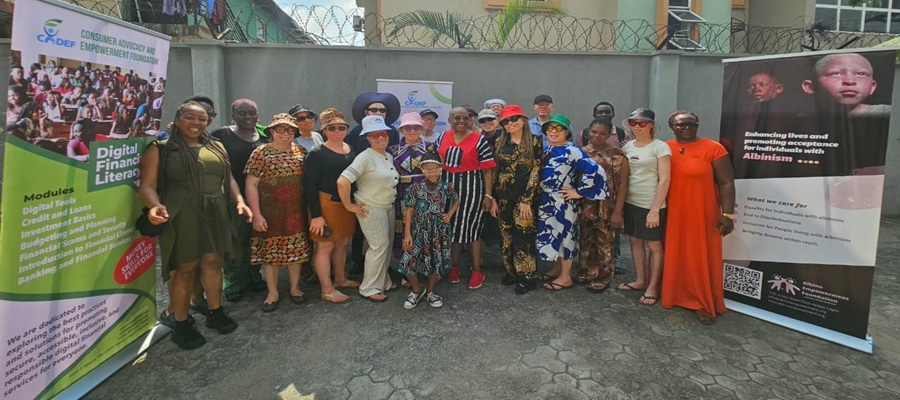
Nigerians living with albinism say their biggest challenge is not skin sensitivity or poor eyesight, but being seen, heard and treated as full human beings, a message that resonated at a recent empowerment session hosted by the Consumer Advocacy and Empowerment Foundation (CADEF) and Albino Empowerment Foundation.

CADEF
The event last Saturday focused on lived experiences, self-advocacy and rights awareness rather than handouts, though participants received food, protective clothing and skin/eye care materials.
CADEF Executive Director, Prof. Chiso Ndukwe-Okafor, said real progress requires respect and inclusion, not pity, adding that knowledge of human rights equips people to demand fairness.
“Dignity begins when people are seen fully and treated equally,” she said.
Ifeoma Ngesina, founder of Albino Empowerment Foundation, defined inclusion as equal rights and participation in decisions affecting their lives, not stereotypes.
“When persons with albinism are included in schools, workplaces, leadership and media, harmful myths fade,” she said, stressing it builds confidence and leadership.
CADEF Advisory Board Member, Ms Kobi Ikpo, urged participants to own their narrative: “If you do not tell people how to treat you, they will not know how to address you. Once you accept yourself as a complete human being deserving of respect, it reflects in how you carry yourself — and that confidence commands respect.”
Afolake Odudinu highlighted parental ignorance leading to school dropouts, skin damage from sun exposure and social/marital stigma, noting skin cancer treatment remains inaccessible for many.
Efosa Peter, a father and associate pastor, rejected pity for genuine empowerment: “I hate pity. I don’t want to be pitied — I want empowerment.” He described persons with albinism as creatively gifted and warned against insincere initiatives.
“Empowerment must include self-esteem and self-motivation. When you see yourself as whole, others will follow,” he said.
Teacher Rose Adudu shared overcoming school bullying through discipline and advocacy, helping enrol a young albino girl in school despite later parental withdrawal.
“Your character will speak for you,” she said.
Participants were encouraged to use content creation for education and myth-busting, with CADEF planning annual events and advancing Digital Financial Inclusion Rights for Persons With Disabilities.
The forum underscored a core demand: opportunity, understanding and respect over sympathy.

OpenAI Launches ChatGPT Health

Pawnith Appoints Martina Ogbebor as Managing Director to Lead Strategic Launch into Nigeria’s Fintech Ecosystem

Study Reveals Majority of IT Professionals Show Openness to Cyber Immunity

Fidelity Bank Completes N500Bn Capital Raise ahead of Deadline

PalmPay Deepens Its Long-Term Commitment in Nigeria with New Office @ Yaba

Banks quietly move to enforce new ₦50 transfer levy from Jan. 1

FIRS says NIN, CAC Numbers to Serve as Tax IDs from 2026

PalmPay Launches N400 Million World Travel Carnival, Rewarding Users with Free Global Trips

Check Point Reveals Nigeria as Second Most Targeted African Country for Cyberattacks in November

Minister Claims Bandits Exploit Poor Network, Bounce Calls Off Multiple Towers




 Telecom3 days ago
Samsung Plans to Double AI Mobile Devices to 800 million Units this Year

 E-Financial3 days ago
Zacch Adedeji says Rebranded NRS will Overhaul Revenue Administration

 Telecom2 days ago
NITDA DG Charts Bold Path for Innovation-Led Digital Boom in North

 News2 days ago
INEC Warns of Fake Ad-hoc Staff Recruitment Portal

 News2 days ago
NRS Boss Dismisses Fears of Political Weaponisation in Tax Reforms

 Telecom2 days ago
Mandatory Biometric Verification for Starlink Users in Nigeria Begins

 E-Financial2 days ago
Senders Now to Pay N50 Stamp Duty – GT Bank

 E-Financial2 days ago
Ecobank Offsets Repayment of $300m Eurobond Notes