

News
Nkemdilim to Speak in South Korea on Africa Innovation


Nkemdilim Begho, Chief Executive Officer of Future Software Resources Limited, will join Heads of African State, Delegations of 80 member countries, international organizations, government establishments, public corporations, private businesses, financial institutions, press, among others in South Korea to tell the story of how best to promote innovation and entrepreneurship in Africa.
Begho will be speaking at two conferences in South Korea – KOAFEC 2018 and the African Development Bank Meeting 2018, alongside other leading voices in Africa including Ngozi Okonjo-Iweala, Board Chair, Gavi, the Global Alliance for Vaccines and Immunisation, between 21st May, 2018 through 25th at the BEXCO, Busan.
Speaking ahead of the events, Begho, a strong promoter of software in Nigeria told newsmen that Africa has a lot of potential in embracing and leap-frogging smart infrastructure, as well as building strategic economic growth through innovation and entrepreneurship.
The KOAFEC 2018 panel discussion, according to her, would focus on how smart infrastructure can contribute to Africa’s socio-economic transformation in the areas such as energy, transportation, agriculture, sustainable environment, health, education, e-government, ICT, etc.
Panelists include: Mr. Amadou Hott, Vice President, Power, Energy, Climate and Green Growth, African Development Bank, Ms. Nkemdilim Begho, CEO, Future Software Resources Ltd, Mr. John Tanui, Chief Executive Officer, Konza Technopolis Development Authority, Mr. Sérgio Pimenta, Vice President for Africa & MENA, International Finance Corporation, Mr. Mark Hyung-Joon Kim, Executive Vice President, Korea Telecom and Mr. Young-hoon Chang,Executive Director, EDCF Group, The Export-Import Bank of Korea.
According to the software guru who is one of the leading women in ICT in Nigeria, her discussion would focus on how software and IT Consultancy service providers like Future Software Resources Limited can be involved in the development of smart infrastructure in Africa.
Key talking points include: IT Consultancy Services, Development of end user applications and interfaces, Driving Digital inclusion, Inclusive Content creation and development in local languages, Digital Marketing to engage with the citizens to drive adoption rates, Capacity Development to increase skilled labour and ensure self-sustainability of the smart infrastructure, among others are among key touchpoints.
The panellists of the second panel at the African Development Bank Meeting will be dealing with how best to promote innovation and entrepreneurship in Africa.
The panel, she explained would focus on the current status of startups in Africa and the future plans for expanding innovation and entrepreneurship on the continent.
Begho who has represented Nigeria in other global forums to tell the story of how best Nigeria can retool Nigeria, said that the key objective on the second panel would contribute to innovation that raises productivity and growth, leading to job creation and poverty reduction in developing countries.
The discussion, according to her, would will focus on the need for the 4th Industrial Revolution and Entrepreneurship, role of Public – Private sector to activate innovation and entrepreneurship, Internation al Cooperation to expand join ventures, exchange of Technology and Human Resources of companies in Africa, current status of startups in Africa and action plan, strategies for Startups and Scale-ups, role of young African Entrepreneurs and ways of shared growth and sustainability between Africa and Asia
Panelists will include Connyong Jennifer Moon, Chief Anchor, Arirang TV Network, Patrick Vermeulen, Professor and Academic Director, Radboud University, Ngozi Okonjo-Iweala, Board Chair, Gavi, the Global Alliance for Vaccines and Immunisation, Hanan Morsy and Director, Macroeconomic Forecasting and Research, AfDB.



EFCC

The African Development Bank Group last week approved an investment of €6.5 million in the Saviu II fund in order to support technology start-ups through their seed phase and first institutional fundraising, mainly in French-speaking Central and West Africa.

The Bank will invest €4.5 million as equity and €2 million as a first-loss hedging tranche on behalf of the European Commission, under the Boost Africa Programme.
This participation of the Bank Group will enable the Saviu II fund to give priority to companies with a strong technological or digital component.
Saviu II, the second investment vehicle of Saviu Partners, plans to invest between €500,000 and €3 million in about 20 technology or technology-oriented business-to-business start-ups in the seed phase or carrying out first institutional fundraising.
The Saviu II venture capital fund aims to make at least 60% of its commitments in the French-speaking countries of West and Central Africa: Côte d ‘Ivoire, Cameroon, Benin, Senegal, Togo, Burkina Faso and Mali.
The fund can also co-invest in promising technology companies in East Africa that have a strong team and business model, and whose strategy includes entering the market in French-speaking West African countries and establishing a strong presence there.
In addition, the fund will devote a dedicated envelope to pre-seed investments, focusing on minority equity investments, usually in co-investment with studios, incubators or other ecosystem partners.
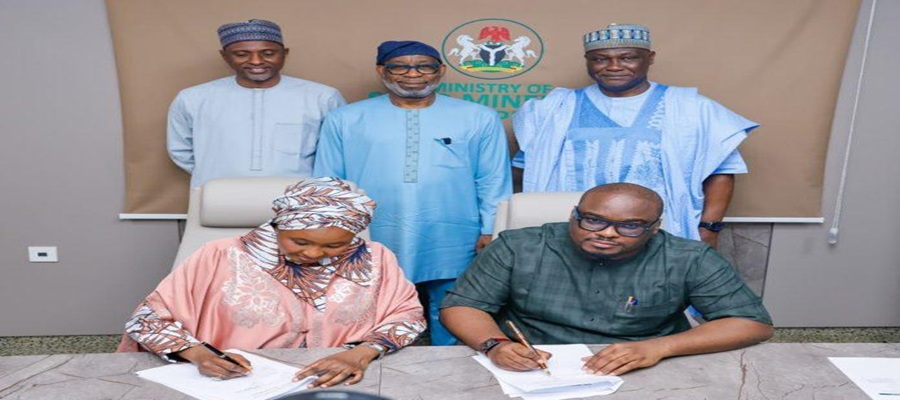
Nigerian Government has signed a $1.3 billion Memorandum of Understanding (MoU) with Africa Finance Corporation (AFC) via the Solid Minerals Development Fund (SMDF) to fund an alumina refinery, national geoscience mapping, and a strategic investment vehicle for mining growth.

Special Assistant to the Minister of Solid Minerals Development, Segun Tomori, said the refinery will process one million tonnes of bauxite yearly using a modern Bayer process, powered by an on-site gas-fired cogeneration plant.
Minister Dele Alake called it a transformative milestone boosting GDP, aligning with reforms that improve investment climate, regulations, and licensing to attract private capital. He directed agencies to fast-track permits.
The 20-year project at 95% utilization eyes 19 million tonnes total output, $1.2 billion annual GDP addition, $25 billion economic impact, and $8 billion forex earnings, per feasibility studies.
SMDF Executive Secretary Fatima Shinkafi termed it the agency’s biggest funding deal, supporting value-addition policy.
The partnership extends to geoscience mapping for mineral data, de-risking exploration, and a joint vehicle for mining assets.
Permanent Secretary Engr. Farouk Yabo praised the reforms. Shinkafi signed for government; AFC’s Franklin Edochie for the corporation, witnessed by AFC CEO Samaila Zubairu.
Tomori positioned it as Nigeria’s largest private mining investment and FDI magnet.

MultiChoice to Discontinue Showmax Streaming Platform

GCR Affirms Afreximbank’s International Scale Ratings of A, A2

SmartCash Launches ‘No Be Cho Cho Cho’ Campaign to Boost Digital Banking in Nigeria

MTN Nigeria Non-Executive Director Mazen Mroue Quits to Focus on Group Role

Google Adds Yorùbá, Hausa to AI Search, Boosting Access for Millions of Nigerians

Dr. Cairo Ojougboh Foundation Bolsters Nigeria’s Education Drive with ₦2.7m Student Support

Kaspersky Brings more Transparency to Threat Detection with New Hunt Hub

NDPC Commits to Balancing Data Privacy, Protection Information

PwC Reveals AI Scaling Gap Slows Africa’s Digital Transformation

Firm Reviews the Evolution of Phishing Threats in 2025




 E-Financial2 days ago
NRS Targets N40trillion in Tax, Royalty Revenue in 2026

 E-Financial2 days ago
SEC Revokes Registration of Kensington Agro Trading Limited

 General News2 days ago
Purple Woman 3.0 Is Back, to Empower Women in Tech this IWD 2026

 News2 days ago
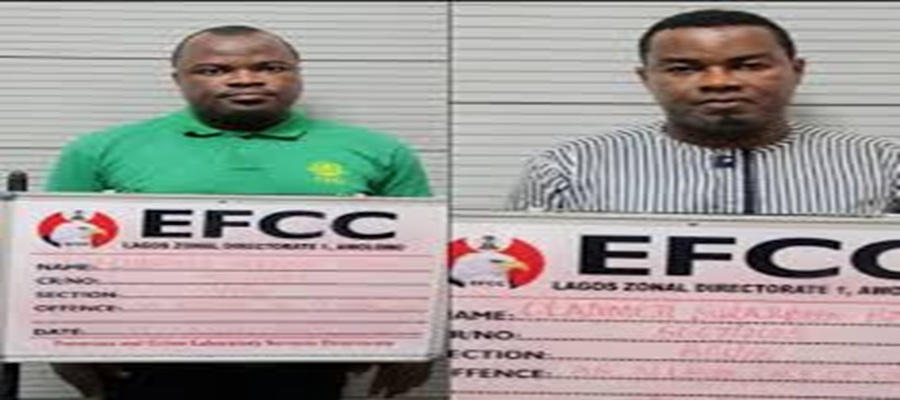
EFCC Arraigns Two FSDH Bank Officials Over $307k, €50k Fraud

 Telecom2 days ago
Konga Launches ‘Berekete Sales’ with Up to 50% Discounts Across Major Categories
 E-Business2 days ago
NDPC, 60 DPAs Collaborate on Enforcing Privacy Rights in the Use of Al

 General News2 days ago
NCDC Raises Alarm over Lassa Fever Ravaging 18 States in Nigeria

 E-Financial1 day ago
Binance Cuts Illicit Activity Exposure by 96%, Leads Global Crypto Compliance Push