

News
Nkemdilim to Speak in South Korea on Africa Innovation


Nkemdilim Begho, Chief Executive Officer of Future Software Resources Limited, will join Heads of African State, Delegations of 80 member countries, international organizations, government establishments, public corporations, private businesses, financial institutions, press, among others in South Korea to tell the story of how best to promote innovation and entrepreneurship in Africa.
Begho will be speaking at two conferences in South Korea – KOAFEC 2018 and the African Development Bank Meeting 2018, alongside other leading voices in Africa including Ngozi Okonjo-Iweala, Board Chair, Gavi, the Global Alliance for Vaccines and Immunisation, between 21st May, 2018 through 25th at the BEXCO, Busan.
Speaking ahead of the events, Begho, a strong promoter of software in Nigeria told newsmen that Africa has a lot of potential in embracing and leap-frogging smart infrastructure, as well as building strategic economic growth through innovation and entrepreneurship.
The KOAFEC 2018 panel discussion, according to her, would focus on how smart infrastructure can contribute to Africa’s socio-economic transformation in the areas such as energy, transportation, agriculture, sustainable environment, health, education, e-government, ICT, etc.
Panelists include: Mr. Amadou Hott, Vice President, Power, Energy, Climate and Green Growth, African Development Bank, Ms. Nkemdilim Begho, CEO, Future Software Resources Ltd, Mr. John Tanui, Chief Executive Officer, Konza Technopolis Development Authority, Mr. Sérgio Pimenta, Vice President for Africa & MENA, International Finance Corporation, Mr. Mark Hyung-Joon Kim, Executive Vice President, Korea Telecom and Mr. Young-hoon Chang,Executive Director, EDCF Group, The Export-Import Bank of Korea.

According to the software guru who is one of the leading women in ICT in Nigeria, her discussion would focus on how software and IT Consultancy service providers like Future Software Resources Limited can be involved in the development of smart infrastructure in Africa.
Key talking points include: IT Consultancy Services, Development of end user applications and interfaces, Driving Digital inclusion, Inclusive Content creation and development in local languages, Digital Marketing to engage with the citizens to drive adoption rates, Capacity Development to increase skilled labour and ensure self-sustainability of the smart infrastructure, among others are among key touchpoints.
The panellists of the second panel at the African Development Bank Meeting will be dealing with how best to promote innovation and entrepreneurship in Africa.
The panel, she explained would focus on the current status of startups in Africa and the future plans for expanding innovation and entrepreneurship on the continent.
Begho who has represented Nigeria in other global forums to tell the story of how best Nigeria can retool Nigeria, said that the key objective on the second panel would contribute to innovation that raises productivity and growth, leading to job creation and poverty reduction in developing countries.
The discussion, according to her, would will focus on the need for the 4th Industrial Revolution and Entrepreneurship, role of Public – Private sector to activate innovation and entrepreneurship, Internation al Cooperation to expand join ventures, exchange of Technology and Human Resources of companies in Africa, current status of startups in Africa and action plan, strategies for Startups and Scale-ups, role of young African Entrepreneurs and ways of shared growth and sustainability between Africa and Asia
Panelists will include Connyong Jennifer Moon, Chief Anchor, Arirang TV Network, Patrick Vermeulen, Professor and Academic Director, Radboud University, Ngozi Okonjo-Iweala, Board Chair, Gavi, the Global Alliance for Vaccines and Immunisation, Hanan Morsy and Director, Macroeconomic Forecasting and Research, AfDB.



Patience Okala, the National Coordinator and Chief Executive Officer of the Nigeria AfCFTA Coordination Office has urged African countries to stop exporting raw materials and instead focus on adding value to its natural resources if it is to fully harness the opportunities offered by the African Continental Free Trade Area.

She stated this on Thursday at the Streamsowers & Köhn 20th Anniversary Business Forum, where she stressed that value addition and beneficiation are essential to Africa’s industrialisation and long-term economic growth.
According to a statement issued on Friday by the Nigeria AfCFTA Coordination Office, she said the AfCFTA goes beyond the elimination of tariffs, serving as a framework for industrialisation, value addition, and job creation across the continent.
“AfCFTA is not only about tariffs; it is also about value addition. Africa has to stop exporting raw materials. We need to add value and ensure that beneficiation is done on the continent,” she said.
Okala also said Africa’s economic transformation would depend on the effective implementation of the AfCFTA rather than on the signing of trade agreements alone.
“We have moved beyond negotiations. The success of AfCFTA will be measured by the extent to which businesses can access new markets, trade seamlessly across borders, and benefit from the opportunities created by the agreement,” she said.
She noted that Nigeria had intensified efforts to implement the agreement under the leadership of the Minister of Industry, Trade and Investment, Dr Jumoke Oduwole, including the development of simplified AfCFTA guides in six languages to help businesses understand and take advantage of opportunities under the trade pact.
Okala called for stronger collaboration among governments, regulators, and the private sector to eliminate barriers to trade and investment and build a truly integrated African market.
“As we move from policy to implementation, our collective responsibility is to ensure that the opportunities created by AfCFTA become practical realities for businesses, particularly MSMEs, women-owned enterprises, and young entrepreneurs across the continent,” she said.

Cisco is exploring artificial intelligence (AI)-powered solutions to support smallholder farmers in Nigeria, as part of efforts to expand digital inclusion and technology adoption.

The initiative focuses on improving agricultural productivity through accessible, data-driven tools.
The move aligns with growing collaboration between Nigeria and the United States under the Commercial and Investment Partnership, which prioritises the digital economy, agriculture and infrastructure.
Speaking at the 2026 World Business Chicago, Brian Tippens, chief social impact and inclusion Officer at Cisco, said the company is assessing practical AI applications to help farmers combine local knowledge with data insights.
He said Cisco is exploring tools such as AI-enabled WhatsApp communities, geospatial mapping and weather intelligence to support day-to-day farming decisions.
The approach reflects a shift towards low-cost, mobile-first solutions suited to rural environments.
Tippens added that the Cisco Foundation is investing in early-stage startups developing technologies for local agricultural challenges.
Industry analysts note that AI adoption in emerging markets depends on locally relevant solutions, rather than large-scale enterprise deployments alone.
Beyond agriculture, Cisco plans to expand digital skills development in Nigeria through programmes such as the Cisco Networking Academy’s One Million Learners initiative.
Tippens said the programme also supports partnerships with organisations working with persons with disabilities, including those developing tools for people with visual impairments.
He added that Cisco’s social impact strategy aims to improve access to technology and promote inclusion, including in conflict-affected regions such as Borno State.
Cisco’s initiatives form part of broader efforts to link digital skills, connectivity and AI adoption to economic development in Nigeria.
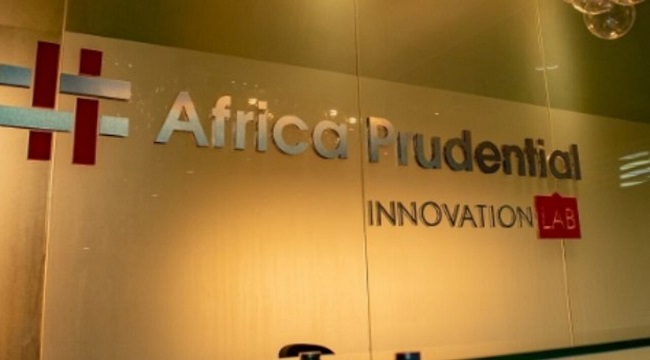
Africa Prudential Plc has reaffirmed its commitment to sustainable growth and digital transformation after posting another strong half-year financial performance, driven by robust growth in its core registrar business, technology-driven solutions and increased activity in Nigeria’s capital market.

Speaking during the company’s H1 2026 Investor Call on Tuesday, the management outlined plans to deepen revenue diversification and accelerate innovation as part of efforts to reduce reliance on interest income and strengthen long-term profitability.
The company reported gross earnings of ₦4.28 billion for the first half of 2026, representing a 27 per cent increase from ₦3.34 billion recorded in the corresponding period of 2025.
Profit before tax rose by 22 per cent to ₦2.41 billion, while profit after tax climbed 18 per cent to ₦1.59 billion.
Net operating income also increased by 27 per cent to ₦4.21 billion, while total assets grew by 13 per cent to ₦46.53 billion. Shareholders’ funds similarly rose by 13 per cent to ₦12.52 billion.
According to the company, the impressive performance was driven by sustained growth in its registrar business, increased corporate actions across the Nigerian capital market, stronger treasury earnings supported by the prevailing interest rate environment and rising adoption of its technology-enabled products and services.African Mineral Wealth
Managing Director and Chief Executive Officer, Dr. Catherine Nwosu, said Africa Prudential is steadily evolving from a traditional share registrar into a diversified technology and business solutions provider serving the broader capital market ecosystem.
Addressing concerns from investors about the sustainability of earnings if interest rates decline, Nwosu said the company was deliberately expanding its non-interest income sources.
“Interest rates influence our treasury income positively, but that is why we are deliberately diversifying our revenue streams. Our strategy is to grow recurring fee-based business lines such as our digital solutions, Know Your Customer (KYC) services, AGM technology, probate services and the SabiVest mobile app. Over time, this will reduce our reliance on interest income and create a more balanced and resilient earnings mix,” she said.
She noted that increasing activity in the Nigerian capital market presents fresh opportunities for technology-driven solutions.
“With capital market activity nearly doubling over the past year, demand for seamless digital investor experiences, improved market efficiency and stronger compliance standards continues to grow. We are investing in technology-enabled solutions that position us to capitalise on these opportunities while delivering sustainable value to our shareholders,” she added.
Looking ahead, the company identified five strategic priorities for the second half of 2026, including driving sustainable growth through its core registrar business and new revenue streams, accelerating technology-led product innovation, strengthening brand leadership, investing in talent development and reinforcing corporate governance.
The investor call attracted institutional investors, shareholders, analysts, regulators and other capital market stakeholders, reflecting strong interest in Africa Prudential’s earnings outlook, revenue diversification strategy and long-term growth plans.

Police Uncover Fake Diplomatic Number Plate Syndicate in Abuja

Davido Shares Past Suicidal Thoughts, Drops Oriadé Album

Gavi Okays $500m for Vaccines, PHCs in Nigeria

82% of Organizations Concerned about AI Risks Even as Adoption Accelerates – Survey Reveals

The Journey to Financial Freedom: Priscilla, a PalmPay Agent Now Owns a Store

NRC, Ponzi Scheme Collapses Resulting Loss of Billions of Naira

EFCC Busts NIS Visa Overstay Racket, Uncovers N700m in an Account

From Scarcity to Scale: What Africa Can Learn from India’s Agricultural Transformation

Tokenization, Blockchain Technology will Transform Financial Institutions – IMF

BON Establishes Six Ad Hoc Committees to Modernize Broadcasting




 Telecom2 days ago
Clydestone Ghana Sues MTN Over Mobile Money

 News2 days ago
IHS Nigeria Donates Business-Support Equipment to Empower People with Disabilities in Abuja Community

 E-Business2 days ago
Kaspersky Uncovers New Mirage Kitten Malware Used in Cyber-espionage Campaign Across Africa, Others

 News2 days ago
Africa Prudential Unveils Digital Growth Strategy

 E-Financial2 days ago
Afreximbank Raises $1.5b in Largest-ever Bond Issuance

 E-Financial2 days ago
CBN Fines Banks N430m for Ignoring Customers’ Complaints

 E-Financial2 days ago
SEC Begins Full e-Registration for Capital Market Operators

 E-Financial2 days ago
Elon Musk Launches Invite-only X Money with Visa Debit Card