

News
Nominees for Beacon of ICT Awards

CDMA OPERATOR OF THE YEAR
ZoomMobile: Leader and Preferred CDMA Operator
ZoomMobile is leader and most preferred wireless service provider in Nigeria.
Having distinguished itself through customer satisfaction, better quality service and strong brand image, ZoomMobile is the pride of telecommunications industry.
ZoomMobile, incorporated on August 25, 1998, as Reliance Telecommunications Limited (Reltel Wireless) hinges its operations on "PIICO", core values which translates to professionalism, integrity, innovation, commitment and one family.
With world class products and services, ZoomMobile is providing solutions to the challenges faced by his/her subscriber anytime, anyday and anywhere ensuring the subscriber uses its’ products & services always with a pleasing experience.
ZoomMobile’s financial performance and solid corporate governance are some qualities that make it a standout amongst their peers.
It is one of the companies enhancing their technologies and taking the telecom industry to a much higher growth state.
Vote, ZoomMobile: “ZoomMobile: CDMA Operator of the Year” by sending email to [email protected]
Starcomms: Simplifying Lifestyle with Outstanding Offerings
Starcomms, Nigeria’s leading telecommunications operator and leading "triple-play" (mobile, fixed wireless voice, wireless broadband) provider.
It is the first telecommunications operator in Nigeria to be listed on the domestic Exchange and also was the first company in Africa to launch EV-DO high-speed broadband services in June 2006.
The company is proud to be Nigeria’s largest CDMA 3G Mobile Network, a clear leader in the introduction of innovative products and services to the Nigerian market, continuously enhancing and simplifying the lifestyle of its customers.
Starcomms has a long standing history with CDMA and is on record as the first in Africa to implement CDMA ONE using the IS-95A in 1998, and in 2002 Starcomms expanded its platform and network to provide fully functional fax & data at 14.4 kbs – a first for Nigeria.
In recognition of its role, Starcomms has received various telecommunication awards for excellence based on its outstanding market performance, that is optimal network capacity, world class customer service and innovative & overall quality of service in Nigeria.
Vote, Starcomms: “Starcomms: CDMA Operator of the Year” by sending email to [email protected]
Multi-Links: Setting the Pace for Others
Multi-Links is one of the major players in the Code Division Multiple Access (CDMA) space of the country’s telecommunications industry. Since its wholesome acquisition by Telkom of South Africa, there have been tremendous changes in the operations of the company ranging of expanded network rollout plan that saw Multi-links Telkom rolling out services in different cities of the country, as against what it used to be associated with as South West operator.
Multi-Links Telkom has remained the only CDMA operator with an optic fibre link from Lagos to Abuja linking all South West cities to the network. The optic fibre link has made it possible for Multi-Links Telkom to provide its subscribers with high quality voice calls as well as data services.
Among services offered by the operator includes 1x data service, EVDO Router, and Blue 3Gbroadband which offers its subscribers an incredible web browsing experience designed to achieve more no matter who you are or for whatever purpose you are using the internet.
The Blue broadband is powered by the Rev. A EVDO Technology is a personal wireless service designed for a wide range of customers from business people to students.
Vote, Multi-Links Telkom: “Multi-Links Telkom: CDMA Operator of the Year” by sending email to [email protected]
Visafone: Most Preferred CDMA Operator
Visafone is the youngest CDMA operator in name but the biggest in terms of number of subscribers on its network. Visafone came as a result of acquisition of CellCom, Bourdex telecom, and Independent Telephone Network (ITN) by Jim Ovia, managing director of Zenith Bank Plc.
Since its coming on board to CDMA space, Visafone has rewritten stories in the sector by becoming the first telecom operator to hit one million subscriber mark within six months of its rollout of service. Perhaps it is Visafone’s very clear calls, fast internet connection, variety of handsets, wide reliable network coverage and lowest international call rates that have endeared it to Nigerians.
According to recent NCC reports, Visafone leads the CDMA sub-sector with 3 million subscribers; Starcomms follows with over 2.3 million while Multilinks has 2 million subscribers. Visafone has been declared the largest CDMA operator and the 4th largest mobile telephone operator in Nigeria by the Nigerian Communications Commission (NCC).
Visafone, an indigenous company won the license for operations in August 2007 and rolled out its network in February 2008.
Vote, Visafone: “Visafone CDMA Operator of the Year” by sending email to [email protected]
CSR COMPANY OF THE YEAR
MTN: Offering Quality Communication and Life
Since launch in August 2001, MTN Nigeria has steadily deployed its services across the country, earning on the way a reputation as the most reliable and subscriber centric operator.
MTN Nigeria is also widely known for its corporate social responsibility (CSR) initiative aimed at reducing poverty and fostering sustainable development in Nigeria.
To institutionalize the initiative, it established in July 2004 the MTN Foundation.
Today, the Foundation is the vehicle through which MTN Nigeria implements its Corporate Social Investment initiatives.
The focus of the Foundation is to give back to society and impact the quality of lives in the communities where they operate in a meaningful and sustainable fashion.
The MTN Foundation partners with both public and credible private organisations to execute sustainable projects in each of the chosen focus areas.
The Foundation empowers Nigerians, not only by facilitating effective communications, but by ensuring that communities and ordinary Nigerians will have access to better education, good health and be economically empowered
Vote MTN, “MTN: CSR Company of the Year” by sending a mail to [email protected]
Globacom: People Oriented Company
The company strives to identify with social responsibility needs in all the markets in which it operates.
Although, its focus at the moment includes job creation and youth empowerment, it is in the area of sports development that it has distinguished itself.
Globacom is fast emerging as the biggest supporter of sports in Africa, with huge investments in football development and athletics.
For Globacom, CSR is a voluntary approach that it takes to meet or exceed stakeholder expectations by integrating social, ethical, and environmental concerns together with the usual measures of revenue, profit, and legal obligation.
Working with some of the best brains in this part of the world, Globacom’s CSR is focused on building understanding of incentives and pressure points, and on improving strategic interactions.
Vote Globacom, “Globacom: CSR Company of the Year” by sending a mail to [email protected]
Zain Nigeria: A Social Responsible Company
Corporate Social Responsibility (CSR) has formed an integral part Zain Nigeria’s business.
This is out of the realization that operator need to give back to the society where it is operating and which is supporting them through the use of their services.
In this regard, the operator has executed projects as well as support communities in areas that are improving their life.
Notable among such efforts are commissioning of several projects worth $1,000,000.00 (one million USD) in University of Ibadan as part of its Corporate Social Responsibility programmes and its brand philosophy of empowering Nigerians to enjoy a wonderful world.
The commissioned projects included a Solar Energy Centre, renovation of Mellanby Hall and construction of a Basketball Court in the Hall, and construction of Car Parks, convenience and offices on Oduduwa Road, all designed to help improve the lives and health of the University community.
Zain Nigeria has donated food and other household materials to 38 charity homes across the country in its bid to bring some succor to the less privileged during the yuletide season.
The charity homes, which are mainly orphanages, were drawn from the 36 states of the country and the Federal Capital Territory, Abuja.
Alain Sainte-Marie, chief executive officer of Zain Nigeria, said, the philosophy of a wonderful world, which is espouse in Zain, is borne out of the desire to continuously improve the quality of life of people and make the world a better place to live. “This is not realizable, if we do not spare a thought for our less privileged brothers and sisters, especially at this time of the year-and that is what we have done with these donations,” he said.
He explained that Zain Nigeria operates a “No Gift” policy, which means that rather than give gifts to already well-off business associates, the company donates the value in kind to the less privileged. By the same token, these associates are encouraged not to give gifts to Zain employees, but instead donate the value to charities nearest to them, on behalf of Zain.
Vote Zain, “Zain: CSR Company of the Year” by sending a mail to [email protected]
CUSTOMER CARE COMPANY OF THE YEAR
Globacom: Putting Premium on Each Subscriber
Globacom values each and every customer.
As the saying in Glo “You are more than just a number to us at Glo; you are our most valuable asset. This is the reason we invest such a lot of time and resource into our customer care department”
Glo gives subscribers guaranteed satisfaction, reliability, and fast action with its round the clock customer care support.
The company also recently launched its new Self care service which enables subscribers access information about the network’s services via the telephone is now available in local languages, in Hausa, Igbo and Yoruba languages.
The Interactive Voice Response (IVR) service, the first such offer in the market, gives subscribers the opportunity of learning about the company and its activities without going to the website or calling the Glo Call Centre on 121 or 200 to speak with a customer care representative.
Through the offer, customers can dial in and listen to basic static information on Glo products and services including its rich bouquet of value added services, promotional offers, SIM replacement and special numbers, among other things.
Globacom’s Customer Care Department compares with the best in the world. It is equipped with the latest technology and is manned by well trained and highly motivated staff.
Vote Globacom, “Globacom: Effective Customer Care Operator of the Year” by sending email to [email protected]
Zain: Where the Customer is King
Zain Nigeria revolutionized customer service delivery in the country with massive investment in cutting edge technologies which enable it provide up-to-the-minute solutions to its customers.
At Zain, the customer is king. The company strives to cater for customer’ needs by providing superior customer care experience.
This is the company’s focus and the core business. It is not just a technology company, the company is out to serve Nigerians.
Zain’s passion for customer service since its inception in 2001 has enabled the company to dominate the customer care category in industry awards.
From every angle, Zain has long standing good customer service and is happy about it.
Vote Zain, “Zain: Effective Customer Care Operator of the Year” by sending email to [email protected]
Multi-Links Telkom: Model Customer Care
Multi-Links Telkom, Code Division Multiple Access (CDMA) operator, is a model telecom operator with one of the world class customer care.
Its flagship customer centre is a manifestation of the Telkom corporate identity detailing its logo type, corporate brand name, corporate culture projection in its interior and exterior looks and feel, visual languages and service delivery.
The total brand transformation is a product of intense analysis of brand equity and brand promise as well as the customers’ expectations.
Multi-Links Telekom customer care is an expression of the inner energy designed to make the customer well catered for.
As a foremost operator in the liberalized telecommunications market, its customer service delivery stands as the model customer care centre that further reinforces the leadership role of Multi-Links Telkom in that area.
Vote Multi-Links Telkom, “Multi-Links Telkom: Effective Customer Care Operator of the Year” by sending email to [email protected]
MTN: Moving Customer Care to the Next Level
The consumers of telecom products and services have many desires expected to be met. He wants services available at all times and at every place. The consumer wants the services to be of a good quality and affordable. The consumer wants the operator to respond at all times when he or she needs attention, and to provide explanations whenever anything goes wrong on the network.
All these are the objectives of Zain Nigeria customer care policy has set out to achieve. MTN has provided its subscribers with unmatched customer care service experience which has earned it several awards.
Customer satisfaction has been the bedrock of Mobile Telecommunications Network (MTN) Nigeria customer care policy. This is responsible for the company’s revolutionary approach to customer care. MTN is the first Global System for Mobile communications (GSM) operator to introduce Interactive Voice Response (IVR) system at its call centres.
MTN believes that the best customer care service delivery is to provide subscribers with quality service which in turn will reduce the intensity of subscribers complaints, by so doing that the leading GSM operators recently upgraded its system through the implementation of a robust Internet Protocol based technology which has given the company capability to process over 500 million calls per annum. It noted that the upgrade has given the network enough capacity to process both voice and data services for the satisfaction of its subscribers.
Vote MTN, “MTN: Effective Customer Care Operator of the Year” by sending email to [email protected]


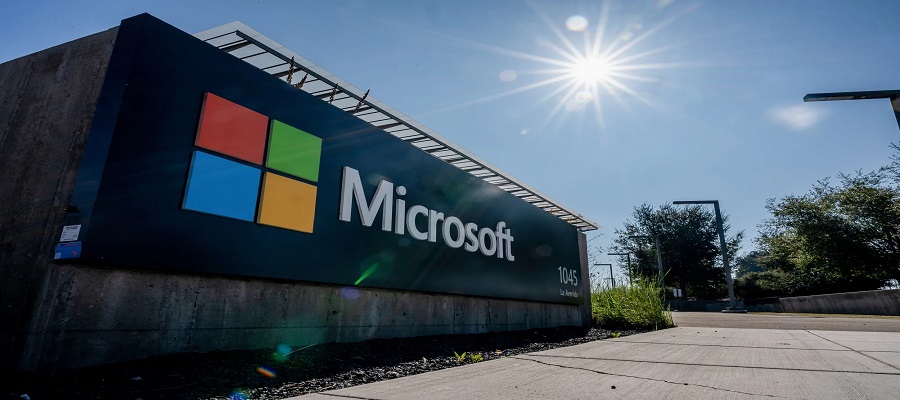
Microsoft has announced plans to cut about 4,800 jobs, representing roughly 2.1 percent of its global workforce, with Xbox, its gaming division, expected to bear the largest share of the layoffs.

The company said more than 1,600 positions at Xbox would be eliminated immediately, while another 1,600 jobs would be phased out over the next year as part of a major restructuring of the gaming business.
In a memo to employees, Amy Coleman, executive vice president, Microsoft, said the company was streamlining its operations to focus on areas that deliver greater value to customers in a rapidly changing technology industry.
Asha Sharma, chief executive officer, Xbox, described the move as “the most significant restructure in Xbox history,” saying the changes are intended to position the gaming business for long-term growth rather than downsizing.
News
Access Bank, Fifth Chukker and UNICEF Renew Commitment to Expanding Educational Opportunities for Nigeria’s Most Vulnerable Children


The transformative power of collective action in expanding access to education took centre stage in London as Access Bank UK, Fifth Chukker, UNICEF and the Kaduna State Government reaffirmed their shared commitment to creating brighter futures for Nigeria’s most vulnerable children.

Hosted by Access Bank UK, Access UK Polo Day celebrated more than 15 years of impact driven by a shared vision to expand educational opportunities for underserved children. What began as a modest initiative has evolved into one of Africa’s most impactful education programmes, with the Access Bank Fifth Chukker School in Kaduna State and its associated interventions positively impacting more than 14,000 children across underserved communities in Northern Nigeria.
At the heart of this transformation is the Access Bank Fifth Chukker School, where investments in educational infrastructure, learning resources and student support have created lasting opportunities for thousands of children.
Between 2018 and 2026 alone, the school recorded 2,538 graduates, with female pupils accounting for more than 54 per cent of the total, underscoring the programme’s contribution to advancing girls’ education and promoting inclusive access to learning.
More than 1,000 pupils benefit from the school’s internationally recognised foundational learning programme each year, contributing to improved literacy and numeracy outcomes and a reported 15 per cent increase in learning performance. Students continue to secure admission into leading secondary schools, while teachers receive ongoing professional development and digital learning support.
Enhanced infrastructural facilities and expanded learning resources have further strengthened the overall learning environment, helping to sustain the programme’s long-term impact.
This year’s event reinforced a compelling message: Every pledge should lead to a classroom, every classroom should empower a child, and every child should have the opportunity to shape a brighter future.
Speaking at the event, the Managing Director and Chief Executive Officer of Access Bank Plc, Roosevelt Ogbonna, reflected on the remarkable growth of the initiative and the unwavering commitment of its supporters.
“What began as a dream to transform the lives of 100 children has grown into a movement that has positively impacted more than 14,000 young people. We want to return next year talking about 28,000 children. Education remains the greatest leveller, giving every child a genuine opportunity to realise their potential and contribute meaningfully to society.”
Ogbonna expressed appreciation to donors and partners whose support has sustained the initiative, noting that investment in education creates lasting intergenerational impact.
Kaduna State Governor Uba Sani described education as one of the most valuable investments any society can make. He praised the longstanding alliance between Access Bank, Fifth Chukker and UNICEF, noting that it has restored hope and opportunity to thousands of children from underserved communities.
Highlighting Kaduna State’s ongoing education reforms, the Governor revealed that approximately 300,000 out-of-school children had been returned to classrooms over the past year through partnerships with organisations including UNICEF and other development partners.
He also announced plans to construct an additional 120 classrooms at the Fifth Chukker Access Bank UNICEF School, enabling even more children to access quality education.
“What we are doing here is about humanity. By giving children access to quality education, we are empowering them to dream, to lead and to build a better future for themselves and their communities.”
Governor Sani also paid tribute to the late Herbert Wigwe, acknowledging his vision, leadership and enduring commitment to improving educational outcomes for underserved populations.
For Aigboje Aig-Imoukhuede, Chairman of Access Holdings, the true success of the initiative is reflected in the lives being transformed.
“The most meaningful measure of success is not the number of buildings we construct, but the opportunities we create. Every child who receives an education, every young person who discovers their potential, and every community strengthened through learning represents the lasting impact of this partnership. Together, we are proving that when purpose meets collaboration, we can create opportunities that change lives for generations.”
Welcoming guests, Jamie Simmonds, Chief Executive Officer of The Access Bank UK, described the gathering as polo with purpose, a celebration not only of sport but of a shared mission to create opportunity through education.
He highlighted the institution’s commitment to supporting initiatives that deliver sustainable social impact and broaden access to learning for underserved children.
The event concluded with a renewed commitment from all stakeholders to deepen investment in education as a catalyst for national development and social progress.
The Access Bank Fifth Chukker School continues to demonstrate the impact of sustained collaboration among the private sector, government and development partners, delivering measurable outcomes for vulnerable children in Northern Nigeria.

Socio-Economic Rights and Accountability Project (SERAP) has given Godswill Akpabio, Senate President, and Tajudeen Abbas, speaker of the House of Representatives, seven days to explain how over N1.3 billion was allocated in the 2026 Appropriation Act to a presidential council that the Presidency has described as fictitious.

In a Freedom of Information (FoI) request dated July 4, 2026, SERAP asked the National Assembly leadership to release certified copies of all documents related to the approval of the N1,302,978,784 allocation to the Presidential Foreign Intervention Promotion Council (PFIPC)/Presidential Economic Advisory Council.
The rights group also called on the National Assembly to invoke its investigative powers under Sections 88 and 89 of the 1999 Constitution to probe the circumstances surrounding the allocation and identify those responsible for what it described as apparent irregularities in the budget process.
SERAP further requested records identifying the lawmakers and committees that considered the allocation, as well as the public officials or representatives who defended the budget proposal before the committees.
The civil organisation also sought clarification on whether the allocation originated from the Executive’s 2026 Appropriation Bill or was introduced during the legislative appropriation process.
It equally demanded to know whether any lawmaker questioned the legal status or operational mandate of the council before approving the allocation.
The FoI request follows a July 1 statement by the Presidency denying the existence of the Presidential Foreign Intervention Promotion Council and insisting that the Federal Government never created the body.
Describing the conflicting claims as alarming, SERAP said they raised “serious concerns regarding the integrity of Nigeria’s appropriations process, legislative oversight, public financial management, and accountability.”
The FoI request, signed by Kolawole Oluwadare, deputy director, SERAP, stressed that Nigerians have a constitutional right to know whether public funds were appropriated to an entity that does not legally exist.
SERAP said, “Nobody has a more sacred obligation to obey the law than those who make the law, and that the National Assembly has a constitutional responsibility not merely to approve the Executive’s budget proposals but to rigorously scrutinise them before authorising public expenditure.”
The organisation argued that disclosure of the requested documents would enable Nigerians to determine whether the National Assembly fulfilled its constitutional obligations under Sections 80, 81, 88, and 89 of the Constitution in approving the allocation.
SERAP warned that if the requested information is not released within seven days of receipt or publication of the letter, it would initiate legal proceedings to compel the National Assembly to disclose the documents.
The organisation further maintained that making the records public would strengthen confidence in the National Assembly’s credibility, enhance transparency in the appropriation process, and promote accountability in the management of public funds.
It also cited the Freedom of Information Act, the Nigerian Constitution, the African Charter on Human and Peoples’ Rights, the International Covenant on Civil and Political Rights, and the Tshwane Principles as legal bases for its demand for full disclosure.

DSS Spyware Acquisition Enables Illegal Wiretaps, Detentions – The ICIR

Microsoft to Lay Off 4,800 Workers

Access Bank, Fifth Chukker and UNICEF Renew Commitment to Expanding Educational Opportunities for Nigeria’s Most Vulnerable Children

IHS Nigeria, FCT-HSES Concludes Clean Cooking Energy Campaign “Project Breathe Clean Air” in Abuja

Kaspersky Transforms Threat Intelligence Reporting into an Interactive Content Hub

Mobile Internet Gender Gap Widest in Africa – GSMA

Nigeria Launches FreeTV Nationwide

NASENI Moves to Digitize CCB’s 5m Assets Declaration and Operations

CANAL+ Partners Samsung to Pre-Load DStv Stream on New Samsung TVs In Nigeria, Other African Countries

UK, Nigeria Launch £15m Growth Programme to Accelerate Economic Transformation




 General News1 day ago
NIS Deploys Advanced Surveillance Masts, other Critical Infrastructure to Boost Border Security

 E-Financial1 day ago
Tokenization, Blockchain Technology will Transform Financial Institutions – IMF

 Broadcasting1 day ago
Obi, NDC Presidential Candidate Faces N50Bn Defamation Claim over Alleged Podcast Remark

 E-Business1 day ago
Weebly Websites to Shut Down for Nigeria, 66 Other Countries from September

 Telecom1 day ago
No Plans for Fresh Tariff Hike – MTN

 E-Financial1 day ago
FG Denies N8 Trillion ‘Shadow Budget’, Says IMF Quoted out of Context

 General News1 day ago
PufferPay CEO to Keynote Business Journal Fintech & Financial Inclusion Roundtable 2026

 Telecom1 day ago
Airtel Africa Foundation Equips 200 Young Women with Digital Skills to Drive Nigeria’s Tech Economy