

E-Business
NSE Rates NigComSat-1R Facilities High, Urges Patronage

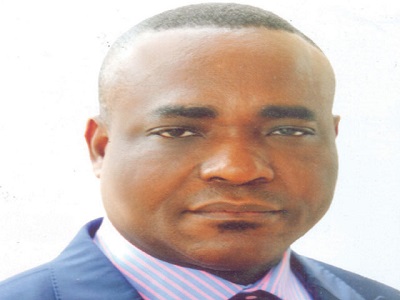
Engr. Mustapha B. Shehu, president, Nigeria Society of Engineers (NSE) has scored the multi-million naira infrastructure of NigComSat -1R very high and said that Nigeria is now on its way to joining the developed world in the race for vision 20.20.20.
Shehu stated this when he led the society’s executives on a facility tour of Nigerian Communications Satellite (NigComSat) Limited at the ground control station, Abuja.
“I am quite impressed with what we have seen here today” adding that the Federal Government would do the citizens a world of good if it puts in place policies that could encourage Ministries, Departments and Agencies (MDAs) to leverage on what NigComSat has for the benefit of the people” he said.
Shehu who said this was his first visit and that of most of the exco-members said that “the Federal Government which came up with this project means well and after spending huge sums of money, cannot allow this to go the Ajaokuta Steel way”.
He also called on the State Governments, Organised Private Sector (OPs) to patronise the NigComSat facilities if they must join the rest of the world in technology acquisition and economic emancipation.
The society has expressed absolute confidence in NigComSat’s resolve to bringing affordable broadband access to the Nigerian populace.
The delegation, after embarking on an extensive tour of the facilities where the operations of NigComSat-1R, the geostationary satellite launched in December 2011 is being closely monitored and sustained by Nigerian engineers thanks to the knowledge transfer of technology by the Chinese people, said they were satisfied with what they saw on ground.
Earlier in his welcome remarks, Engr. Timasaniyu Ahmed-Rufai, managing director of NigComSat Ltd, told the group of the capabilities of the Micro-Electronic Centre(MEC) and the Direct to Home(DTH) satellite broadcasting platform which enables viewers to receive a minimum of 200 to 300 channels.
He assured the engineers that when fully deployed, content providers would have an opportunity to ride on the platform and leverage its use to revolutionise the broadcasting media in Nigeria and contribute immensely to the improvement of broadcasting in general especially that we have a few year to migrate to digital broadcasting.
The group which also included Engr.Olumuyiwa Ajibola, the immediate past president; raised questions on the technical capacity, durability, life span of NigComSat-1R and projections on revenue generation for the nation.
Responding, Rufai said the satellite has a life-span of 15 years plus and was in a very robust position to meet the needs of Nigerians adding that the DTH alone could generate an average of N20billion for the country if the right policies are put in place.
They also decried the heavy dependence on foreign satellites by the private and public sectors.
Studies show Nigeria’s sharp decline in the global competitive index in the last 5 years such as security, education and infrastructure.
NigComSat-1R is a national infrastructural backbone and should be seen as such.
It will be recalled that last year, NSE successfully deployed the use of e-voting system designed by Nigerian engineers at NigComSat to elect executive officers in Ilorin, proving the credibility and potential capability of the system for large number of groups and communities. The group prescribed the e-voting platform to the country for the future elections.
.


Galaxy Backbone Limited (GBB) has been ranked first overall in the 2025 Federal Government Website Performance Scorecard.

This is a landmark achievement for Nigeria’s digital economy.
The ranking, conducted by the Bureau of Public Service Reforms (BPSR), is the definitive benchmark for digital excellence and transparency across all Ministries, Departments, and Agencies (MDAs).
Professor Ibrahim Adepoju Adeyanju, managing director and CEO of Galaxy Backbone, received the award during a ceremony in Abuja.
He described the feat as a validation of the agency’s“Nigeria First”data sovereignty strategy and its relentless pursuit of service excellence.
This recognition comes as the Federal Government intensifies its push to achieve a fully paperless civil service by December 31, 2025.
GBB has been the primary architect of this transition through its 1Gov Enterprise Content Management (ECM) platform, which now hosts the operations of almost all federal MDAs.
The award adds to a growing list of accolades for Galaxy Backbone in 2025, following its recent win of the “International Standard Excellence Award for Best IT Service Provider.”
As the central hub for government shared services, GBB’s performance serves as a blueprint for other agencies currently undergoing digital transformation.
With its expanded fiber-optic backbone now covering over 13 states and its secure cloud solutions, Galaxy Backbone remains the cornerstone of Nigeria’s vision to become a leading digital nation by the end of the decade.

Okitipi Samuel, a Nigerian man, has been taken into custody by the Nigeria Police Force for his alleged role in a global cyberattack on Microsoft 365 users.

Benjamin Hundeyin, Force public relations officer, disclosed this on Thursday in Abuja while briefing journalists on the outcome of investigations carried out by the National Cybercrime Centre of the Nigeria Police Force.
Hundeyin said the centre, under the leadership of Ifeanyi Uche, its director and Commissioner of Police, commenced investigations in collaboration with Microsoft, the Federal Bureau of Investigation, the United States Secret Service, and the United Kingdom’s National Crime Agency.
According to him, investigations revealed that a phishing toolkit known as “Raccoon 0365” was used to create fake Microsoft login portals to harvest user credentials and unlawfully access email accounts belonging to corporate organisations, financial institutions, and educational institutions in several countries.
“This investigation commenced following credible intelligence received from Microsoft USA through the FBI, indicating that a malicious phishing toolkit known as Raccoon0365 was being used to create fake Microsoft login portals, harvest user credentials, and unlawfully access the email accounts of corporate organisations, financial institutions, and educational establishments,” Hundeyin said.
He added that between January and September 2025, several reports of unauthorised access to Microsoft 365 accounts were traced to phishing emails designed to mimic legitimate Microsoft login pages, enabling business email compromise, internal phishing, data breaches, and other cyber-enabled fraud.
Hundeyin said digital forensic analysis and cryptocurrency tracing identified wallets connected to the illegal operation.
He noted that operatives were deployed to Lagos and Edo states, leading to the arrest of three suspects identified as Joshua, James, and Okitipi Samuel between September 20 and October 4, 2025.
“Following extensive digital forensic and technical intelligence analysis, the centre conducted cryptocurrency tracing that identified suspicious wallets connected to cash-out schemes.
“Acting on actionable intelligence, operational teams were deployed to Lagos and Edo states, resulting in the arrest of Joshua, James, and Okitipi Samuel. Searches at their residences led to the recovery of mobile devices, laptops, and other digital exhibits linked to the fraudulent scheme,” he said.
Hundeyin identified Okitipi Samuel, also known as “0365” and Moses Felix as the principal suspect and developer of the phishing infrastructure.
He added that investigations confirmed Samuel unlawfully used the email details of one of the arrested individuals without consent to register some of the accounts used in the operation.
The police spokesperson said further investigations revealed that the identities of Joshua and James were used without their consent.
“There was no evidence linking them to the creation or operation of the phishing scheme. They were victims of identity theft,” Hundeyin said.
He said a prima facie case had been established against Samuel for identity theft, unlawful access to computer systems, creation and distribution of malicious software, unauthorised interference with network data, and aiding and abetting fraud.
Hundeyin added that the suspect would be charged under relevant provisions of the Cybercrimes (Prohibition, Prevention, etc.) Act, 2024.
He said the suspect would be prosecuted in Nigeria, noting that the country has the capacity to enforce its cybercrime laws, although extradition could be considered if formally requested through due process.
Hundeyin assured Nigerians that the police, under the leadership of Kayode Egbetokun, inspector-general of Police, would continue to protect the country’s digital ecosystem and urged citizens to practise good cyber hygiene by being cautious when clicking links and sharing personal information online.
Speaking separately, Ifeanyi Uche, director of the National Cybercrime Centre, urged Nigerians to exercise caution online.
Uche advised members of the public to avoid clicking on links from unknown or unexpected sources, noting that such links often contain malware or phishing tools designed to compromise devices and personal data.
He warned that indiscriminate clicking of links or responding to unsolicited emails could lead to unauthorised access to personal and corporate accounts, urging citizens to “wash their cyber hands” by verifying sources before taking action online.


Nigeria has unveiled a comprehensive, multi-pronged strategy designed to localise WSIS+20 commitments. This roadmap accelerates national transformation by prioritising robust infrastructure, transparent internet governance, and advanced cybersecurity through deep stakeholder collaboration.

Unveiled in New York at the Nigerian high-level side event titled “Re-Imagining Digital Cooperation for Sustainable Development: From WSIS+20 Vision to Local Action,” the strategy cements Nigeria’s position as a primary architect of the world’s digital future.
Speaking at the event, the Director General of the National Information Technology Development Agency (NITDA), Kashifu Inuwa, CCIE represented by Director, Corporate Planning and Strategy, Dr. Dimie Shively Wariowei said Nigeria’s approach is deliberately aligned with the four core activity areas identified under the ongoing WSIS+20 review process.
According to him, the focus areas provide a practical framework for translating global digital commitments into measurable national outcomes, ensuring that international resolutions drive inclusive growth and sustainable digital development at the country level.
Inuwa identified digital infrastructure as the foundation of effective localisation, noting persistent challenges in extending connectivity to underserved and remote communities. Beyond infrastructure gaps, he highlighted affordability constraints and digital literacy deficits, stressing that addressing these issues remains central to Nigeria’s digital inclusion drive.
He explained that government alone cannot shoulder the burden of nationwide digital infrastructure deployment, given Nigeria’s vast geographical spread, hence the adoption of collaborative Public-Private Partnership (PPP) models. He disclosed that Nigeria, in collaboration with the World Bank, is implementing a major fibre-optic project spanning about 90,000 kilometres nationwide to boost connectivity.
The NITDA DG also revealed that the current National Broadband Plan, which has guided broadband expansion in recent years, is nearing completion, with plans underway to renew and reposition it for the next five years. The renewed plan, he said, will strategically target increased broadband penetration as a catalyst for digital access and economic growth.
On internet governance, Inuwa referenced Nigeria’s active participation in the Internet Governance Forum (IGF), noting that the country successfully hosted its annual national IGF. He said the forum operates on a multi-stakeholder model that brings together government, the private sector, civil society and the technical community to foster cooperation and informed policy dialogue.
Cybersecurity, he added, remains a critical pillar of Nigeria’s localisation efforts. He cited the existing Cybersecurity Act and ongoing efforts to strengthen the legal framework through a reviewed version currently awaiting parliamentary approval. These measures, he said, are designed to mitigate risks associated with increased internet use and to protect users and critical digital infrastructure.
Inuwa further stressed Nigeria’s ambition to play a leadership role in advancing digital cooperation across Africa through inclusive, multi-stakeholder engagement. He underscored the importance of coordinated national data collection, noting that reliable, country-specific data is essential for tracking progress and presenting Africa’s digital development story on the global stage.
He concluded that sustained engagement and follow-up actions arising from the WSIS+20 review would strengthen digital cooperation among African countries and ensure that global digital commitments translate into tangible national and regional impact.
Stakeholders commended Nigeria’s efforts in the digital space, acknowledging the country’s growing role in shaping Africa’s digital future.
Earlier, Ms. Jennifer Chung, Co-Convener of the Informal Multi-Stakeholder Sounding Board (IMSB), praised Nigeria for convening a broad-based, multi-stakeholder delegation and for its commitment to the meaningful implementation of WSIS+20 outcomes.
Chung stressed the growing demand for localised WSIS follow-up mechanisms, noting that platforms such as the annual IGF, National and Regional IGF Initiatives (NRIs), and youth-led forums are vital for tracking progress towards the 2030 Agenda and Africa’s Agenda 2063.
She described the WSIS+20 review as a critical step toward effective monitoring, reliable data collection and evidence-based evaluation, particularly for developing countries in the Global South. According to her, these measures are essential to achieving WSIS targets and ensuring that no region is left behind.
Drawing parallels with the Asia-Pacific region, Chung noted that challenges around affordable and meaningful connectivity remain widespread across developing economies. She emphasised that expanding broadband penetration and reducing the cost of access are crucial to closing digital divides in Africa, Asia-Pacific and other parts of the Global South.
She also highlighted the need to enable active citizen participation in emerging technologies, including artificial intelligence and future innovations such as quantum technologies, stressing that inclusive digital access is key to maximising the benefits of digital transformation.
Reflecting on the WSIS+20 review process, Chung praised the innovative and inclusive approach adopted through the informal multi-stakeholder sounding board, describing it as one of the first of its kind in global digital governance. She called for sustained collaboration among governments, the private sector, civil society and the technical community to carry the WSIS vision from global commitments to local action.

US Begins Partial Visa Ban on Nigerians January 1

Glo Extends Christmas Greetings, Urges Unity and Care for Others

Galaxy Backbone Tops FG’s Website Performance Ranking

SEC Says CMOs Must Renew Registration in January

Naira Stability, Lower Borrowing Costs Expected in 2026 — CBN Survey

Nigeria Records Highest Weekly Cyberattacks in Africa — Report

Cyber Tsunami Hits Nigeria as Breaches Surge 1,047%, esentry Q3 Report Reveals

GenAI Adoption Among African workers Outpace Global Peers

Jumia’s Data Shows Nigerians Turning to Digital Retail to Navigate Inflation Pressures

Minister Claims Bandits Exploit Poor Network, Bounce Calls Off Multiple Towers




 General News1 day ago
The Mood Market to Light Up Lagos with a Rooftop Gifting, Food & Lifestyle Fair this Christmas
 News1 day ago
US Okays $2.1Bn for Christian Healthcare in Nigeria

 Broadcasting1 day ago
Tim Akano Recounts 20-Year Growth, Media Support at NITRA End-of-Year Meet

 News1 day ago
SERAP Asks Tinubu to Release CTC of Tax Bill

 E-Financial1 day ago
Sterling Bank, Water.org, Sterling One Foundation Partner on WASH Loan for Millions

 General News1 day ago
Leo Stan Ekeh: A “Rare Avis”, an Unconquerable Entrepreneur

 General News1 day ago
FCCPC Forces Ikeja Electric Into Compliance, Unseals Headquarters After Rights Breach

 General News1 day ago
NITDA Wins Triple SERVICOM Honours for Citizen-Centred Service Delivery