

News
Nutridor Expands Regional Footprint with AED 75M Factory in Dubai


Nutridor, a leading food and beverage (F&B) company under TGI Group, has launched its first state-of-the-art dairy production facility in the UAE at Dubai Industrial City, part of TECOM Group PJSC.

The newly launched facility represents an investment of AED 75 million and will serve demand for Nutridor’s high-quality dairy products under the ‘Abevia’ brand.
The new dairy facility has a total built-up area of 100,000 sq.ft. and was developed in less than a year, including the installation of the latest technologies and innovations in dairy manufacturing to ensure that Abevia continues to deliver high-quality products to its customers.
The commencement of commercial operations from the factory will double Abevia’s production capacity to 120,000 litres of milk a day.
The factory’s inauguration ceremony was attended by distinguished guests including His Excellency Mohammed Mousa Alameeri, Assistant Undersecretary for the Food Diversity Sector at the Ministry of Climate Change and Environment of the UAE; His Excellency Mohammed Dansanta Rimi, Ambassador of the Federal Republic of Nigeria, Embassy of Nigeria in UAE; Mohammed Al Kamali, COO of Manufacturing & Export Development at Dubai Economic Development Corporation (DEDC); and Abdulla Belhoul, CEO of TECOM Group PJSC.

Commenting at the launch, Mohammed Al Kamali, COO of Manufacturing & Export Development at DEDC, said: “The inauguration of Nutridor’s facility underscores the steadfast support of TECOM Group PJSC and Dubai Industrial City in their commitment to fostering a conducive environment for new ventures, which contributes directly to Dubai’s economic diversification, in line with the Dubai Economic Agenda, D33.
“As Dubai’s Department of Economy and Tourism strives to harness the collective support of its stakeholders and partners to drive forward this visionary Agenda to enhance the competitiveness of the emirate’s manufacturing sector, the newly launched state-of-the-art dairy production facility represents a significant initiative and investment, creating an environment that nurtures entrepreneurship, embraces innovation, and catalyses economic expansion.
“We are committed to supporting similar growth and investment as they are instrumental in shaping Dubai’s economic progress and contributing to the sustainable growth of the emirate.”
The factory will help to deliver value-added dairy products, supporting Nutridor’s goal of reducing import reliance and enhancing its position in the regional F&B sector. Nutridor estimates revenues of AED 110 million from the factory’s operations.
Commenting on the new factory on behalf of Dubai Industrial City, Saud Abu Alshawareb, Executive Vice President of Industrial at TECOM Group PJSC, said: “Localising manufacturing activity in the F&B sector is paramount as economic and ecological conditions evolve around the world. It is a critical lever to unlock enhanced food security, economic growth, and positive environmental impact at a global scale.
“Nutridor’s factory at Dubai Industrial City is a strategic move towards self-sufficiency in the F&B sector and its geographically strategic location within our district will help to unlock greater nutrition security for local and regional populations, aligning with the goals of the UAE’s National Food Security Strategy 2051.
The factory also reiterates Dubai Industrial City’s contribution to government strategies aimed at elevating the manufacturing sector’s GDP contribution, such as Operation 300bn, Make it in the Emirates, and Dubai Economic Agenda ‘D33’.
A collaborative and business-friendly ecosystem must be championed to leverage local competencies and export the ‘Made in UAE’ brandmark to new geographies, and Dubai Industrial City remains committed to nurturing this environment.”
Local competencies
Nutridor has a vast network of operations in the Middle East and Africa region, with customers in over 15 countries, including the GCC nations, Jordan, Lebanon, Angola, Gambia, Ghana, and Senegal.
The new Abevia factory at Dubai Industrial City will create over 200 new direct and indirect jobs, underscoring the commitment to nurturing Emirati talent and contributing to D33’s overarching objectives of economic expansion and diversification by Nutridor, which aims to secure In-Country Value (ICV) certification in the UAE in 2023.
Commenting on the factory’s launch, Sankha Biswas, CEO of Nutridor said: “This facility represents a pivotal juncture for Nutridor and Abevia that will allow us to manufacture our products locally and fulfil the region’s burgeoning demand for high-quality dairy products.
“We are committed to contributing to the food security goals of the UAE. The UAE also has a growing population with an increasing demand for high-quality food products, and we stand as flag bearers for the Make it in Emirates initiative.
Abevia is dedicated to meeting the highest standards of quality and safety for its products, adhering to the rigorous standards set by Nutridor, the Dubai Municipality, and the UAE government. We will seek to continually grow and expand our product offerings.”
In line with the UAE Net-Zero 2050 strategy, the facility has been designed to ensure zero waste and will use solar power to meet 100,000 kilowatt-hours’ worth of its energy requirements.
Its strategic location within Dubai Industrial City – close to Al Maktoum International Airport, Jebel Ali Port, key national highways, and soon, an Etihad Rail freight terminal – will provide greater access to new markets for Abevia. Nutridor is avoiding 8,144 tonnes of carbon emissions – equivalent to removing 1,759 cars from the roads or planting 135,735 trees over a decade – by moving its manufacturing base to the district.
Abevia was awarded ‘Superbrands’ status in the UAE in 2022 and 2023 in recognition of its excellence in quality by an independent panel of experts and consumers, making it one of the youngest brands to achieve the recognition.
Furthermore, in its pursuit of achieving the highest international standards in the industry, Nutridor also recently received the coveted Food Safety System Certification FSSC 22000, a benchmarked standard of the Global Food Safety Initiative (GMSI).


Mobility technology company, Moove has raised $250 million in a Series C funding round at a valuation of $2.1 billion, reaching unicorn status.

The startup will deploy the fresh capital to build out autonomous vehicle infrastructure, expand fleet ownership, construct robotics-focused “Nests” for charging and maintenance, and grow its autonomous workforce from 150 to 500 by year-end.
The company plans to enter additional global markets, reflecting a strategy to build the operational infrastructure required for large-scale autonomous transportation rather than simply supplying vehicles.
Led by Mubadala Investment Company and co-led by Woven Capital, Toyota’s Growth Fund, and Ion Pacific, the round also included new investors BlueCrest Capital Management, Sona Asset Management and The Raptor Group, alongside existing backers BlackRock, MUFG, Franklin Templeton and Uber.
“Autonomous mobility is becoming an infrastructure race requiring fleets, charging systems, maintenance, data infrastructure and continuous city-level operations,” said Ladi Delano, co-founder, co-CEO and advisory board chairman of Moove.
Founded in Lagos in 2020, Moove has grown into a global mobility platform employing about 3,300 people across 29 cities in 13 countries, operating approximately 42,000 vehicles and reaching $420 million in annualised recurring revenue.
It has expanded organically and through acquisitions, including Kovi in Brazil and Tokyo Taxi in Japan. Moove also operates autonomous vehicle fleets in partnership with Waymo in Phoenix and Miami, with London expected to join its footprint.
The $2.1 billion valuation places Moove among Africa’s small group of tech unicorns, alongside Flutterwave, OPay, Moniepoint, Andela, Chipper Cash, Wave, Tyme, MNT-Halan and Interswitch.
The $250 million round is the largest single funding deal announced by an African startup this year, though EV mobility firm Spiro raised $270 million cumulatively across two separate rounds.

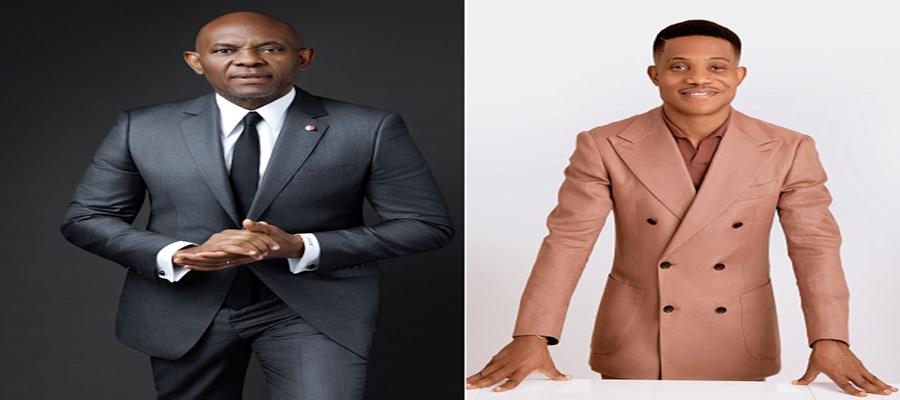
Heirs Life Assurance, the specialist life insurance company of Heirs Insurance Group, has appointed Pastor Jerry Eze as an Independent Non-Executive Director on its Board, effective August 10, 2026.

L – R: Tony Elumelu, Chairman, Heirs Life Assurance; Pastor Jerry Eze, incoming director, Heirs Life Assurance
The appointment reinforces Heirs Life Assurance’s commitment to expanding financial inclusion and accelerating insurance adoption by strengthening public trust, consumer education, and long-term financial resilience across Nigeria.
Despite being Africa’s largest economy, Nigeria’s insurance penetration remains below one percent – among the lowest globally – highlighting the need to expand financial protection and build greater public trust in insurance.
As Heirs Life continues to pursue its mission of making insurance accessible to every Nigerian, Eze’s appointment brings a unique perspective on community engagement, value-based leadership, and broad societal impact.
Pastor Jerry Eze is the Founder and Lead Pastor of Streams of Joy International Ministry, a growing multinational ministry with 34 branches across West Africa, Southern Africa, Europe and North America.
He is also the convener of the New Season Prophetic Prayers and Declaration (NSPPD), one of the world’s largest digital prayer platforms, reaching millions of people daily. Through his ministry and humanitarian initiatives, he has become one of Africa’s most influential voices, championing hope, compassion, and community transformation.
Beyond ministry, Eze is the Founder of the Jerry Eze Foundation, a faith-led philanthropy where he provides housing support and grants to vulnerable and underserved communities.
In 2026, he announced N1billion in grants to support young entrepreneurs across agriculture, technology, and manufacturing, further advancing enterprise development and economic opportunity.
Before entering full-time ministry, Pastor Jerry Eze built a career in development communications, serving as a Communications Specialist on a World Bank HIV/AIDS programme and with the United Nations Population Fund (UNFPA).
He holds a Bachelor’s degree in History and International Relations from Abia State University and a postgraduate degree in Business Administration from Enugu State University of Science and Technology.
Speaking about the appointment, Tony O. Elumelu, CFR, Chairman, Heirs Life Assurance, said: “Pastor Jerry brings an exceptional combination of integrity, influence, and a deep understanding of people and communities.
“As we continue our mission to democratise access to insurance, his insight will help strengthen consumer trust, deepen financial inclusion, and reinforce our commitment to protecting the financial future of millions of Nigerians.
“We are delighted to welcome him to the Board of Heirs Life Assurance and the broader family of Heirs Insurance Group.”
Commenting on his appointment, Pastor Jerry Eze said: “I am honoured to join the Board of Heirs Life Assurance at a defining moment for the insurance industry. Financial security empowers individuals, families, and businesses to pursue their aspirations with greater confidence and resilience.
“I look forward to working with the Board and Management to advance the company’s mission of making insurance more accessible, relevant, and impactful for every Nigerian.”
Heirs Life Assurance has become one of Nigeria’s leading specialist life insurance companies, ranking 7th on the Financial Times list of Africa’s fastest-growing companies.
It is one of the three insurance businesses of Heirs Holdings, the leading pan-African investment company, with investments across 24 countries and four continents.
Combining an omni-channel digital presence with physical branches spread across the country, Heirs Life continues to redefine life insurance through innovation, customer-centric solutions, and a commitment to making financial protection accessible to every Nigerian.
Heirs Insurance Group, comprising Heirs Life Assurance, Heirs General Insurance, and Heirs Insurance Brokers, collectively serves over 3 million people directly and indirectly.
The Group is championing financial inclusion and leading the digital insurance play in Nigeria, demonstrating its mission to democratise access to insurance.

The World Bank Group has announced the 31-month debarments of United Aviation Services Limited (UNASEL), a transportation services company based in Nigeria, and Air Vice Marshal Alkali Mamu, its owner and president, “in connection with fraudulent practices under the Enhancing Niger Northeastern Connectivity Project,” according to a press release issued by the multilateral development bank.

The statement said that the project aims to enhance connectivity and road safety along the Zinder-Agadez Road section and improve access to basic socioeconomic infrastructure for selected communities in that road section.
However, according to the statement: “UNASEL and Mr. Mamu presented false experience documents in a prequalification application to qualify for a contract under the project. This was a fraudulent practice under the World Bank’s sanctions framework.”
“The debarments make UNASEL and Mr. Mamu ineligible to participate in projects and operations financed by Bank Group institutions. The debarments are part of two settlement agreements under which UNASEL and Mr. Mamu admit culpability for the underlying sanctionable practices,” it added.
The statement further said: “Per the Bank Group Sanctioning Guidelines, the settlement agreements provide for a reduced period of debarment in light of UNASEL and Mr. Mamu’s cooperation.
As a condition for release from sanction under the terms of the settlement agreements, UNASEL and Mr. Mamu commit to developing and implementing integrity compliance measures that reflect the relevant principles set out in the Bank Group Integrity Compliance Guidelines, and Mr. Mamu further agrees to complete corporate ethics training.
UNASEL and Mr. Mamu also commit to continue to fully cooperate with the Bank Group’s Integrity Vice Presidency.
“The debarments of UNA SEL and Mr. Mamu qualify for cross-debarment by other multilateral development banks under the Agreement for Mutual Enforcement of Debarment Decisions that was signed on April 9, 2010.”

Affordable, Flexible Streaming Platforms May Kill PAYtv – Report

FG Suspends NAICOM’s N680m Insurance Recapitalisation Fees

FG Taps Indian, Chinese Technologies to Tackle $2.5Bn in Food Losses

MTN Nigeria Clocks 25, Connects over 90m People

Subscribers to Seek Legal Redress if Poor Quality of Service Continue in September

EFCC Busts NIS Visa Overstay Racket, Uncovers N700m in an Account

Fact-Check: Elon Musk’s “Tesla Pi Phone” is Internet Rumor

NBC Tasks Broadcasting Stations over 2028 DSO Global Deadline

NBC Scraps Annual Digital Access Fee on DSO

Glo Sponsored African Voices to Feature Netflix’s “The Polygamist” Stars




 Telecom1 day ago
MTN Alerts Subscribers over Fake 25GB Anniversary MTN Data Giveaway

 E-Business1 day ago
X Replaces Revenue Sharing wit New Creator Rewards Programme

 E-Financial1 day ago
Interswitch, Temenos Commit to Advancing Nigeria’s Digital Banking Technology

 General News1 day ago
Fake Agency: ICPC Indicts NITDA, Others over Inadequate Due Diligence

 E-Financial1 day ago
FG Spent N3.1 Trillion on Domestic Debt Servicing in Q1- DMO

 General News1 day ago
UNESCO Taps Oguamanam,Nigerian Scholar to Advisory Body on Science, Tech Ethics

 General News1 day ago
Tax Reform Built on Taxing Prosperity, Not Poverty– Adedeji

 Broadcasting1 day ago
Awba-Ofemili Unveils 2026 Health Campaign, Offers Free Medical Screening