

News
Obazee, Banker Recounts Ordeal in Hands of EFCC

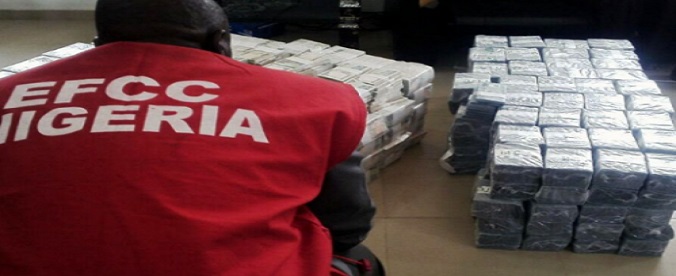
Sunny Obazee, an investment banker faced for seven years, humiliation, rejection and prosecution for alleged N855 million fraud at defunct Platinum and Habib Bank (PHB) which he joined as Divisional Director Investment Banking in December 2007.

Obazee was arraigned and tried by the Econonic and Financial Crimes Commission (EFCC) alongside Anayo Nwosu, Olajide Oshodi, Ashok Israni (Indian businessman), Sunny Obazee, Keystone Bank and NULEC Industries Limited on 13 counts of conspiracy, fraudulent diversion, obtaining under false pretences and theft before Justice Kudirat Jose of the Lagos High Court, Igbosere in 2011.
But on December 9, Justice Jose discharged and acquitted Obazee in a judgement that sent Nwosu, Oshodi and Israni to five years in prison each on seven counts; a fine of N20million to the federal government against Keystone Bank and Nulec Industries on three counts, as well as restitution of N395million to the victim of the fraud Chief Chukwudozie of Dozzy Oil and Gas.
For Obazee, the trial years were days of torture, emotional and psychological traumas especially because the fraud he was accused of started at least two years before he joined the bank.
“The mental torture was great. At a point, I had to file a case of breach of human rights against the EFCC because they were harassing and intimidating me with calls and intermittent detention after we had been admitted to bail.

“I have a boy and a girl and both were studying in Canada; all of us, including my wife, were broken down emotionally. In fact, one day in 2015, I put a call to my son and told him we would be going to court the following day and he told me that he was not feeling okay because he kept thinking about my ordeal.
“He said he could not move one of his legs and one arm. He was crying on the phone. He said he did not want to tell me about his situation so as not to compound my problem. I had to call my younger brother, who is a medical doctor in the United States to go and help check on him.
“The second day in court, I sat down weeping profusely and a lady lawyer in the EFCC team had to go and explain my situation to Rotimi Jacobs, the lead lawyer for the agency, who brought the matter to the attention of the court.
“The court magnanimously granted that I be allowed to go and see my boy. Only God helped me not to lose a boy who was close to finishing his university education over a case I knew nothing about. I would have lost Edosa over nothing.
“I was denied of my promotion, sacked and my official car collected. By the virtue of my position, the bank ought to give me two cars and a generator every four years, but before the trouble started, they only gave me one car and a generator. While they sacked me when I was still pursuing the matter, I wrote them on the need to reconcile what I need to get from them or return to them.
“They said they were coming to take the car and the generator and I was not at home the day they came, but they took away the car and said my dogs did not allow them to take the generator, only for them to later write that I am owing them N12 million for the generator.
“In the course of the trial, a friend recommended me to a British firm coming to Nigeria and who needed an investment banker.
“I met the officials and we discussed and I told them that I had an issue with EFCC and that I was sure I would come out unscathed when we departed, they never got across to me again. The EFCC stamped me with an indelible mark,” he told The Nation.
Genesis of the fraud
Israni, the owner of NULEC Industries Limited, had taken some loan from then-BankPHB and his debt rose to N130million around June 2007 and then he decided to raise capital for his company through Private Placement.
Consequently, the bank constituted a team to make a presentation to the authorities to be the Issuing House for the exercise and by then, Obazee had joined BankPHB and was leader of the team by virtue of his position.
A series of events followed the success of the bank in securing the mandate to be the Issuing House for the Private Placement exercise.
Obazee said: “NULEC gave us the mandate to be the Issuing House. I was not in Corporate Finance; the person who headed it was a Senior Manager. Also, the offer for the Private Placement was not underwritten by the bank. If that was the case, I would have been required to sign and the bank would have needed an Approval Memo, as that would mean we were exposing the bank to some risks.
“The document they produced said the transaction should be underwritten by the bank, but that was not done. I was not a signatory to the account and nobody in my division was. The allotment of the shares was done by the bank and I was not involved also. I did not ask anybody to falsify any report. We asked that a Reporting Accountant and a Solicitor be appointed for the transaction.
“The job of the Reporting Accountant was to verify the viability of NULEC Industries Limited and NULEC would do two or three years projection about its activities and what it wanted to use the funds for. In the course of the trial which lasted seven years, the Reporting Accountant gave evidence that NULEC was viable as of the time the money was given to it. “When we handled the offer, the company was not dead. I personally committed N5.7 million to the Private Placement. However, we all witnessed how the Capital Market crashed in 2009. A company, Dozzy Oil and Gas Limited, owned by one Chief Chukwudozie, committed the sum of N855 million to buy 600 million units of the shares at N5 per share.
“Other things being equal and in accordance with the regulations, if the shares were listed as planned, the company and its owners would have made N3billion from the sale of the shares and about N2 billion as profit. Unfortunately, the Capital Market collapsed.
“By the time the market collapsed, it affected a lot of things, even banks and BankPHB was not left out. Chukwudozie started making a demand for his money and some of my colleagues in the bank were being interrogated and probed by the EFCC.
“I came back from leave in 2011 and I was asked by the management to go to the EFCC office to explain myself. Before this time, some of my colleagues were already being investigated by the agency. It was at the EFCC office that I met Chukwudozie for the first time. I explained to him that the ugly development was as a result of the market collapse and I also invested some funds into the project and that if I did not believe it would work, I would not have done so.
“The next thing was that I was made to write a statement and asked a series of questions. I was now joined with those who had been under investigation for two years over the matter.
“I knew I was not involved in any criminal activity. Though I am from a humble background, my father, who worked in the palace of the Oba of Benin, wrote on the lintel of his house, in Bini Language, that good name is better than gold and silver and he inculcated that in his children.
“We were arraigned in 2011 and re-arraigned on 15-count amended charge in October 4, 2016. They still wanted to amend the charges again this year, but the court refused to entertain that.
“Each time they amended the charges, it was like starting all over again. I just wish the stain the trial put on me is removed. The establishment of the EFCC is laudable, but their activities must follow due process and based on facts.
“My son and daughter came all the way from Canada to be in court on the day of judgement because they know the type of father and parents they have. I am grateful to God that in the end I was vindicated,” he said.



Ogba Ogbaga, an Abuja-based lawyer, has said that he has been instructed to institute legal proceedings against MTN Nigeria, Airtel Nigeria, Globacom, 9mobile and MultiChoice Nigeria, operators of DStv, over what he described as unfair consumer practices relating to expiring data bundles and television subscriptions.

In a statement posted on Facebook, Ogbaga said his law firm, GIMBG Legals, received instructions from its client, KAA, also known as KaaTruths, to challenge the companies’ subscription policies in court.
According to him, the proposed suit will question whether telecom operators and DStv’s subscription models comply with provisions of the Federal Competition and Consumer Protection Act (FCCPA) 2018 and other applicable laws.
Ogbaga alleged that telecom providers operate internet data services that are unfair to consumers, claiming subscribers sometimes do not receive the services they paid for but still lose their subscriptions once the validity period expires.
He also criticised DStv’s subscription model, arguing that consumers lose paid viewing time due to factors such as power outages, adverse weather conditions and service interruptions, while subscriptions continue to count down regardless.
“Our clients have complained that MTN data services are unduly one-sided,” Ogbaga said, adding that the legal action would also extend to other telecommunications providers and DStv.
He said the court action would seek judicial determination on whether the companies’ subscription practices comply with consumer protection laws.
The lawyer also invited interested legal practitioners to collaborate on the case, saying his firm would provide updates as the matter progresses.
In a separate Facebook post on Wednesday, Ogbaga said previous policy discussions, town hall meetings and debates at the National Assembly had failed to address the concerns raised by consumers.
He argued that telecom operators regularly carry out maintenance and network upgrades that temporarily disrupt services without extending customers’ subscription periods, while DStv subscribers also lose viewing time because of electricity outages and weather-related disruptions.

The National Insurance Commission (NAICOM) has commenced the issuance of new licence certificates to insurance companies that successfully met the industry’s new minimum capital requirements, marking the formal beginning of a new regulatory era aimed at strengthening the financial capacity, governance and global competitiveness of Nigeria’s insurance sector.

At a ceremony held at the Commission’s headquarters in Abuja, the Commissioner for Insurance, Olusegun Ayo Omosehin, presented the new licence certificates to compliant operators, describing the exercise as a major milestone in the industry’s recapitalisation programme.
According to the Commission, a total of 43 insurance companies declared compliant with the new capital requirements are expected to receive the new licence certificates in phases.
Omosehin congratulated the successful companies, saying the issuance of the new licences signals the beginning of a stronger regulatory framework anchored on improved capitalisation, sound corporate governance, innovation and sustainable growth.
He urged operators to leverage their enhanced capital base to develop innovative insurance products, improve operational efficiency and deepen insurance penetration across the country.
The Commissioner said the Commission expects the recapitalised companies to deliver stronger financial performance while maintaining high standards of professionalism and customer service.
He also announced that NAICOM’s next major regulatory initiative would be the implementation of the Risk-Based Capital (RBC) framework, under which insurers’ capital levels would be aligned with the risks inherent in their respective business portfolios.
According to him, the new framework will further strengthen the industry’s resilience by ensuring that insurers maintain capital commensurate with the risks they underwrite, thereby enhancing policyholder protection and boosting market confidence.
Omosehin reaffirmed the Commission’s commitment to removing regulatory impediments where necessary while maintaining effective oversight to safeguard policyholders and strengthen confidence in the insurance market.
The issuance of the new licence certificates marks the commencement of a phased transition to higher capital standards aimed at improving the financial capacity, solvency and claims-paying ability of insurance companies operating in Nigeria.


Management of Nigeria CommunicationsWeek Media has withdrawn its publication titled “Adefolarin Ogunsanya and the Allegations of Shareholder Interference and Self-Dealing at Pan African Towers,” which was published on its platform.

The decision to retract the story follows an editorial review to ensure that the platform maintains the highest standards of accuracy, fairness and responsible journalism in reporting matters that are the subject of ongoing judicial proceedings.
Nigeria CommunicationsWeek acknowledges that the issues raised in the publication remain before the courts and have not been finally determined.
Accordingly, the organisation has decided to remove the article from its platforms pending the conclusion of the legal processes or the availability of additional verified information.
The publication regrets any inconvenience or misunderstanding the report may have caused to readers or any individuals or organisations mentioned in the story.
Nigeria CommunicationsWeek remains committed to the principles of balanced, factual and ethical journalism and will continue to uphold professional standards in its coverage of judicial and corporate governance matters.

ITUC-Africa Faults FG’s Plans to Remove Electricity Subsidy

SEC Begins Full e-Registration for Capital Market Services

NAICOM Revokes Nigeria Reinsurance’s Licence over Failure to Meet MCR

Many Nigerian Airlines May Collapse within 30 Days – Onyema

Ogbaga, Abuja Lawyer to Sue Telcos, DStv over Alleged Unfair Practices

NRC, Ponzi Scheme Collapses Resulting Loss of Billions of Naira

From Scarcity to Scale: What Africa Can Learn from India’s Agricultural Transformation

EFCC Busts NIS Visa Overstay Racket, Uncovers N700m in an Account

BON Establishes Six Ad Hoc Committees to Modernize Broadcasting

How EFCC Turned Recovered Loot Into School Supplies for Thousands of Nigerian Students




 E-Business3 days ago
Kaspersky Identifies Cyberespionage as a Growing Threat Across Africa, Others

 Broadcasting3 days ago
NBC Files Fresh Appeal against Judgment Barring it from Imposing Fines on Broadcast Stations

 News3 days ago
INTERPOL Report Shows AI Powers 55% of Cybercrimes in Africa Amid $484m Losses

 News3 days ago
Nigeria Expands Deep-tech Skills Pipeline

 Telecom3 days ago
Why Strong Institutions Remain Africa’s True Growth Engine

 E-Financial3 days ago
Nigerians Lost N25.85Bn to Digital Payment Fraud in 2025 –CBN

 E-Business2 days ago
Kaspersky Reveals a New Malicious Framework Targeting Cryptocurrency Users with the Use of OkoSpyware

 E-Financial3 days ago
NRS Announces 30 Percent Tax on Corporate Crypto Income