

General News
OBJ, Others Acting Like Motor Park Touts-FG

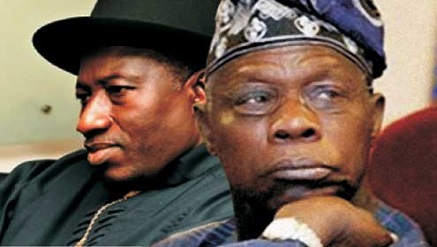
President Goodluck Jonathan on Wednesday condemned some politicians parading themselves as statesmen and senior citizens whereas, they are by their utterances, “ordinary politicians and motor park touts.”
President did not mention names, but the remarks is believed to be reference to former President Olusegun Obasanjo statement that Nigeria was facing economic problems due to the failure of the present administration to plan for a rainy day.
According to President Jonathan, such politicians could not be described as statesmen because of the big offices they occupied before but by virtue of what they brought to bear on the nation.
Jonathan spoke while playing host to a delegation of the Tanko-Yakasai-led Northern Elders Council in the Presidential Villa, Abuja.
But Obasanjo had told Iyalodes and eminent women leaders from the South-West, who visited him at his Hilltop residence in Abeokuta, Ogun State, Monday, that the nation’s reserves which as of 2007 stood at $67bn had been depleted by the Federal Government.
The former President had earlier written an open letter to Jonathan in which he accused him of tribalism, condoning corruption and training snipers.
But a visibly angry Jonathan told the Northern elders that some people were hiding under big names to create problems for the country.
Jonathan also said that such people were in the habit of making unguarded statements with the aim of creating enmity.
The President said, “Some people call themselves statesmen but they are not statesmen, they are just ordinary politicians.
“For you to be a statesman, it is not because you have occupied a big office before but the question is what are you bringing to bear on the nation?
“Are you building this country? Or are you a part of the people who tell lies to destroy this country; to create enmity and make people who ordinarily would have been living together to fight themselves?
“Are you planning to set the country ablaze because you did not get that particular thing you want?
“At the appropriate time, Nigerians will know all of them even though I know most of such people. The younger ones do not know.
“Some people, including those with big names, are hiding under some clogs and creating a lot of problems in this country.
“They are making provocative statements that will set this country ablaze. How can someone tell me that such people are senior citizens. They are not senior citizens and they can never be. They are ordinary motor park touts.
“If you are a senior citizen, you will act like one. It is not because of the offices we occupy, it is by divine grace and providence that some of us occupy these offices. But what role are you playing to build this country?”
Jonathan also used the opportunity to assure the delegation that he was not against the Northern part of the country.
He said whenever he heard about such accusation, he always turned to Vice- President Namadi Sambo who is from the North to ask if, indeed, he is anti-North.
The President listed his Principal Secretary, Hassan Tukur, and his Chief Detail simply identified as Yusuf, as some of his close aides from the North.
Jonathan said because of his background, he believed that the only thing that could liberate individuals was education.
He said that was why he insisted that nine out of the 12 new federal universities be located in the North.
Jonathan said, “I used to tell Nigerians that I come from a background people refer to as the Talakawas; I come from that level and I am here today talking to Alhaji Jimeta because I went to school.
“And I said the only thing that can liberate an individual or a group of individuals is education. If I had not gone to school, I wouldn’t have been here to talk to big people like these.
“If you didn’t go to school, you wouldn’t have spoken the way you spoke, you would have looked for somebody to interpret. This is what I believe. I don’t play politics with it. It has been my policy that I don’t play politics with education.
“When I came on board, I said even though as a country we have the policy on paper, every state must get a Federal Government university.
“Out of the 12 federal universities created, nine of them are in the North while three are in southern Nigeria. The only three states that had no federal university were Bayelsa, Ebonyi and Ekiti.
“Those who were in charge of the university establishment were not fair. For us to liberate ourselves, we must go to school. If I hate the North, would I have done that?
“We talk about Almajiri education, we felt we must change. Luckily, we initiated it but now state governments are keying into it.
“I know that it was education that liberated me. I would have been a local canoe builder like my father and grandfather. But I am here because of education and I feel if we must liberate Nigerian children whether they are from Zamafara, Bayelsa, Kebbi or Delta state, they must be educated. I feel we must enter the North by aggression through education.
The President also referred to a newspaper publication (not The PUNCH) which, he said, indicated that the Federal Government awarded a few projects for the North-East and a chunk for the South-South.
He said he had reproduced copies of the publication and distributed them to ministers with a directive to ascertain whether indeed projects were skewed in favour of a particular geopolitical zone.
Jonathan added that he directed the ministers that if the report was indeed true, they must explain the reason(s) to him.
He said despite all the negative campaigns against him and his government, he would not cheat any part of the country.
The President said, “For the people who want to paint us in all kinds of colour, we will explain to Nigerians. There are a lot of documentations we will show Nigerians.
“Let me reassure you that this administration is working with your sons and daughters; we will not exploit any part of this country; we will not cheat any part of this country.”
Jonathan also stressed the need for peace and unity in the country, saying there could be no development without the two factors.
He said he was saddened that young Nigerians were seeing the country as a divided one.
The President said, “I feel sad that our younger ones are beginning to see Nigeria as if we are so divided. A Nigeria that a Muslim and a Christian cannot sit down together.
“I was told that the driver of the late Prime Minister, Tafawa Balewa, was a Christian. Our people lived together in those days. Why not now that we have even modern ways of life?
“Any country that its citizens see themselves through their tiny tribal enclaves cannot go anywhere.”
Yakasai had in his remarks said it was important for all Nigerians to appreciate the fact that the country was crafted in such a manner that no one section could rule without the support of the other.
He recalled that it was the North that endorsed the principle of power shift which brought about the Presidency of Obasanjo and Jonathan.
He said it behoved on all Northerners and indeed, other Nigerians to continue to respect the principles of democracy.
Yakasai said, “Northern Elders Council believes in peaceful co-existence and extension of hands of fellowship to brothers and sisters from the other side of the nation.
“It is unpatriotic for anybody to instigate people against any person or peoples because of a temporary gain.
“Politics of insult, blackmail and castigation of individuals will not take this country anywhere.
“We therefore believe in peaceful co-existence among Nigerians and by working together shall we move the country forward.”



Conoil Plc is spreading joy this Valentine season as the first group of winners in its Valentine Bonanza promotion have been announced and rewarded. Launched on February 14, the campaign continues to delight customers at participating retail outlets.

The initial raffle draw, conducted on February 21, saw fortunate customers receive ₦10,000 worth of free petrol each. The draw was carried out publicly, with media representatives present to ensure full transparency. With the promotion still ongoing, more customers have the opportunity to join in and potentially be among the next winners.
A Conoil Management spokesperson explained that the initiative is a way to show appreciation to loyal customers for their ongoing support. “Our customers have responded impressively to the bonanza, with strong participation recorded across our stations,” the spokesperson said.
The second and final phase of the promotion is now in motion. Customers who purchase at least 10 litres of petrol at any participating Conoil station remain eligible to win in the grand finale raffle.
The grand finale is set for February 28 at 12 noon. Motorists in Lagos and Ogun states are encouraged to visit Conoil outlets to collect their tickets and take part in the exciting conclusion of this Valentine celebration.

PalmPay users took to the #LoveWithPalmPay campaign to show how experiences are powered through seamless banking.

It’s the month of love and social media has been filled with couples showing affection with gifts. As digital payments become embedded in everyday life, the way relationships are planned, funded, and experienced is evolving.
Recent insights from SBM Intelligence 2025 ‘Love in the Air’ report show that despite economic pressures, most Nigerians still set aside dedicated budgets for Valentine’s Day, with the largest percentage planning to spend between N51,000 and N100,000, while less than 5% are willing to spend above N500,000.
This growing intentionality highlights the need for platforms that help people manage their money more effectively, offering features like free transfers and tools that make it easier to send, track, and preserve funds while still showing up for meaningful moments.
Through the #LoveWithPalmPay campaign, PalmPay set out to show how the platform is enabling users to plan, pay, and celebrate meaningful moments with greater ease.
During the Valentine’s season, PalmPay invited couples across Nigeria to share their stories through the #LoveWithPalmPay campaign, celebrating how digital banking supports their individual expressions of love.
The campaign saw strong participation, with many PalmPay couples submitting entries that showcased how they use the app to plan surprises, pay for outings, and stay connected through everyday transactions.
From these entries, four couples were selected, each showcasing how PalmPay has enabled fast and reliable transactions in key moments.
One video from @simply.omotoshan, one of the selected couples, captures the role of seamless payments in making their spontaneous moments possible.
She said in her entry video: “Our cutest money moment with PalmPay was when we planned our Valentine’s picnic and realized we had forgotten half of the things we needed; literally, half of everything. We rushed to the mall to get cakes, food, decorations, and all the essentials. When it was time to pay, we used PalmPay.
“The transaction was smooth, fast, and stress-free. In no time, we were done setting up our Valentine-themed picnic with everything perfectly ready. Honestly, all our experiences with PalmPay have been easy and satisfying, but this one is definitely our cutest money moment. Thank you, PalmPay.”
A testimonial from the fourth selected couple, Mohammed and his wife, reflects his excitement: “Hello PalmPay, thank you so much for selecting us as one of the winners of the #LoveWithPalmPay campaign. We truly appreciate this. My wife and I are very grateful. Thank you, PalmPay, for the love and support. We’re so happy and thankful for the N100,000 reward. We love you, PalmPay, and long live PalmPay. Thank you so much.”
Beyond the feel-good stories, the campaign reflects a broader shift: fintech is no longer just about transactions, it’s about enabling experiences. Reliable payments, fast transactions, and accessible financial tools reduce the friction that can disrupt important moments, allowing users to focus on connection rather than logistics.
From paying for dinner to managing other expenses, PalmPay continues to demonstrate how digital financial services support modern relationships, proving that in today’s economy, love is not only felt, it’s funded digitally.
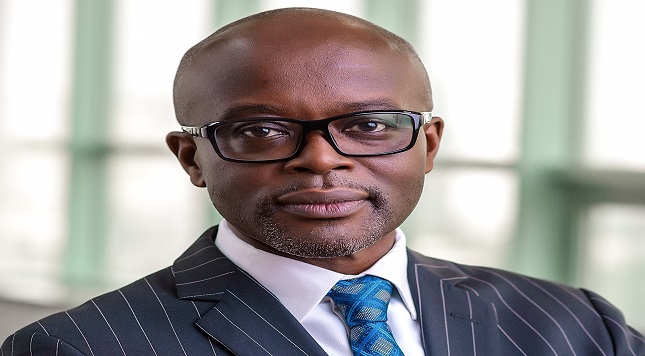
KPMG has appointed Tola Adeyemi as Chief Executive Officer for KPMG one Africa, alongside the addition of Professor Olayinka David‑West and Dr. George Njenga as independent members of the Africa Governance Council (AGC).

Effective from March 2026, the appointments reinforce the firm’s leadership expertise, underscore a long‑term commitment to Africa and highlight confidence in the continent’s growth potential.
“Africa is one of the most dynamic and promising regions in the global economy, and KPMG is committed to playing a meaningful role in its growth story,” said Tola Adeyemi, incoming CEO for KPMG One Africa.
He continued: “It is a privilege to step into this role at such a pivotal moment for both KPMG and the continent. I look forward to building on our strong, connected and high‑performing base to deepen collaboration and deliver consistent quality and impact across our markets.”
KPMG is recognised globally for its commitment to quality, integrity and professional excellence, supported by a strong global network of member firms. Trust remains the foundation of the audit and accounting profession, with high standards of governance, ethics and audit quality increasingly demanded across Africa’s public and private sectors.
KPMG One Africa’s approach brings the continent closer together with strong leadership to strengthen cross-border collaboration and offer shared expertise and consistency which is business‑critical to help clients navigate complex risks and unlock sustainable growth opportunities.
Commenting on the appointment, Professor Ben Marx, Chairman of the Africa Governance Council, said: “Tola Adeyemi is exceptionally well positioned to lead KPMG One Africa. In addition to his global perspective as a member of the KPMG Global Council, he brings significant influence and credibility as a respected business leader across the continent.”
The appointments of Professor David‑West and Dr Njenga to the Africa Governance Council, which provides board level governance, further strengthens independent oversight, bringing strong academic credentials alongside deep strategic and business expertise.
“These appointments reinforce KPMG’s commitment to strong governance, accountability and leadership depth,” Marx added. “They complement our established African leadership team, in‑country managing partners and regional senior partners, further enhancing our client‑centric approach across Africa.”

Kaspersky Discovers New Phishing Campaign Exploiting Google Tasks Notifications to Steal Corporate Credentials

NITDA Equips Federal Character Commission with Data Tools to Drive Public Sector Reform

Telecom Giant MTN Injects N1.0 Trillion CAPEX into Network Expansion

History is Watching: Tinubu’s Moment to Rescue Nigeria’s Stolen Future

Samsung Unveils Galaxy S26 Series, Powered by Smarter, Background AI

Kaspersky Launches OT Calculator to Align Cybersecurity Investments with Business Goals

Accidental Billionaire Opts for Jail Instead of Returning Money Credited Him by Mistake

Why the Future of PR Depends on Healthier Client–Agency Partnerships

New Horizons Nigeria Breaks Ground: First to Fuse Mandarin into ICT Curriculum

Kaspersky Brings more Transparency to Threat Detection with New Hunt Hub




 E-Business3 days ago
AfDB, UNDP Launch $10Bn AI Initiative for Africa

 Telecom3 days ago
Grey Expands Cross-Border Banking with USD Accounts, USDC Support

 General News2 days ago
KPMG Strengthens Africa Leadership to Support Long‑term Growth Across the Continent

 News3 days ago
DG NITDA Reaffirms FG Commitment to Responsible, Inclusive AI

 News3 days ago
Lotus Bank, REA Seal N100Bn Deal to Power Rural Nigeria

 E-Financial3 days ago
CBN Cuts MPR by 50bps to 26.50% as Inflation Eases for 11th Month

 E-Financial3 days ago
Kuda Bank Teams Up with Lovers & Frnds for Inclusive Valentine’s R&B Bash
 General News3 days ago
Kaspersky Enhances Network Detection and Response Capabilities with KATA 8.0 Release