

General News
SAHCOL Operates Best Ground Handling Equipment in Nigeria- Owolabi


The Skypower Aviation Handling Company (SAHCOL), a member of the Sifax Group, currently operates the best ground handling equipment (GHE) in the Nigerian market, according to Mr Olu Owolabi, the managing director.
Owolabi made the remark while speaking with newsmen at SAHCOL’s new headquarters in Lagos, adding that with the state-or-the-art equipment the Company handles, on the domestic scene, almost 80% of the airlines.
While on the international, “we have 40% of the business”, he said.
The MD said in spite the acquisition of sophisticated equipment, the SAHCOL is not satisfied, as it moves to improve and expand on its service delivery.
He said, “We have the best ground handling equipment so far in the country. We are however not satisfied yet, because the more we improve and expand on our service delivery, the more we will need to acquire additional equipment to meet up with the demand of our clients. The type of equipment we use, are not the type you buy and keep. The more the need arises, the more equipment we add.
“As regarding our customer base, in this business you gain some and lose some. That is the game. I can assure you that those we handle enjoy our services very well. We look forward for more customers in 2015. Our customers come first in our in our line of thought before any other thing. So far, on the domestic scene we handle almost 80 per cent of the airlines while on the international we have 40 per cent of the business.
In view of the peculiarity of the industry, Owolabi advised the Federal Authorities to find ways of ending Double Taxations as sure way to help players succeed.
“It had always been serious issue which has not been resolved, but I understand that presentation has been made to the new Minister of Aviation, who has passed it to a committee to look into it and make appropriate recommendations.
“I am very positive that government will look into it and out ways to assist us. All the multi-million Naira equipment we invested and pay duties on are stationed at on the tarmac for our operations and cannot be parked on the street, yet we are still being billed by FAAN.
“Do you expect us to take our equipment like the FMC to the street? Government meant well for the industry when it said it was embarking on the upgrading of airports and at the same time, it should be supportive when handling companies are buying new equipment to be able to facilitate passengers and airlines needs.
“So, I sincerely belief that since airlines are enjoying zero tariff on aircraft spare parts, the same should be extended to handling companies on the equipment being imported by giving us duty free on spare parts. We have been agitating on this for long.
On Cargo Freighting & Passengers Facilitating, he said, “Facilitation go side by side with cargo handling depending on which side you want to focus and depending on the type of facilities that is provided by the Federal Airports Authority of Nigeria [FAAN]-our landlord and what we’ve been able to do to compliment government as one of the handling agents in the country.
“In terms of cargo handling, we are almost at the tail end of completion of our multi-million Naira bonded warehouse project which is going to be the best, not only in West Africa, but also in the whole of Africa in terms of facilities being provided.
“We sincerely hope that the government will be able to assist us in implementing the rules that govern the procedures of all of these issues that necessitated the closure of warehouses of handling companies recently for almost three weeks thereby making us lose billions of Naira in the process on both sides including us, the handling companies.
“Don’t forget that we have to engage extra hands to handle security aspects of peoples’ baggage. On cargo that litters the tarmac, we have to work extra hours with the men of the Nigeria Customs Service to decongest the tarmac because of the small size of the apron where the cargo freighters are parked. So, it’s a lot of workload”.
On passengers facilitation, the MD said, if the conveyor belts are not working or are not good, passengers do not want to know whether or not it’s SAHCOL’s responsibility. “So, we have to go extra length by doubling our staff on shift to meet the challenges. Don’t forget that we also pay overtime allowances to our staff for working extra hours to be able to meet passengers
On opening the SAHCOL new magnificent warehouse, he said that before the end of February 2015, “we will start the test running of the facilities provided in the warehouse. The type of facilities there are a complete village on its own. We are looking at March 2015 for the formal opening of the new warehouse”.
He added that, although in the provision of security gadgets to deter and detects dangerous ‘terrorists’ tools such as guns, bombs and other explosive materials is that of the governments, on its part, SAHCOL assist the government in the provision of X-ray machines, for the screening of exports and imports. It is therefore the job of of the Customs to screen all in-bound and outbound goods.
—


General News
Fiona Ahimie Launches LEADHER Mentorship Session to Inspire the Next Generation of Female Leaders


As part of activities leading up to her investiture as the 14th President of the Chartered Institute of Stockbrokers (CIS) and the first female President in the Institute’s history, Dr. Fiona Ahmed Ahimie, Managing Director of First Securities Brokers Limited, hosted the inaugural LeadHER Mentorship Session last week.

The session, themed “Leading with Purpose, Breaking Barriers, Building Legacy,” brought together emerging female professionals and aspiring leaders from across various industries for an engaging afternoon of mentorship, learning, and empowerment.
The LeadHER Mentorship Session was designed to provide participants with practical insights into leadership, career advancement, personal development, and navigating challenges in the traditionally male-dominated sectors.
Through candid conversations and shared experiences, attendees gained valuable perspectives on building successful careers while creating lasting impact within their organizations and communities.
Speaking at the event, Dr. Ahimie noted that leadership is not merely about achieving personal success but about creating pathways for others to thrive.
“Throughout my professional journey, I have benefited from the guidance, support, and encouragement of remarkable mentors. The LeadHER Mentorship Session is an opportunity to pay that forward by equipping and inspiring the next generation of women to pursue excellence, embrace leadership opportunities, and break barriers with confidence,” she said.
The mentorship session forms part of a broader commitment to advancing female participation and leadership within Nigeria’s financial services industry and the wider corporate ecosystem. It also reflects Dr. Ahimie’s longstanding dedication to talent development, professional excellence, and inclusive leadership.
The event provided a platform for meaningful dialogue, networking, and knowledge sharing.
Dr. Ahimie’s investiture as President of the Chartered Institute of Stockbrokers marks a historic milestone for the Institute and the Nigerian capital market, underscoring the growing role of women in shaping the future of the financial services industry.


Ventures Platform and the Yemisi Shyllon Museum of Art (YSMA), Pan-Atlantic University, are pleased to announce Haneefah Adam as the winner of the inaugural Ventures Platform–YSMA Futures Art Award, a pioneering public art commission established to support artistic innovation and future-focused cultural expression in Nigeria.

L-R: Kola Aina, Founding Partner, Ventures Platform; Dotun Olowoporokun, Managing Partner, Ventures Platform; Haneefah Adam, Artist and winner of the Futures Art Award; and Jess Castellote, Director, Yemisi Shyllon Museum of Art, Pan-Atlantic University during the Presentation of the Ventures Platform-YSMA Futures Art Award at Ventures Platform’s 10th Anniversary Dinner in Lagos on June 19, 2026.
The announcement was made during the 10th Anniversary Dinner of Ventures Platform in Lagos, where Haneefah was formally recognized following a competitive national selection process that attracted submissions from artists and art collectives across Nigeria.
As the winner of the Award, Haneefah will be commissioned to create a 12-foot public sculpture titled Bloom in Unexpected Places, which will be permanently installed within the YSMA and Pan-Atlantic University environment.
Selected through a rigorous jury process involving leading artists, curators, scholars, and cultural professionals, the proposal distinguished itself through its originality, conceptual strength, artistic ambition, and thoughtful engagement with the Award’s central theme: Reimagine the future and build into form through art.
The work explores themes of growth, resilience, innovation, and possibility, inviting audiences to reflect on how creativity and human ingenuity can flourish in unexpected circumstances and environments. Through its scale and public presence, the installation is intended to spark conversations about the future while enriching the cultural landscape of the University and the wider community.
The Award represents a landmark moment in Haneefah Adam’s artistic journey. While she has earned recognition for her innovative and socially engaged practice, this commission marks her first institutional award, her first major public art commission, and the largest public artwork of her career to date.
Speaking on behalf of YSMA, Museum Director, Jess Castellote described the Award as an important investment in both artists and public culture.
“At YSMA, we believe museums have a responsibility not only to preserve cultural heritage but also to support the creation of new cultural futures. Haneefah’s proposal impressed the Jury with its clarity, imagination, and relevance to contemporary conversations about innovation and possibility.
“We are delighted to support the realization of this ambitious work and to welcome it into the Museum’s growing public art programme.
“The Ventures Platform–YSMA Futures Art Award demonstrates what is possible when cultural institutions and private-sector partners work together to invest in creativity and public engagement.”
For Ventures Platform, the Award forms part of its broader vision of supporting the systems, ideas, and people shaping Africa’s future.
According to Kola Aina, Founder and General Partner of Ventures Platform: “As we celebrate ten years of backing visionary founders across Africa, we wanted to create something that reflects our belief that innovation is not confined to technology or business alone.
“The future is also imagined through culture, creativity, and the stories we tell about ourselves. This Award represents an investment in imagination itself.
“Haneefah’s proposal captures that spirit beautifully, and we are excited to see it come to life as a public artwork that inspires curiosity, reflection, and optimism.”
The Award is one component of a broader three-year collaboration between Ventures Platform and YSMA, which also includes entrepreneurship-focused masterclasses, guest lectures, and student engagement initiatives within the Pan-Atlantic University ecosystem.
Supporting the long-term legacy of the programme is Atsur Technologies Ltd, the exclusive Provenance Infrastructure and Physical-Digital Documentation Partner for the Ventures Platform–YSMA Futures Art Award. Through this partnership, every commissioned artwork produced under the Award will be professionally digitized, authenticated, and recorded using Artsur’s provenance and collection management technology, ensuring robust documentation of the artist’s creative process, the artwork’s history, and its enduring place within Nigeria’s cultural record. This partnership reflects a shared commitment to strengthening transparency, documentation standards, and the long-term preservation of contemporary African artistic production using innovative technologies.
Commenting on her selection, Haneefah Adam expressed gratitude for the opportunity and excitement about the journey ahead.
“I am deeply honoured to be the inaugural recipient of the Ventures Platform–YSMA Futures Art Award. To have my work selected from among so many strong submissions is both humbling and encouraging. Bloom in Unexpected Places is rooted in the belief that creativity, hope, and transformation can emerge even in the most unlikely circumstances. I look forward to working with YSMA and Ventures Platform to bring this vision into the public realm and create a work that invites people to think differently about the future.”
Beyond the commissioning of a single artwork, the Ventures Platform–YSMA Futures Art Award seeks to establish a new model for collaboration between the cultural and innovation sectors. By positioning artists as active participants in conversations about technology, entrepreneurship, and societal transformation, the Award expands the ways in which the future can be imagined, questioned, and made visible.
As work begins on Bloom in Unexpected Places, the project signals a bold commitment by both Ventures Platform and YSMA to nurturing creative talent, supporting public art, and fostering interdisciplinary approaches to shaping the future.

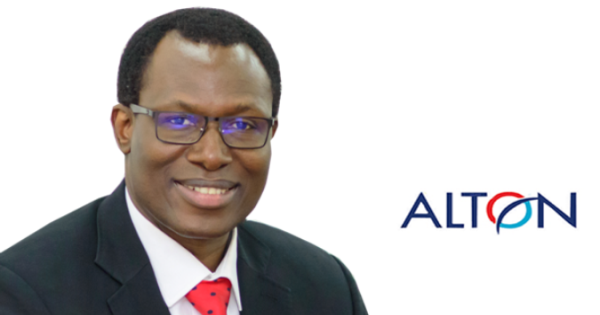
Association of Licensed Telecommunications Operators of Nigeria (ALTON), official industry body and advocacy group for major telecommunications providers in Nigeria, has backed the Central Bank of Nigeria’s (CBN) directive requiring banks and fintechs to host payment transaction data locally.

Gbenga Adebayo, chairman, ALTON
Gbenga Adebayo, chairman, ALTON, said this in an interview with the News Agency of Nigeria (NAN) in Lagosat the weekend.
His position follows a recent CBN directive mandating that banks, fintechs, and other payment service providers store payment transaction data generated in Nigeria on local servers from January 1, 2027.
The directive forms part of measures aimed at strengthening oversight of the country’s rapidly growing digital payments ecosystem.
Adebayo said data sovereignty required countries to take responsibility for their entire data value chain.
According to him, this covers data collection, management, storage, and integrity assurance.
“We cannot continue to outsource that to other jurisdictions.
“The more we host our data locally, the better for us,” he said.
Adebayo said local hosting would enable Nigeria to manage data end-to-end and guarantee the integrity of critical information.
He noted that hosting payment data outside the country increased communication requirements, latency, and retrieval costs.
“For every transaction involving data hosted outside our shores, communication has to take place from your location to the host and back.
“It increases latency and also increases the cost of data retrieval,” he said.
The ALTON chairman described the directive as an important first step toward achieving national data sovereignty.
He also dismissed concerns about infrastructure readiness, saying Nigeria already had significant data center capacity.
According to him, several Nigerian-owned facilities currently host data for organisations operating from other jurisdictions.
“I’m happy to say that we have a lot of data centres owned and managed by Nigerians that are hosting data from other jurisdictions.
“If people overseas can host their data here, why can’t we host our own data here?” he queried.
Adebayo argued that local hosting would reduce dependence on foreign infrastructure while improving national control over data security.
He said concerns about security and reliability should not justify continued reliance on foreign hosting providers.
“No one can protect your house better than yourself.
“You have more at stake in terms of security and safety than somebody else hosting your data,” he said.
The telecom industry leader also highlighted the cost implications of local hosting.
He said organisations that host data locally would pay in local currency rather than foreign currency.
According to him, this would help reduce exposure to exchange rate pressures and lower long-term operating costs.
Adebayo said Nigeria currently had about six Tier III data centres, with additional facilities under development.
He, however, stressed that capacity was more important than the number of facilities.
“It’s not just about the numbers; it’s about the capacity of what they can host.
“So far, we can,” he said.
He urged stakeholders to accelerate efforts toward domestic data hosting and management.
“The earlier we begin to domesticate our data hosting and data management, the better for us,” Adebayo added.

CredibleVoteNG Opens Free Access to all Polling Units in Nigeria after INEC Demanded N1.Bn for Register

NESREA Defends Plastic Waste Rules, Says Policy Targets Pollution

FG Engages Banks on RevOp, New Digital Platform for Revenue Generation

Kaspersky Discovered a Malware Campaign Targeting Steam Users Through Infected Wallpaper

Fiona Ahimie Launches LEADHER Mentorship Session to Inspire the Next Generation of Female Leaders

CBN Extends PoS Geo-Fencing Enforcement Deadline to August 2026

London Strengthens Global Investment Ties with Africa @ First Ever London-Africa Business Summit

FG Targets Alleged N3tn Capital Flight, Opens Airtime Credit Market to Nigerian Fintechs

Japan, UNESCO Boost Digital Learning in 15 CoEs with Donation of ICT Equipment

Mobile Internet Gender Gap Widest in Africa – GSMA




 Telecom2 days ago
MTN Nigeria Commits to Ethical Conduct with IFRS S1, S2 Compliance

 E-Financial2 days ago
FG Moves to End Double Taxation

 News2 days ago
BoI’s EIB-Backed Financing Accelerates Fidson’s Pharmaceutical Manufacturing Growth

 General News2 days ago
ALTON Backs CBN on Local Data Hosting Rule for Banks, Fintechs

 E-Business2 days ago
NDPC to Review Data Law to Address AI, Privacy Concerns

 Telecom2 days ago
NCC, CAC Move to Block Unapproved Ownership Changes in Telecom Sector

 E-Business2 days ago
Galaxy Backbone @ 20, Unveils New Identity

 General News2 days ago
Nwanegbo Bags Africa Digital Award in Applied Artificial Intelligence and Data Science