

General News
OneHealth Launches App for Africans Living with Non-Communicable Diseases

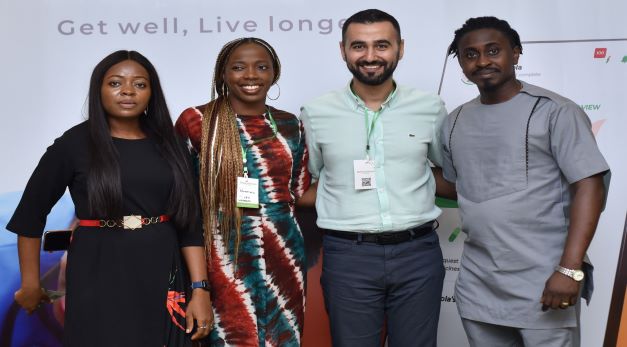
With the aim of helping Africans living with non-communicable diseases (NCDs) like arthritis, high cholesterol, cancer, diabetes, hypertension, sickle cell anemia, heart diseases and so on, live better lives, Nigeria’s leading digital-first pharmacy and healthcare platform, OneHealth has launched a new and innovative app, OneWellness.

OneWellness has impressive features for its users including medication, vitals and refill reminders, automated medicine and lab test deliveries, compulsory weekly check ins & follow-ups, 24/7 medication sourcing, test consultations with qualified Doctors, dedicated care partners and many more.
The OneWellness App enables real-time notifications to help users and their caregivers manage their medications, treatment and recovery in a timely manner.
Speaking to participants at the Launch event in October, 2022 , CEO & Founder, OneHealth, Adeola Alli stated that, “OneWellness provides a holistic approach to healthcare management, via our vetted methodology: Access, Adherence and Accountability (3As).
“With the app, users are assigned a dedicated care partner available via chats, call or video and they can track vitals, consult doctors and specialists as well as report medication-related problems.”
The new app will help over 250,000 people access affordable medicines and healthcare by the year 2024.
Adeola Alli says that, “Since 2020 when the idea of OneWellness was founded, the product has impacted over 1000 lives, onboarded over 200 Doctors and Specialists, partnered with over 846 Pharmacies and saved over 5 Million Naira in healthcare costs.”
She added that, “Medicine non-adherence as one of the biggest inhibitors for people living with NCDs is one of the major motivators for OneWellness.
“Our approach to non-communicable diseases is to help identify, resolve and prevent medicine-related problems, optimize medication therapy, reduce adverse events and improve clinical outcomes.”
Based on World Health statistics, Non-communicable diseases threaten the 2030 Agenda for Sustainable Development which includes reducing all probability of death from NCDs.
74% of all global deaths are as a result of these NCDs and 77% of these deaths come from low and middle-income countries.
WHO has estimated that adherence with long-term therapy for chronic illnesses averages 50% in developed countries and is even lower in developing countries.
Furthermore, it has been estimated that 20% of new prescriptions are never filled, and even among those filled, approximately 50% are taken incorrectly (errors regarding dosage and timing or frequency administration).
Effective treatments are therefore failing to realize their potential in reducing the burden of NCDs owing to poor patient adherence.
OneHealth has been a pioneer in using technology to provide numerous pharmaceutical and healthcare solutions.


Following the recently held Court-Ordered Meeting and subsequent overwhelming endorsement, the merger and business combination between Unity Bank Plc and Providus Bank Limited remains firmly on course.

Unity Bank
Analysts appraising the ongoing recapitalisation programme believe that the regulatory backing and shareholders’ support for the merger represent the most important milestones for meeting the recapitalisation requirements within the stipulated timeline.
Recall that the Central Bank of Nigeria (CBN) backed the merger between the two lenders, with a pivotal financial accommodation to support the transaction.
The merger also received a further boost with a “no objection” nod from the Securities and Exchange Commission (SEC).
The regulatory approvals form part of broader efforts to strengthen the resilience of Nigeria’s banking system, reinforce capital adequacy across the sector, and mitigate potential systemic risks.
The development positions the combined entity among the 21 banks that have satisfied the apex bank’s new capital threshold for national banking operations.
Through the proposed merger, the combined capital base of Unity Bank and Providus Bank exceeds N200 billion, which is the minimum requirement to retain a national banking licence under the CBN’s recapitalisation framework.
The transaction marks a significant milestone in strengthening the financial stability and long-term competitiveness of the enlarged institution.
Following the CBN’s approval, shareholders of both banks overwhelmingly endorsed the merger at their respective Extraordinary General Meetings held in September 2025, where the scheme of merger was formally adopted.
The transaction has since progressed with additional regulatory clearances from the Securities and Exchange Commission (SEC) and other relevant authorities. Integration activities between the two institutions are currently underway, with the final court sanction expected to conclude the process.
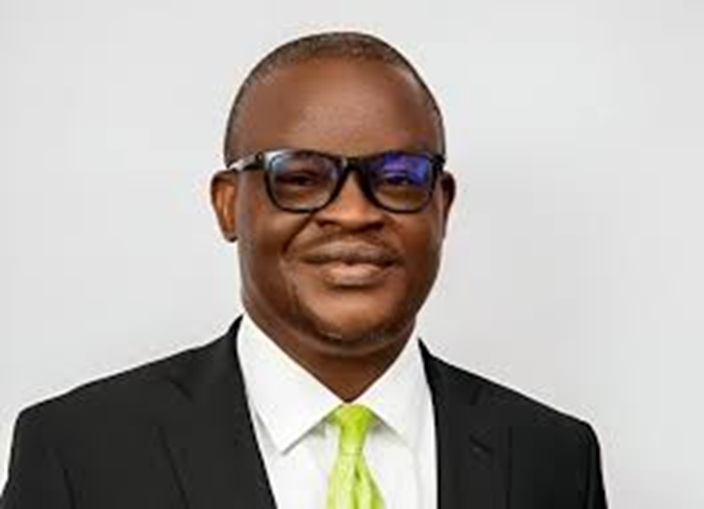
Managing Director and Chief Executive Officer of Unity Bank, Ebenezer Kolawole, described the development as a defining moment for the institution, adding that the complementary strengths and unique advantages of the Unity Bank and Providus Bank merger place the new entity on a strong footing to create and leverage opportunities in the market.
“This milestone underscores our commitment to building a stronger, more resilient bank that can deliver greater value to our customers and stakeholders. The merger with Providus Bank significantly enhances our capital base, operational capacity, and strategic positioning.
“We are confident that the combined institution will be better equipped to support economic growth and deliver innovative financial solutions across Nigeria.”
The Bank further clarified that, contrary to reports in certain sections of the media suggesting that the merger process had stalled, the transaction remains firmly on track. The necessary regulatory steps have been completed, with a few other steps only a matter of formality.
When completed, the Unity-Providus merger is expected to deliver a stronger, more competitive, and customer-centric financial institution — one with the scale, innovation, and reach to redefine the retail and SME banking landscape in Nigeria.

Warner Bros. Discovery (WBD) has reaffirmed its support for its merger agreement with Netflix, even as it temporarily reopens discussions with Paramount Global over a potential competing bid.

The media giant said it wants to hear Paramount’s “best and final proposal” and has opened a short window for renewed negotiations. At the same time, WBD is urging shareholders to reject Paramount’s current hostile offer and instead approve the Netflix deal.
WBD previously agreed to sell most of its studio and streaming assets including the Warner Bros. film studio and HBO to Netflix. Its cable networks, such as CNN, are expected to be spun off into a separate entity. The Netflix transaction values the studio and streaming assets at $27.75 per share.
Paramount, led by CEO David Ellison, responded by bypassing WBD’s board and offering shareholders $30 per share for the entire company, including CNN. According to WBD, Paramount recently signaled it could raise its bid to $31 per share if formal talks resumed, though it left open the possibility of going higher.
Despite having a signed merger agreement with Netflix, WBD has secured a limited seven-day waiver from the streaming giant to hold discussions with Paramount.
In a letter to Paramount’s board, WBD requested a definitive offer, effectively asking the company to present its highest binding bid.
WBD CEO David Zaslav said the company’s priority remains maximizing value and certainty for shareholders. He stated that Paramount has been repeatedly informed of weaknesses in its proposals and must now demonstrate whether it can present a superior and actionable offer.
Netflix, for its part, has sharply criticized Paramount’s bid, describing it as financially risky and raising concerns about its funding structure. The streaming company also pointed to potential regulatory scrutiny, citing foreign investment backing Paramount’s proposal, including capital linked to Middle Eastern royal families.
WBD emphasized that its board has not concluded that Paramount’s offer is superior to the Netflix merger. However, by reopening talks, the company is signaling it is willing to evaluate whether a higher bid could emerge.
The high-stakes battle for control of Warner Bros. Discovery continues to unfold, with shareholders set to vote on the Netflix transaction at a special meeting scheduled for March 20

By Blaise Udunze
Lagos prides itself as Africa’s commercial nerve centre. It markets innovation, fintech unicorns, rail lines, blue-water ferries, and billion-dollar real estate. Though with the glittering skyline and megacity ambition lies a parallel state, a shadow taxation regime run not from Alausa, but from motor parks, bus stops, and highway shoulders. They are called “agberos.” And for decades, they have functioned as Lagos’ unofficial tax masters.

What began as loosely organised transport unionism mutated into a pervasive and often violent system of extortion. Today, tens of thousands of commercial buses, over 75,000 danfos according to estimates by the Lagos Metropolitan Area Transport Authority, ply Lagos roads daily. Each bus is a moving ATM. Each stop is a tollgate. Each route is a revenue corridor.
Looking at the daily estimate from their operations, at N7,000 to N12,000 per bus per day, conservative calculations show that between N525 million and N900 million is extracted daily from drivers. Annually, that balloons toward N192 billion to N328.5 billion or more, money collected in cash, unreceipted, unaudited, unaccounted for. This illicit taxation on an industrial scale did not emerge in a vacuum.
The reality today is that to understand the scale of the problem, one must confront its political history. It was during the administration of Bola Ahmed Tinubu as Lagos State governor from 1999 to 2007, who is now the President, that the entrenchment of transport union dominance and motor park patronage deepened.
Under his political machine, transport unions became not just labour associations but mobilization structures, formidable grassroots networks capable of crowd control, voter turnout engineering, and territorial enforcement. In exchange for political loyalty, street influence translated into operational latitude.
Motor parks became power bases. “Area boys” became enforcers. Union leadership became politically connected. What should have been regulated associations morphed into revenue-generating franchises with muscle.
The system outlived his tenure. It institutionalised itself. It professionalised. It embedded into Lagos’ political economy.
And today, it thrives in broad daylight. Endeavour to visit Ajah under bridge, Ikeja under bridgeor Mile-2 along Ojo at 6:00 a.m. Watch drivers clutching crumpled naira notes. Observe men in green trousers and caps marked NURTW weaving between buses, collecting what drivers call òwò àrò, or evening as òwò iròlè money taken from passengers.
A korope driver shouts, “Berger straight!” His bus fills. The engines rumble. But before he moves, he must pay. If he refuses? The side mirror may disappear. The windscreen may crack. The conductor may be assaulted. The vehicle may be blocked with planks, and if they resist, the conductor or driver may be beaten. Movement becomes impossible. It is not optional.
This is common across Lagos, especially amongst drivers in Oshodi, Obalende, Ojodu Berger, Mile 2, Iyana Iba, and Badagry, and describes a three-layered structure ranging from street collectors, area coordinators, and union executives at each location. Daily targets flow upward. Commissions remain below.
One conductor disclosed he budgets at N8,500 daily for louts alone, excluding fuel, delivery to vehicle owners, and official tickets. Another driver says he parts with nearly N15,000 in total daily levies across routes.
Of N40,000 collected on trips, barely N22,000 survives before fuel. Sometimes, drivers go home with N3,500. Working like elephants. Eating like ants. The impact extends far beyond drivers.
Every naira extorted is transferred to commuters. An N700 fare becomes N1,500. A N400 corridor becomes N1,200 in traffic, and this is maintained even after fuel prices fall; fares rarely decline. The hidden levy remains.
Retail traders reduce stock purchases because transport eats profits. Civil servants watch salaries stagnate while commuting costs climb. Market women complain that surviving Lagos costs more than living in it.
This is not just a transport disorder. It is inflation engineered by coercion. Economists call it financial leakage, money extracted from the productive economy that never enters the fiscal system. Billions circulate annually without appearing in government ledgers. No roads are built from it. No hospitals funded. No schools renovated.
It is taxation without development. Small and Medium Enterprises form nearly half of Nigeria’s GDP and employ the majority of its workforce. In Lagos, they are under assault from informal levies layered on top of official taxes. Goods delivered by bus carry hidden transport premiums. Commuting staff face higher daily costs. Inflation ripples through supply chains.
The strike by commercial drivers in 2022 exposed the depth of resentment. Under the Joint Drivers’ Welfare Association of Nigeria (JDWAN), drivers protested “unfettered and violent extortion.” Lagos stood still. Commuters trekked. Appointments were missed. Businesses stalled.
Drivers alleged that half of daily income vanished into motor park collections.
Some who protested were attacked. Yet the collections continued.
Drivers insist daily collections at single corridors can exceed N5 million. Park chairmen allegedly control enormous cash flows. Uniformed collectors operate with visible confidence.
Meanwhile, Lagos State Government denies sanctioning any roadside extortion. Officials describe the tax system as institutionalised and structured. They promise reforms through Bus Rapid Transit, rail expansion and corridor standardisation. Yet the shadow toll persists.
Contrast this with Enugu State, where Governor Peter Mbah introduced a Unified e-Ticket Scheme mandating digital payments directly into the state treasury. Paper tickets were banned. Cash collections outlawed. Revenue flows traceable. Harassment criminalised.
Drivers in Lagos say openly that they should be given a single N5,000 daily ticket paid directly to the government, and end the chaos. Instead, they face multiple actors, agberos, task forces, and traffic officials, each demanding settlement.
The difference is in governance philosophy. One digitises and centralises revenue to eliminate leakages.
The other tolerates fragmentation that breeds shadow collectors. The uncomfortable truth is that the agbero structure is politically sensitive. Transport unions are not just labour bodies; they are political instruments. They mobilise during elections. They maintain territorial presence. They command street loyalty. In return, they are allegedly tolerated, protected, or absorbed into broader political structures as they turn into war instruments and a battle axe in the hands of the government of the day. The underlying reality is that the agbero who are the street-level power structures and the government authorities benefit from each other; the line between unofficial influence and official governance becomes unclear, making reform politically sensitive.
The issue is not merely about street disorder; it is about economic governance. Illicit taxation distorts pricing mechanisms, reduces productivity, discourages formalization of businesses, and weakens public trust. If citizens are compelled to pay both official taxes and unofficial levies, compliance morale declines. Why comply with statutory taxation when parallel systems operate unchecked?
Dismantling them is not merely administrative; it is political. Perhaps unbeknownst to the people, the cost of inaction is immense. Lagos aspires to be a 21st-century smart megacity under such an atmosphere. But investors notice informal roadblocks. Businesses factor in unpredictability. Commuters absorb unofficial taxes daily. Across Lagos roads, the script repeats “òwò mi dà,” meaning, give me my money.
Passengers plead with collectors to reduce levies so they can proceed. Conductors argue over dues before departure. Citizens feel hostage to a system they neither elected nor authorised.
Taxation, constitutionally, belongs to the state. It must be legislated, receipted, audited and deployed for the public good.
Agbero taxation is none of these. It is coercive. It is not transparent. It is extractive. Lagos has launched rail lines and BRT corridors. The Lagos Metropolitan Area Transport Authority continues transport reforms. Officials promise that bus reform initiatives will eliminate unregistered operators. But reform cannot be selective. You cannot modernise rail while medieval tolling persists on roads. You cannot preach digital governance while cash collectors flourish at bus stops. You cannot aspire to global city status while informal muscle dictates movement.
The solution is not episodic arrests. It is a structural overhaul: mandatory digital ticketing across all parks; a single harmonised levy payable electronically; an independent audit of union revenue; protection for drivers who resist illegal collections; and political decoupling of unions from patronage networks.
The agbero empire is not merely about bus fares. It is about how patronage systems, once empowered, metastasise into parallel authorities. What may have begun as strategic alliance-building two decades ago has matured into a shadow fiscal regime embedded in daily life.
The challenge is that Lagosians are left with no choice as they now pay twice, once to the government, once to the streets. And unlike official taxes, shadow taxes leave no developmental footprint. No bridge bears their name. No hospital wing testifies to their billions. No classroom is built from their collections. Only inflated fares. Broken windscreens. Frustrated commuters. And drivers who sweat under the sun, calculating how much will remain after everyone has taken their cut.
The agbero question is ultimately a governance question. Is Lagos governed by law, or by tolerated coercion? Is taxation a constitutional function, or a roadside negotiation? Is political convenience worth permanent economic distortion? What is absolutely known is that the structure has a political backing and what politics created, politics can dismantle.
Unless meaningful reform takes place, Lagos will continue to remain a megacity with a shadow treasury, where movement begins not with ignition, but with payment to men who answer to no ledger without any tangible returns. This is to say that every danfo that moves carries not just passengers, but the weight of a system that taxes without law, collects without accountability and punishes the very people who keep the city alive.
Blaise, a journalist and PR professional, writes from Lagos and can be reached via: [email protected]

Ecobank Nigeria Fully Repays $300m Eurobond Notes

Chams Carves Out Subsidiary to Support Africa’s Digital Transformation

BoI Secures CBN’s Approval for Non-interest Banking Operation

Nigeria, South Africa Drive Stablecoin Spending in Africa

Africa’s Active Data Centres’ Capacity on Back Foot, Despite Investment Push
Nigeria’s 9 Top FinTech Firms Valued at $10.6Bn in January 2026

Firm Detected a Fivefold Surge in QR Code Phishing Attacks in the Second Half of 2025

DG NCC Tasks University Dons on Research Commercialization, IP Management to Build Global Competitive Ecosystems

Kaspersky Launches OT Calculator to Align Cybersecurity Investments with Business Goals

Firm Detected a Scam Exploiting OpenAI’s Teamwork Features




 News3 days ago
African Leaders Highlight Africa’s AI Ambitions

 General News3 days ago
NDPC Orders Probe into Temu over Alleged Data Privacy Breaches

 Telecom3 days ago
MTN, BUA, Dangote & Other Industry Giants Triumph at NGX Made of Africa Awards

 Telecom3 days ago
X Suffers Global Outage, Millions Barred from Access

 Telecom2 days ago
Terra Moves to Expand in African Drone Sector, Secures $22m Funding

 News3 days ago
LG Nigeria Begins Nationwide Search for Oldest Working TV, Rewards Loyalty with AI QNED Upgrade

 Telecom3 days ago
MTN CIO Urges Africa to Lead Fourth Digital Revolution

 Telecom3 days ago
Nigeria’s Internet Users Hit 148.2m Amid Data Cost Surge