

General News
OnePipe Launches Utility Payment Scheduling to Ease Consumer Stress


In a bid to address growing consumer stress over missed utility payments, Nigerian fintech company OnePipe has introduced a new payment scheduling feature on its PaywithAccount platform, enabling users to automate essential payments such as electricity, airtime, and mobile data subscriptions.

The launch follows a recent survey by financial inclusion advocate EFInA, which revealed that nearly half of Nigerian adults have missed at least one critical utility or service payment in the past year. The findings underscore the need for more reliable and user-friendly payment systems.
The new feature allows users to automate recurring payments directly from their existing bank accounts via paywithaccount.com, eliminating the need for manual reminders and reducing the risk of service disruptions, penalties, and financial anxiety.
“Managing monthly payments has become a significant source of stress for many Nigerians,” said Akin Olunloye, Product Manager at PaywithAccount. “This scheduling feature is a direct response to the need for automation. Our goal is to help consumers streamline their payments reliably and consistently.”
Early adopters have praised the feature for its convenience and reliability.

Chinyere, a lawyer based in Lagos, shared: “Missing electricity payments has always been a hassle in my household. Automating with PaywithAccount has eliminated that completely. I get notifications and receipts immediately through WhatsApp.”
Sodiq, a digital marketer, added: “I handle various payments every month for family and business purposes. Automating these transactions means I never worry about disruptions, even if I’m occupied or traveling.”
The scheduling feature currently supports major electricity distribution companies including Eko, Ikeja, Abuja, and Ibadan, as well as all primary mobile operators—MTN, Airtel, Glo, and 9Mobile. OnePipe says additional categories such as cooperative society dues and insurance premiums will be added soon.
With this launch, OnePipe reaffirms its commitment to supporting the financial well-being of Nigerians by offering intuitive, secure, and relevant digital payment solutions that integrate seamlessly into everyday life.


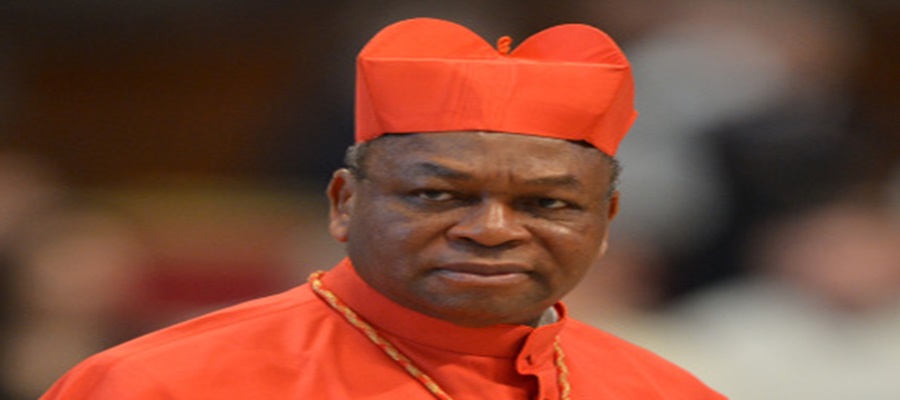
Sunday Dare, special adviser to the President on Media and Public Communication, has faulted the criticism directed at President Bola Tinubu and his economic policies by John Cardinal Onaiyekan, Archbishop Emeritus and the Catholic Bishops’ Conference of Nigeria (CBCN).

Sunday Dare, special adviser to the President on Media and Public Communication,
During an interview with Arise TV, Onaiyekan, who had led Catholic Bishops on a visit to the President, revealed details of their discussion.
“When the nation is bleeding, you cannot expect a polite meeting with the Head of State. We told him the economy is not helping our poor people; he told us the economy is doing fine. Frankly speaking, he told us quite clearly that he did not agree with us,” Onaiyekan said.
He added, “We didn’t expect him to agree with us. We have done our duty, we have delivered our message, and we have a feeling that somehow, along the line, somebody will show him a few of the things we said.”
Reacting, Dare stated that while Onaiyekan and his cohort choose the easy path of populist lamentation, the facts of President Tinubu’s administration reveal a relentless, methodical restoration of the Nigerian state. He said that by courageously removing the petrol subsidy and unifying the foreign exchange windows within his first days in office, President Tinubu ended decades of economic illusion.
“State and local governments now receive record-breaking monthly allocations from the Federation Account Allocation Committee (FAAC), enabling governors—including those in the Catholic heartlands—to pay salaries, fund local infrastructure, and service pensions promptly. The debt service-to-revenue ratio has been dramatically slashed to under 65%, pulling Nigeria back from the edge of default and restoring international credit rating confidence, he said..
According to Dare, the administration did not merely reform numbers; it invested in human dignity. He noted that through the landmark establishment of the Nigerian Education Loan Fund (NELFUND), millions of indigent students across tertiary institutions now access interest-free loans for tuition and stipends. “Academic calendar stability has been restored, ending the agony of prolonged university strikes that once paralysed national development,” he said.
The presidential spokesperson revealed that to counter global inflation and local supply shocks, the Tinubu administration deployed emergency agricultural interventions that involve direct distribution of hundreds of thousands of metric tons of grains and fertilisers to smallholder farmers nationwide, the multi-billion naira investments in dry-season farming, mechanisation hubs, and irrigation infrastructure aimed at achieving permanent food self-sufficiency.
He said to understand the weight of President Tinubu’s achievements, one must first measure the abyss Nigeria faced on the eve of his inauguration. He recalled that in May 2023, the Nigerian nation was hovering on the precipice of total economic collapse and structural paralysis.
“The unsustainable petrol subsidy regime was draining trillion-naira holes into the national treasury monthly, enriching a parasitic cabal of smugglers and middlemen while starving sub-national governments of basic infrastructure funding. A fraudulent multi-tiered foreign exchange system had turned the Central Bank of Nigeria into an arbitrage engine, crippling legitimate manufacturing, scaring off foreign direct investment, and burning through scarce external reserves.
“The nation’s debt service-to-revenue ratio had spiralled to an unsustainable 97 per cent, meaning Nigeria was literally borrowing money to pay interest on past loans while operational governance ran on fiscal fumes. This was the broken, bleeding nation handed over to President Tinubu. It required bold surgery, not diplomatic sedation. Yet, when the President applied the sharp scalpel of structural reform, armchair critics and political opponents decried the incision while ignoring the terminal tumour it removed,” he said.
General News
Lenacapavir, HIV Injectable Drug Offers Pregnant, Lactating Mothers 100 Percent Protection – Study

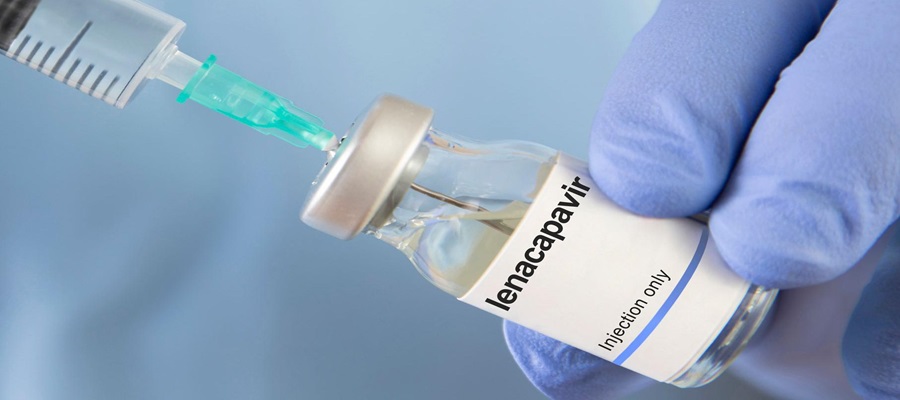
Lenacapavir, injectable HIV prevention drug, has been found to provide 100 percent protection against HIV infection among pregnant and breastfeeding women using it as pre-exposure prophylaxis (PrEP).

This is according to sub-study of the landmark clinical trial evaluating the safety and efficacy of the twice-yearly injectable HIV prevention drug.
The Phase 3 PURPOSE 1 trial results, published in the Lancet Medical Journal last week and presented at the ongoing 2026 International AIDS Conference Rio de Janeiro, Brazil, show the injection to be safe for use in pregnancy.
While Lenacapavir was previously studied and demonstrated high efficacy and safety as PrEP in cisgender women, its use during pregnancy and lactation, when women are disproportionately vulnerable to HIV acquisition, was not described in the initial studies that formed the World Health Organisation’s global recommendation for the drug.
Now, in the latest study, Dr Flavia Matovu Kiweewa, a senior Research Scientist at MUJHU, said they checked for drug traces in breast milk and exposure to an unborn baby and found drug exposure levels across all trimesters and postpartum were comparable to non-pregnant participants, confirming no dose adjustments are needed for this group.
Among 5345 women enrolled between Sept 28, 2021, and Sept 15, 2023, 487 participants, 184 allocated to Lenacapavir and 303 allocated to oral PrEP, had one or more pregnancies, resulting in 509 total pregnancies with 512 pregnancy outcomes, including three sets of twins.
While the study involved women aged between 16 and 26 years in both South Africa and Uganda, 80 percent of all the pregnancies recorded were in Uganda. Results show Lenacapavir was present in breast milk, but exposure in breastfed infants was minimal. Drug concentrations were measured in the blood of the mothers, breast milk, and breastfed infants’ blood.
Kiweewa said thatthese results are a breakthrough as pregnant and postpartum women face elevated vulnerability of HIV acquisition, yet historically they have been excluded from early prevention trials, leading to years-long evidence gaps.
The study compared twice-yearly Lenacapavir with daily oral PrEP in women who were not pregnant at enrollment.
But, unlike previous studies, women who got pregnant while participating in the study were, for the first time, left on their allocated study drug.
Now, because of the new findings, Kiweewa said at one of their study sites in Mityana District Hospital, they have decided to dedicate seventy percent of their drug supplies to women.

Police in Abuja have uncovered a criminal group making fake diplomatic and government number plates.

Ahmed Sanusi, commissioner of Police FCT, stated this during a press briefing on Friday.
He explained that criminals use these fake plates to dodge security checks and enter restricted areas.
The investigation started soon after Sanusi took office.
He noticed too many unauthorized cars driving around with official government and diplomatic tags.
“I immediately ordered a comprehensive investigation into this disturbing trend,” Sanusi said. He noted that these individuals use the plates as a cover to commit crimes and avoid arrest.
The police have already arrested several people caught using the fake plates.
They have also figured out who is making them.
The manufacturers operate outside Abuja, and police are actively hunting them down.
Sanusi kept their names secret so they would not flee.
He stressed that this is a highly profitable illegal business.
Buyers pay between N500,000 and N1.7 million for a single fake plate.
“This will tell you that they are making such huge expenditure because they have an agenda,” Sanusi explained.
“Now they will face punishment that is bigger than both the cost they incur and the agenda they are planning.”
The commissioner urged residents to report any cars with suspicious diplomatic plates.
He reminded the public that real diplomatic tags follow a very specific format.
A diplomatic number plate in Nigeria is a special vehicle identification tag issued to foreign embassies, high commissions, and accredited international diplomats.

FCT Court Awards Ex-Customers N15m against Stanbic IBTC over Data Privacy Breach

CBN Exposes over 13,000 BVNs Tied to Fraud as Banks Tighten Security

Atte, Nigerian Develops AI Algorithm for Hair Transplants

Dare Tackles Onaiyekan over Criticism of Tinubu, Says Economic is Working

FG to Abolish Subsidies in Power Sector in 2027 – Minister

NRC, Ponzi Scheme Collapses Resulting Loss of Billions of Naira

EFCC Busts NIS Visa Overstay Racket, Uncovers N700m in an Account

From Scarcity to Scale: What Africa Can Learn from India’s Agricultural Transformation

Tokenization, Blockchain Technology will Transform Financial Institutions – IMF

BON Establishes Six Ad Hoc Committees to Modernize Broadcasting




 E-Financial3 days ago
Access Bank Debunks Shutdown Report, Vows Action against Perpetrators

 E-Business2 days ago
How Temu Helped a Madagascan Vanilla Family Business Sell Direct to Consumers Across Europe

 Broadcasting2 days ago
Davido Shares Past Suicidal Thoughts, Drops Oriadé Album

 General News2 days ago
MTN Nigeria Posts N707.5bn H1 Profit, Declares N26 Interim Dividend

 E-Business2 days ago
82% of Organizations Concerned about AI Risks Even as Adoption Accelerates – Survey Reveals

 News2 days ago
AfCFTA Urges Africa to Stop Exporting Raw Materials

 News2 days ago
Cisco Explores AI for Nigeria Farmers

 E-Financial3 days ago
CBN Orders N19Bn Refunds to Customers as Complaints Rise