

News
Our Youth and the Protests, Looking Beyond End SARS

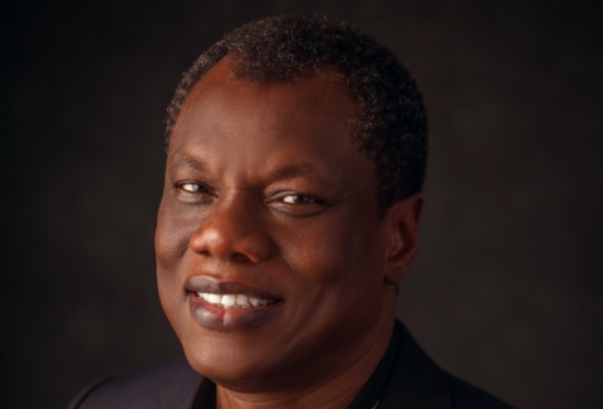
By Austin Okere
The youth are not our enemies; let us remember this before we do anything rash such as using brute force to quell their protests. They are our children that have come of age.

Their flaws are our failings as parents. All over the world, the youth have broken ranks with the earlier generation when they feel that their future is being mortgaged, mostly through excessive greed of the “elders”.
The wind of change has been blowing for quite a while. After the global financial crisis in 2008 there was the Occupy Wall Street protests in the America. Occupy Wall Street (OWS) was a protest movement against economic inequality that began in Zuccotti Park, located in New York City’s Wall Street financial district, in September 2011. It gave rise to the wider Occupy movement in the United States and other countries.
Thereafter came the Extinction Rebellion, a global environmental movement with the stated aim of using non-violent civil disobedience to compel government action to avoid tipping points in the climate system, biodiversity loss, and the risk of social and ecological collapse.
Young Greta Thunberg, a Swedish environmental activist gained international recognition as the face of the protests for promoting the view that humanity is facing an existential crisis arising from climate change.
Quite recently, there was the Black Lives Matter protests which started in America and gained momentum, after a white policeman brutally murdered a black man, George Floyd, by kneeling on his neck for 8 minutes and 46 seconds. The #BlackLivesMatter movement is a Global Network that builds power to bring justice, healing, and freedom to Black people across the globe.
The Arab Spring, closer to home is indelibly etched in our minds. It was sparked by the first protests that occurred in Tunisia on 18 December 2010 in Sidi Bouzid, following Mohamed Bouazizi’s self-immolation in protest of Police Corruption and ill treatment. It escalated into a series of anti-government protests, uprisings, and armed rebellions that spread across much of the Arab World in the early 2010s.
The past two years have indeed been years of discontent, with protests demanding the removal of corrupt governments, better living standards, greater freedoms and more rights, toppling leaders from Bolivia to Sudan, with the latest being the forced resignation of the President of Kyrgyzstan after weeks of mass protests. The leaders of Bolivia, Algeria, Lebanon, Iraq and Sudan have been pushed out as a consequence.
Youth Protests across the world aiming to take back their future is like a moving train. Stand in front of it and it will crush you. Remain on the platform and it will leave you behind; or you can hop on it for a ride into a future of social Justice and good governance.
Truth be told Nigeria’s case is not very different, even though in fairness, it did not start with this regime. It is an endemic problem that has assumed exponential proportions. SARS (Special Anti-Robbery Squad) and the injustice they perpetuate with characteristic impunity is a microcosm of the Nigerian situation.
In June 2018, CNN announced that Nigeria had overtaken India as the country with the largest number of people living in extreme poverty, with an estimated 87 million Nigerians, or around half of the country’s population, thought to be living on less than $1.90 a day.
Data from the National Bureau of Statistics reveals that Nigeria’s unemployment rate as at the second quarter of 2020 was 27.1%, indicating that about 21.7 million Nigerians remain unemployed. The data also reveals that the worst-hit are Nigerian Youths (between the ages of 15 and 25 years) with over 13.9 million currently unemployed.
With the largest economy in Africa (GDP of $447b in 2019 compared to South Africa $359b and Egypt $303b), and despite her abundant natural resources and huge revenue from oil and gas exports of $32.6 billion in 2018 (according to eiti.org) it seems that Nigeria is experiencing growth without shared prosperity.
The gap between the rich and poor is ever increasing, as is the gap between the “in Crowd” and those left behind. Treasury looting and stashing hoards abroad has not helped the deficit in infrastructure and the enabling environment for creating Jobs. According to TRT World, Every year, Africa loses more than $88b due to illicit capital flight, amounting to 3.7 percent of the continent’s GDP of $2.6trillion.
Our youth are forced to take to immigration – legal and illegal, sometimes risking dangerous trails in the Sahara desert and across the Mediterranean Sea in rickety rafts in pursuit of survival. Nigeria has been a “country of huge potential” since independence 60 years ago. When will this giant wake up from her slumber?
It is good that our youth have found Purpose behind a common goal. The strategy, conduct and prosecution of the peaceful protests has so far been remarkable. Unlike previous ones, this Youth Movement has not been punctured by tribalism, religion nor compromised by “leaders”.
The youth have stood as one, behind a vision of a better country with shared prosperity and social justice. The youth have finally proved that they are not lazy, clueless and entitled. To buttress this, PayStack, a Fintech company founded in 2016 by Nigerian Youths Shola Akinlade and Ezra Olubi has been acquired by global fintech giant Stripe, in the biggest M&A deal in Nigerian corporate history.
Just recently, Interswtich, another Youthful Nigerian Company reached unicorn status after Visa acquired a minority equity stake in the firm, making her one of the most valuable African fintech businesses with a valuation of $1 billion,”.
CWG Plc’s significant contribution to Financial Inclusion is another example. Diamond bank (now acquired by Access Bank) with 7m customer accounts after 23 years was able to add an additional 6m customers, mostly from the Bottom of the Pyramid in just one year after the launch of the Diamond Yello Account, Powered by CWG and MTN.
It is about time that the youth invite themselves to the political table, because it is about their future. It is imperative to get involved in politics right from the grassroots, where the impact is most felt. It is through such initiatives that we can ensure quality and inclusive education and healthcare for the masses while create an enabling environment to attract businesses and create jobs.
It is from here that they can ensure that the voice of democracy rings out loud throughout the land (and not one political godfather installing his stooges and milking the state treasury). #EndSARS was just a catalyst, it is imperative to now look #BeyondEndSARS and focus on the broader goals of social justice and equity.
The Youth have drunk deep of this cup of knowledge and empowerment, and there is no turning back. Even though the protests end in the streets, they will be carried deep in their hearts. This movement is by no means to a destination but rather a journey of sustainable nation building. They will begin to ensure that the demand side of governance is deeply entrenched and that the voice of democracy will always be heard loud and clear at every ballot.
Gone will be the days when they were used as thugs during elections and dumped soon after, and the days when they disenfranchised themselves from apathy to the pollical process and the attendant requirement of probity from elected officials. This is just the beginning; the best of the Nigerian Youth is yet to come – Finally there is hope for our dear country.
Austin Okere is the Founder of CWG Plc, the largest security in the technology sector of the Nigerian Stock Exchange, and Entrepreneur-in-Residence at CBS, New York. Austin also serves on the Advisory Board of the Global Business School Network based in Washington, and on the World Economic Forum Global Agenda Council on Innovation and Intrapreneurship. Austin is a Non-Executive Director at Globus Bank and serves on the Board of Trustees of the Risk Management Association of Nigeria (RIMAN). Austin now runs the Ausso Leadership Academy focused on Business and Entrepreneurial Mentorship.


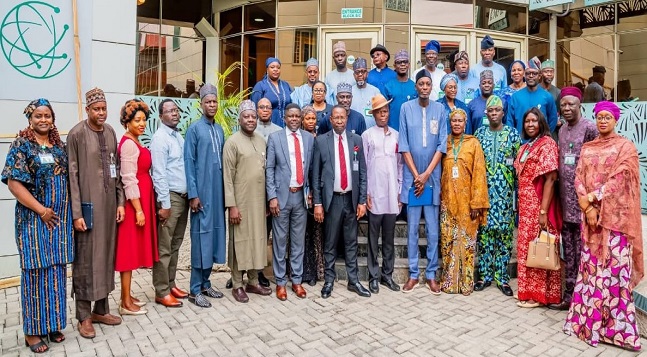
The National Information Technology Development Agency (NITDA) has reinforced its commitment to advancing Nigeria’s digital transformation agenda through strengthened collaboration with key strategic institutions, as it hosted the Director General of the National Institute for Policy and Strategic Studies (NIPSS), Professor Ayo Omotayo, alongside participants of the Senior Executive Course (SEC) 48, 2026.

The visit, which builds on an earlier strategic study tour, provided a platform for in-depth engagement on the role of digital innovation in driving sustainable economic growth, with particular focus on the Orange Economy.
Representing the Director General of NITDA, Kashifu Inuwa CCIE, the Director of Stakeholder Management and Partnerships, Dr Aristotle Onumo, highlighted the Agency’s commitment to fostering a vibrant digital ecosystem through inclusive policies, strategic partnerships, and capacity development initiatives.
“NITDA is committed to creating an enabling environment where innovation can thrive by bringing together government, private sector, academia, and creatives to drive Nigeria’s digital economy,” he stated.
Inuwa underscored the growing importance of the Orange Economy, describing it as a critical driver of innovation and economic value through intellectual property. He identified sectors such as digital content creation, film, animation, and digital art as key contributors to national development.
“The Orange Economy represents a powerful opportunity to transform our rich cultural heritage and creativity into sustainable economic growth,” he noted.
He further highlighted Nigeria’s unique advantage, particularly its youthful and creative population, while calling for stronger collaboration among stakeholders to fully harness the sector’s potential.
“With our youthful population and rich cultural assets, Nigeria is well-positioned to become a global leader in the Orange Economy if we deepen collaboration and investment across the ecosystem,” he added.
During the engagement, NITDA also presented its strategic initiatives aimed at supporting the digital and creative sectors, including digital infrastructure development, promotion of digital literacy, and implementation of policies that enable startups and innovators to scale.
Addressing challenges facing the sector, Inuwa pointed to issues such as limited access to funding, infrastructure gaps, weak intellectual property protection, and ecosystem fragmentation, while emphasising the need for coordinated action.
“Addressing challenges such as funding gaps, infrastructure deficits, and intellectual property protection is critical to unlocking the full potential of Nigeria’s creative economy,” he said.
The Agency reiterated its target of achieving 70 per cent digital literacy by 2027, noting that ongoing programmes are equipping millions of Nigerians with essential digital skills, including those in underserved and informal sectors.
In his remark, Professor Omotayo described the visit as an important opportunity to deepen understanding of how digital technologies are reshaping economic sectors, particularly the creative industry. He noted that the insights gathered would contribute significantly to policy recommendations aimed at strengthening Nigeria’s economic framework.
Participants of the SEC 48 programme engaged actively during the session, raising questions on capacity development, access to tools, and frameworks for protecting digital content. NITDA highlighted its ongoing collaborations with industry stakeholders to provide training, innovation hubs, and access to digital tools for young Nigerians.
The engagement concluded with a renewed commitment from both NITDA and NIPSS to strengthen collaboration in research, policy development, and capacity building, aimed at positioning Nigeria as a globally competitive force in the digital and creative economy.

Nigeria Revenue Service (NRS) has assumed responsibility for collecting mineral royalties from mining operators nationwide, following new tax laws effective January 1, 2026.

NRS
The shift emerged from a Thursday meeting between Solid Minerals Development Minister Dele Alake and NRS Chairman Dr. Zacch Adedeji. Their joint statement, endorsed by both, confirms NRS now administers all federally collectible revenues, including royalties.
Enacted by President Bola Tinubu on June 26, 2025, the Nigeria Tax Laws 2025 empower this transition. The Ministry of Solid Minerals Development remains a key partner, supplying pricing data, geological insights, and sector coordination.
NRS Special Adviser Dare Adekanmbi’s statement outlines collaborative steps: a nationwide sensitization program for operators on filing and payments; development of a digital royalty system; and regular joint technical sessions to address issues.
Both agencies pledge orderly, transparent implementation to boost the mining sector. Operators must comply with obligations and join upcoming programs.
The move aims to streamline revenue collection while fostering mining growth.
Microsoft has rolled out a new set of features for its Microsoft 365 Copilot platform, including tools for complex, multi-step work and deeper research tasks, as competition in workplace artificial intelligence (AI) intensifies.

The update introduces Copilot Cowork, a capability aimed at handling long-running tasks across Microsoft 365 applications.
The feature is being made available through the company’s Frontier programme, which typically gives early access to experimental tools.
Microsoft is also integrating technology linked to Claude – an AI model developed by Anthropic –into Copilot, signalling a broader shift toward using multiple AI systems within a single product rather than relying on a single model.
Jared Spataro, chief marketing officer for AI at Work at Microsoft, says the company is positioning Copilot as a system embedded directly into workplace software, rather than a standalone tool.
“Microsoft 365 Copilot is your AI for work,” he says, adding that it draws on multiple AI models and is integrated into existing workflows.
Alongside this, Microsoft has upgraded its Researcher feature, which is designed to analyse information from multiple sources and generate structured reports.
A new “Critique” function separates the drafting and review process between different AI models – one generates an initial response, while another evaluates and refines it.
The company says this approach improves output quality, with Researcher showing gains on its internal benchmark for accuracy, completeness and objectivity.
Another addition, called Model Council, allows users to compare outputs from different AI models side-by-side, highlighting differences in responses and reasoning.
The updates form part of what Microsoft calls “Wave 3” of Copilot, as it pushes to embed generative AI deeper into enterprise software. The move reflects a wider industry trend towards combining models from multiple providers, including OpenAI and Anthropic, to improve performance and reliability.

Union Bank Looted: How Former Directors Gambled with Billions and Nearly Destroyed a National Bank

N4.65 Trillion in the Vault, but is the Real Economy Locked Out?

FG, Others Say Nigeria Wastes 38m Tonnes of Food Annually

Ecobank Assures of Seamless Easter Banking Services

Anchor Gets Nigerian, Canadian Licences as Transactions Crosses $2.5Bn

Spotify’s Loud & Clear Report Reveals Over ₦60Bn Revenue for Nigerian Artists in 2025

Madonna University Taps Tech Guru Adote for Strategic Board Role

China Threatens to Shut Nigeria’s Satellite Over $11.44m Unpaid Debt

Healthcare Under Attack: Why Cybersecurity is Now Critical Care

Police Says Victims Enable Cyber Attacks Out of Ignorance




 E-Financial2 days ago
UBA Beefs Up Mobile App Security to Stop Fraudulent Debits, Withdrawals

 Telecom2 days ago
Bharti Airtel Crosses 650m Users

 General News2 days ago
FG Orders Installation of 5000 CCTV Cameras for Surveillance in Plateau

 E-Financial2 days ago
Ghana Makes History as First African Country to Integrate Payment National Identity Card

 E-Financial2 days ago
CBN Plans New Payment Systems Vision

 E-Financial2 days ago
Flutterwave Secures Nigerian Banking License, Boosts Financial Autonomy

 E-Business2 days ago
Nigeria Mulls National Cybersecurity Council

 Broadcasting2 days ago
Nigeria’s Joeboy Headlines Easter Edition of African Voices