

/home/kenneth/web/nigeriacommunicationsweek.com.ng/public_html/wp-content/themes/zox-news/parts/post-single.php on line 153
">
Warning: Undefined array key 0 in /home/kenneth/web/nigeriacommunicationsweek.com.ng/public_html/wp-content/themes/zox-news/parts/post-single.php on line 153
Warning: Attempt to read property "cat_name" on null in /home/kenneth/web/nigeriacommunicationsweek.com.ng/public_html/wp-content/themes/zox-news/parts/post-single.php on line 153
Over 1.65m Students Benefit in Microsoft’s Imagine Cup

Microsoft Nigeria, devices and services giant, has called on Nigerian students to participate in its annual Imagine Cup student technology competition aimed at encouraging students to create imaginative technology solutions that can solve some of the world’s toughest problems.
Now in its 12th year, the competition has grown to become the world’s global student technology competition with more than 1.65 million students from more than 190 countries having participated in the Microsoft Imagine Cup annual competition from inception.
“If you are a student and sixteen years or older as of 10 September 2013 and are or will be enrolled as a student of a University at any time between 1 January 2013 and 31 July 2014, then you are eligible to compete for the competition,” Microsoft said.
Students have until 12.00am, April 10th, 2014 to register for this year’s competition in our three main competitions — Games, Innovation, and World Citizenship. A team is made up to four eligible students and a mentor, who advises on the teams’ project.
Each competing team will make an original technology project from start to finish: come up with a great idea, make a plan, build a project, and submit it to Imagine Cup.
It can be either purely software or a combination of software and hardware.
It needs to use either Windows, Windows Phone, or Windows Azure.
In addition to the vast opportunities presented from competing on the world stage at the technology competition, participants in Imagine Cup stand to win cash prizes and grants.
The National Finals selects the best teams from Nigeria who then enter the World Semifinals. The very best of team sat the World Semifinals in-turn wins a trip to Seattle in July 2014 for the Imagine Cup World Finals.
Last year’s winning application, CardioLife is a health care solution which helps prevent heart attacks by monitoring heart readings on the fly via the Microsoft Windows Phone.
It also provides a rehabilitation programme for stroke patients using the Kinect sensor.
The application, developed by Team Life Saver comprising of two students each from the
Obafemi Awolowo University (OAU) , Ile-Ife and the Ladoke Akintola University of Technology (LAUTECH), Ogbomosho.
It is a clear indication that Nigeria is blessed with talents and Microsoft will continue to provide the platform for Nigerian students to innovate.
In a statement made by Mr. Shina Oyetosho, director, Developer and Platform Evangelist, Microsoft Anglophone, West Africa, “Team Life Saver did the country and continent proud last year, and we are hoping to see this year’s entries follow in their footsteps. There are so many challenges faced by our country, and we believe that the solutions to many of these problems lie in the power of technology and the potential imagination of our youths. We hope to see a record number of entries for this year’s competition.”
To accommodate the anticipated number of entries the national finals will hold in Lagos on April 24th2014 while the Worldwide Finals, previously hosted in Spain, Brazil, Japan, India, Korea, France, Egypt, Poland, USA, Australia and Russia goes back home to Seattle,USA in July 2014.
Interested applicants are to register for the competition on imagine cup web.


Warning: Undefined array key 0 in /home/kenneth/web/nigeriacommunicationsweek.com.ng/public_html/wp-content/themes/zox-news/parts/post-single.php on line 493
Warning: Attempt to read property "cat_ID" on null in /home/kenneth/web/nigeriacommunicationsweek.com.ng/public_html/wp-content/themes/zox-news/parts/post-single.php on line 493

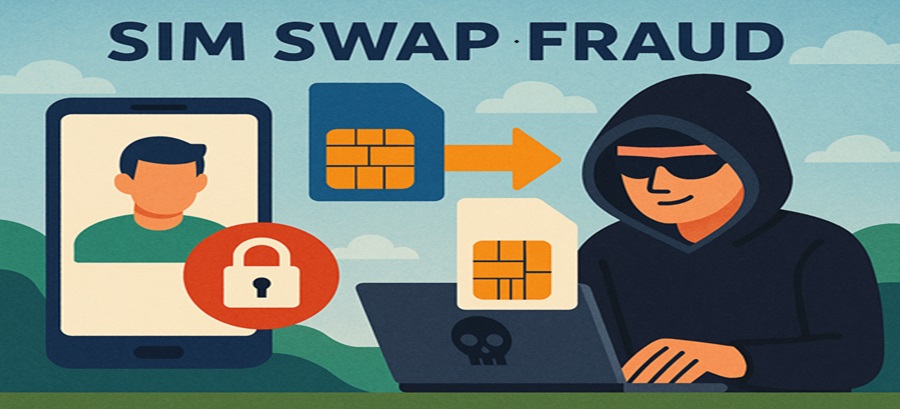
Titilayo Ibrahim, Nigerian businesswoman, has shared a harrowing experience of how she narrowly escaped imprisonment after a SIM card she purchased was linked to a N50 million kidnapping and murder case.

In an interview with BBC Yoruba shared on Facebook, Ibrahim narrated how a routine business transaction quickly turned into a terrifying ordeal.
According to her, the nightmare began on October 16, 2025, when a purported customer contacted her business line to purchase nightwear.
The caller, a woman, claimed her own phone was faulty and that she was using her husband’s device.
After selecting two pieces, the woman asked for directions for pickup. Ibrahim shared the location of her estate junction, but upon arrival, she was met by two men who identified themselves as police officers and immediately arrested her.
The officers accused Ibrahim of being connected to a major kidnapping operation.
They alleged that the phone number she was using had been involved in a January 2024 incident where a N50 million ransom was collected before the victim was brutally murdered.
Ibrahim desperately tried to explain that the number was innocent, stating that she had only purchased the SIM card in April 2025—months after the crime took place—and used it strictly for her MiFi device.
The officers, reportedly led by Inspector Dauda Adamu of the Force Intelligence Department (FID) in Abuja, claimed that one of the phone numbers linked to her National Identification Number (NIN) was tied to the crime.
They took her to the State Criminal Investigation and Intelligence Department, and she faced intense harassment and the threat of being detained in Akure and transferred to Abuja.
In a bid to clear her name, Ibrahim and the officers visited an Airtel office.
On October 17, 2025, the telecommunications company officially confirmed from their records that the disputed SIM was indeed purchased and activated in April 2025.
“Even after confirming it at the network office, they still didn’t believe me. They harassed me and almost sent me to prison for what I know nothing about,” Ibrahim recounted.
Despite the undeniable evidence from the network provider clearing her of any involvement, the police still confiscated her phones, took them to Abuja, and instructed her to report there.
Her revelation has sparked widespread outrage and concern online.
Many Nigerians expressed shock at the incident, pointing out the growing dangers and security risks associated with telecommunication companies recycling inactive phone numbers or the hazards of inadvertently purchasing pre-registered SIM cards.
The incident highlights the terrifying reality of how easily innocent citizens can become entangled in complex criminal investigations.

Senate on Tuesday approved the fresh $6 billion loan request forwarded to the lawmakers by President Bola Tinubu.

Lawmakers approved the fresh loan on the same date the request letter was read by Godswill Akpabio, senate president.
The Senate approved the loans following the presentation and consideration of the report by Senator Aliyu Wamakko, chairman, Senate Committee on Local and Foreign Debts.
President Tinubu had written to the Senate seeking approval to borrow a total of $6 billion to finance key government projects and address budgetary gaps.
The requests were contained in two separate letters addressed to Godswill Akpabio, president of the Senate, and read during Tuesday’s plenary.
In the first letter, the President requested approval to obtain a $5 billion loan from Abu Dhabi Bank.
According to the President, the facility will be used to cover the nation’s budget deficit and support debt financing, among other fiscal obligations.
The request forms part of the Federal Government’s efforts to stabilise public finances and sustain ongoing government programmes.
In a separate communication, Tinubu also sought approval to secure a $1 billion UK Export Finance loan facility from London Citi Bank.
The loan is intended for the rehabilitation of key port infrastructure, including the Lagos Port Complex and Tin Can Island Port.
The President said the project aims to address critical infrastructure deficiencies in the country’s maritime sector
According to him, the rehabilitation will help improve efficiency, enhance safety standards, and support Nigeria’s efforts to diversify its economy beyond oil.
He added that the initiative would also strengthen Nigeria’s position as a regional trade hub.
Both requests have now been considered and approved by the Upper Legislative Chamber.
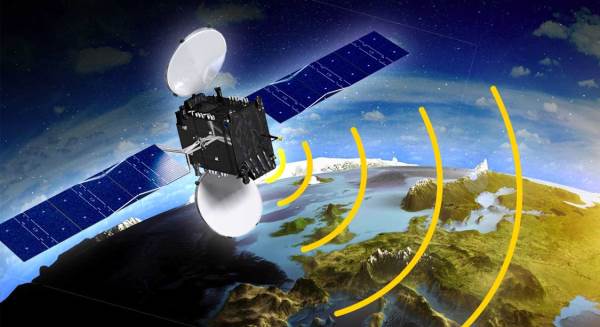
Federal government has fixed 2028 and 2029 for the launch of two communication satellites, NIGCOMSAT-2A and NIGCOMSAT-2B, as part of efforts to strengthen security and expand digital connectivity.

The government will be committing over $22 billion on the ambitious space-led growth agenda focused on new satellite launches, increased industry revenue and expanded broadband access in underserved communities.
At the opening of the 2026 Nigerian Satellite Week in Abuja, Dr Bosun Tijani, minister of Communications, Innovation and Digital Economy, confirmed the government’s approval for the acquisition of two new satellites—NigComSat 2A and 2B, describing the move as a “defining commitment” to national development, digital sovereignty and economic competitiveness.
Also, Mrs Jane Nkechi Egerton-Idehen, managing director of Nigerian Communications Satellite Limited (NigComSat), noted that the projects have moved beyond procurement to the execution stage.
She said the satellites are designed to enhance intelligence gathering, surveillance, and connectivity across Nigeria and neighbouring countries, particularly in support of security operations.
“For 2A and 2B, we have started the process. We have closed the tender and are now back into the financing and implementation stage. 2A is built to come up in 2028, and 2B for 2029.
“When they are up and running, they are expected to provide security within the borders and neighbouring countries. They will support the security agencies because data collection and intelligence in real time is important. Satellites like communication satellites allow that, irrespective of where they are,” she said.
On his part, Tijani, said the satellite programme forms part of a broader government strategy to deepen digital infrastructure nationwide.
According to him, the initiative complements ongoing investments in fibre-optic expansion and telecommunications infrastructure, while extending connectivity beyond Nigeria’s borders.
“The President’s approval of NIGCOMSAT-2A and 2B demonstrates a clear commitment to building the future. These satellites will enhance security, connect remote communities, and extend our fibre-optic network into neighbouring countries.
“Some of these neighbouring countries pay up to ten times more for internet capacity than Lagos. Extending our fibre network will not only improve connectivity but also enhance border security and regional collaboration.
“Satellite technology affects everything, from how a child in a rural community accesses the internet to how farmers make critical decisions and how businesses operate across distance,” he said.

How Recycled SIM Card Linked to N50m Kidnapping Nearly Landed me in Jail – Businesswoman

Senate Gives Tinubu Nod to Borrow Fresh $6Bn

FG Earmarks $2Bn to Launch 2 Satellites in 2028, 2029

CBN Directs Banks, Fintechs to Complete Cybersecurity Audit Tool

FG Launches CLHEEAN to Streamline Access to Government Services

Spotify’s Loud & Clear Report Reveals Over ₦60Bn Revenue for Nigerian Artists in 2025

Madonna University Taps Tech Guru Adote for Strategic Board Role

China Threatens to Shut Nigeria’s Satellite Over $11.44m Unpaid Debt

Jumia Tech Week 2026 Begins with Tech Deals on Smartphones, Electronics, and Everyday Technology

FCCPC Bans Lagos ‘No Refund’ Policy, Vows Fines and Shutdowns for Traders




 E-Financial2 days ago
CBN bars large‑ticket loan defaulters from banking services in tough new crackdown

 General News2 days ago
ARN Rejects Medical Bill over Attempt to ‘Scrap’ Profession

 Telecom2 days ago
NIGCOMSAT Supports Startups Growth with the Launch of Accelerator 3.0

 News2 days ago
Meningitis Kills a Quarter Million People a Year -Study

 Telecom2 days ago
FG Unveils Digital Economy Research Fund Scheme

 News2 days ago
Stakeholder says AI is Crucial to Nigerian Data Centres Amid Persistent Grid Collapse
- General News2 days ago
Nigeria Advances Digital Governance as NITDA takes over NGEA Portal

 General News2 days ago
Zarttech Reflects on Its Role in Changing Global Perceptions of Africa