

General News
PalmPay’s Bold Move For Social Impact in Northern Nigeria

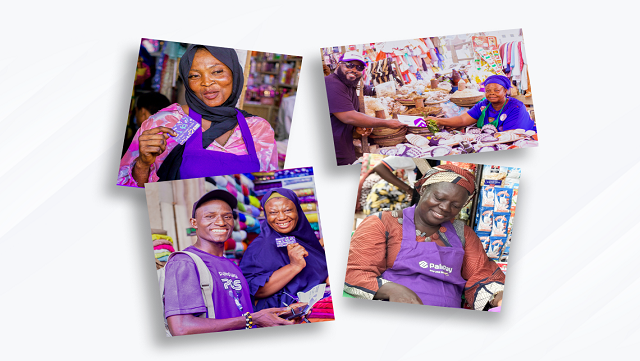
In the busy Fagge Market in Kano, Zahra Bello, a middle-aged entrepreneur who runs a fabric store, speaks about her experience with mobile banking and how this has simplified business transactions and improved her small business.

Behind the growth of these resilient women entrepreneurs lies a story of transformation powered by technology.
“My name is Zahra Bello, I’m from Dambatta in Kano State, and I’m a fabric trader. I first heard about PalmPay from my elder brother in March 2024. He told me how he used the PalmPay Target Savings feature to buy new machinery for his farm and even earned interest. That inspired me to try it too.”
Zahra downloaded the PalmPay app that very day. By December, she’d used the Target Savings plan to restock her shop with new fabrics, an achievement she never thought possible within such a short period. “I was so happy,” she smiles. “The interest I earned on my savings motivated me to save more. PalmPay has become my savings box. I use it for all my transactions now.”
Her story, like many others, is the inspiration for PalmPay’s evolving vision of inclusive banking in Nigeria’s underserved communities.
Women, SMEs, and Technology
Financial exclusion remains a critical challenge in Northern Nigeria. According to EFInA’s 2023 Access to Financial Services survey, an estimated 28.8 million adults in the North are excluded from the formal financial system, with exclusion rates as high as 47% in the Northwest.
Among women, especially those in rural areas, the figures are even more concerning, as these numbers represent the daily reality of millions of women who run informal businesses and contribute to household income without access to banking, credit, or digital tools.
PalmPay’s initiative addresses this gap directly. 5,000 female entrepreneurs in Kano and Kaduna will receive hands-on financial literacy training on mobile payments and their shops are rebranded with signages, aprons, and other kits that will enhance visibility for their businesses.
“I used to write down every sale in a notebook. Now I track everything with my PalmPay account,” says Rabi Abdullahi, a trader in Kano. “Customers trust me more now that I have a business name and branded store.”
PalmPay has done its due diligence to understand the challenges and has offered a tailored approach to solving these issues which includes this social impact initiative.
Social Impact and Strategic Growth
With over 35 million users in Nigeria, the company is keen to expand in regions where smartphone adoption is rising but digital finance penetration remains low.
Femi Hanson, Head of Marketing and Communications, explains: “We see this as long-term ecosystem building. When you give small business owners the tools to grow, you don’t just gain users, you build loyalty, trust, and sustainable impact.” This also aligns with Nigeria’s Financial Inclusion Strategy goal to reach 95% inclusion by 2025, a benchmark that can’t be reached without focused efforts in the North.
The project has earned the support of traditional leaders, most notably His Royal Highness, the Emir of Kano, Dr. Muhammadu Sanusi II, who praised the initiative and called for greater collaboration between the private sector and community stakeholders.
With the success of this initiative, PalmPay has continued to expand its solutions in these regions offering support to even more women.
In Northern Nigeria, where the need is great and the gap wide, PalmPay is proving that true impact goes beyond offering products to providing support and meeting the needs of its users at the grassroots.


Additional 14 million farmers in 37 low-income and vulnerable countries served by the African Development Fund, the Bank Group’s concessional financing window, are set to benefit from a technology initiative targeted at scaling up climate-resilient food production across the continent.

This comes after the African Development Bank Group (AfDB) and the International Institute of Tropical Agriculture (IITA) signed a $16.61 million grant agreement to launch the third phase of the Technologies for African Agricultural Transformation Programme (TAAT-III)
TAAT-III, funded by the African Development Fund, is expected to consolidate earlier gains benefiting 14 million more farmers while introducing a more sustainable, private sector-driven delivery approach.
AfDB said the initiative aims to reinforce seed and technology distribution systems, deepen partnerships with governments and agribusinesses, and expand the digital tools, including its technology e-catalogues and real-time monitoring platforms, to speed up deployment of high‑impact solutions.
Simeon Ehui, director general of IITA, commented: “TAAT-III allows us to deepen the delivery of science‑based solutions that improve farmers’ yields and livelihoods. Working with the Bank and our partners, we are scaling technologies that make Africa’s food systems more resilient and competitive.”
Since its launch in 2018, TAAT has become one of Africa’s most effective and transformative platforms for agricultural innovation, reaching nearly 25 million farmers and boosting productivity across major staples.
The initiative has expanded climate-resilient agricultural practices across over 35 million hectares.
In a statement, the AfDB said working closely with the Consultative Group of International Agricultural Research Centres and national and regional partners, TAAT has increased crop yields up to 69% and generated more than $4 billion in additional agricultural value.
Countries including Sudan, Ethiopia, Zambia, Zimbabwe, and Nigeria have recorded notable gains in staple crop productivity and resilience to climate shocks.
Nigeria has been a key beneficiary of TAAT initiatives. Under its Wheat Compact, farmers adopting improved heat-tolerant varieties more than doubled yields from 1.7 tons per hectare to 3.5 tons per hectare.
Programme supported seed system assessments also helped inform national reforms to expand access to certified, climate-resilient seeds.
Speaking at the signing ceremony, Abdul Kamara, director general of the Bank Group’s Nigeria Country Department, said the new phase will focus on scaling innovation more rapidly
Kamara said: “TAAT-III underscores the Bank’s commitment to ensuring that proven, climate-resilient agricultural technologies reach farmers faster and at scale. This phase strengthens the systems that deliver innovation, helping countries boost productivity, enhance resilience, and align agricultural transformation efforts with the Bank’s four new areas of emphasis, dubbed the Four Cardinal Points.”


A recent webinar hosted by the Newmark Group examined how Artificial Intelligence AI is changing healthcare across Africa, highlighting both its promise and its risks.

Newmark
The session, titled “AI in Healthcare: Opportunities and Challenges,” brought together healthcare and communications experts who agreed that AI can help fix long-standing problems in Africa’s health systems — but only if it is used carefully and responsibly.
Gilbert Manirakiza, CEO of Newmark Group in his opening speech said that AI is already helping speed up decision-making. He said AI tools can quickly analyse patient feedback, monitor conversations online, personalise health messages for different audiences and reduce delays in approvals.
He noted that many patients now turn to AI tools like ChatGPT to ask about symptoms and treatments. Because of this, he said health communicators must take responsibility for ensuring accurate information is available.
“If AI makes mistakes in healthcare, the consequences affect real lives,” he said.
Manirakiza stressed that Africa’s healthcare environment is unique. Many communities rely on mobile phones, speak different local languages and trust religious or community leaders. He warned that AI systems built mainly with Western data may misunderstand African realities.
He summarised his position simply: AI should help speed up work, but humans must ensure accuracy.
Daniel Marfo spoke about how AI is already being used in practical ways. Insurance companies now use AI systems to process thousands of claims daily. In hospitals, electronic medical records can suggest possible diagnoses and help doctors decide which patients need urgent attention.
He also said AI tools are helping detect problems in X-rays and MRI scans faster, especially in places where there are few radiologists. This reduces waiting time for patients.
At a national level, countries such as Rwanda, Sierra Leone and Ghana are building health data centres powered by AI to help governments track diseases and plan better responses.
However, Marfo warned that AI tools must be built using local medical guidelines to gain doctors’ trust. He emphasised that AI should support doctors, not replace them.
Dr. Afriyie Bempah focused on how AI can help countries prepare for health crises before they happen. He said resilience is not just about recovering from shocks, but about predicting them early.
He cited examples such as Kenya using AI to track mosquito patterns to predict malaria outbreaks, and Ghana using digital tools to improve disease reporting. In South Africa, digital health systems have been adapted to manage patients with chronic illnesses remotely.
He explained that linking clinics, pharmacies and supply chains through data sharing can help detect disease trends early and prevent large outbreaks.
During the question session, speakers discussed challenges such as data privacy, incorrect AI outputs, biased systems, and resistance from some healthcare workers.
They recommended clear rules for AI use, fact-checking AI-generated information, and creating internal review teams to monitor its application.
In their closing remarks, the panel encouraged healthcare professionals to learn how to work with AI tools to improve efficiency. They also urged young Africans to see healthcare technology as a major opportunity for innovation and investment.
The webinar concluded that AI is here to stay in healthcare. But its success in Africa will depend on strong regulation, local adaptation and continued human oversight — especially in a sector where mistakes can cost lives.

Conoil Plc is spreading joy this Valentine season as the first group of winners in its Valentine Bonanza promotion have been announced and rewarded. Launched on February 14, the campaign continues to delight customers at participating retail outlets.

The initial raffle draw, conducted on February 21, saw fortunate customers receive ₦10,000 worth of free petrol each. The draw was carried out publicly, with media representatives present to ensure full transparency. With the promotion still ongoing, more customers have the opportunity to join in and potentially be among the next winners.
A Conoil Management spokesperson explained that the initiative is a way to show appreciation to loyal customers for their ongoing support. “Our customers have responded impressively to the bonanza, with strong participation recorded across our stations,” the spokesperson said.
The second and final phase of the promotion is now in motion. Customers who purchase at least 10 litres of petrol at any participating Conoil station remain eligible to win in the grand finale raffle.
The grand finale is set for February 28 at 12 noon. Motorists in Lagos and Ogun states are encouraged to visit Conoil outlets to collect their tickets and take part in the exciting conclusion of this Valentine celebration.

Galaxy Backbone Confirms Over 150,000 Active Official Government Email Accounts, Clarifies Status of GOVMAIL

More 14m Farmers to Benefit from AfDB-backed Initiative

Dimension Data Nigeria Secures ₦20Billion Funding to Strengthen Digital Infrastructure

Newmark Webinar Explores How AI Could Transform Healthcare in Africa

Alerzo Liquidates Delivery Fleet as N4.38bn Moniepoint Loan Row Deepens

Kaspersky Launches OT Calculator to Align Cybersecurity Investments with Business Goals

Accidental Billionaire Opts for Jail Instead of Returning Money Credited Him by Mistake

Why the Future of PR Depends on Healthier Client–Agency Partnerships

New Horizons Nigeria Breaks Ground: First to Fuse Mandarin into ICT Curriculum

Kaspersky Brings more Transparency to Threat Detection with New Hunt Hub




 General News3 days ago
KPMG Strengthens Africa Leadership to Support Long‑term Growth Across the Continent

 E-Business3 days ago
esentry 2025 Report Shows Healthcare, Financial Services and Telecoms as Staging Grounds for Increased Cyberattacks in Africa

 News2 days ago
NITDA Equips Federal Character Commission with Data Tools to Drive Public Sector Reform

 E-Financial2 days ago
History is Watching: Tinubu’s Moment to Rescue Nigeria’s Stolen Future

 E-Financial3 days ago
Flutterwave Rises from Lagos Startup to Africa’s Fintech Powerhouse

 News3 days ago
Nigeria, EU Ink Research, Innovation Deal Worth €100Bn

 Telecom2 days ago
Telecom Giant MTN Injects N1.0 Trillion CAPEX into Network Expansion

 General News3 days ago
PalmPay Couples Show How Love Is Funded Digitally