

Telecom
Pantami to Lead Software Ecosystem Players to TestNigeria Conference

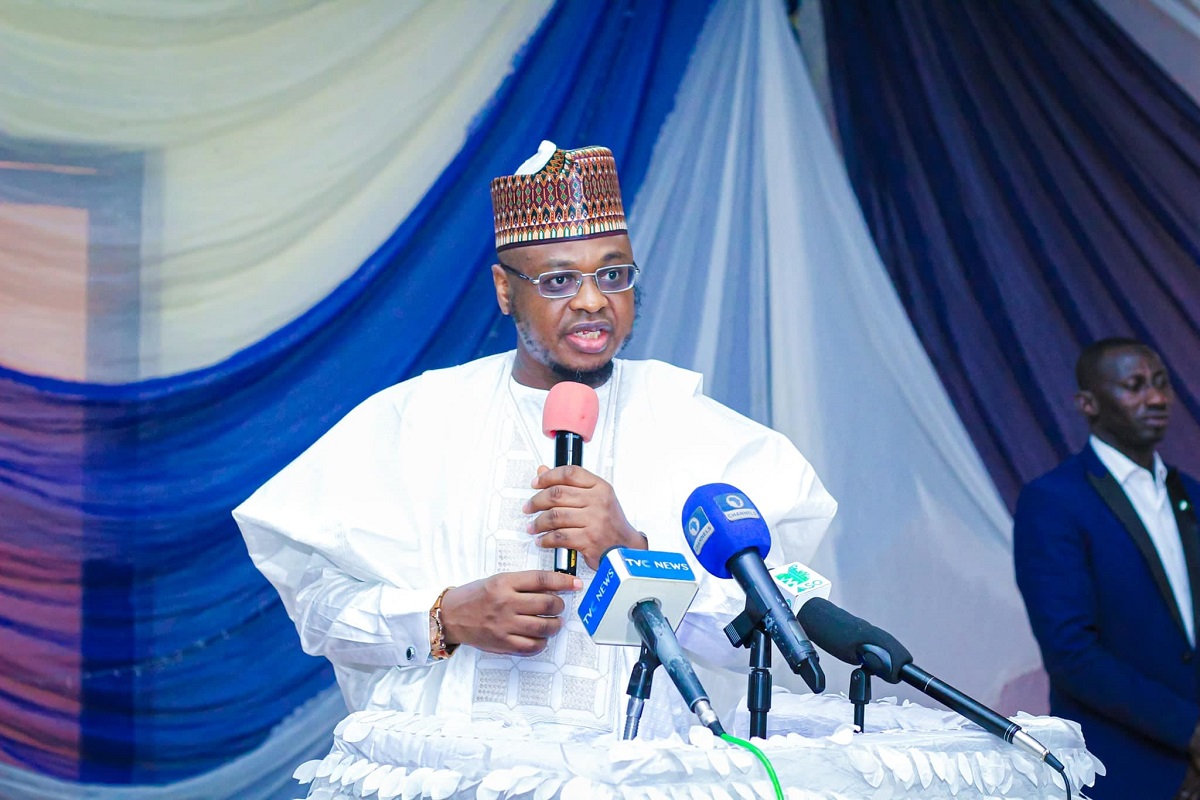

Since assumption of office in August of 2019, Professor Pantami’s aggressive initiatives and reforms towards digital transformation have received recognitions within and outside the country.
The Minister had expressed the Federal Government’s readiness to collaborate with the NGSTQB in democratizing software testing.
Prof. Pantami will expatiate on the government’s agenda for the software industry at the TestNigeria Conference 1.0 to be held on Tuesday November 22 and Wednesday November 23, 2022 at Lagos Oriential Hotel, Lekki road, Lagos under the theme: ‘Impact of Software Quality Assurance in the Nigerian Digital Economy’.
Guests & speakers lined up for the conference are; Mr. Hakeem Fahm, Hon Commissioner, Lagos State Ministry of Science and Technology, Mr. Olivier Denoo, President of the International Software Testing Qualifications Board (ISTQB), Mr. Bob Van de Burgt, the Test Maturity Model integration Foundation (TMMi) Local Chapter Manager, Dr. Babatunde Oghenobruche Obrimah, Chief Operating Officer, FINTECH Association of Nigeria, and Dr. Chika O. Yinka-Banjo, Department of Computer Sciences, University of Lagos.
Other expected guests and speakers include; Dr. Vincent Olatunji, National Commissioner / CEO, Nigeria Data Protection Bureau (NDPB), Dr. Dan- Azumi Ibrahim, Director General, National Office for Technology Acquisition and Promotion (NOTAP), Mrs Rukiya Mohammed, Director of IT, Central Bank of Nigeria (CBN), Ms. Ola Williams, Country Manager Nigeria & Ghana, Microsoft Nigeria; Speaker from Inlaks, and Global Accelerex.
Speaking ahead of the Conference, Mr. Boye Dare, the President of NGSTQB, said that TestNigeria Conference 1.0, said that the role of software professionals in actualizing the National Digital Economy Policy and Strategy (NDEPS) for a Digital Nigeria, cannot be overemphasized.
He said that TestNigeria Conference 1.0 will feature networking cocktail, keynote presentations, panel sessions and fireside chat including special sessions on Software Test Improvement in Organisations; Growing Software Testing Ecosystem in Nigeria’s Educational Sector, and Need for Certified Test Professionals in Organisations.
While reemphasizing the need for software testing, Mr. Dare said is it vital for Nigeria to be identified as a country with high-quality software.
In his words, “Testing is necessary because we all make mistakes. Some of those mistakes are unimportant, but some are expensive and dangerous.
“Software failures can be devastating to company value and reputation. For example, UK-based loan company Provident Financial lost 1.7 billion pounds (about 2.4 billion American dollars) of market value in 2017 after a bug in their newly developed scheduling software, such that barely half of their loan debts were collected when due. This bug cost the company 120 million pounds (170 million American dollars) in profit loss, and the fiasco is considered a record-breaking loss.
Designed as a platform for software professionals to discuss how Nigerian IT ecosystem can start developing quality software that meets international standards and help achieve Nigeria’s Digital Economy Strategy, the conference is targeted at software developers, banks, government institutions, telcos, fintech companies, industry regulators and major users of sensitive software among others.
Interested participants should visit the website here or click https://www.ngstqb.ng/conference/ to see details.
NGSTQB is a member of the International Software Testing Qualifications Board (ISTQB); the world’s leading organization for Certification of Professionals in Software Testing.



Association of Licensed Telecoms Operators of Nigeria (ALTON), has decried persistent challenges such as vandalism, high operating costs, and regulatory bottlenecks threatening service delivery despite recent improvements in investment inflows.

Gbenga Adebayo, chairman, ALTON, warned that the continuous attack are putting strains on Nigeria’s telecom sector which serve as the backbone of the country’s economic and digital systems,
Adebayo, speaking in an interview on ARISE News, described telecommunications as the critical foundation supporting all sectors of the economy.
“Telecom operators are the infrastructure of infrastructures that supports all other sectors,” he said, stressing that the industry remains central to power, transport, security, and financial services.
Adebayo noted that the recent 50% tariff adjustment has helped restore investor confidence in the sector after years of underinvestment.
“It has restored confidence in the sector… we are seeing investment, we are seeing now the impact of that investment,” he said, adding that the sector is now beginning to recover gradually.
But, he warned that improvements in service quality remain constrained by multiple external challenges, including vandalism, insecurity, and regulatory bottlenecks.
“Things can be better… but there are also other external factors… vandalism, behavior of public actors, behavior of non-state actors,” he explained.
Adebayo highlighted the scale of infrastructure damage, particularly on fibre networks, noting a major disparity between international and domestic connectivity routes.
“The fiber optic in the Atlantic… has witnessed probably one outage in two years… the one running from Lagos to Kano, we record an average of about 40 cuts a day,” he said.
He explained that such disruptions significantly increase operating costs and affect service quality across the country.
Beyond vandalism, he pointed to theft of telecom equipment such as batteries and generators, as well as security challenges that prevent timely restoration of services in some regions.
“Issue of security… people are stealing batteries, they’re stealing generators,” he said, noting that some areas remain inaccessible during outages until security conditions improve.
Adebayo also called for urgent reforms in right-of-way charges and taxation policies, arguing that telecom infrastructure should be treated as essential national infrastructure.
“Right of way should become free of charge across the country… issue of multiple taxation… it has to be a thing of the past,” he stated.
On rising energy costs, he said operators are gradually adopting hybrid and renewable energy solutions, although the transition is slow and still exposed to vandalism risks.
“We are doing a lot on renewable energy and providing hybrid solution… but that takes time,” he said.
Adebayo concluded that while policy support and investment inflows are improving the outlook of the sector, sustainable progress will depend on stronger protection of telecom infrastructure and coordinated action among government, regulators, and communities to address vandalism, insecurity, and regulatory inefficiencies.

Ride-hailing company Uber has introduced a new feature that allows users to book hotel rooms directly through its app, as part of its strategy to evolve into a broader lifestyle and services platform.

Uber announced that the hotel booking service is being launched in partnership with Expedia Group, giving users access to more than 700,000 hotel properties worldwide.
The company said the collaboration is also expected to expand in future to include short-term rental listings from Vrbo.
According to Uber, the hotel booking tool offers features similar to traditional online travel platforms, including destination search, maps, and filters based on pricing, amenities and guest ratings.
Users can also complete bookings using payment information already saved on the app.
Speaking during a presentation in New York City, Uber Chief Executive Officer, Dara Khosrowshahi, said the company was broadening its offerings beyond transportation and food delivery.
“We’re no longer just an app for rides, or even a family of apps for rides and eats. Uber is now an app for everything,” he said.
Chief Executive Officer of Expedia, Ariane Gorin, said the partnership was aimed at simplifying travel planning for users.
“Together, we can reduce the number of steps, save people time and money,” she said.
Uber’s latest move builds on its expansion strategy which began with the launch of Uber Eats in 2014.
Initially focused on food delivery, Uber Eats has since expanded into retail services, allowing customers to order products such as cosmetics, groceries and electronics.
Industry analysts say the development reflects the growing global trend toward “super apps” — digital platforms that combine multiple everyday services within one ecosystem.
This model is already widely adopted in markets such as China, where platforms like WeChat and Alipay integrate messaging, payments, travel bookings and e-commerce services.
Competitors are also broadening their offerings.
For instance, Airbnb has expanded beyond accommodation to include bookable local experiences, wellness services and mobility options.
Uber also disclosed plans to integrate more artificial intelligence-powered tools into its platform.
The company said upcoming features would enable users to plan meals, generate shopping lists and arrange deliveries through conversational prompts, while a voice assistant is also in development to support hands-free navigation within the app.

National Economic Council (NEC) of Nigeria has officially approved 112 as the unified, toll-free national emergency number to streamline responses to security, medical, fire, and natural disasters.

It is part of measures to strengthen Nigeria’s emergency lifeline and build a unified and coordinated national response to emergencies.
NEC also approved the establishment of a multi-agency implementation committee and programme coordination led by the Office of the Vice President and the National Communications Commission (NCC).
The approval was part of decisions taken at the 157th meeting of the NEC held virtually and chaired by Vice President Kashim Shettima.
Shettima said the 112 emergency lifeline had become necessary to prevent delay caused by bureaucratic bottlenecks, noting that what the citizens seek urgently when confronted by a natural disaster or insecurity is an urgent response and not bureaucracy.
“This is not only a technical reform. It is a test of the state’s humanity. In moments of fire, accident, robbery, medical emergency, flood, violence, or panic, citizens do not need bureaucracy.
“They need a response. They need to know one number to call, one system to trust, and one coordinated chain of action that moves quickly enough to save lives,” he stated.
He explained that while Nigeria is not beginning from zero, as the emergency number had been in existence, what is required at the moment “is coordination, adoption, standard operating procedures, public awareness, institutional ownership, and trust”.
The vice president described NEC as the nation’s economic engine room, where the federal government and the states must convert the Renewed Hope Agenda of President Bola Tinubu into practical outcomes.

US to Deny Applicants Saying they Fear Persecution @ Home Visas

ALTON Rues Vandalism, Others as Critical Infrastructures Suffer Attacks

Opay Plans IPO in US, Targets $4Bn in Valuation

Meet Top Five Tech-Driven Banks and Their Overseers

FG Owes World Bank $2.08Bn in 2025 – Report

FG to Gift Nigerians over 100 Free TV Channels from May 15

Kaspersky Discovers Vulnerability in Qualcomm Snapdragon Chips that can Lead to Data Loss & Device Compromise

What Adekunle Gold’s Support Means for ‘The Gathering on 100

MTN Suspends Data, Airtime Borrowing Service over New FCCPC Lending Rules

NRS Takes Over Mineral Royalties Collection Under New Tax Laws




 E-Financial2 days ago
New CBN’s BVN Rules Starts Today

 Telecom2 days ago
FG Okays 112 as Toll-Free National Emergency Response Number

 General News2 days ago
Nigeria’s CardForté Turns Five, Showcasing Impact on Domestic Payment Infrastructure

 General News2 days ago
Shareholders of MTN Nigeria Okay N152Bn Fintech Restructuring

 Telecom2 days ago
Court Order Ensures Access to Essential Airtime and Data Services for Millions of Nigerians

 E-Financial2 days ago
EFCC Warns Fintech Firms over Rising Fraud, Ransom Payments
 Telecom1 day ago
ALTON Rues Vandalism, Others as Critical Infrastructures Suffer Attacks

 General News2 days ago
Glo Commends Nigerian Workers on May Day