

E-Business
Paradigm Initiative Urges NIMC to Suspend NIN Enforcement Activities

Paradigm Initiative, a digital rights advocacy group has called for the immediate suspension of the enforcement of National Identification Number (NIN), as announced by the National Identity Management Commission.
According to a statement released by the advocacy group, “NIMC, on January 1st announced the commencement of the full enforcement of the use of the NIN by Ministries, Departments and Agencies and other bodies requiring the verification of individual’s identity in the country, such as security outfits, banks and other financial institutions.
“The commission also announced it was empowering other government agencies and private companies to collect citizens’ data on its behalf, a situation Paradigm Initiative finds disturbing.”
Tope Ogundipe, Paradigm Initiative’s Director of Programs, reacting of this development, said “We have always been concerned about the ability of the Commission to ensure the protection of the data in their possession, in a country that has failed to put in place a data protection law.
“Full enforcement of NIN at this time could lead to denial of crucial services to millions of citizens who are not comfortable with sharing their data with the commission or its agents for good reasons.”
“While the harmonization of records and data might be a good step in the right direction for better accountability and statistical documentation in Nigeria, we consider the whole process premature at this time.
“There has to be a strong data protection law before citizens are forced to entrust their data to NIMC or other agencies of government,” Ogundipe added.
Weighing in on the issue, Paradigm Initiative’s Executive Director, ‘Gbenga Sesan said, “Data protection is a core necessity in every society.
“It is a responsibility of the state and individuals alike to respect the privacy of citizens.
“Section 37 of the Nigerian Constitution guarantees this unequivocally.
“There is no way that the right to a person’s privacy can truly be respected in the digital age without data protection laws, policies and mechanisms.”
The National Identity Management Commission is saddled with the mandate to establish, own, operate, maintain and manage the National Identity Database in Nigeria.
The Commission ought to take data protection very seriously; including ensuring that before the execution of such a nation-wide database harmonization exercise, there is extant and comprehensive legislation on data protection.
The advocacy group urges NIMC to cease all activities regarding the mandatory registration and use of the National Identification Number (NIN) pending when the nation enacts a data protection law.
“We have been following the legislative process of the Digital Rights and Freedom Bill (HB. 490) which contains comprehensive and internationally recognized provisions for data protection and we are confident that if the President assents to the Bill, the NIMC would have a sufficient data protection legislation to guide its activities” the statement added.


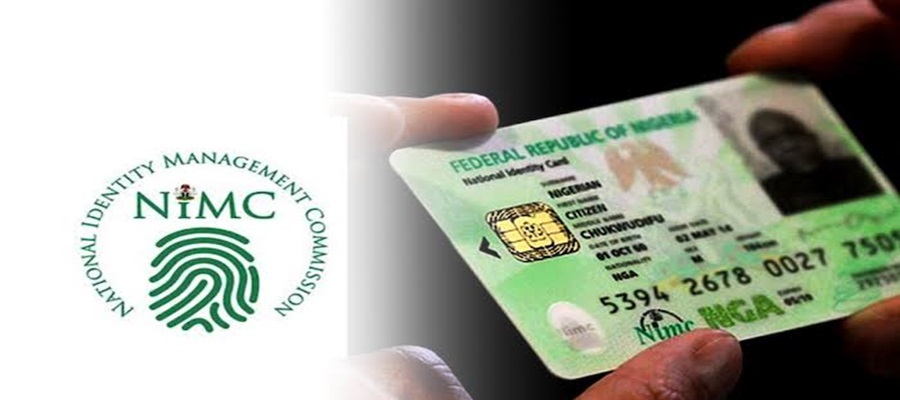
National Identity Management Commission (NIMC) has said thet more than 136 million Nigerians and legal residents have been enrolled in the National Identity Database (NIDB).

In a statement on Tuesday, Kayode Adegoke, head of corporate communications, NIMC, said Abisoye Coker-Odusote, chief executive officer (CEO) of the commission, announced the milestone during a courtesy visit to the ministry of budget and economic planning.
In April 2025, NIMC said over 117.36 million Nigerians had been enrolled as of February 28, 2025.
The visit was part of the commission’s ongoing stakeholder engagements with ministries, departments and agencies (MDAs) on the implementation of the NIMC Act 2026.
Presenting the new Act, Coker-Odusote said the legislation repeals and replaces the 2007 NIMC Act, modernising Nigeria’s digital identity ecosystem by positioning the national identification number (NIN) as the country’s foundational identity under the “one person, one identity” policy.
She said the law also establishes NIMC as the root certificate authority for the national digital infrastructure and introduces stronger data protection and cybersecurity measures, as well as digital credentials.
“The Federal Government remains committed to enrolling and issuing NINs to all Nigerians and legal residents within the shortest possible time,” Coker-Odusote said.
She added that NIMC is ready to collaborate with the ministry of budget and economic planning to leverage the NIN for economic planning and national development initiatives.
Speaking during the visit, Abubakar Atiku Bagudu, the minister of budget and economic planning, reaffirmed the federal government’s commitment to the implementation of the NIMC Act 2026.
Bagudu described the legislation as “a transformative milestone” that would strengthen Nigeria’s digital identity ecosystem and accelerate national planning and development.
He commended the NIMC director-general and the commission’s leadership for their efforts in securing the passage of the legislation, noting that it provides “a solid legal foundation for a trusted, secure, and inclusive national identity management system”.
The minister, however, said the true measure of the Act’s success would lie in its implementation and the benefits it delivers to Nigerians.
“The true measure of the Act’s success will lie in its effective implementation and the tangible benefits delivered to citizens,” he said.
Bagudu also called for stronger collaboration across the federal, state and local governments to build public confidence in the national identity system and eliminate the duplication of identity databases across government institutions.
He said the NIN should serve as Nigeria’s single, universally accepted identity standard, supporting efficient service delivery and good governance.
On June 26, President Bola Tinubu signed the NIMC Act 2026 into law, repealing the commission’s 2007 establishing Act.
At the time, Olubunmi Tunji-Ojo, minister of interior, said the legislation would strengthen Nigeria’s legal framework for digital identity management, cybersecurity and secure digital authentication, while reinforcing the NIN as the country’s foundational identity credential under the “one person, one identity” principle.
Plateau State Public Complaints Commission (PCC), an agency of the state established to investigate complaints of abuse of office, administrative injustice and other forms of official misconduct is allegedly collecting personal information from members of the public through its website with no privacy policy.

According to investigation by Foundation for Investigative Journalism (FIJ), PCC is falling short of a key transparency requirement under Nigeria’s data protection laws.
FIJ found on Tuesday that PCC collects personal information from members of the public through its website despite providing no privacy policy explaining how that information is collected, processed, stored or protected.
The commission serves as the state’s ombudsman, receiving complaints free of charge against public institutions and private organisations on issues including wrongful dismissal, victimisation and administrative negligence.
Yet, while its online complaint portal requests personal information such as names, phone numbers, email addresses, subject lines and complaint details, visitors are given no privacy notice explaining what becomes of that information after it is submitted.
The omission means visitors are not told why their information is being collected, how long it will be retained, the legal basis for processing it or the rights available to them as data subjects.
WHAT IS THE POSITION OF THE LAW?
The guidelines issued by the National Information Technology Development Agency (NITDA) are explicit: every government website is required to have a privacy policy.
Section 10.4 (i, ii) of the NITDA guidelines mandates all government websites to exercise diligence when collecting personal details or information about visitors on their websites.
The requirement is intended to ensure transparency and accountability in the handling of personal information, allowing visitors to understand why their data is collected, how it will be used and the safeguards in place to protect it.
Similarly, the Nigeria Data Protection Act (NDPA) 2023 requires data controllers to provide privacy notices to individuals before, or at the point of, collecting their personal information.
Such notices are expected to disclose, among other things, the purpose for collecting the data, the legal basis for processing it, the period for which it will be retained and the rights available to data subjects.
Section 27 of the NDPA states:
(1) Before a data controller collects personal data directly from a data subject, the data controller shall inform the data subject of the – (a) identity, residence or place of business of, and means of communication with the data controller and its representatives, where necessary;
(b) specific lawful basis of processing under section 25(1) or 30(1) of this Act, and the purposes of the processing for which the personal data are intended;
(c) recipients or categories of recipients of the personal data, if any;
(d) existence of the rights of the data subject under Part VI;
(e) retention period for the personal data;
(f) right to lodge a complaint with the Commission in accordance with section 46 (1) of this Act; and
(g) existence of automated decision-making, including profiling, the significance and envisaged consequences of such processing for the data subject, and the right to object to and challenge such processing.
Without a privacy policy, visitors have no way of knowing the commission’s data-handling practices or the safeguards, if any, in place to protect the personal information they submit through the website.
At press time, the Plateau State Public Complaints Commission’s website had no privacy policy.

Federal government has directed key digital regulators to suspend the implementation of new rules affecting internet platforms and online intermediaries while it develops a unified national regulatory framework.

Dr Bosun Tijani, minister of Communications, Innovation and Digital Economy
The directive was issued on Tuesday by Dr Bosun Tijani, minister of Communications, Innovation and Digital Economy, after chairing a strategic meeting with the leadership of the Nigerian Communications Commission (NCC), the National Information Technology Development Agency (NITDA), and the Nigeria Data Protection Commission (NDPC).
The minister in a statement, said that the rapid growth of the digital economy has created areas where the responsibilities of the three regulators increasingly overlap, particularly in artificial intelligence, online safety, and data protection.
He said that a coordinated approach is needed to provide regulatory clarity, protect investor confidence, and support innovation.
Dr Tijani noted that as part of the directive, the agencies will temporarily halt the implementation of recently introduced guidelines in these overlapping areas.
However, the Minister said that they will continue to carry out their statutory responsibilities within their respective legal mandates.
Dr Tijani said that a Joint Technical Coordination Committee will now be established to work with industry players, academics, and civil society on a single, coherent regulatory framework.
The minister added that the move is designed to improve coordination across government, create a more predictable business environment, and strengthen Nigeria’s position as a leading destination for digital investment in Africa.

Court Declares ARCON’s N60Bn Fine against Facebook Nigeria Illegal

NIN Enrollment Hits over 136m as New ID Law Takes Effect

NRC, Ponzi Scheme Collapses Resulting Loss of Billions of Naira

Plateau PCC Collects Nigerians’ Data without Privacy Policy – FIJ

FG Suspends New Internet Regulations to Prevent Overlapping Rules

NASENI Moves to Digitize CCB’s 5m Assets Declaration and Operations

Mobile Internet Gender Gap Widest in Africa – GSMA

Nigeria Launches FreeTV Nationwide

CANAL+ Partners Samsung to Pre-Load DStv Stream on New Samsung TVs In Nigeria, Other African Countries

CredibleVoteNG Opens Free Access to all Polling Units in Nigeria after INEC Demanded N1.Bn for Register




 E-Financial3 days ago
Tokenization, Blockchain Technology will Transform Financial Institutions – IMF

 General News3 days ago
NIS Deploys Advanced Surveillance Masts, other Critical Infrastructure to Boost Border Security

 General News2 days ago
IHS Nigeria, FCT-HSES Concludes Clean Cooking Energy Campaign “Project Breathe Clean Air” in Abuja

 Broadcasting3 days ago
Obi, NDC Presidential Candidate Faces N50Bn Defamation Claim over Alleged Podcast Remark

 E-Business3 days ago
Weebly Websites to Shut Down for Nigeria, 66 Other Countries from September

 E-Financial3 days ago
FG Denies N8 Trillion ‘Shadow Budget’, Says IMF Quoted out of Context

 Telecom3 days ago
No Plans for Fresh Tariff Hike – MTN

 News3 days ago
World Bank Sounds Alarm: Low Revenue, Not Debt, Is Nigeria’s Biggest Fiscal Threat