

E-Financial
Phillips Oduoza: Inspirational Giant of Banking Industry

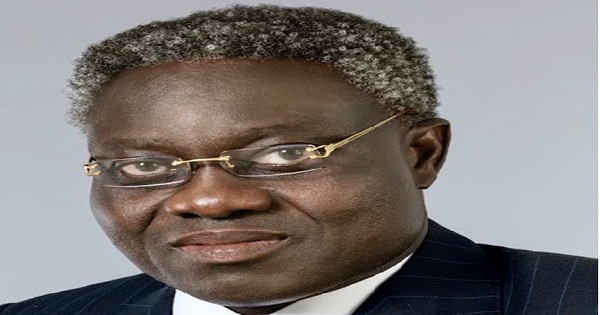
Phillips Oduoza, founder and chairman, NOVA Merchant Bank Limited is inspired by Nigeria’s future, which he believes holds potential waiting to be harnessed.

Phillips Oduoza
NOVA Merchant Bank offers an integrated suite of financial solutions covering Wholesale Banking, Investment Banking, Asset Management, Wealth Management, Trade Services, Transaction Banking, Cash Management and Digital Banking.
Phillips, also former group managing director (GMD), United Bank for Africa (UBA), is gifted, a deep thinker, selfless with a knack for seeing what others couldn’t see and making the seemingly impossible possible in addition to great leadership skills.
In this article, we will look at his new bank, banking career, his leadership skills and background.
NOVA Merchant Bank
NOVA Merchant Bank founded by Phillips is a licensed merchant bank with a focus on wholesale and investment banking.

The bank which began operation in 2018- became an instant success and broke-even in the first year of operations.
Recall at the time of commencement of operations by NOVA Merchant Bank, the economic environment was quite challenging, because the country just exited from recession.
Secondly, there was still turbulence in the industry resulting from interventions in some banks by the Central Bank of Nigeria (CBN).
But the new bank’s growth trajectory has also continued as it reported a profit after tax of N3.49bn for the financial year ended December 31, 2020.
This represents a 112% increase when compared to N1.65bn in 2019.
All the key financial parameters recorded major improvement over the prior year performance; Gross Earnings showed a quantum leap of 130% growth over 2019 and Profit Before Tax at N3.52bn recorded a 135% growth over the 2019 figure of N1.5bn.
The bank achieved such growth amidst the unprecedented nature of the COVID-19 pandemic and resulting macro-economic headwinds.
Also, the Nigerian Exchange Limited (NGX) recently admitted the bank’s N10 billion bond on its platform.
The bank made history as the youngest merchant bank to issue a bond in Nigeria which also oversubscribed by 300 per cent
The success of the bond is an indication of the level of investor confidence in the bank’s reputation, brand and corporate performance.
Banking Career
Phillips started his banking career in 1989 with Citibank as the first set of Executive Trainees where he trained in every aspect of banking after a brief stint with International Merchant Bank (IMB) as a Credit Officer in 1987.
Within the three years at Citibank, he was equipped with knowledge of banking operations, relationship management, credit/marketing, efficient implementation of technology, risk management and lean banking methods.
He moved from Citibank to Diamond bank in 1991, as one of the pioneer staff who built the bank to become a strong and notable brand in the industry.
Phillips rose through the ranks to become an Executive Director, serving as ED, Operations and Technology (1999-2002) the period where most banks had to do the IT transformation to meet up with global standards and practices.
He was also Executive Director, Commercial/Retail Banking from 2002 to 2004.
His next stop was at the Reliance Bank Limited where he had a blinking stint as Deputy Managing Director for 4 months before moving on to join the Management and Board of Standard Trust Bank PLC in December 2004.
He was with STB at the time of the merger with UBA and became a key player in the new UBA, rising through the ranks to serve two terms as MD/CEO before his retirement in 2016.
He was succeeded by Kennedy Uzoka.
Leadership Skills
Phillips is a consummate banker with limitless energy who believes in team work.
He is hard worker who avoids shortcuts and do not jump leadership ladder.
He possess the Midas touch, everything he touches turns into gold
Phillips has mentored and is mentoring crops of young bankers and entrepreneurs.
He is also my benefactor.
Tony O. Elumelu, chairman, United Bank for Africa (UBA), described Philips as “a man with a very cerebral mind, very diligent, loyal and astute”
He is man who loves and encourages progress and a man who always works for the best of everything.
Elumelu said that the performance of UBA today, both financial and brand management are all attributable to Philips and all the team he worked with.
Alex Otti, former CEO of Diamond Bank Plc, praised Philips for his extra-ordinary talent and management skills and leaving the banking industry with his integrity intact.
Philips has won several awards and is one of the most popular bankers in the continent of Africa.
In 2013 and in 2015, he emerged as the Africa investor (Ai) Socially Responsible Investment (SRI) 30 CEO of the year.
He currently serves on the boards of Veritas University Abuja, Lagos State Security Trust Fund, and the Development Bank of Nigeria.
Philips has also served on several boards including Interswitch Plc (representing UBA), Valuecard Plc (Unified Payment Services Plc), Nigeria Interbank Settlement System, Nigeria Economic Summit Group, Financial Markets, and Dealers Quotations (FMDQ).
Background
Phillips was born into a large family in Owerri, Imo state Nigeria.
He attended St. Kelvins Primary School, Owerri, and Government College, Owerri before moving down to Lagos state for his university education.
He bagged a Civil Engineering degree (with First class honours) from the University of Lagos.
He was intelligent and excelled in his studies.
According to Phillips, he never considered banking or accounting in his first degree because he did not want a sedentary career.
Instead, he wanted a career in civil engineering where he felt he would be more actively engaged.
“As a student, I was very proficient in science subjects,” he recalled, “and I could have studied Medicine or any other such course. However, I wanted a profession that is involved in physical activities, as against research. That was why I chose to study engineering because it has physical applications. As a civil engineer, you are involved in building roads, bridges, houses and so many diverse things.”
However, in the course of his engineering study, he took a couple of courses that were business-related and his interest was piqued.
After school, he considered several career options before eventually settling for banking, and this became the epicentre of his entire career.
He went back to UNILAG and obtained an MBA in finance to guide his new career path.
Since then, he has attended numerous banking, management and leadership courses including the Advanced Management Programme of the Harvard Business School.
He is an honorary fellow of the Chartered Institute of Bankers.



Central Bank of Nigeria (CBN) has released an exposure draft proposing the establishment of a 30-member Mediation and Dispute Resolution Panel (MDRP) aimed at strengthening consumer protection and boosting confidence in Nigeria’s financial system.

Pic credit….aequitasjuris.com
According to a circular signed by Paul Oluikpe, acting director of the Development Finance Advisory Department of the CBN, the establishment of the MDRP, is in furtherance of efforts to strengthen the financial ecosystem, ensure compliance with extant legislation, and enhance the efficiency of financial intermediation.
The draft guidelines and modalities for the operation of the MDRP are in line with the Secured Transactions in Movable Assets (STMA) Act, 2017, which established a MDRP as the first recourse for mediation and settlement over any civil dispute which may arise between the creditor and the grantor in the course of implementing the Act.
The act also mandates the Governor of the Bank to issue guidelines that will set out the modalities and regulate the Panel’s functioning, among others. The circular further noted that the “MDRP is intended to provide a specialised, cost-effective platform for resolving disputes arising from creation, perfection and enforcement of security interests in movable assets.
“The key objective of the MDRP guidelines is to establish a clear and standardised procedure for managing STMA-related disputes, while ensuring transparency, fairness and efficiency to bolster confidence in the secured transactions in movable assets system.”
According to the draft guideline, the CBN will “appoint 30 persons from whom panels shall be constituted, with each panel comprising 3 members.
The members shall serve on a rotational basis for an initial term of four years.
“Upon satisfactory performance, determined through an evaluation by the CBN, members may be reappointed for an additional term of four years. The tenure of members shall not exceed two terms of four years each, which need not be consecutive.
“Members shall be professionals with a minimum of 10 years of relevant experience in any of law, banking, finance, mediation, arbitration, alternative dispute resolution, or financial regulation. Members shall be persons of proven integrity, professional competence and sound judgement.”

Nigeria Deposit Insurance Corporation (NDIC) said that it has commenced the process of liquidating 89 closed Microfinance Banks (MFBs) and Primary Mortgage Banks (PMBs).

This followed their successful acquisition by new owners under the Purchase and Assumption (P&A) resolution model executed by the Corporation.
The corporation disclosed this in a statement on Wednesday, signed by Hawwau Gambo, head of Communication and Public Affairs.
It explained that the affected institutions were part of the 179 MFBs and four PMBs whose licences were revoked by the Central Bank of Nigeria (CBN), on May 22 and 23, 2023.
According to the corporation, under the P&A arrangement, 89 new eligible institutions were subsequently licensed by the CBN to assume the assets and liabilities of the defunct banks.
It noted that the new banks had since commenced operations under different names.
“To legally conclude the liquidation process, the NDIC, in its capacity as liquidator, will file applications at various divisions of the Federal High Court for orders of dissolution of the closed banks and its discharge as liquidator,” the statement said.
NDIC added that the move was in line with provisions of its enabling Act and other relevant laws guiding bank resolution in the country.
The corporation said the exercise would ensure proper closure of the defunct institutions while safeguarding financial system stability.
It reiterated its commitment to protecting depositors and sustaining public confidence in the banking sector.
The affected banks were located across several states, including Lagos, Anambra, Oyo, Kaduna, Kano and the Federal Capital Territory.

Nigeria’s economy is projected to grow at 4.1 per cent in 2026 and strengthen slightly to 4.3 per cent in 2027, even as the International Monetary Fund (IMF) warned that the ongoing Middle East conflict is clouding the global outlook.

The projections, contained in the IMF’s April 2026 World Economic Outlook released at the ongoing IMF/World Bank Spring Meetings in Washington DC, the United States, show a relatively stable trajectory for Nigeria despite rising external risks, particularly from energy market disruptions triggered by the war.
The IMF had earlier projected stronger growth of about 4.4 per cent in early January before the latest global shock, reflecting the impact of domestic reforms and improving macroeconomic conditions.
While Nigeria’s growth outlook remains steady, the IMF warned that countries like Nigeria face growing vulnerability from higher global energy prices, inflation pressures and tighter financial conditions.
The war, which has disrupted oil supply routes and pushed up fuel costs, is already feeding into domestic inflation and cost-of-living pressures.
Recent data show petrol and diesel prices have surged sharply since the conflict began, straining households and businesses.
Although higher crude prices may support government revenues, the broader macroeconomic impact remains mixed, with inflation and exchange rate pressures posing downside risks.
The IMF also cut global growth to 3.1 per cent in 2026, with only a modest recovery to 3.2 per cent in 2027 as the Middle East conflict disrupts trade and energy markets.
Emerging markets and developing economies, including Nigeria, are expected to grow at 3.9 per cent this year before recovering to 4.2 per cent in 2027, reflecting the uneven impact of the shock across regions.
Sub-Saharan Africa is projected to expand by 4.3 per cent in 2026 and 4.4 per cent in 2027, placing Nigeria slightly below the regional average but still among the stronger performers.
South Africa, the continent’s largest economy, continues to lag with growth forecast at one per cent in 2026, rising modestly to 1.3 per cent in 2027.
Among major economies, the U.S. is projected to grow by 2.3 per cent in 2026 before easing to 2.1 per cent in 2027, while China is projected to grow by 4.4 per cent and four per cent respectively.
India remains the fastest-growing major economy at 6.5 per cent through 2027, while the Euro Area continues to struggle with weak growth, particularly in Germany and France.
The IMF warned that many developing economies, particularly energy importers, remain vulnerable to rising costs and external shocks.
The IMF urged central banks to prioritise price stability, warning against easing policy prematurely in response to supply shocks. It stressed the need for clear communication and strong institutional independence.
On fiscal policy, the Fund cautioned against broad-based energy subsidies, describing them as costly and inefficient. It recommended a targeted and temporary support for vulnerable households, funded within existing budgets.
The IMF also warned against the use of trade restrictions to address external imbalances, noting that such measures tend to weaken output without resolving underlying issues. It called instead for coordinated global action to stabilise trade and restore energy supply chains.

Lagos Targets Vulnerable Residents in Expanded Social Register

CBN Proposes 30-Member Mediation Panel for Loan Disputes

CAC Urges Users to Secure Accounts after Cyberattack Scare

NCDC Predicts Cholera Outbreak in 10 States as Heavy Rains Loom

NDIC Seeks Court Nods to Liquidate 89 Failed Banks

Kuda MFB Increases Kuda for Her Business Grants to ₦10 Million

Canal+ to Cut Jobs as Part Sweeping Restructuring

Nigeria tops global rankings for USDT, USDC ownership

NBC Boss Urges Content Ceators to Participate in DSO

NITDA Takes Over National Digital Architecture System




 E-Financial3 days ago
Fidelity Surges Ahead in Recapitalisation Drive with ₦564bn Capital

 General News2 days ago
Guinness Nigeria Surpasses ₦1Trillion Market Capitalisation, Signalling Strong Investor Confidence and Sustained Value Creation

 Telecom3 days ago
AfDB Grants Project BRIDGE $200m Facility for Nationwide Internet Access

 Telecom3 days ago
Qualcomm Unveils Startup Selection for Qualcomm Make in Africa 2026

 E-Financial3 days ago
Digital “Pickpockets” Compromise Over a Million Banking Accounts – Kaspersky

 Telecom3 days ago
Nigeria Seeks Stronger Digital Sovereignty, National Software Infrastructure

 E-Business3 days ago
Nigeria Needs Some 480,000 Local DPOs for Data Protection

 E-Financial3 days ago
EFCC Warns Banks against Loans without Credible Collateral