

E-Financial
Piggybank.ng Secures $1.1M Seed Funding

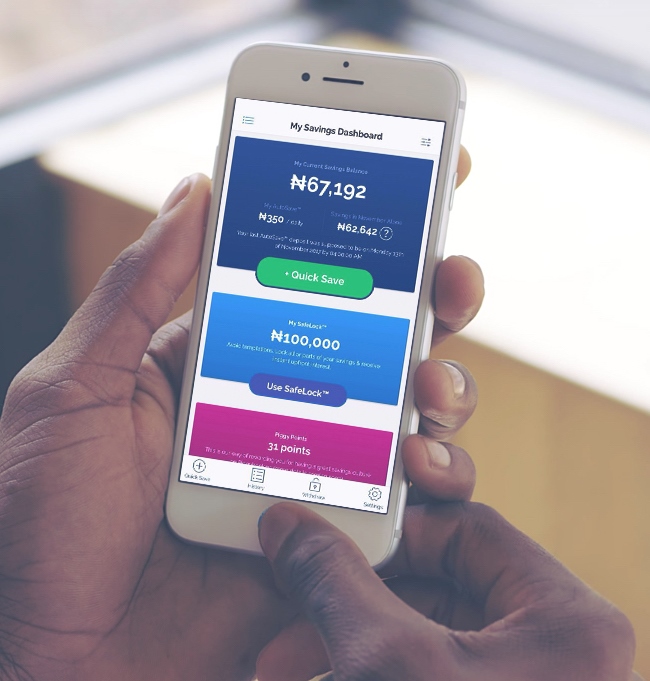
Piggybank.ng, an online and mobile app savings platform targeted at African Millennials, has announced that it has closed on Seed Funding of $1.1M, from High Net Worth Individuals, led by Olumide Soyombo, founder of LeadPath Nigeria, and with participation from International and Pan-African investors Village Capital and Ventures Platform.
The company will deploy the VC investment for license acquisition and product development.
Piggybank.ng has recorded 20 – 35% m-o-m growth in user traction over the past 12 months; primarily from peer-to-peer recommendations, its referral program -Piggybank Stories, and grass-roots social media campaigns.
The startup will also invest in additional marketing spend, to accelerate its growth trajectory. Having completed accelerator programs with Blackbox, the CcHub’s Pitch Drive, powered by Google for Entrepreneurs, and Google Launchpad Africa,
Piggybank.ng has built a savings community of over 53,000 registered users of which approximately 60% are Nigerian Millennials, who have saved in excess of $5M, with a savings growth of 3000% between 2016-17.
Founded in 2016 by Somto Ifezue, Odunayo Eweniyi and Joshua Chibueze, graduates of Covenant University, Nigeria, Piggybank.ng is positioned to fill a void for tens of millions of Nigerians, who have no access to credit, in a country where up to two years’ rent is often required upfront to secure a home.
Targeting low-middle income savers in Nigeria, of which there are 26.5M with a market size of $2.2Bn, the fintech start-up is an automated savings platform where savers manage their finances by depositing small amounts of money [starting from as little as USD$1/day] on a daily, weekly or monthly basis, depending on their saving target, free of charge.
Savers can expect to earn on average 6% per annum on automated savings or 10.95% per annum on the fixed deposit product, Safelock and can withdraw funds once per quarter. Piggybank.ng generates its revenues through asset management, which currently stands at 5 – 7%.
Odunayo Eweniyi, Co-Founder and COO of Piggybank.ng says: “In a country such as Nigeria, almost everything has to be paid in advance. The majority of Nigerians struggle to save their income, manage cash flow and build credit, which is a huge problem as around 80% of Nigerians need to save a minimum of 40% of their monthly income, in order to survive.
This is the sheer scale of the challenge we are embracing; to actively promote a savings culture in Nigeria and act as the savings infrastructure to millions of people who want a safe, transparent and innovative platform to assist them in managing their finances, on their journeys to financial freedom.”
Joshua Chibueze, Co-Founder and CMO of Piggybank continues: “Today’s announcement allows us to expand and capitalise on the many opportunities that the market presents us with.
Our growth so far has been stimulated almost entirely by peer-to-peer advocacy and our investment in the highest quality customer service, so we know the market is there, and the product has been built, modified, tested and ratified by users.
With this fundraise; we can invest significantly in our people and products, as we build a digital financial warehouse accessible to millions of Africans whose savings woes we want to put firmly behind them.”
Olumide Soyombo, Co-Founder Leadpath adds: “Piggybank.ng is a leading example of how Africans are innovating to solve African problems.
In this case, the team is applying technology and innovation to solve a problem facing millions of Nigerians; how can they accrue enough money to make down-payments on so many ‘life events’, in a market where there’s little to no access to credit? Led by a solid and experienced executive team, who have recorded significant growth after two years of bootstrapping, and have built a product that is ready to scale, I’m excited to have led other local angel investors this investment round, and to now work closely with the team to grow the platform”
In addition to securing its Seed Funding of $1.1M, Piggybank.ng has recently acquired a micro-financing license from the Central Bank of Nigeria [CBN], which provides the relevant regulatory cover, allowing them independence from partnering with banks.
As of June 2018, the company will also be expanding its product range to include Smart Target, a group savings tool, that can be scaled from family-size to large corporations, based on the age-long West African tradition of ajo or esusu to leverage the power of communal savings and harness the network effect of accountability.
Available on iOS and Android, Piggybankers save an average of N20,000 per month [approx USD$55] and in contrast to conventional bank savings accounts, the platform restricts withdrawals until an agreed date or users can withdraw their savings on a quarterly basis, whereby savings drawn outside of the agreed day attract a 5% early withdrawal fee.
A recent survey conducted by Piggybank.ng, which saw 5,000+ responses, revealed that the top 5 areas Nigerians are saving for include investments, starting a business, rent and unforeseen circumstances e.g health and vacations. Co-founder and CEO, Somto Ifezue concludes,
“The research reveals that our savers are hardworking, focused, and serious about reaching their savings goals.
Already, we are seeing thousands of our users reaping the benefits of addressing their financial future by weaving Piggybank.ng into their daily lives, making it a savings ritual.
We’re looking forward to helping thousands more in the coming months and years reach their financial goals”.


Providus Bank Limited has dispelled media reports over its compliance with regulatory capital requirements, confirming that it has successfully met and exceeded the recapitalisation threshold set by the Central Bank of Nigeria (CBN).

In a statement, the bank clarified that under the CBN’s recapitalisation framework, regional commercial banks are mandated to maintain a minimum capital base of N50 billion, stating unequivocally that it achieved this benchmark as far back as January 2025 and has since strengthened its financial standing.
According to the bank, its current paid-up capital stands at N65 billion, significantly above the regulatory minimum, underscoring its resilience and commitment to sound financial management.
The bank noted that this strong capital position places it in good stead to support its growth strategy and continue delivering value to customers and stakeholders.
Providus Bank emphasied that any suggestion implying non-compliance with the CBN’s recapitalisation requirement was inaccurate and does not reflect its current regulatory status.
The bank reiterated its dedication to maintaining robust governance standards and aligning with all prudential guidelines set by the apex regulator.
It explained: Providus Bank Limited notes recent media reports regarding the recapitalisation status of certain banks and considers it important to provide factual clarification as it relates to the Bank. Under the CBN recapitalisation framework, regional commercial banks are required to maintain a minimum capital base of N50 billion.
“Providus Bank confirms that it had met its capital requirement since January 2025 and currently has a capital base of N65 billiom which is in excess of its capital requirement.
Accordingly, any suggestion that Providus Bank has not met the applicable recapitalisation threshold is not consistent with its current regulatory standing.”
The Olayemi Cardoso-led Central Bank of Nigeria (CBN) had, on March 28, 2024, announced a two-year bank recapitalisation exercise which commenced on April 1, 2024.
The 24-month timeline for compliance ends on March 31, 2026. The upward capital revision is expected to ensure that Nigerian banks have the capacity to take on bigger risks and stay afloat amid both domestic and external shocks.
Specifically, the recapitalisation exercise requires a minimum capital of N500 billion, N200 billion, and N50 billion for commercial banks with international, national, and regional licences, respectively.


United Bank for Africa (UK) Limited (“UBA UK”) and British International Investment plc (“BII”), the UK’s development finance institution and impact investor, today announced that they have signed a letter of intent to develop trade finance collaboration opportunities. The proposed initiative aims to expand access to trade and working capital facilities for businesses operating across Africa.

L-r: West Africa Director and Head of Office Africa Coverage, BII West Africa, Benson Adenuga; Managing Director and Head of Africa, BII, Chris Chijiutomi; Lok Mishra, Chief Executive Officer, UBA UK, Loknath Mishra; Group Managing Director, United Bank for Africa (Plc) during the signing of letter of intent to develop trade finance collaboration opportunities.
Access to trade finance remains one of the most significant structural constraints on African trade. Businesses – particularly small and medium-sized enterprises – are frequently unable to secure letters of credit, guarantees, and supply chain finance on commercially viable terms, limiting their capacity to export and import competitively. This trade finance gap is estimated by the African Development Bank to be over USD 80 billion annually.
To help close this gap, UBA UK, the London subsidiary of UBA Group, Africa’s Global Bank, will leverage its deep relationships across the Group’s 20-country African network to originate and structure trade finance transactions. While BII, with a mandate to support productive, sustainable, and inclusive growth across Africa, can support transactions that might otherwise fall outside conventional commercial appetite.
Lok Mishra, Chief Executive Officer, UBA UK, said: “The signing of this letter with BII represents a landmark moment for UBA UK and for the UBA Group’s global ambitions. As the Group’s hub for Trade Operations, UBA UK is uniquely positioned to connect African businesses with the international financial system.
“Working alongside BII, we can extend that capability further — mobilising capital where it matters most and helping to close the trade finance gap that holds back so much African potential.”
Chris Chijiuitomi, Managing Director and Head of Africa, said: “British International Investment is committed to catalysing private sector growth across Africa, and trade finance is a critical enabler of that growth.
“We welcome the opportunity to collaborate with UBA Group, whose pan-African network and deep institutional relationships can help advance our ambition to expand access to trade and working capital finance, particularly in frontier markets.”
The announcement builds on growing momentum around intra-African trade facilitated by the African Continental Free Trade Area (AfCFTA), which entered into force in 2021 and represents one of the world’s most ignificant trade integration initiatives.
Both institutions have identified the operationalisation of AfCFTA as a priority catalyst for a trade finance facility, with UBA UK’s network across major AfCFTA economies offering a basis for supporting businesses navigating the emerging continental market.
This also complements the UK Government’s broader engagement with African economic development, including commitments made at the UK-Africa Investment Summit, and reinforces the City of London’s role as a leading international finance centre for Africa-focused capital mobilisation.
Future cooperation remains subject to further assessment, due diligence and the completion of internal approvals by both parties.


Central Bank of Nigeria (CBN) has introduced stricter rules guiding the use and management of the Bank Verification Number (BVN) as part of efforts to reduce fraudulent transactions within the financial system.The revised framework, which takes effect from May 1, includes tighter controls on BVN enrolment, data access and customer information updates.

The apex bank said the measures are aimed at strengthening identity management, improving fraud monitoring and safeguarding the integrity of banking transactions.
Under the new guidelines, BVN enrolment is now restricted to individuals aged 18 and above, while customers will only be allowed to change the phone number linked to their BVN once.
The restriction is designed to curb identity manipulation often exploited by fraudsters through repeated updates of personal information.
The CBN also directed financial institutions to maintain a temporary watchlist for BVNs linked to suspicious transactions.
Affected BVNs may be flagged for up to 24 hours, during which customers are expected to verify or clarify flagged transactions before further action is taken.
In addition, access to BVN data has been tightened, with the apex bank retaining exclusive control over the database while granting access only to licensed financial institutions under defined conditions.
The move, according to the CBN, is expected to enhance data security and support a more resilient financial system as BVN enrolment continues to grow.

Court Jails ‘Colonel’, ‘Major’ of Global Money-Laundering Ring

Court Bans Kenyan Telcos from Recycling SIM Cards

Providus Bank Fully Meets CBN Capital Requirement, Sets Record Straight

African Tech Start-ups to Receive $46m of Speedinvest Africa Fund

U.S. Charges Three in $2.5 Billion Plot to Smuggle Nvidia AI Chips to China

Kaspersky Discovers New Phishing Campaign Exploiting Google Tasks Notifications to Steal Corporate Credentials

esentry 2025 Report Shows Healthcare, Financial Services and Telecoms as Staging Grounds for Increased Cyberattacks in Africa

AfDB, UNDP Launch $10Bn AI Initiative for Africa

Mutual Benefits Assurance Settles ₦5.9bn Claims in January 2026

MultiChoice Suspends Yearly DStv Price Hike as Canal+ Pushes Growth




 E-Financial2 days ago
Kuda MFB Increases Kuda for Her Business Grants to ₦10 Million

 Telecom2 days ago
Vitel Wireless Lures Subscribers with “Data that Never Expires” Campaign

 News2 days ago
NSIA Sign MoU with UK’s Asset Green Ltd to Develop $496M Integrated Dairy Livestock Production Platform in Nigeria

 News2 days ago
BoI, MTN Foundation Launch N1Bn Fund for Women Entrepreneurs

 General News2 days ago
One SA Bank Equals Nigeria’s Entire Banking Sector – Why Recapitalisation Is Critical for Global Competitiveness

 Broadcasting2 days ago
Nigeria tops global rankings for USDT, USDC ownership

 General News2 days ago
Luno Launches First Crypto Prediction Market in Nigeria

 E-Financial1 day ago
CBN Introduces Stricter BVN Rules to Curb Fraudulent Transactions