

Broadcasting
Post-pandemic World Calls for Empathetic Leadership


By Emmchel Dudu
Usman Okoroigwe has been struggling with unemployment since the advent of the Covid-19 pandemic. Usman worked as a hospitality manager in a popular hotel chain. He had been with the company for over a decade and had worked his way up from an entry-level position to a managerial role. However, when the pandemic hit and travel restrictions were imposed, the hotel industry suffered a severe blow.

As the hotel occupancy plummeted, Usman’s position was declared redundant due to the financial strain the company was experiencing. It was a devastating blow for him, as he had dedicated a significant portion of his career to the hotel industry and built a strong professional network. Usman’s story reflects the harsh reality faced by many individuals who have been struggling with unemployment since the Covid-19 pandemic began. It highlights the long-lasting impact of economic disruptions and the challenges in finding new job opportunities in a rapidly changing job market.
Like other workers who lost their jobs, Usman’s mental health plummeted. A survey was conducted among adults in selected African countries using WhatsApp, Facebook, and emails between April and May 2020, when those countries were under lockdown due to the pandemic. The survey included adult respondents – the majority (27%) were from Nigeria. Almost all Nigerians reported mental health symptoms (89.9%). About half of Nigerians reported feeling anxious (44.9%) or worried (47.1%). Almost a third reported being frustrated (31.7%). A sixth were angry (18.5%), and almost two-thirds (59.2%) reported boredom during the lockdown. In the wake of this unprecedented state of mental health among the workforce, empathetic leadership has become essential to cultivating a workplace culture that acknowledges and supports individual needs, fosters resilience, and boosts overall well-being.
Newmark Group Limited, a pan-African Integrated Marketing and Communications Company, emerged as a shining example of empathetic leadership. When the pandemic necessitated a transition to remote work, the company made a pivotal decision that defined its empathetic approach—it chose to continue paying its employees full salaries when many other companies either slashed their employees’ salaries or retrenched others. This helped the employees feel at ease, ensuring their financial stability and peace of mind. This compassionate act thus laid the foundation for a post-pandemic world where empathy and employee well-being remained the core principles of Newmark’s leadership philosophy.
Embracing Empathy and Inclusive Leadership
The importance of empathy by leaders is further shown in reports carried out between the 2020 pandemic and now. 77% of respondents to a Deloitte survey agreed that empathy is a crucial leadership skill, especially in times of crisis. Additionally, a study by the Center for Creative Leadership (CCL) found that leaders who demonstrate empathy are viewed as more effective by their employees and have higher levels of engagement and job satisfaction within their teams.
This proves the essence of leaders actively seeking diverse perspectives and ensuring that marginalised voices are heard. This will prioritise the well-being of their employees, as leaders will pay attention to not just their physical safety but also their mental health, work-life balance, and overall well-being. Human-centric leaders understand the power of empathy in driving meaningful connections, fostering inclusivity, and building resilient organizations. By valuing diversity, equality, and inclusion, leaders can tap into the full potential of their teams.
Prioritizing Employee Well-Being:
Creating a work-life balance-friendly environment for leaders to support employee well-being is important. Leaders can establish flexible work schedules, provide resources and assistance for mental health issues, and encourage self-care behaviours. This will foster a healthy workforce by investing in the total well-being of their workforce, which will also increase productivity and creativity.
Empathy and compassion must be at the core of leadership in a post-pandemic world. Putting employee well-being first shows dedication to people’s growth and success and directly affects organisational performance. Empathy should be embraced even by those who are not yet leaders for the benefit of both individuals and the organisation. We should engage in human-centric leadership and create a future marked by compassion, understanding, and growth.
Moving forward, it’s important to recognise the necessity for health and well-being workplace technology disruption. This disruption should go beyond wearable devices and smartphone health-tracking apps. This will create an environment that optimises their health, productivity, and satisfaction. The future of work can be reshaped by embracing these changes that prioritise the holistic well-being of the workforce.
As leaders, employees, and communities, we have the power to create a post-pandemic world where empathy, inclusive leadership, and digital workplace technology converge. Our transformative journey involves combining compassion and innovation to establish human-centric leadership as the norm. This will enable us to achieve new heights of success, well-being, and fulfilment.


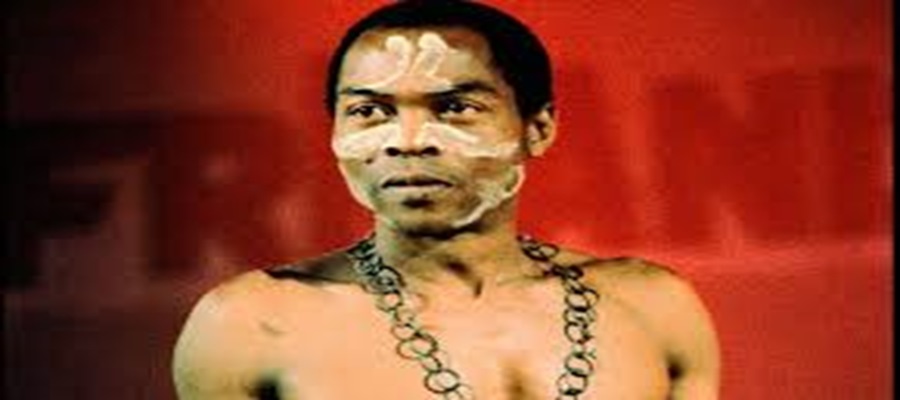
Fela Anikulapo-Kuti, simply known as Fela, legendary Nigerian musician, has made history as the first African artist to be inducted into the Rock & Roll Hall of Fame.

Fela
This is coming after he was posthumously honored with the 2026 Grammy Lifetime Achievement Award, becoming the first African artist to receive this prestigious special merit recognition.
Fela will be honoured in the early influence category this year, along with Queen Latifah, rapper MC Lyte, country rocker Gram Parsons, and Cuban singer Celia Cruz at this year’s Rock and Roll Hall of Fame event.
The honorees were revealed on Monday night in the US, during an airing of American Idol.
Sade Adu, Nigerian-born British singer, will be honoured in the performance category.
However, Shakira, Mariah Carey, Lauryn Hill, New Edition, and Pink, missed out on the final cut despite being nominated.
Over 1,200 artists, historians and music industry professionals voted to decide the honorees.
The induction ceremony will be held on 14 November at the Peacock Theatre in Los Angeles.

National Broadcasting Commission (NBC) is set to launch so-called FreeTV, with over 100 channels for news, sports, education, entertainment and children’s programming in multiple Nigerian languages.

The launch is scheduled for May 15.
Charles Ebuebu, director-general, NBC, who disclosed this, said the new platform will offer free-to-air access with no carriage fees, leveraging hybrid satellite and internet delivery via NigComSat-1R.
The new plan is not an upgrade, the NBC stressed. This is a rebuild, according to Ebuebu .
FreeTV will be true free-to-air – no encryption, no set-top box barrier.
Any DVB-T2/S2 television will work. A mobile app will extend reach to phones and tablets.
The platform will launch with over 100 national, regional and state channels across sports, news, children’s programming, education, entertainment and cultural content in Hausa, Yoruba, Igbo, Tiv, Ijaw, Edo, Fulfulde, Ibibio, Efik and Nupe – all in HD.
Crucially, the NBC has partnered with a Bulgarian firm, GARB (operating since 2006 and recognised by the European Broadcast Union), to deliver a 94 per cent-accurate audience measurement system using return-path data, app analytics, demographic panels, and Artificial Intelligence (AI).
To qualify broadcasters, must commit their channels, produce a minimum of 60 per cent local content, and promote FreeTV until January 2029.
After that, a regulated tiered rate card takes effect.
According to NBC, the strategic rationale is simple: build viewers first, monetise later.
The document further revealed that six regional production hubs in Lagos, Abuja, Port Harcourt, Enugu, Kano and Benin would function as local content factories, expected to generate 500 to 1,000 jobs per zone within two years.
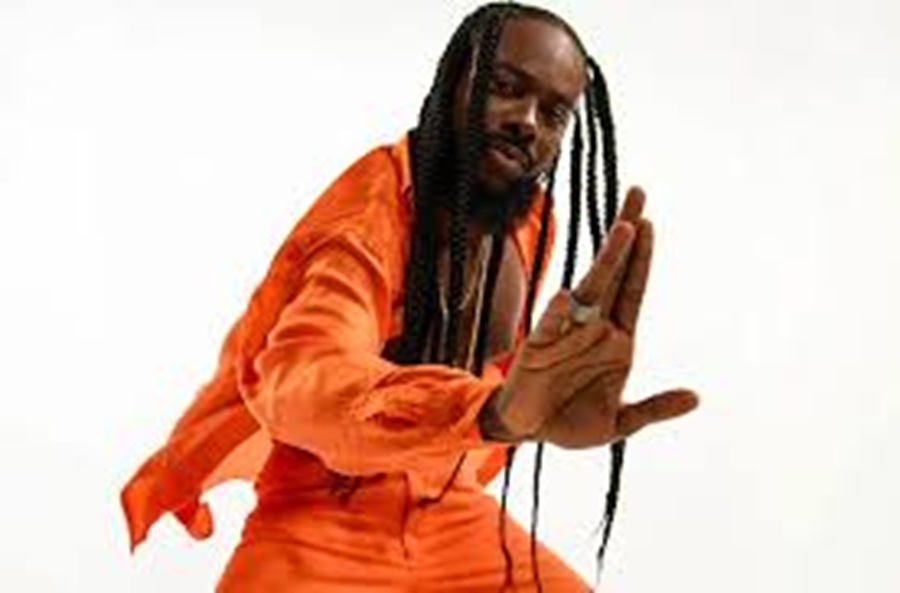
Popular Nigerian artist Adekunle Gold has lent his support to the growing youth-driven movement behind The Gathering on 100, further amplifying conversations around what is fast becoming one of the most talked-about upcoming experiences among young Nigerians.

Adekunle Gold
Known for his music and his strong connection with youth culture and evolving creative expression, Adekunle Gold’s involvement signals a deeper alignment between the event and the kind of audience it is attracting, a generation that is bold, expressive, and constantly redefining what community looks like.
While details of his involvement remain understated, his visible support adds a new layer of support and cultural relevance to the movement. In a landscape where attention is currency, endorsements from artists of his stature often act as a signal, drawing more eyes, more curiosity, and ultimately, more participation, but beyond visibility, the significance lies in what it represents.
The new father has, over the years, built a reputation for embracing creativity in its many forms, from music to visual storytelling, fashion, and digital engagement. His brand has consistently resonated with young Nigerians navigating similar spaces of self-expression and identity.
From interactive experiences like live music sessions and open performance moments to fashion runways and content creation spaces, the event is designed to blur the lines between audience and participant. It invites attendees to move beyond observation and become part of the moment.
This is a concept that closely mirrors the kind of cultural shift Adekunle Gold has been part of, one where boundaries between creator and consumer continue to dissolve.
His support also reflects a broader trend within Nigeria’s entertainment industry, where artists are increasingly engaging with youth-led initiatives that go beyond traditional performances. Rather than simply appearing on stage, they are aligning with movements that foster community, creativity, and shared experience.
For fans and attendees, this adds another dimension to what The Gathering on 100 represents.
As registrations increase and conversations expand across social platforms, the movement is gradually taking shape through the collective interest of those drawn to it.
Head to gathering.com to register.

MTN Suspends Data, Airtime Borrowing Service over New FCCPC Lending Rules

Nigeria Customs Deploys AI to Cover Revenue Leaks

Top 7 Reliable Virtual Cards for Running Ads in Nigeria

Nokia, Orange Partner on AI-native 6G Networks

NDPC Issues Critical Advisory as Hackers Target Nigeria’s Key Digital Systems

Kuda MFB Increases Kuda for Her Business Grants to ₦10 Million

Canal+ to Cut Jobs as Part Sweeping Restructuring

Nigeria tops global rankings for USDT, USDC ownership

NBC Boss Urges Content Ceators to Participate in DSO

NITDA Takes Over National Digital Architecture System




 General News2 days ago
Guinness Nigeria Surpasses ₦1Trillion Market Capitalisation, Signalling Strong Investor Confidence and Sustained Value Creation

 News2 days ago
CISA Asks NDPC, Police to Act on Alleged Data Breach by NIPSS

 E-Financial2 days ago
FG Investigates ‘Sharp Sharp’ Loan Operators over Alleged Privacy Violations

 Telecom2 days ago
Amazon Satellite to Challenge Starlink in Africa with Globalstar Acquisition

 E-Financial2 days ago
Ecobank Delivers Strong Results, Posts $801m in Pre-Tax Profit for 2025

 News2 days ago
Tinubu Tasks NRS to Restore Public Trust Amid Fiscal Changes

 Broadcasting2 days ago
Fela Makes History as First African to be Inducted into Rock and Roll Hall of Fame

 News2 days ago
Kaspersky Reports Online Scam Exposure Remains Widespread Despite High Levels of Self-assurance