

E-Business
QNET Launches “SAY NO” Campaign to Boost Fight Against Human Trafficking

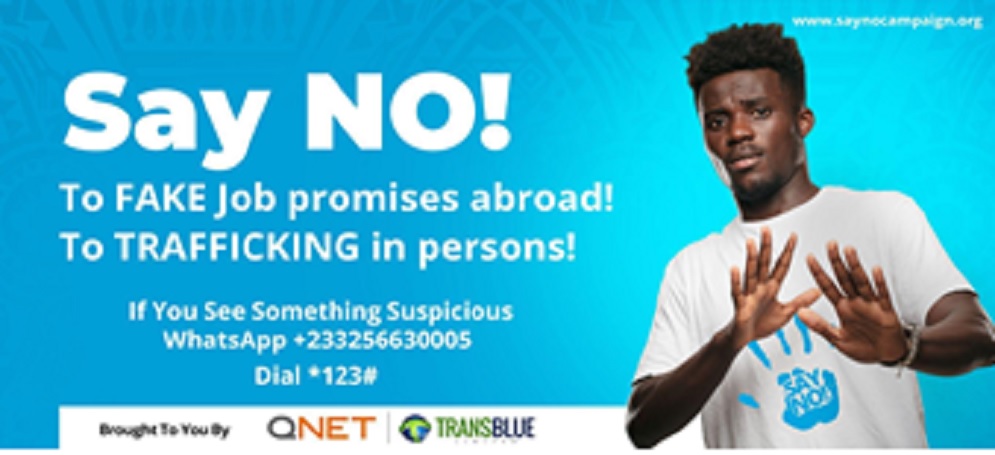
QNET, a lifestyle and wellness-focused direct-selling company, has launched the “Say NO” public awareness campaign. This initiative aims to educate communities about the dangers of fake job offers used by fraudsters to lure members of the public into human trafficking.

The United Nations Office on Drugs and Crime (UNODC) defines Human trafficking as a global crime that trades in people and exploits them for profit. People of all genders, ages and backgrounds can become victims of this crime, which occurs in every region of the world. Traffickers use violence, fraudulent employment agencies, and fake promises of education and job opportunities to trick, coerce and deceive their victims.
Across Africa and in Nigeria, reputable companies such as QNET, Coca-Cola and even the West African Development Bank (BOAD) have fallen victim to scammers who use their reputable names to deceitfully promise non-existent jobs to members of the public for purposes of exploitation (1 2 3). The lack of awareness about such scams and about Human Trafficking are, therefore, a key challenge in the fight against the vice.
Addressing the issue of Human Trafficking and its impact on society, Mr. Biram Fall, QNET’s Regional General Manager for Sub-Saharan Africa, said, “Human Trafficking not only destroys the lives of victims and communities, and it is regrettable that scammers often use the names of reputable companies such as QNet to promise fake jobs. We therefore believe that the private sector should support the efforts of states to tackle the vice, and the “Say NO” Awareness Campaign is our contribution. It seeks to empower communities with the knowledge and awareness they need to “Say No!” to the traffickers who want to rob them of their future. “
The Nigerian Government, in collaboration with the National Agency for the Prohibition of Trafficking in Persons (NAPTIP), has made sustained efforts to combat human trafficking. A United States Department of State’s Trafficking in Persons Report shows that Nigeria has been placed on Tier 2, reflecting significant governmental endeavours. The report indicates an increase in the identification of trafficking victims, rising from 935 in the previous reporting period to 1,634 in 2023.
Addressing the matter, Akeem Ajisafe, Managing Director of Transblue Limited, the Nigerian partner of QNET, said, “The Nigerian government, in collaboration with NAPTIP and other relevant agencies, have shown unwavering commitment to combating human trafficking. Their dedicated efforts can be seen in the increased identification of trafficking victims, which showcases a proactive stance in addressing this critical issue. The Say NO campaign aims to amplify these efforts by educating the youth in Nigeria on recognizing and avoiding fraudulent job offers. Empowering the younger generation with knowledge is essential in fortifying our collective stand against human trafficking, and I believe this campaign will contribute significantly to that endeavour.”
The “Say NO” campaign shall be implemented in several countries, starting with Burkina Faso, Nigeria and Senegal. It consists of a public education campaign that will use radio, billboards, pamphlets and other activities aimed at sensitizing communities, especially in regions where the prevalence of fake job scams is high.
QNET has implemented several measures to prevent the use of its platforms to perpetrate fraud. This includes the implementation of customer identification technology that blocks users from buying products or referring customers from a country different from their own. With this technology, only users with verified identity documents can refer other customers, and those who are in breach of the company code of conduct are removed from the network. Any individual found fraudulently using the company’s name shall be reported to the authorities, and QNet will seek full punishment according to the law.
In addition to these, the company trains its Independent Representatives on its products, ethical practices and entrepreneurial skills, thereby empowering them to generate income for themselves and their families by referring customers to QNet.



The Central Bank of Nigeria (CBN) has affirmed the capitalisation of Alpha Morgan Bank, marking an important milestone in the bank’s growth journey and reinforcing its commitment to building a strong, resilient, and future-ready financial institution.

This affirmation reflects the bank’s adherence to regulatory requirements and its strategic focus on strengthening its capital base to support sustainable growth, innovation and improved service delivery to customers.
With this milestone, Alpha Morgan Bank is well positioned to continue expanding its footprint with its 14 approved branches across different states, while deepening inclusivity and enhancing the range of banking solutions available to individuals, businesses, and institutional clients nationwide.
Commenting on the development, the Managing Director of Alpha Morgan Bank, Mr. Ade Buraimo, expressed the readiness of the bank in ensuring compliance with regulatory requirement, good governance framework while delivering satisfying banking along the long-term vision of the bank to become the best bank to work and strong financial institution to reckon with.
He said: “Capitalisation is more than a regulatory requirement; it is an opportunity to strengthen the institution for the future. The affirmation of Alpha Morgan Bank capitalisation reflects the work we have done to build a solid capital foundation that allows us to support businesses more effectively, expand financial access and continue delivering the level of service our customers expect.’’
According to him, Alpha Morgan Bank remains committed to maintaining strong corporate governance standards, sound risk management practices, and prudent financial management as it continues to support economic development and create long-term value for stakeholders.
“As Alpha Morgan Bank enters the next phase of its journey, the institution will continue to scale its operation, invest in technology, expand its branch network and digital banking presence, whilst delivering reliable and satisfying banking experiences to its growing customer base,” Buraimo added.


Mr Uche Ifeanyi, commissioner of Police in charge of the Nigeria Police Force National Cyber Crime Centre (NPF-NCCC), said on Friday that most cyber attacks occur because victims act out of ignorance.

He spoke in Abuja at the opening of an online cybercrime awareness campaign themed “Odogwu No Dey Hide Him Face,” organised to educate and empower communities about online safety and cyber hygiene.
“Studies reveal that the majority of cyber attacks are initiated or enabled by victims due to lack of knowledge.
“Personal information is invaluable and must be protected at all times.
“Just as we maintain physical health, we must also maintain a healthy digital lifestyle,” he added, stressing that simple cyber hygiene practices could greatly reduce the risk of becoming a victim.
He urged the public not to disclose confidential information to unauthorised persons and to use strong, unique passwords, enable multi-factor authentication, and apply security safeguards on digital devices.
“Keep personal information private, avoid suspicious links, and regularly update software or system patches,” he said, adding that antivirus programmes and firewalls were essential for online safety.
Ifeanyi warned against falling for “free gifts” online.
“If it sounds too good to be true, it most likely is fraud,” he said, advising caution with urgent or suspicious messages.
He also urged internet users to verify information before sharing to avoid spreading fake news, emphasising that cybercriminals could exploit everyone regardless of age, occupation, or social class.
Vincent Olatunji, director-general, National Data Protection Commission (NDPC), commended NPF-NCCC for its efforts and said the campaign theme was commendable.
He noted the importance of educating people on legitimate wealth and safe internet use.
Olatunji said that the fight against cybercrime required collective effort, warning that the risks were increasing daily as more people connected to the internet across Nigeria.

Kaspersky has introduced an update to its Automated Security Awareness Platform, adding full support for PDF and SCORM (Sharable Content Object Reference Model) – the industry-standard protocol for deploying and managing e-learning content.

The enhancement enables organisations to build fully customised cybersecurity training programmes that reflect their infrastructure, risk profile, and internal policies, while continuing to benefit from Kaspersky’s expert-driven security content and phishing simulations.
According to the Kaspersky report titled “Redefining the Human Factor in Cybersecurity”, employees responding to phishing attacks was one of the main causes of cyber incidents in companies worldwide, accounting for 21% of cases among other reasons.
At the same time, additional Kaspersky research reveals that social engineering attacks are predicted to increase more than any other type in the nearest future, with 87% of respondents believing that social engineering attacks will become even more effective due to the use of AI tools.
The new Kaspersky Automated Security Awareness Platform (Kaspersky ASAP) update directly addresses several persistent challenges such as reducing the number of human-related incidents, cutting time spent on managing training programmes, decreasing regulatory and compliance risks, and minimising potential legal or reputational damage stemming from cybersecurity breaches.
With the new SCORM support, the platform becomes even more flexible: companies can now upload, track, and manage their own SCORM-based learning materials directly within the system. In addition, companies can accelerate their programmes by using easier-to-create PDF-formats.
This allows organisations to tailor training to their specific technology stacks and emerging threats targeting their industry or region. Businesses that have already invested in third-party SCORM courses or internal learning development can now seamlessly reuse their existing modules, protecting their prior investments while strengthening their cybersecurity posture.
The combination of Kaspersky’s embedded content built on real cases uncovered by the company’s world-class experts with customers’ PDF materials or SCORM modules enables a true best-of-breed approach to human risk management.
Organisations can supplement Kaspersky’s up-to-date cyberattack scenarios with internal policies, unique workflows, and industry-specific lessons, ensuring training resonates with employees and reflects real operational challenges.
“Human behaviour remains one of the most unpredictable elements in cybersecurity and also one of the easiest for attackers to exploit. By adding SCORM support to Kaspersky Automated Security Awareness Platform, we’re giving organisations the flexibility to build training programmes that truly match their internal realities.
“Combined with Kaspersky’s expert-driven content and real-world attack data, this update empowers companies to create more adaptive, relevant, and impactful awareness programmes than ever before,” comments Svetlana Kalashnikova, Security Awareness expert at Kaspersky.

First Batch of Nigerian Undergraduates Emerged in Airtel Africa Foundation Scholarships Programme

Mojisola Sayo-Kazeem Reflects on Leadership, Opportunity, Women in Tech @ IWD

Experts Weigh Blockchain Option for Nigeria’s Elections Process

CBN Affirms Alpha Morgan Bank’s Capitalisation

Dimension Data Nigeria Seals N20bn Bond Deal to Bridge Digital Infrastructure Gap

Dr. Cairo Ojougboh Foundation Bolsters Nigeria’s Education Drive with ₦2.7m Student Support

Kaspersky Brings more Transparency to Threat Detection with New Hunt Hub

Kaspersky Discovers New Phishing Campaign Exploiting Google Tasks Notifications to Steal Corporate Credentials

esentry 2025 Report Shows Healthcare, Financial Services and Telecoms as Staging Grounds for Increased Cyberattacks in Africa

AfDB, UNDP Launch $10Bn AI Initiative for Africa




 E-Business3 days ago
Police Says Victims Enable Cyber Attacks Out of Ignorance

 E-Financial3 days ago
Quest Merchant Bank Achieves CBN Regulatory Recapitalisation Milestone

 General News3 days ago
FG Launches NERD to Combat Certificate Fraud

 E-Financial3 days ago
Bank Accuses Magistrate, Lawyer of Using Fake Order to Steal N3.5m from Account

 Telecom3 days ago
Cassava Launches Sovereign Cloud for Africa’s Public Sector

 General News3 days ago
Goodnews Naija Launches ‘Building in Nigeria’ Series on Entrepreneurs, Real Sector Builders

 News3 days ago
FG Can Now Track, Prosecute Visa Overstayers – Interior Minister

 News3 days ago
NCDC Issues Public Advisory on Cerebrospinal Meningitis